Department of Biology, Functional Biology, KU Leuven Leuven-Heverlee, Belgium.
Front Oncol. 2012 Jul 25;2:77. doi: 10.3389/fonc.2012.00077. eCollection 2012.
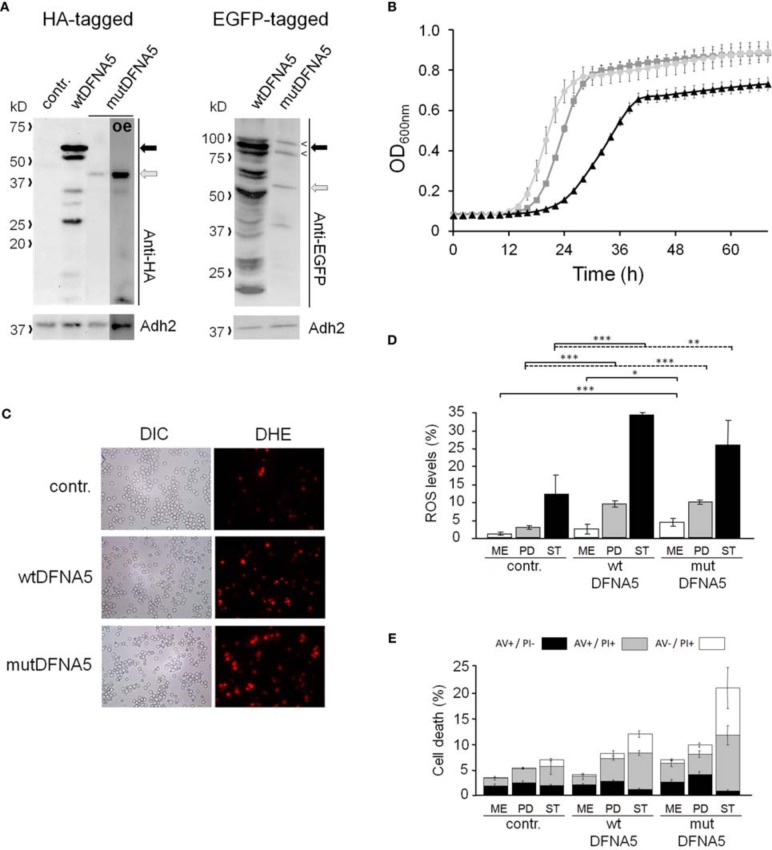
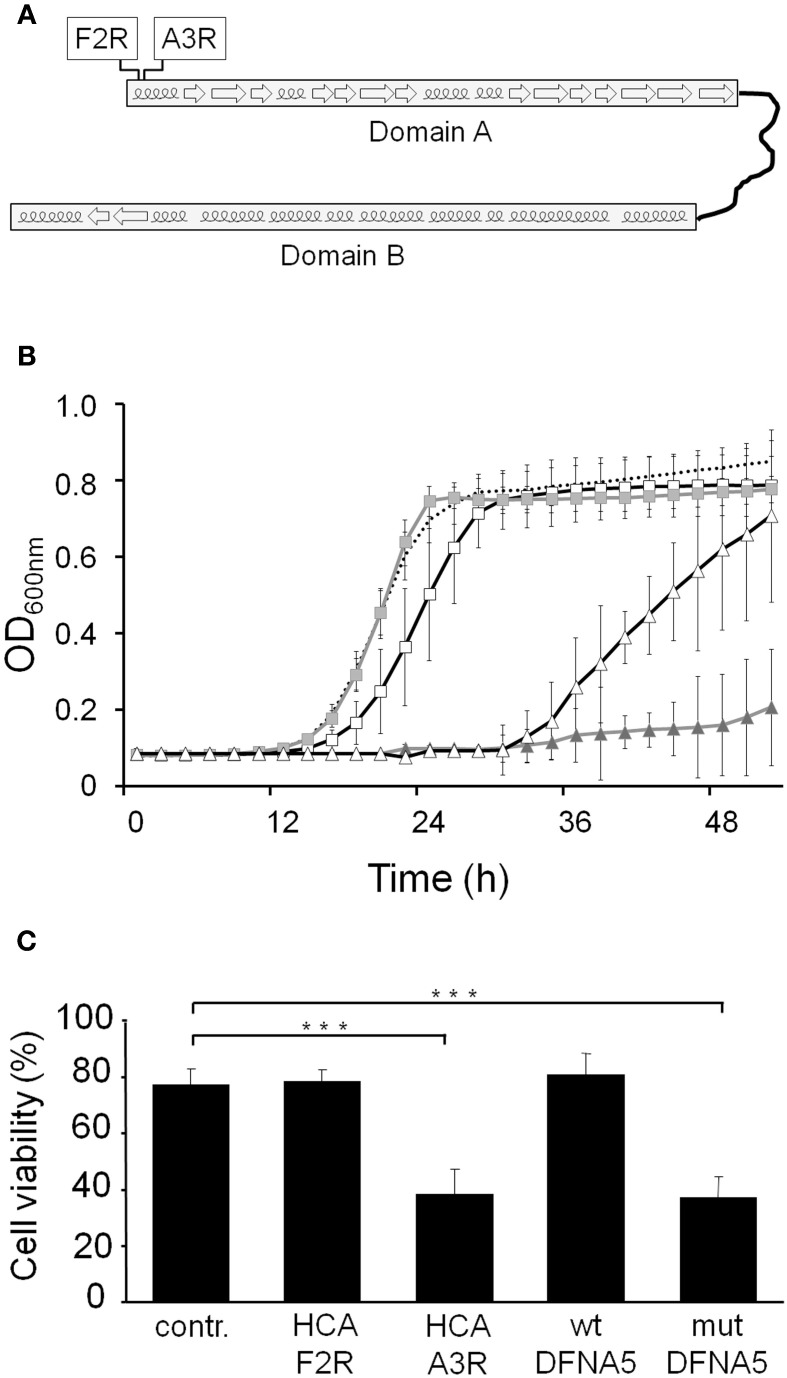
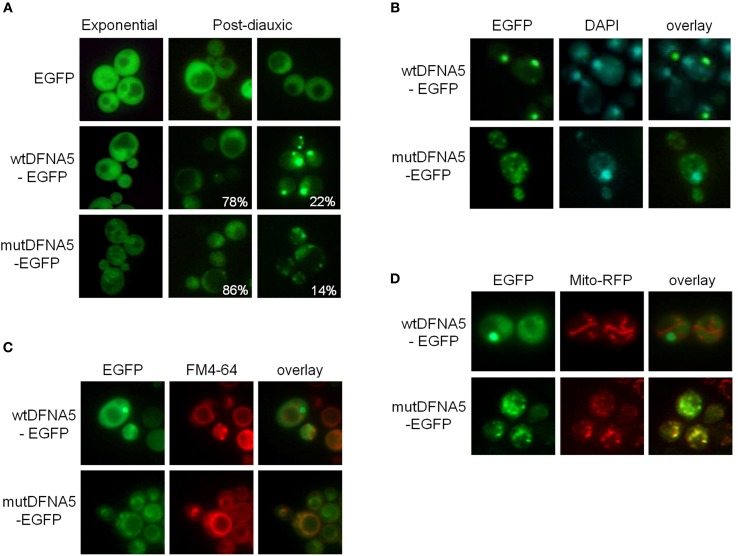
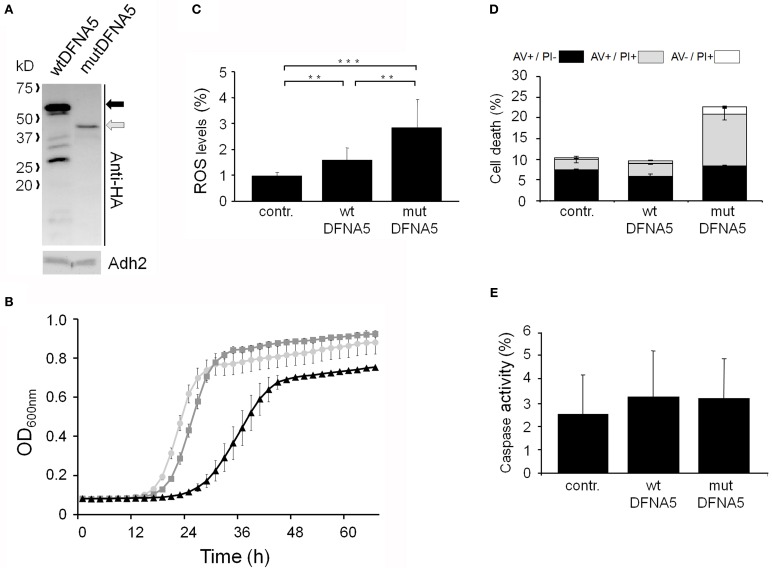
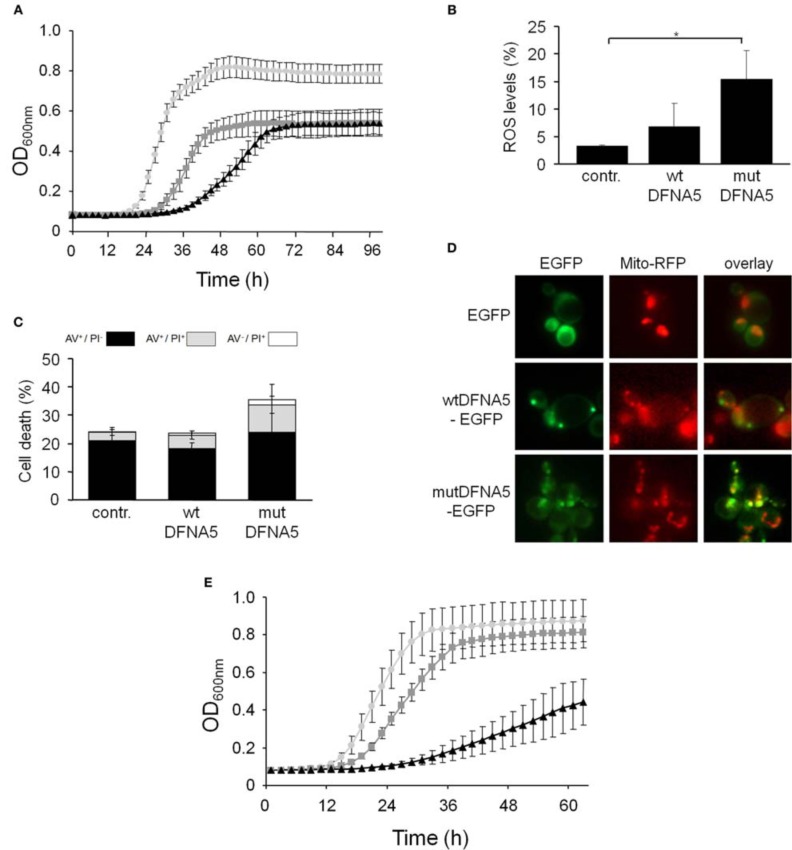
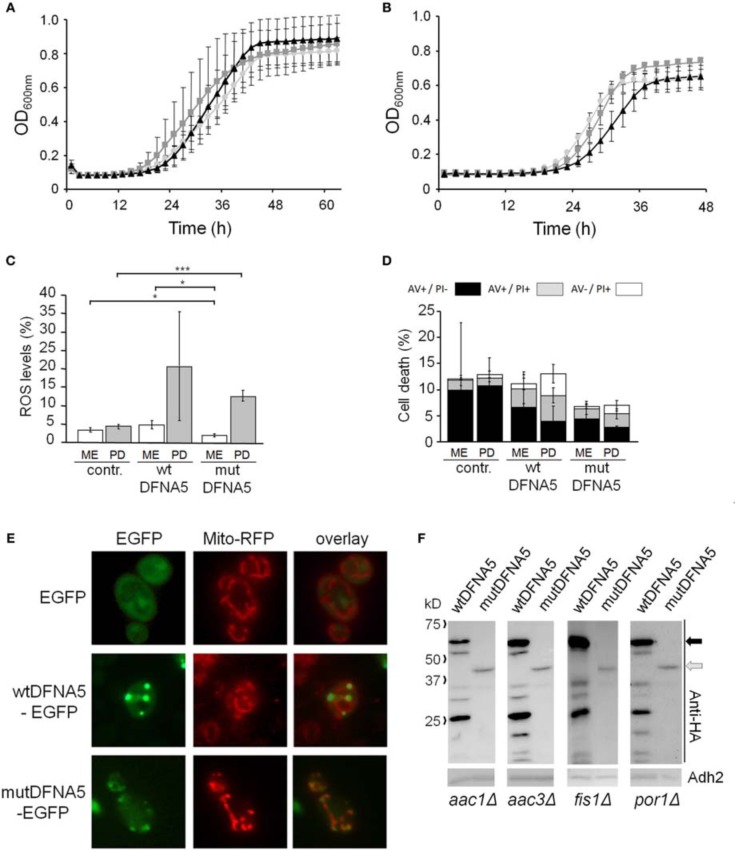
DFNA5 was first identified as a gene responsible for autosomal dominant deafness. Different mutations were found, but they all resulted in exon 8 skipping during splicing and premature termination of the protein. Later, it became clear that the protein also has a tumor suppression function and that it can induce apoptosis. Epigenetic silencing of the DFNA5 gene is associated with different types of cancers, including gastric and colorectal cancers as well as breast tumors. We introduced the wild-type and mutant DFNA5 allele in the yeast Saccharomyces cerevisiae. The expression of the wild-type protein was well tolerated by the yeast cells, although the protein was subject of degradation and often deposited in distinct foci when cells entered the diauxic shift. In contrast, cells had problems to cope with mutant DFNA5 and despite an apparent compensatory reduction in expression levels, the mutant protein still triggered a marked growth defect, which in part can be ascribed to its interaction with mitochondria. Consistently, cells with mutant DFNA5 displayed significantly increased levels of ROS and signs of programmed cell death. The latter occurred independently of the yeast caspase, Mca1, but involved the mitochondrial fission protein, Fis1, the voltage-dependent anion channel protein, Por1 and the mitochondrial adenine nucleotide translocators, Aac1 and Aac3. Recent data proposed DFNA5 toxicity to be associated to a globular domain encoded by exon 2-6. We confirmed these data by showing that expression of solely this domain confers a strong growth phenotype. In addition, we identified a point mutant in this domain that completely abrogated its cytotoxicity in yeast as well as human Human Embryonic Kidney 293T cells (HEK293T). Combined, our data underscore that the yeast system offers a valuable tool to further dissect the apoptotic properties of DFNA5.
DFNA5 最初被鉴定为导致常染色体显性遗传性耳聋的基因。发现了不同的突变,但它们都导致剪接过程中第 8 外显子跳过和蛋白质过早终止。后来,人们清楚地认识到该蛋白质还具有肿瘤抑制功能,可诱导细胞凋亡。DFNA5 基因的表观遗传沉默与多种类型的癌症有关,包括胃癌、结直肠癌和乳腺癌。我们在酵母酿酒酵母中引入了野生型和突变型 DFNA5 等位基因。野生型蛋白质的表达被酵母细胞很好地耐受,尽管该蛋白质被降解,并且当细胞进入双相呼吸时,经常沉积在不同的焦点中。相比之下,细胞难以应对突变型 DFNA5,尽管表达水平明显降低,但突变型蛋白仍会引发明显的生长缺陷,部分原因是其与线粒体相互作用。一致地,具有突变型 DFNA5 的细胞显示出显著增加的 ROS 水平和程序性细胞死亡的迹象。后者独立于酵母半胱天冬酶 Mca1 发生,但涉及线粒体裂变蛋白 Fis1、电压依赖性阴离子通道蛋白 Por1 和线粒体腺苷核苷酸转运蛋白 Aac1 和 Aac3。最近的数据表明,DFNA5 的毒性与第 2-6 外显子编码的球形结构域有关。我们通过证明仅表达这个结构域就赋予了强烈的生长表型来证实了这些数据。此外,我们在该结构域中鉴定了一个点突变,该突变完全消除了其在酵母和人肾细胞 293T(HEK293T)中的细胞毒性。综合来看,我们的数据强调了酵母系统为进一步剖析 DFNA5 的凋亡特性提供了有价值的工具。