Nemours Children’s Hospital, Orlando, FL, USA.
Diabetes. 2012 Nov;61(11):2906-12. doi: 10.2337/db12-0145. Epub 2012 Jul 30.
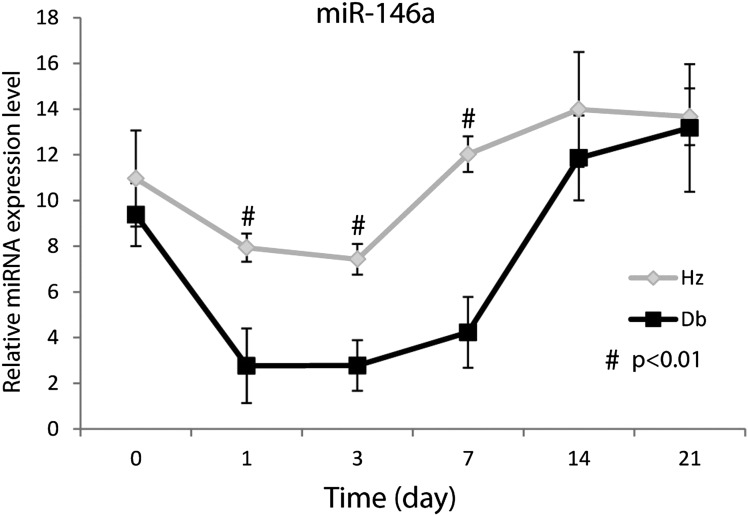
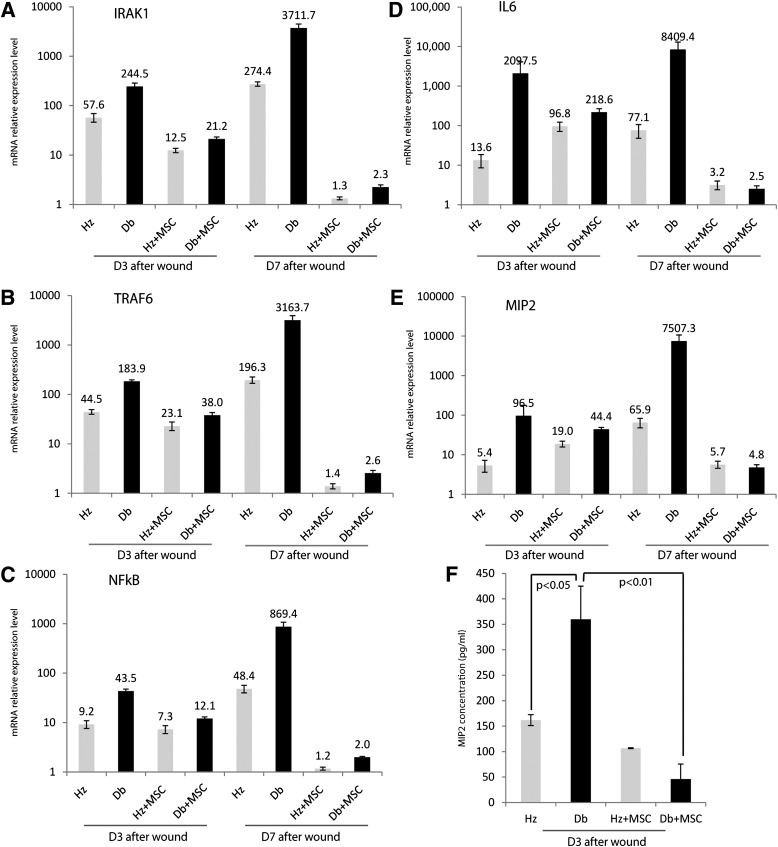
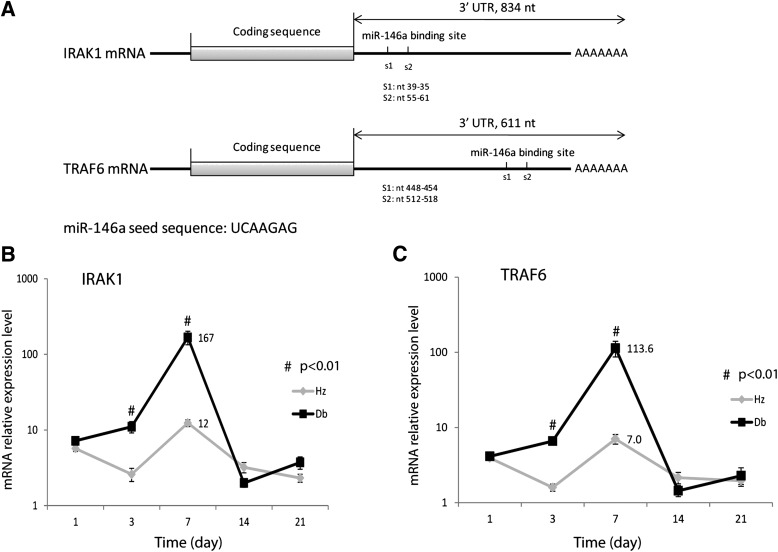
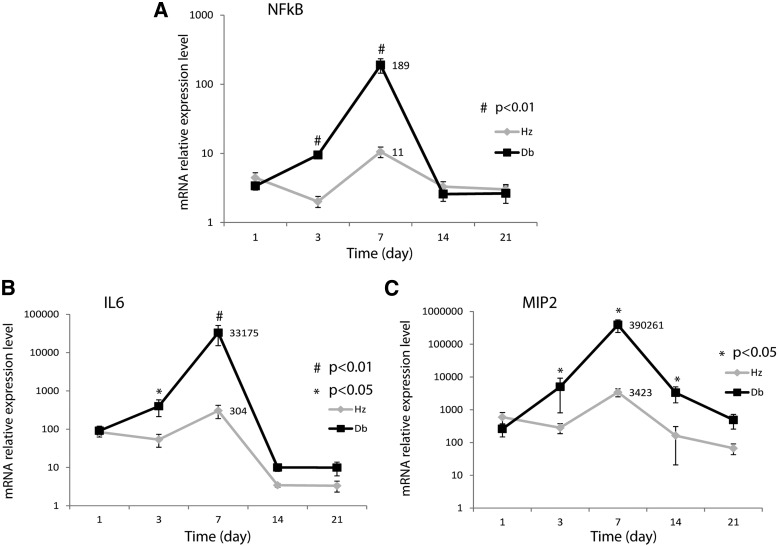
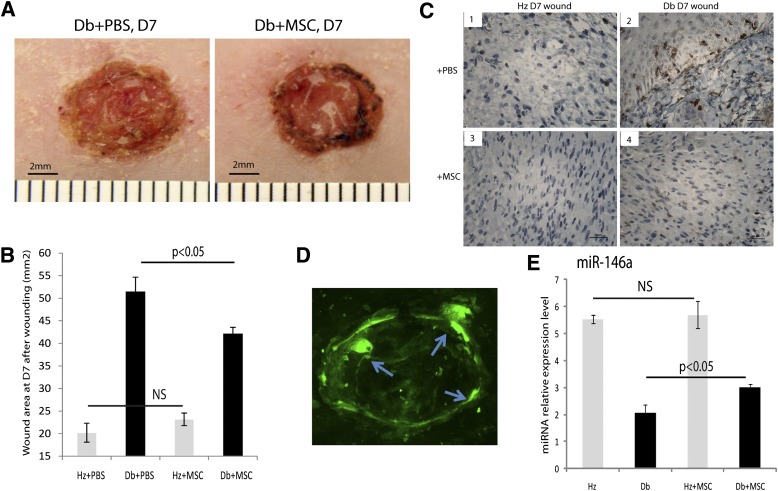
The impairment in diabetic wound healing represents a significant clinical problem. Chronic inflammation is thought to play a central role in the pathogenesis of this impairment. We have previously shown that treatment of diabetic murine wounds with mesenchymal stem cells (MSCs) can improve healing, but the mechanisms are not completely defined. MicroRNA-146a (miR-146a) has been implicated in regulation of the immune and inflammatory responses. We hypothesized that abnormal miRNA-146a expression may contribute to the chronic inflammation. To test this hypothesis, we examined the expression of miRNA-146a and its target genes in diabetic and nondiabetic mice at baseline and after injury. MiR-146a expression was significantly downregulated in diabetic mouse wounds. Decreased miR-146a levels also closely correlated with increased gene expression of its proinflammatory target genes. Furthermore, the correction of the diabetic wound-healing impairment with MSC treatment was associated with a significant increase in the miR-146a expression level and decreased gene expression of its proinflammatory target genes. These results provide the first evidence that decreased expression of miR-146a in diabetic wounds in response to injury may, in part, be responsible for the abnormal inflammatory response seen in diabetic wounds and may contribute to wound-healing impairment.
糖尿病创面愈合受损是一个重大的临床问题。慢性炎症被认为在这种损伤的发病机制中起核心作用。我们之前已经表明,用间充质干细胞(MSCs)治疗糖尿病小鼠创面可以改善愈合,但机制尚未完全明确。微小 RNA-146a(miR-146a)已被认为与免疫和炎症反应的调节有关。我们假设异常的 miR-146a 表达可能导致慢性炎症。为了验证这一假设,我们在基线和损伤后检查了糖尿病和非糖尿病小鼠中 miR-146a 及其靶基因的表达。miR-146a 在糖尿病小鼠创面中的表达明显下调。miR-146a 水平的降低也与促炎靶基因的基因表达增加密切相关。此外,MSC 治疗纠正糖尿病创面愈合受损与 miR-146a 表达水平的显著增加和促炎靶基因的基因表达降低有关。这些结果首次提供了证据,表明损伤后糖尿病创面中 miR-146a 的表达下调可能部分导致糖尿病创面中异常的炎症反应,并可能导致创面愈合受损。