National Institute for Agro-Environmental Sciences, 3-1-3 Kannondai, Tsukuba, Ibaraki, 305-8604, Japan.
AMB Express. 2012 Aug 2;2(1):40. doi: 10.1186/2191-0855-2-40.
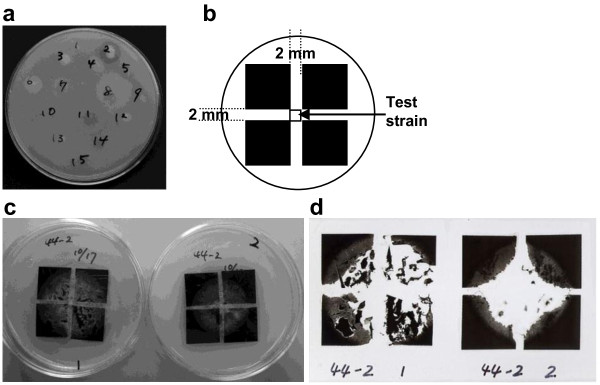
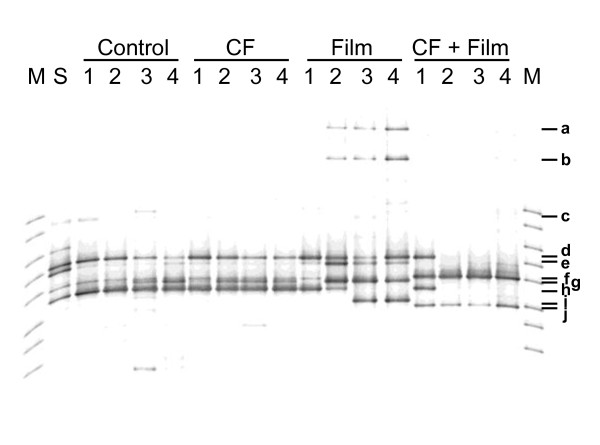
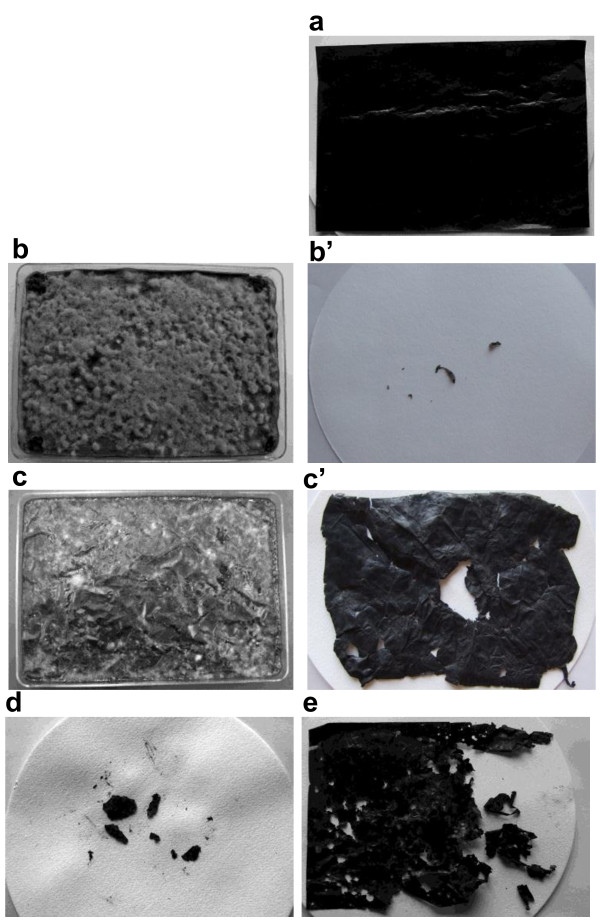
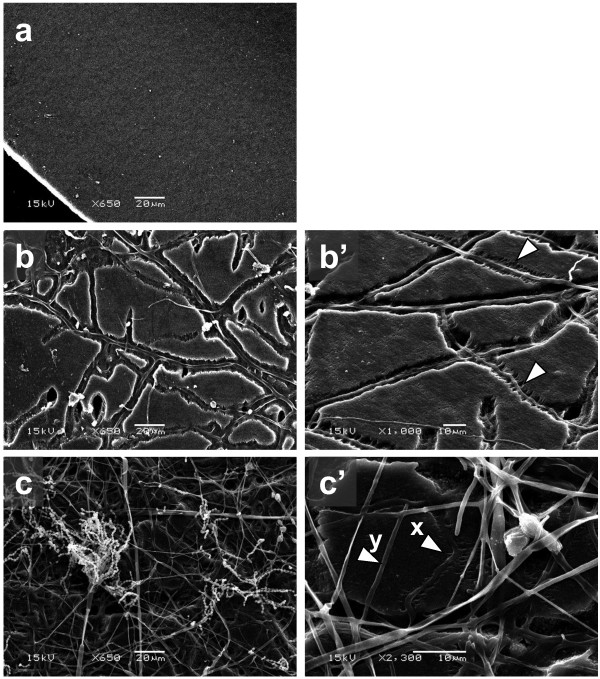
To improve the biodegradation of biodegradable plastic (BP) mulch films, 1227 fungal strains were isolated from plant surface (phylloplane) and evaluated for BP-degrading ability. Among them, B47-9 a strain isolated from the leaf surface of barley showed the strongest ability to degrade poly-(butylene succinate-co-butylene adipate) (PBSA) and poly-(butylene succinate) (PBS) films. The strain grew on the surface of soil-mounted BP films, produced breaks along the direction of hyphal growth indicated that it secreted a BP-degrading enzyme, and has directly contributing to accelerating the degradation of film. Treatment with the culture filtrate decomposed 91.2 wt%, 23.7 wt%, and 14.6 wt% of PBSA, PBS, and commercially available BP polymer blended mulch film, respectively, on unsterlized soil within 6 days. The PCR-DGGE analysis of the transition of soil microbial community during film degradation revealed that the process was accompanied with drastic changes in the population of soil fungi and Acantamoeba spp., as well as the growth of inoculated strain B47-9. It has a potential for application in the development of an effective method for accelerating degradation of used plastics under actual field conditions.
为了提高可生物降解塑料(BP)覆盖膜的生物降解性,从植物表面(叶表)分离出 1227 株真菌菌株,并评估其对 BP 的降解能力。其中,一株从大麦叶片表面分离出的菌株 B47-9 对聚丁二酸丁二醇酯-共-己二酸丁二醇酯(PBSA)和聚丁二酸丁二醇酯(PBS)薄膜具有最强的降解能力。该菌株在土壤覆盖的 BP 薄膜表面生长,在菌丝生长方向上产生断裂,表明其分泌了一种 BP 降解酶,这直接有助于加速薄膜的降解。在未灭菌的土壤中,用培养液处理 6 天,分别分解了 91.2wt%、23.7wt%和 14.6wt%的 PBSA、PBS 和市售的 BP 聚合物混合覆盖膜。在薄膜降解过程中土壤微生物群落演替的 PCR-DGGE 分析表明,该过程伴随着土壤真菌和变形虫属种群的剧烈变化,以及接种菌株 B47-9 的生长。它有可能在实际田间条件下开发加速使用塑料降解的有效方法。