School of Engineering and Applied Sciences, Harvard University, Cambridge, Massachusetts, United States of America.
PLoS One. 2012;7(7):e38704. doi: 10.1371/journal.pone.0038704. Epub 2012 Jul 20.
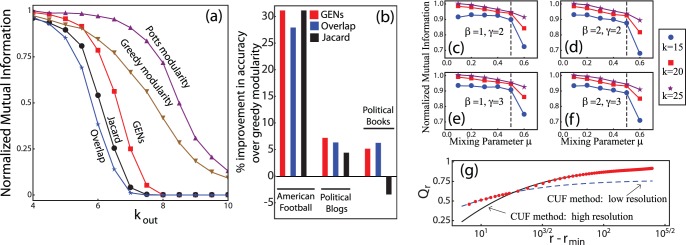
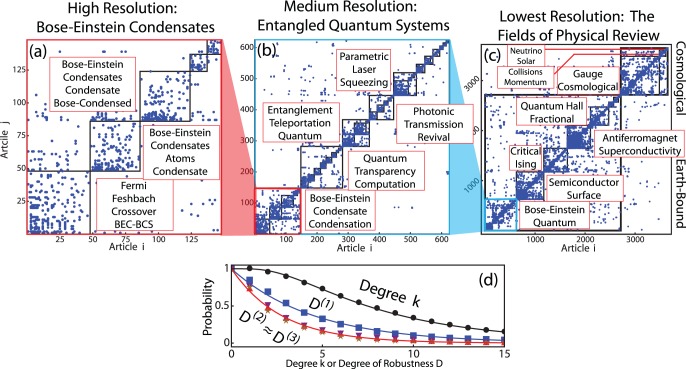
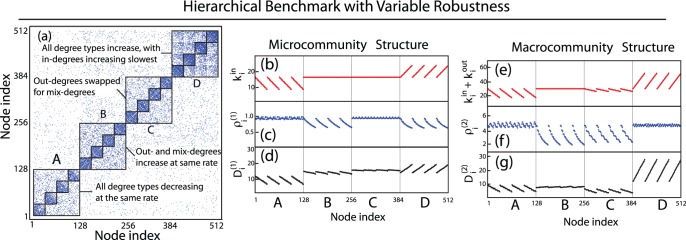
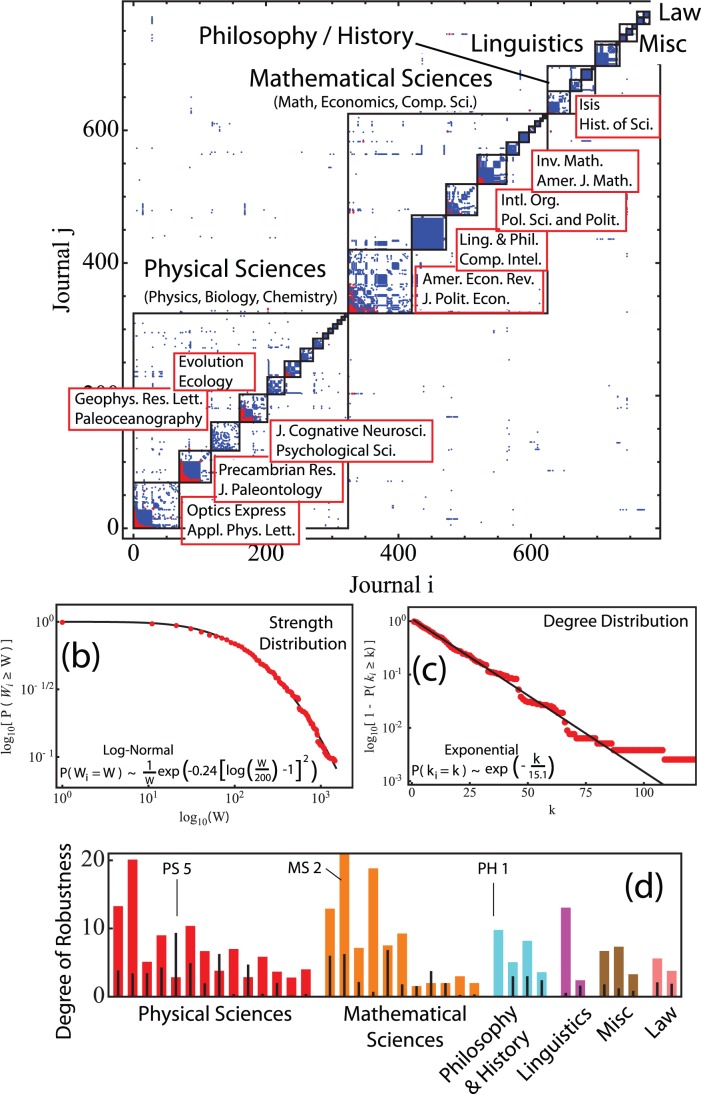
We introduce a new method for detecting communities of arbitrary size in an undirected weighted network. Our approach is based on tracing the path of closest-friendship between nodes in the network using the recently proposed Generalized Erds Numbers. This method does not require the choice of any arbitrary parameters or null models, and does not suffer from a system-size resolution limit. Our closest-friend community detection is able to accurately reconstruct the true network structure for a large number of real world and artificial benchmarks, and can be adapted to study the multi-level structure of hierarchical communities as well. We also use the closeness between nodes to develop a degree of robustness for each node, which can assess how robustly that node is assigned to its community. To test the efficacy of these methods, we deploy them on a variety of well known benchmarks, a hierarchal structured artificial benchmark with a known community and robustness structure, as well as real-world networks of coauthorships between the faculty at a major university and the network of citations of articles published in Physical Review. In all cases, microcommunities, hierarchy of the communities, and variable node robustness are all observed, providing insights into the structure of the network.
我们介绍了一种在无向加权网络中检测任意大小社区的新方法。我们的方法基于使用最近提出的广义 Erds 数追踪网络中节点之间的最亲密友谊路径。这种方法不需要选择任何任意参数或零模型,也不受系统大小分辨率限制。我们的最亲密朋友社区检测能够准确地重建大量真实世界和人工基准的真实网络结构,并能够适应研究层次社区的多层次结构。我们还使用节点之间的接近程度来为每个节点开发一定程度的鲁棒性,这可以评估该节点分配给其社区的鲁棒性。为了测试这些方法的效果,我们将它们部署在各种著名的基准上,包括具有已知社区和鲁棒性结构的层次结构人工基准,以及主要大学教职员工之间的合著网络和发表在《物理评论》上的文章引文网络等真实世界网络。在所有情况下,都观察到了微社区、社区层次结构和可变节点鲁棒性,为网络结构提供了深入的了解。