Department of Neurology, Mount Sinai School of Medicine, New York, NY, USA.
Mol Psychiatry. 2013 Aug;18(8):882-8. doi: 10.1038/mp.2012.115. Epub 2012 Aug 7.
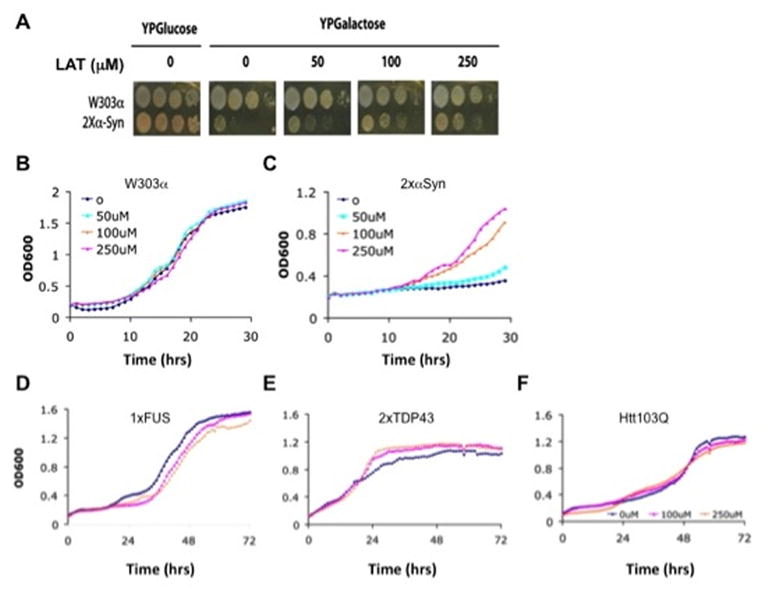
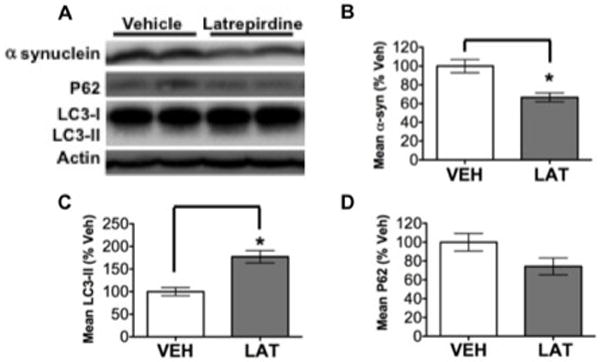
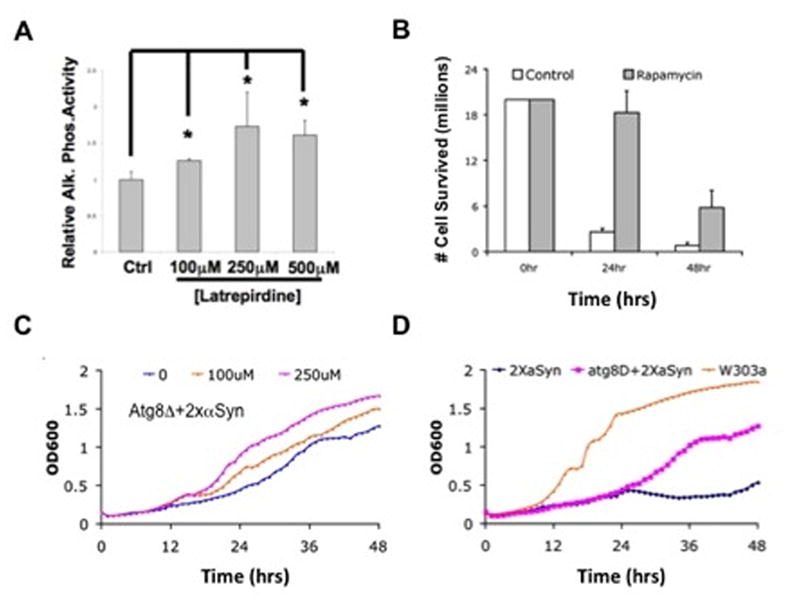
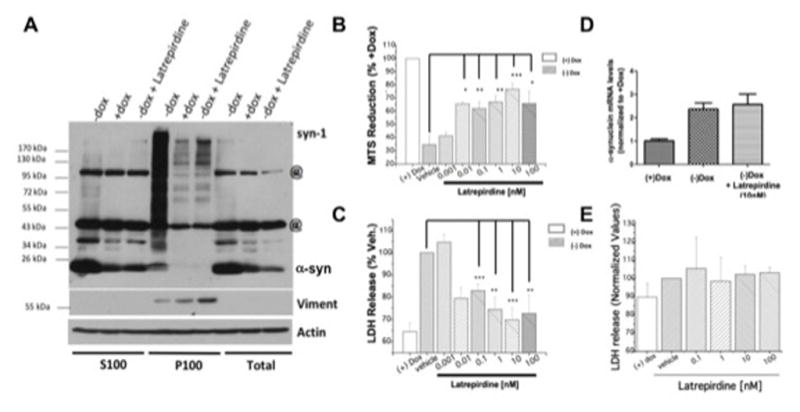
Latrepirdine (Dimebon; dimebolin) is a neuroactive compound that was associated with enhanced cognition, neuroprotection and neurogenesis in laboratory animals, and has entered phase II clinical trials for both Alzheimer's disease and Huntington's disease (HD). Based on recent indications that latrepirdine protects cells against cytotoxicity associated with expression of aggregatable neurodegeneration-related proteins, including Aβ42 and γ-synuclein, we sought to determine whether latrepirdine offers protection to Saccharomyces cerevisiae. We utilized separate and parallel expression in yeast of several neurodegeneration-related proteins, including α-synuclein (α-syn), the amyotrophic lateral sclerosis-associated genes TDP43 and FUS, and the HD-associated protein huntingtin with a 103 copy-polyglutamine expansion (HTT gene; htt-103Q). Latrepirdine effects on α-syn clearance and toxicity were also measured following treatment of SH-SY5Y cells or chronic treatment of wild-type mice. Latrepirdine only protected yeast against the cytotoxicity associated with α-syn, and this appeared to occur via induction of autophagy. We further report that latrepirdine stimulated the degradation of α-syn in differentiated SH-SY5Y neurons, and in mouse brain following chronic administration, in parallel with elevation of the levels of markers of autophagic activity. Ongoing experiments will determine the utility of latrepirdine to abrogate α-syn accumulation in transgenic mouse models of α-syn neuropathology. We propose that latrepirdine may represent a novel scaffold for discovery of robust pro-autophagic/anti-neurodegeneration compounds, which might yield clinical benefit for synucleinopathies including Parkinson's disease, Lewy body dementia, rapid eye movement (REM) sleep disorder and/or multiple system atrophy, following optimization of its pro-autophagic and pro-neurogenic activities.
拉替拉滨(Dimebon;二甲苯并嗪)是一种神经活性化合物,在实验室动物中与认知增强、神经保护和神经发生有关,并已进入阿尔茨海默病和亨廷顿病(HD)的 II 期临床试验。基于最近的研究表明,拉替拉滨可保护细胞免受与表达聚集性神经退行性相关蛋白(包括 Aβ42 和 γ-突触核蛋白)相关的细胞毒性,我们试图确定拉替拉滨是否对酿酒酵母有保护作用。我们利用酵母中几种神经退行性相关蛋白的独立和并行表达,包括 α-突触核蛋白(α-syn)、肌萎缩性侧索硬化症相关基因 TDP43 和 FUS 以及与 103 拷贝聚谷氨酰胺扩展相关的 HD 相关蛋白 huntingtin(HTT 基因;htt-103Q)。还在 SH-SY5Y 细胞处理或野生型小鼠慢性处理后,测量了拉替拉滨对 α-syn 清除和毒性的影响。拉替拉滨仅能保护酵母免受与 α-syn 相关的细胞毒性,这似乎是通过诱导自噬发生的。我们进一步报告,拉替拉滨刺激分化的 SH-SY5Y 神经元中 α-syn 的降解,并在慢性给药后在小鼠脑中降解,同时自噬活性的标志物水平升高。正在进行的实验将确定拉替拉滨在α-syn 神经病理学的转基因小鼠模型中消除α-syn 积累的效用。我们提出,拉替拉滨可能代表一种新的支架,用于发现强大的促自噬/抗神经退行性化合物,这可能会为包括帕金森病、路易体痴呆、快速眼动(REM)睡眠障碍和/或多系统萎缩在内的突触核蛋白病带来临床益处,在优化其促自噬和促神经发生活性后。