AgroParisTech, CRNH-IdF, UMR914 Nutrition Physiology and Ingestive Behavior, Paris, France.
PLoS One. 2012;7(8):e42155. doi: 10.1371/journal.pone.0042155. Epub 2012 Aug 3.
Existing diet quality indices often show theoretical and methodological limitations, especially with regard to validation.
To develop a diet quality index based on the probability of adequate nutrient intake (PANDiet) and evaluate its validity using data from French and US populations.
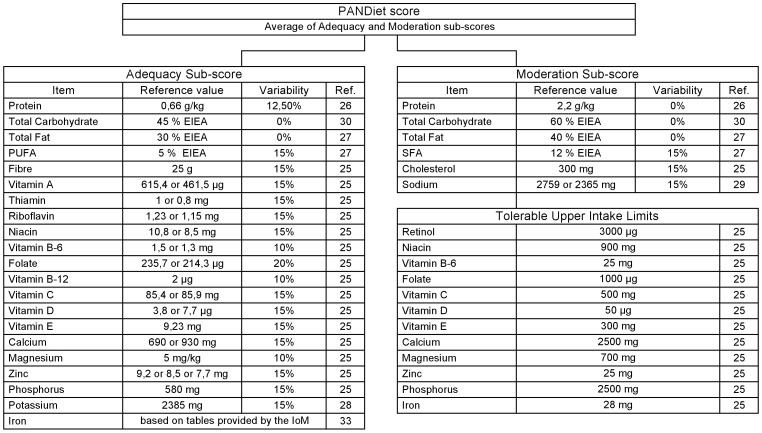
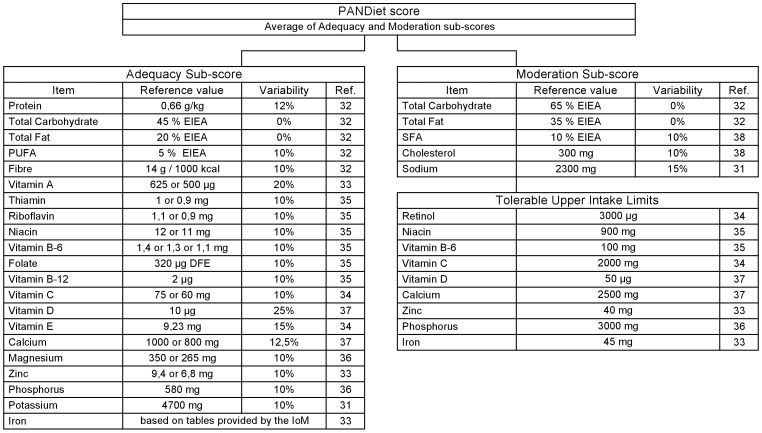
The PANDiet is composed of adequacy probabilities for 24 nutrients grouped into two sub-scores. The relationship between the PANDiet score and energy intake were investigated. We evaluated the construct validity of the index by comparing scores for population sub-groups with 'a priori' differences in diet quality, according to smoking status, energy density, food intakes, plasma folate and carotenoid concentrations. French and US implementations of the PANDiet were developed and evaluated using national nutritional recommendations and dietary surveys.
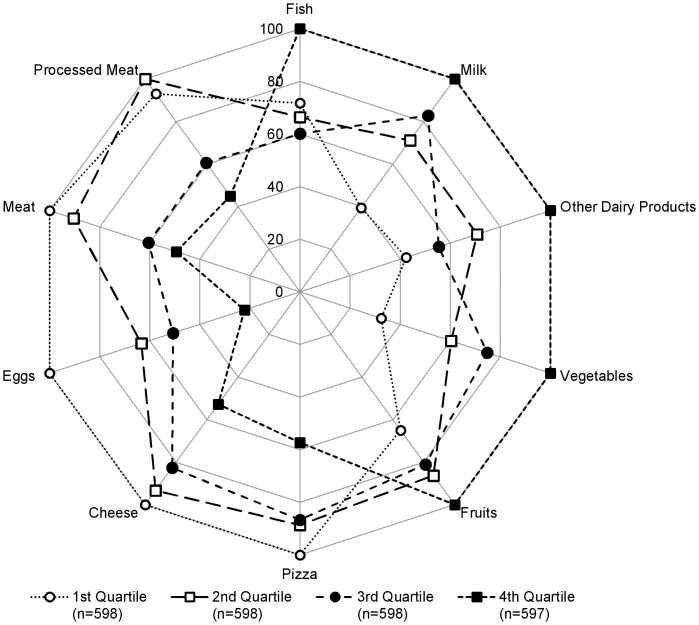
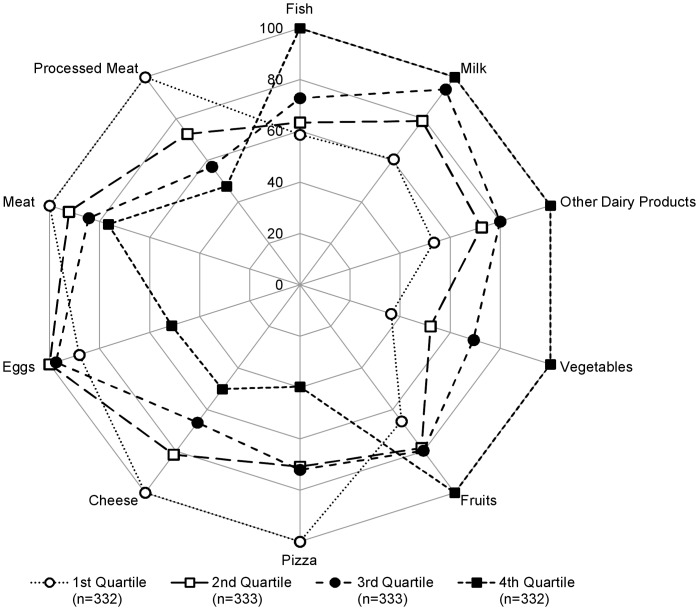
The PANDiet was not correlated with energy for the French implementation (r = -0.02, P>0.05) and correlated at a low level for the US implementation (r = -0.11, P<0.0001). In both implementations, a higher PANDiet score (i.e. a better diet quality) was associated with not smoking, having a lower-energy-dense diet, consuming higher amounts of fruits, vegetables, fish, milk and other dairy products and lower amounts of cheese, pizza, eggs, meat and processed meat, and having higher plasma folate and carotenoid concentrations after controlling for appropriate factors (all P<0.05, carotenoid data for US not available).
The PANDiet provides a single score that measures the adequacy of nutrient intake and reflects diet quality. This index is adaptable for use in different countries and relevant at the individual and population levels.
现有的饮食质量指数通常存在理论和方法上的局限性,特别是在验证方面。
开发一种基于营养素充足摄入概率(PANDiet)的饮食质量指数,并使用来自法国和美国人群的数据评估其有效性。
PANDiet 由 24 种营养素的充足摄入概率组成,分为两个子分数。研究了 PANDiet 得分与能量摄入之间的关系。根据吸烟状况、能量密度、食物摄入量、血浆叶酸和类胡萝卜素浓度等因素,我们评估了该指数的构效关系,比较了具有“先验”饮食质量差异的人群亚组的得分。使用国家营养建议和膳食调查开发和评估了法国和美国的 PANDiet 实施情况。
法国实施的 PANDiet 与能量无相关性(r=0.02,P>0.05),而美国实施的 PANDiet 相关性较低(r=-0.11,P<0.0001)。在这两种实施方式中,较高的 PANDiet 得分(即更好的饮食质量)与不吸烟、能量密度较低的饮食、较高的水果、蔬菜、鱼类、牛奶和其他乳制品的摄入量、较低的奶酪、比萨饼、鸡蛋、肉类和加工肉类的摄入量以及适当控制后较高的血浆叶酸和类胡萝卜素浓度相关(所有 P<0.05,美国的类胡萝卜素数据不可用)。
PANDiet 提供了一个单一的分数,用于衡量营养素摄入的充足程度并反映饮食质量。该指数适用于不同国家,在个体和人群层面上均具有相关性。