Center for Retrovirus Research, The Ohio State University, Columbus, OH 43210, USA.
Retrovirology. 2012 Aug 9;9:64. doi: 10.1186/1742-4690-9-64.
Human T lymphotropic virus type-1 (HTLV-1) and type 2 (HTLV-2) are closely related human retroviruses, but have unique disease associations. HTLV-1 is the causative agent of an aggressive T-cell leukemia known as adult T-cell leukemia (ATL), HTLV-1 associated myelopathy/tropical spastic paraparesis (HAM/TSP), and other inflammatory diseases. HTLV-2 infection has not been clearly associated with any disease condition. Although both viruses can transform T cells in vitro, the HTLV-1 provirus is mainly detected in CD4+ T cells whereas HTLV-2 is mainly detected in CD8+ T cells of infected individuals. HTLV-1 and HTLV-2 encode accessory proteins p30 and p28, respectively, which share partial amino acid homology and are required for viral persistence in vivo. The goal of this study was to identify host proteins interacting with p30 and p28 in order to understand their role in pathogenesis.
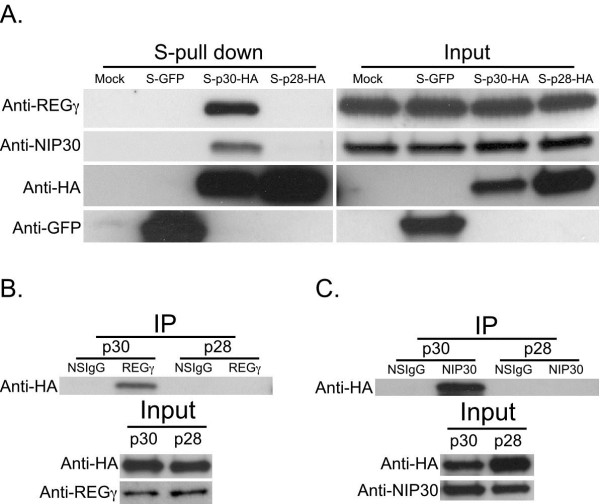
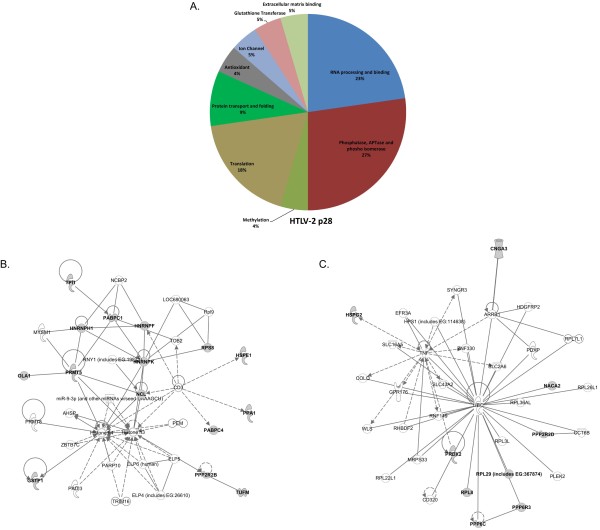
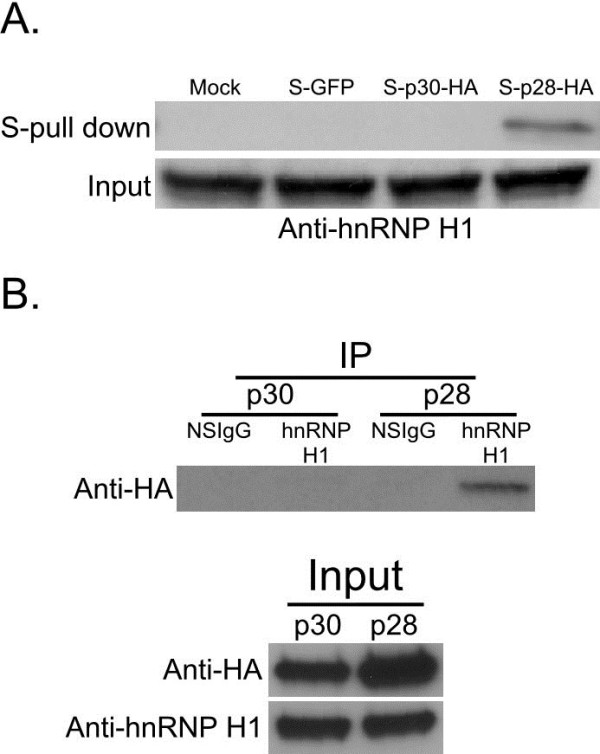
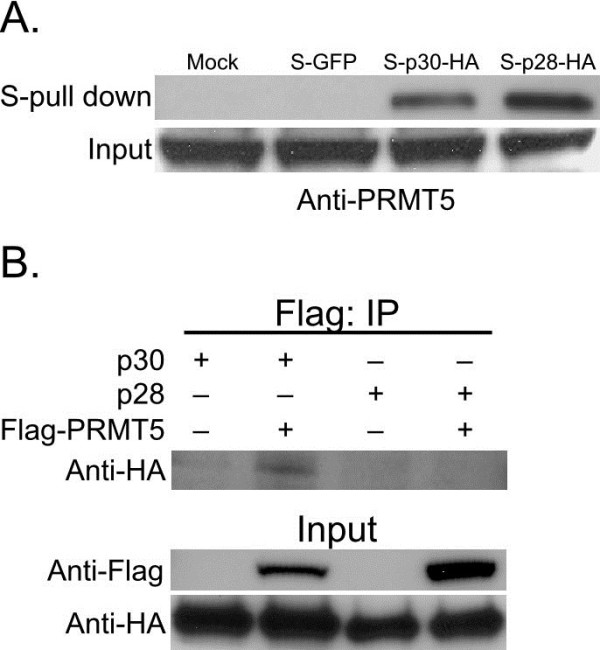
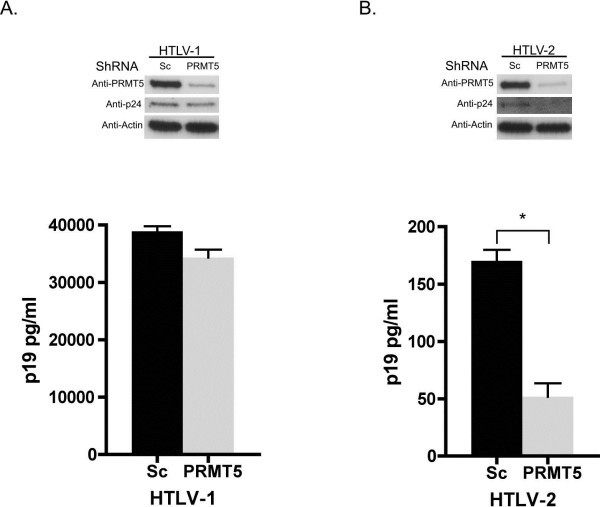
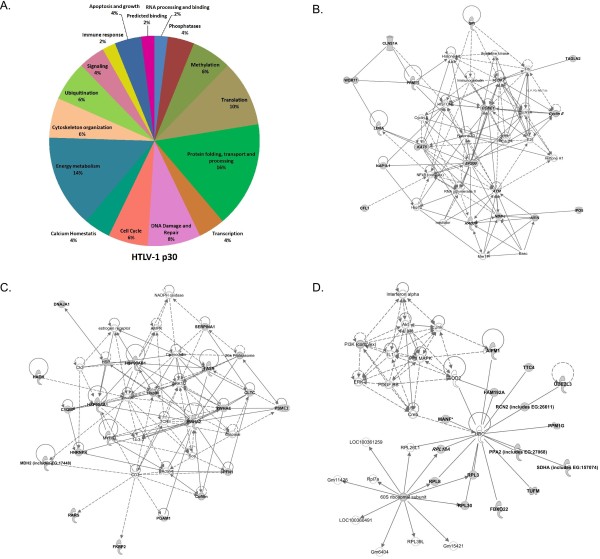
Affinity-tag purification coupled with mass spectrometric (MS) analyses revealed 42 and 22 potential interacting cellular partners of p30 and p28, respectively. Of these, only three cellular proteins, protein arginine methyltransferase 5 (PRMT5), hnRNP K and 60 S ribosomal protein L8 were detected in both p30 and p28 fractions. To validate the proteomic results, four interacting proteins were selected for further analyses using immunoblot assays. In full agreement with the MS analysis two cellular proteins REGγ and NEAF-interacting protein 30 (NIP30) selectively interacted with p30 and not with p28; heterogeneous nuclear ribonucleoprotein H1 (hnRNP H1) bound to p28 and not to p30; and PRMT5 interacted with both p30 and p28. Further studies demonstrated that reduced levels of PRMT5 resulted in decreased HTLV-2 viral gene expression whereas the viral gene expression of HTLV-1 was unchanged.
The comparisons of p30 and p28 host protein interaction proteome showed striking differences with some degree of overlap. PRMT5, one of the host proteins that interacted with both p30 and p28 differentially affected HTLV-1 and HTLV-2 viral gene expression suggesting that PRMT5 is involved at different stages of HTLV-1 and HTLV-2 biology. These findings suggest that distinct host protein interaction profiles of p30 and p28 could, in part, be responsible for differences in HTLV-1 and HTLV-2 pathobiology. This study provides new avenues of investigation into mechanisms of viral infection, tropism and persistence.
人类 T 淋巴细胞病毒 1 型(HTLV-1)和 2 型(HTLV-2)是密切相关的人类逆转录病毒,但具有独特的疾病关联。HTLV-1 是一种侵袭性 T 细胞白血病的病原体,称为成人 T 细胞白血病(ATL)、HTLV-1 相关脊髓病/热带痉挛性截瘫(HAM/TSP)和其他炎症性疾病。HTLV-2 感染与任何疾病状况均无明确关联。尽管两种病毒均可在体外转化 T 细胞,但 HTLV-1 前病毒主要存在于感染个体的 CD4+T 细胞中,而 HTLV-2 主要存在于 CD8+T 细胞中。HTLV-1 和 HTLV-2 分别编码辅助蛋白 p30 和 p28,它们具有部分氨基酸同源性,是病毒在体内持续存在所必需的。本研究的目的是鉴定与 p30 和 p28 相互作用的宿主蛋白,以了解它们在发病机制中的作用。
亲和标签纯化结合质谱(MS)分析显示,p30 和 p28 分别分别有 42 种和 22 种潜在的细胞相互作用伙伴。在这些相互作用蛋白中,只有三种细胞蛋白,即精氨酸甲基转移酶 5(PRMT5)、hnRNP K 和 60S 核糖体蛋白 L8,同时存在于 p30 和 p28 中。为了验证蛋白质组学结果,我们选择了四个相互作用蛋白,使用免疫印迹分析进行进一步分析。与 MS 分析完全一致的是,两种细胞蛋白 REGγ和 NEAF 相互作用蛋白 30(NIP30)与 p30 选择性相互作用,而与 p28 不相互作用;异质核核糖核蛋白 H1(hnRNP H1)与 p28 结合,而不与 p30 结合;PRMT5 与 p30 和 p28 均相互作用。进一步的研究表明,PRMT5 水平降低会导致 HTLV-2 病毒基因表达减少,而 HTLV-1 的病毒基因表达不变。
p30 和 p28 宿主蛋白相互作用蛋白质组的比较显示出显著的差异,具有一定程度的重叠。PRMT5 是与 p30 和 p28 相互作用的宿主蛋白之一,它对 HTLV-1 和 HTLV-2 病毒基因表达的影响不同,提示 PRMT5 参与了 HTLV-1 和 HTLV-2 生物学的不同阶段。这些发现表明,p30 和 p28 的不同宿主蛋白相互作用谱可能部分导致了 HTLV-1 和 HTLV-2 病理生物学的差异。本研究为病毒感染、嗜性和持续性的机制研究提供了新的途径。