Department of Neuroscience, King's College London, Institute of Psychiatry, London, SE5 9NU, United Kingdom.
BMC Neurosci. 2012 Aug 9;13:97. doi: 10.1186/1471-2202-13-97.
Cell therapy is a potential therapeutic approach for several neurodegenetative disease, including Huntington Disease (HD). To evaluate the putative efficacy of cell therapy in HD, most studies have used excitotoxic animal models with only a few studies having been conducted in genetic animal models. Genetically modified animals should provide a more accurate representation of human HD, as they emulate the genetic basis of its etiology.
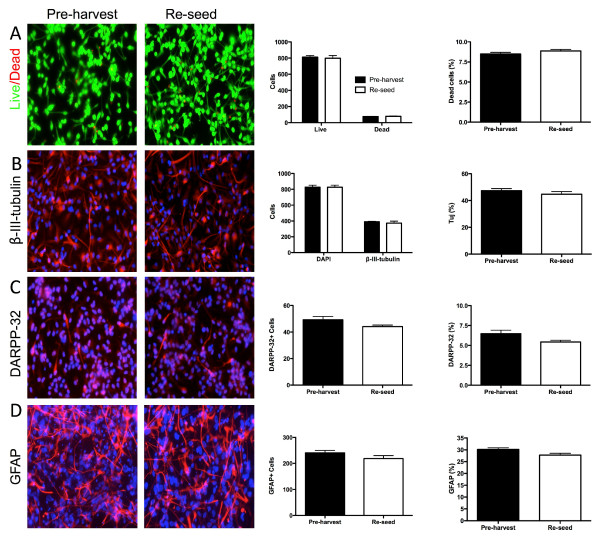
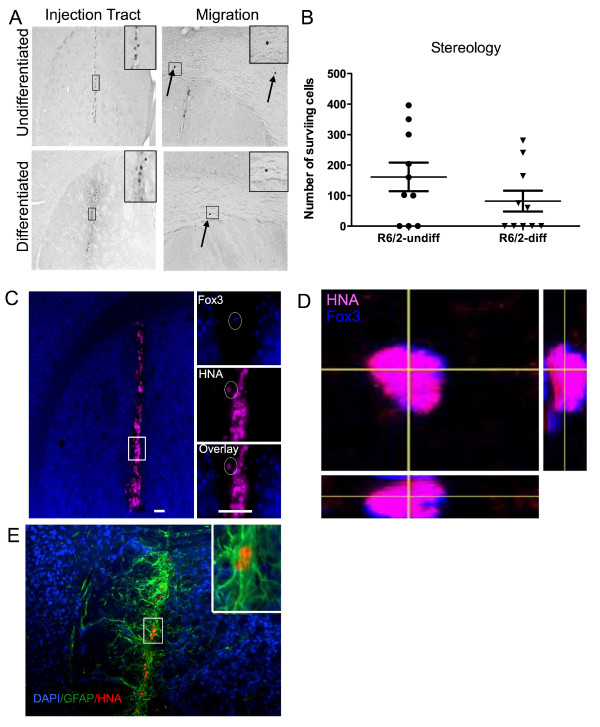
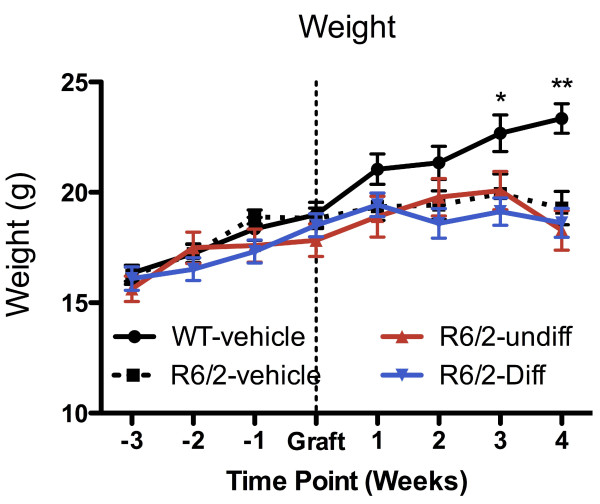
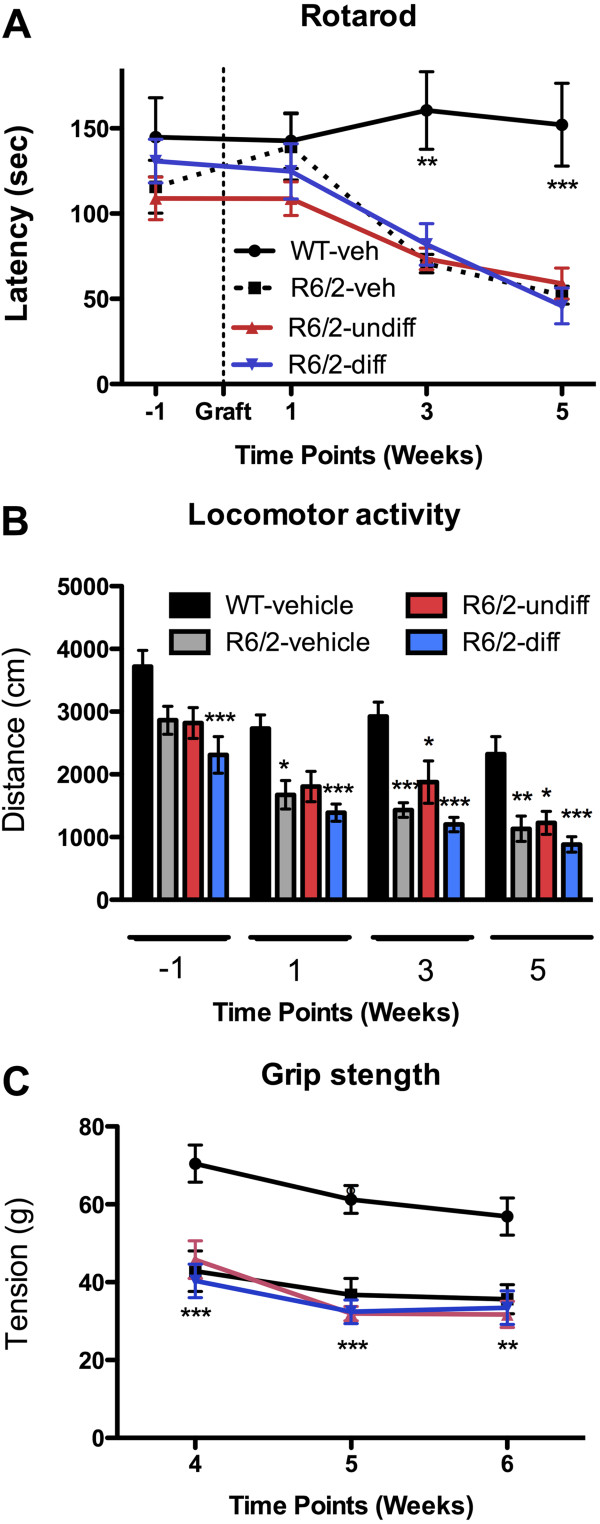
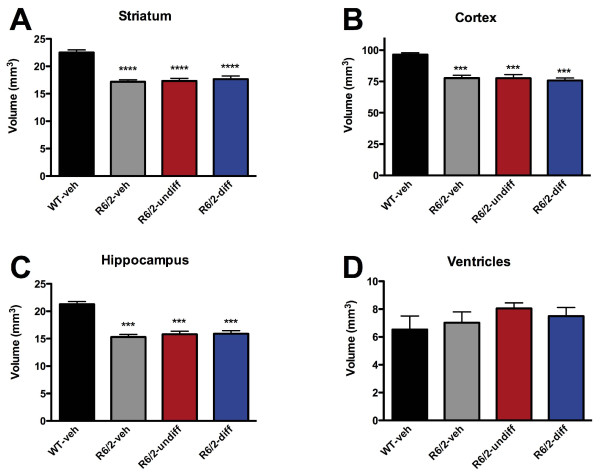
In this study, we aimed to assess the therapeutic potential of a human striatal neural stem cell line (STROC05) implanted in the R6/2 transgenic mouse model of HD. As DARPP-32 GABAergic output neurons are predominately lost in HD, STROC05 cells were also pre-differentiated using purmorphamine, a hedgehog agonist, to yield a greater number of DARPP-32 cells. A bilateral injection of 4.5x10⁵ cells of either undifferentiated or pre-differentiated DARPP-32 cells, however, did not affect outcome compared to a vehicle control injection. Both survival and neuronal differentiation remained poor with a mean of only 161 and 81 cells surviving in the undifferentiated and differentiated conditions respectively. Only a few cells expressed the neuronal marker Fox3.
Although the rapid brain atrophy and short life-span of the R6/2 model constitute adverse conditions to detect potentially delayed treatment effects, significant technical hurdles, such as poor cell survival and differentiation, were also sub-optimal. Further consideration of these aspects is therefore needed in more enduring transgenic HD models to provide a definite assessment of this cell line's therapeutic relevance. However, a combination of treatments is likely needed to affect outcome in transgenic models of HD.
细胞疗法是几种神经退行性疾病(包括亨廷顿病(HD))的潜在治疗方法。为了评估细胞疗法在 HD 中的潜在疗效,大多数研究使用兴奋性毒性动物模型,只有少数研究使用遗传动物模型进行。遗传修饰动物应更准确地代表人类 HD,因为它们模拟了其病因的遗传基础。
在这项研究中,我们旨在评估植入 HD 转基因 R6/2 小鼠模型中的人纹状体神经干细胞系(STROC05)的治疗潜力。由于 DARPP-32 GABA 能输出神经元在 HD 中大量丢失,因此还使用 hedgehog 激动剂 purmorphamine 将 STROC05 细胞预先分化,以产生更多的 DARPP-32 细胞。然而,与载体对照注射相比,双侧注射 4.5x10⁵ 个未分化或预先分化的 DARPP-32 细胞对结果没有影响。存活和神经元分化仍然很差,未分化和分化条件下分别只有 161 和 81 个细胞存活。只有少数细胞表达神经元标记物 Fox3。
尽管 R6/2 模型的快速脑萎缩和短寿命构成了检测潜在延迟治疗效果的不利条件,但也存在一些技术障碍,例如细胞存活和分化不良等。因此,在更持久的转基因 HD 模型中需要进一步考虑这些方面,以对该细胞系的治疗相关性进行明确评估。然而,可能需要联合治疗来影响 HD 转基因模型的结果。