Department of Behavioral Biology, University of Vienna, Vienna, Austria.
PLoS One. 2012;7(8):e42292. doi: 10.1371/journal.pone.0042292. Epub 2012 Aug 7.
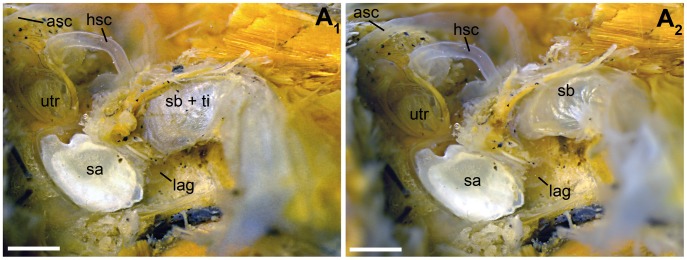
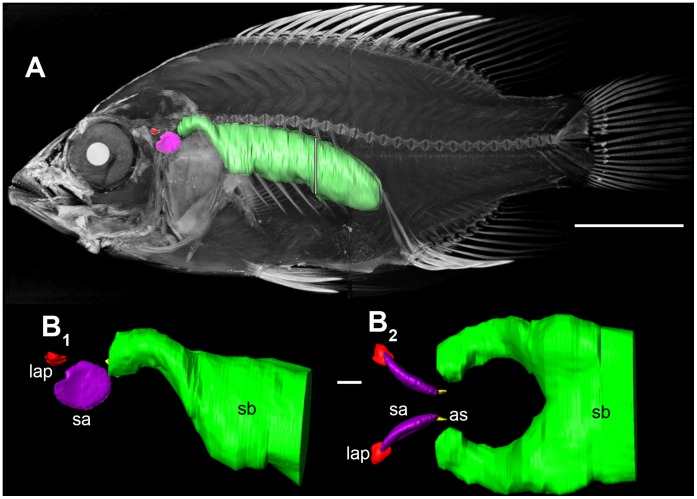
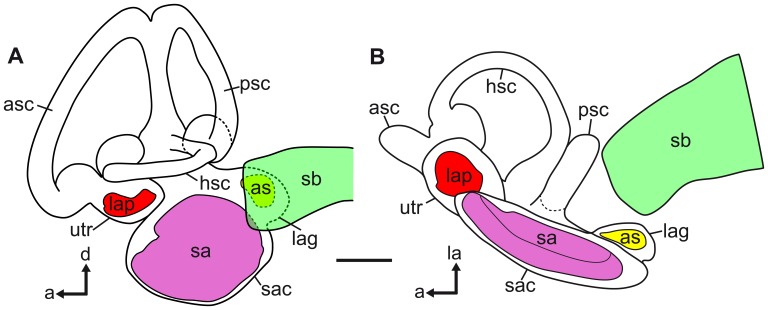
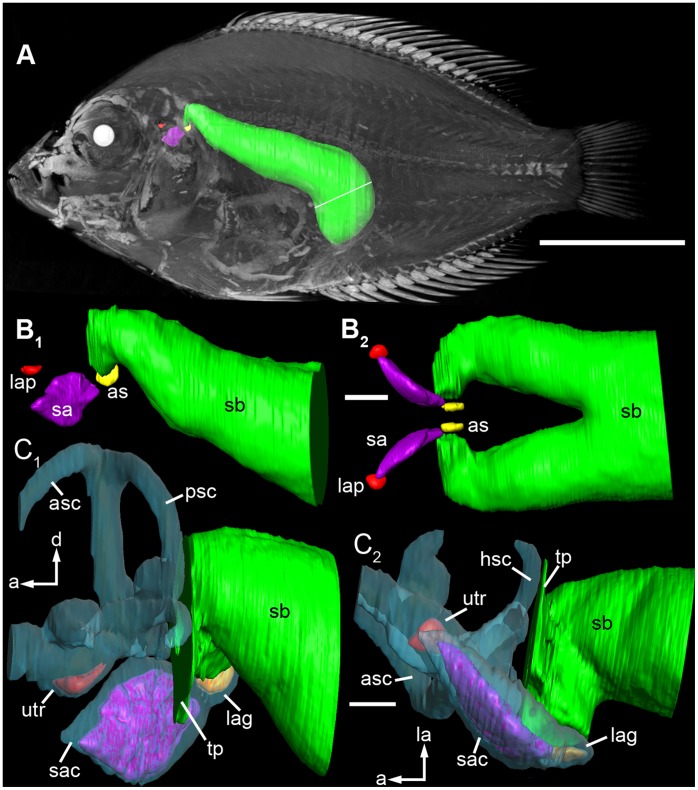
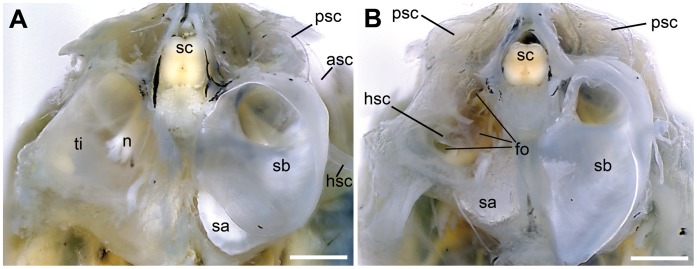
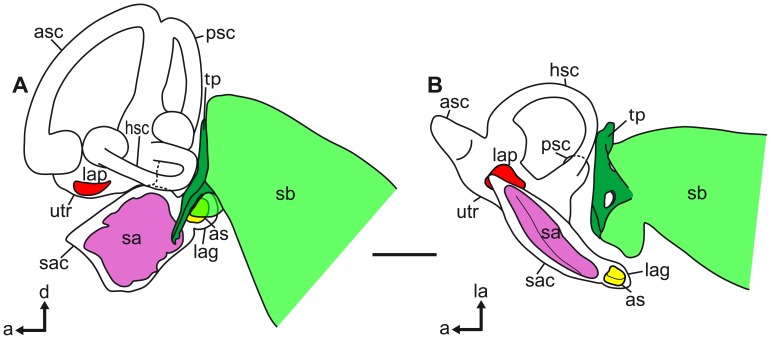
Several teleost species have evolved anterior extensions of the swim bladder which come close to or directly contact the inner ears. A few comparative studies have shown that these morphological specializations may enhance hearing abilities. This study investigates the diversity of swim bladder morphology in four Asian and African cichlid species and analyzes how this diversity affects their hearing sensitivity.
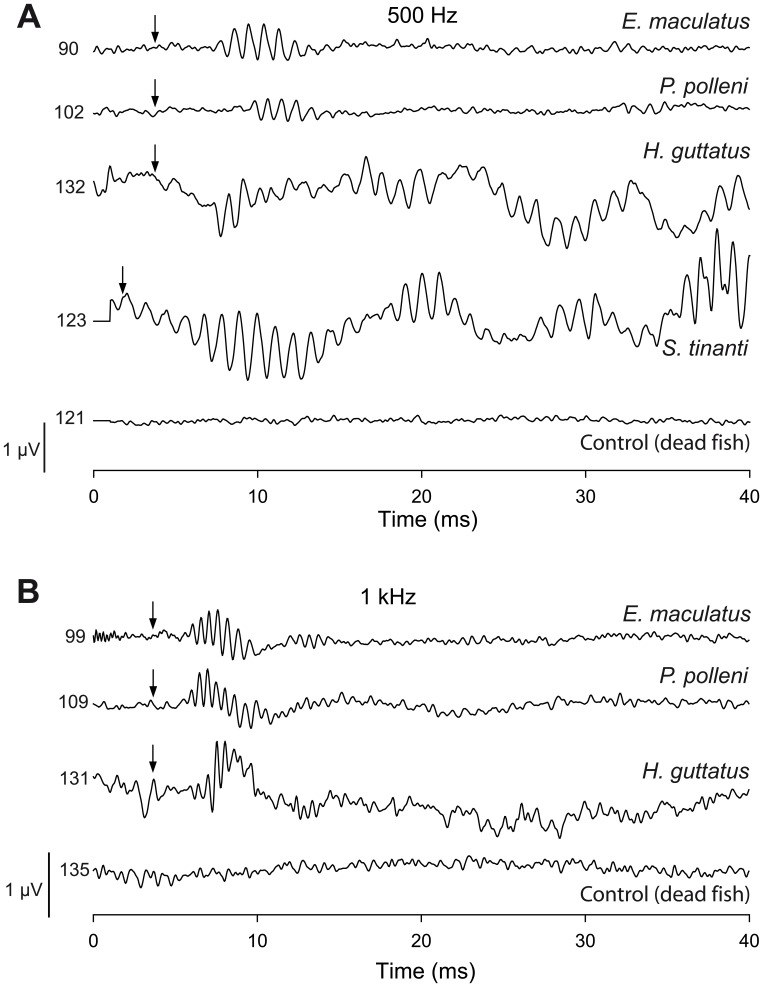
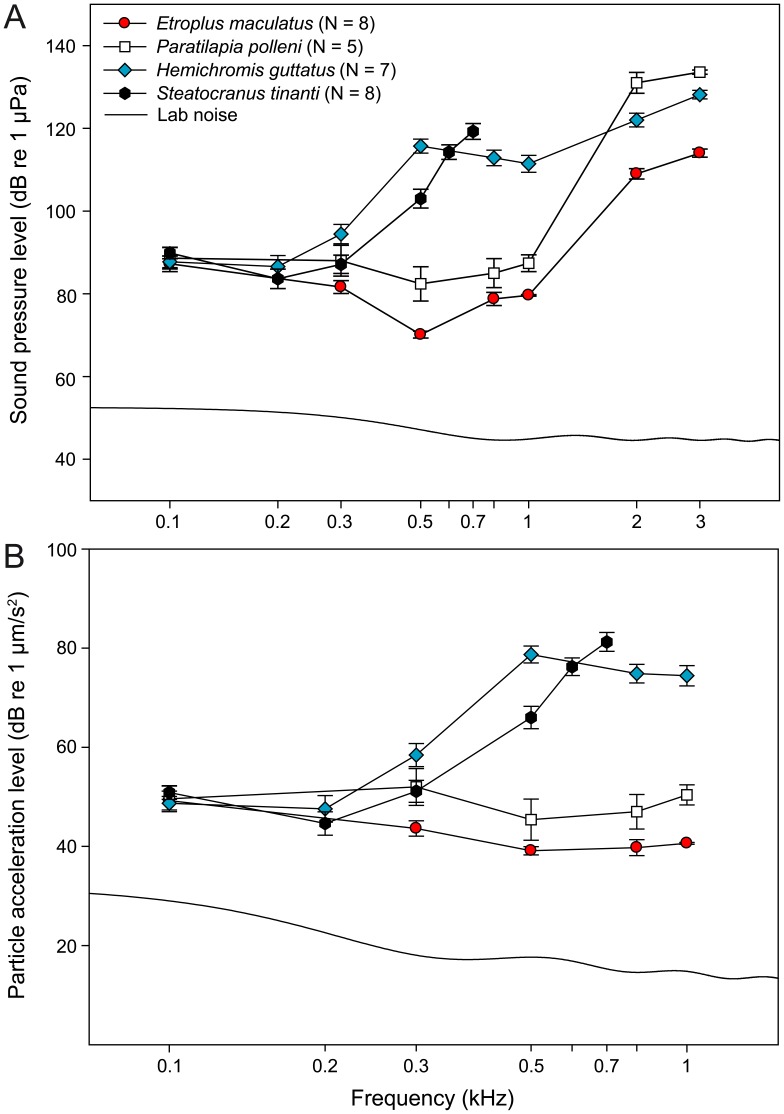
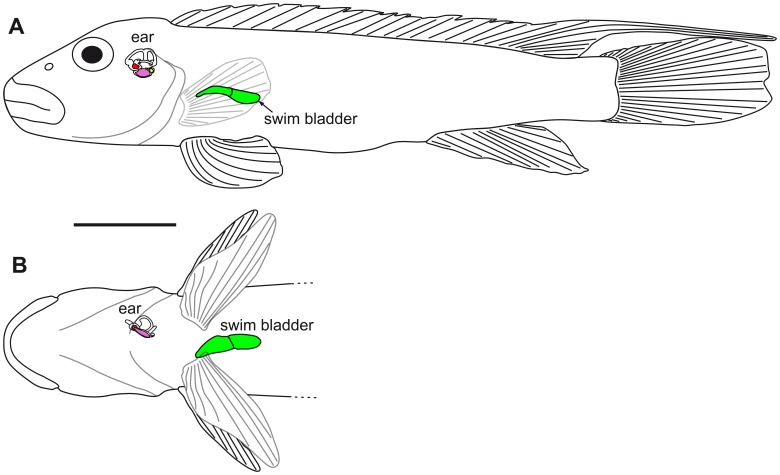
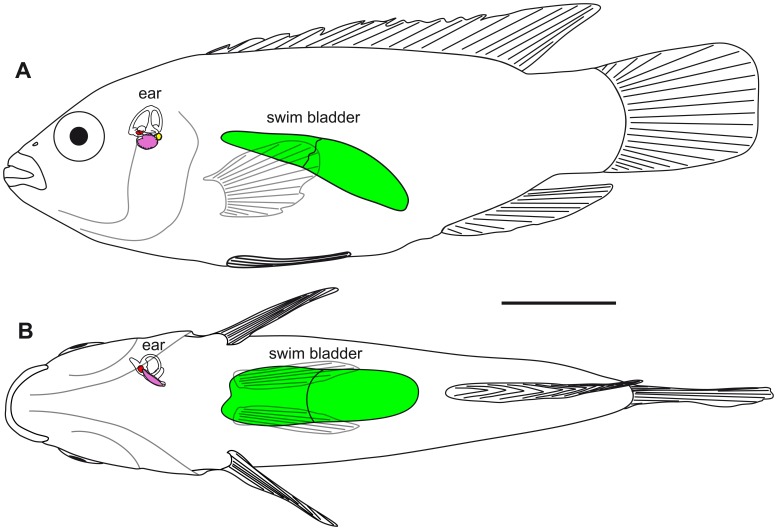
METHODOLOGY/PRINCIPAL FINDINGS: We studied swim bladder morphology by dissections and by making 3D reconstructions from high-resolution microCT scans. The auditory sensitivity was determined in terms of sound pressure levels (SPL) and particle acceleration levels (PAL) using the auditory evoked potential (AEP) recording technique. The swim bladders in Hemichromis guttatus and Steatocranus tinanti lacked anterior extensions and the swim bladder was considerably small in the latter species. In contrast, Paratilapia polleni and especially Etroplus maculatus possessed anterior extensions bringing the swim bladder close to the inner ears. All species were able to detect frequencies up to 3 kHz (SPL) except S. tinanti which only responded to frequencies up to 0.7 kHz. P. polleni and E. maculatus showed significantly higher auditory sensitivities at 0.5 and 1 kHz than the two species lacking anterior swim bladder extensions. The highest auditory sensitivities were found in E. maculatus, which possessed the most intimate swim bladder-inner ear relationship (maximum sensitivity 66 dB re 1 µPa at 0.5 kHz).
Our results indicate that anterior swim bladder extensions seem to improve mean absolute auditory sensitivities by 21-42 dB (SPLs) and 21-36 dB (PALs) between 0.5 and 1 kHz. Besides anterior extensions, the size of the swim bladder appears to be an important factor for extending the detectable frequency range (up to 3 kHz).
一些硬骨鱼类已经进化出了接近或直接接触内耳的鳔前延伸。一些比较研究表明,这些形态特化可能增强了听觉能力。本研究调查了四种亚洲和非洲慈鲷物种鳔形态的多样性,并分析了这种多样性如何影响它们的听力敏感度。
方法/主要发现:我们通过解剖和使用高分辨率微 CT 扫描进行 3D 重建来研究鳔的形态。使用听觉诱发电位 (AEP) 记录技术,以声压级 (SPL) 和质点加速度级 (PAL) 来确定听觉灵敏度。在 Hemichromis guttatus 和 Steatocranus tinanti 中,鳔没有前延伸,而且后者的鳔非常小。相比之下,Paratilapia polleni 特别是 Etroplus maculatus 具有前延伸,使鳔靠近内耳。除了 S. tinanti 只能响应 0.7 kHz 以下的频率外,所有物种都能够检测到 3 kHz(SPL)以下的频率。在 0.5 和 1 kHz 时,P. polleni 和 E. maculatus 的听觉敏感度明显高于没有前鳔延伸的两种鱼类。在 E. maculatus 中发现了最高的听觉敏感度,它具有最密切的鳔-内耳关系(在 0.5 kHz 时最大灵敏度为 66 dB re 1 µPa)。
我们的结果表明,前鳔延伸似乎可以将 0.5-1 kHz 之间的平均绝对听觉敏感度提高 21-42 dB(SPL)和 21-36 dB(PAL)。除了前延伸,鳔的大小似乎也是扩大可检测频率范围(高达 3 kHz)的重要因素。