Southern Crop Protection and Food Research Centre, Agriculture and Agri-Food Canada, London, Ontario, Canada.
PLoS One. 2012;7(8):e42405. doi: 10.1371/journal.pone.0042405. Epub 2012 Aug 3.
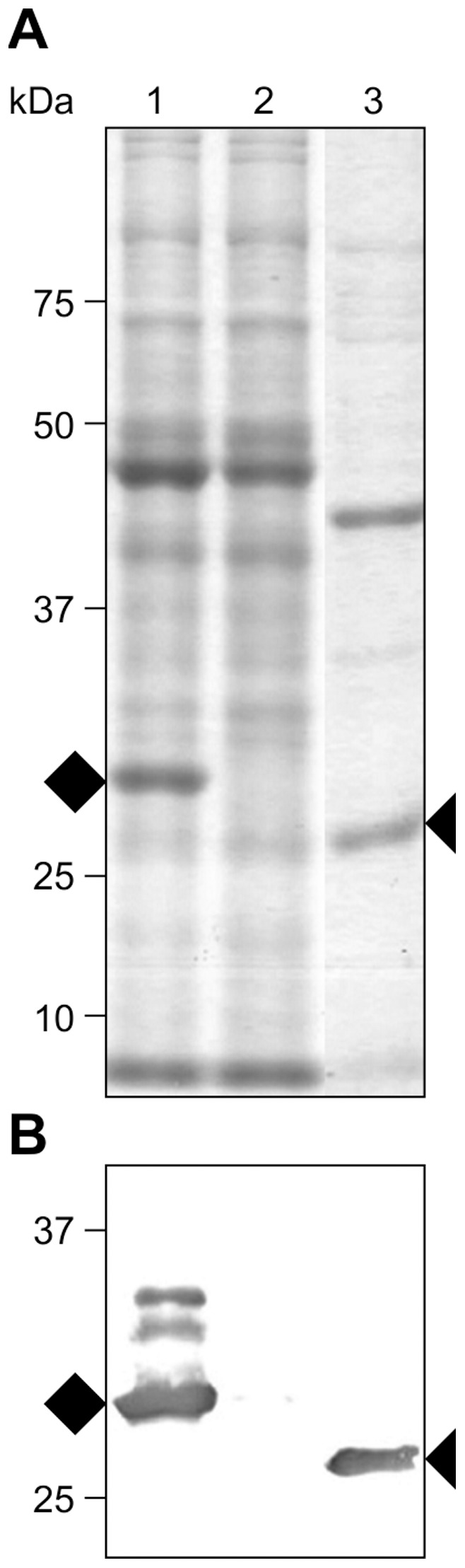
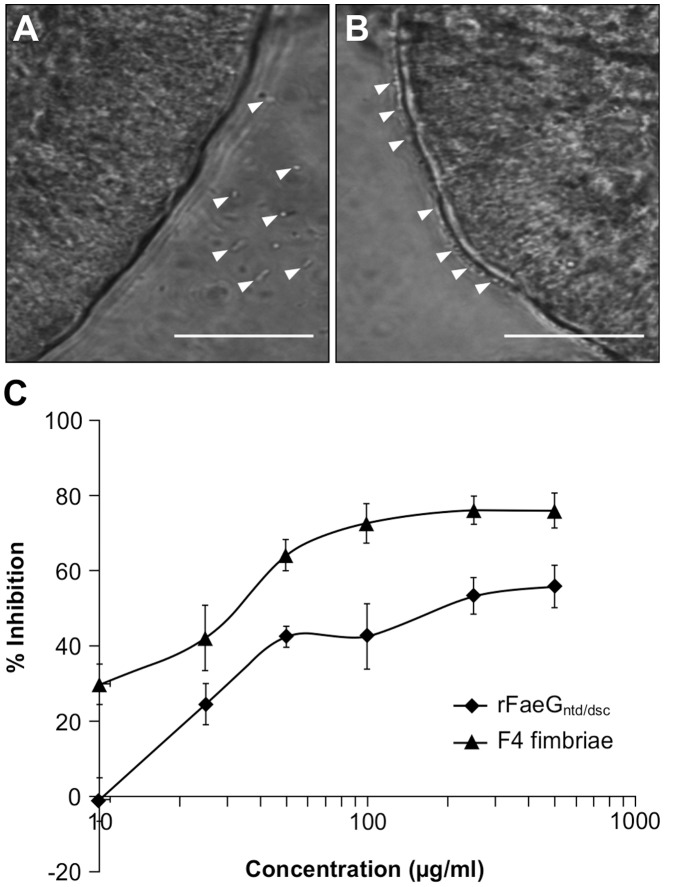
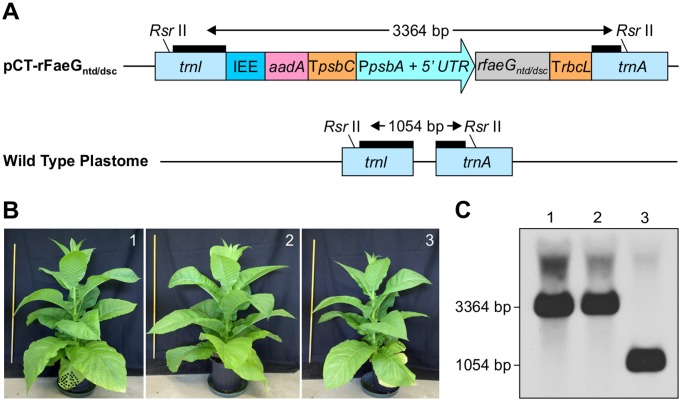
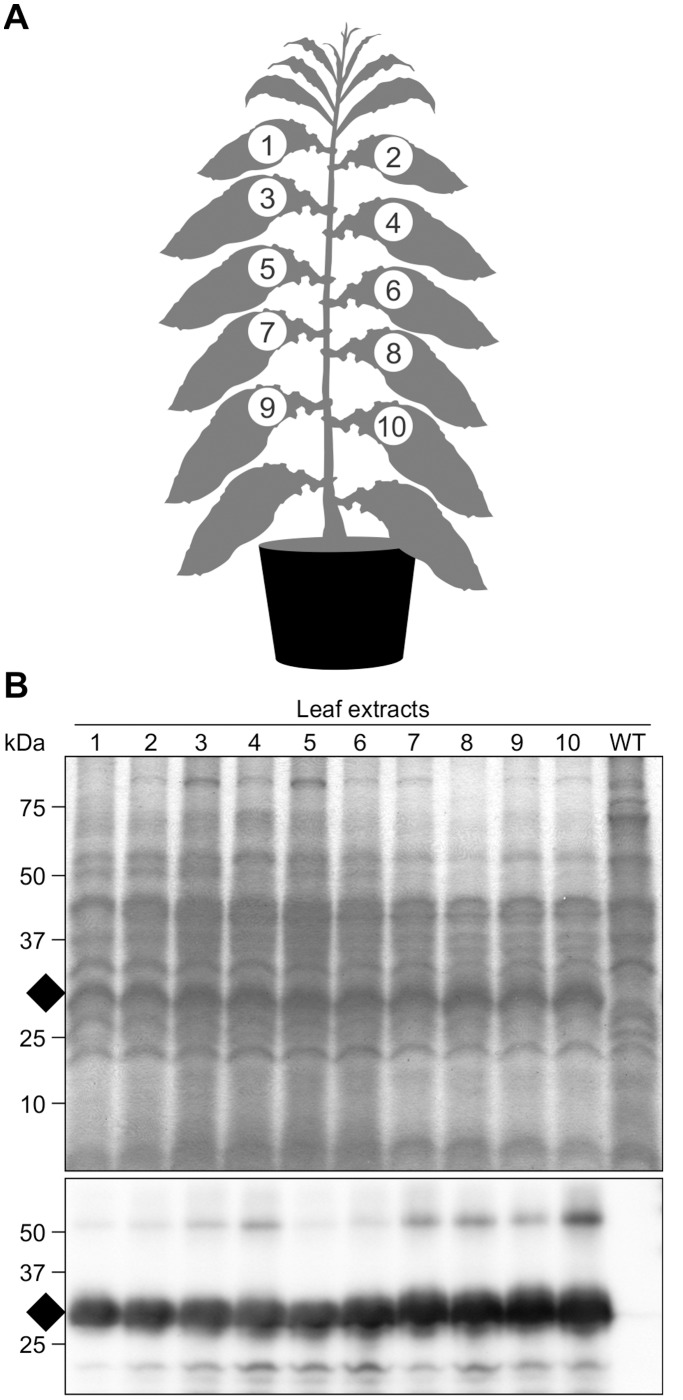
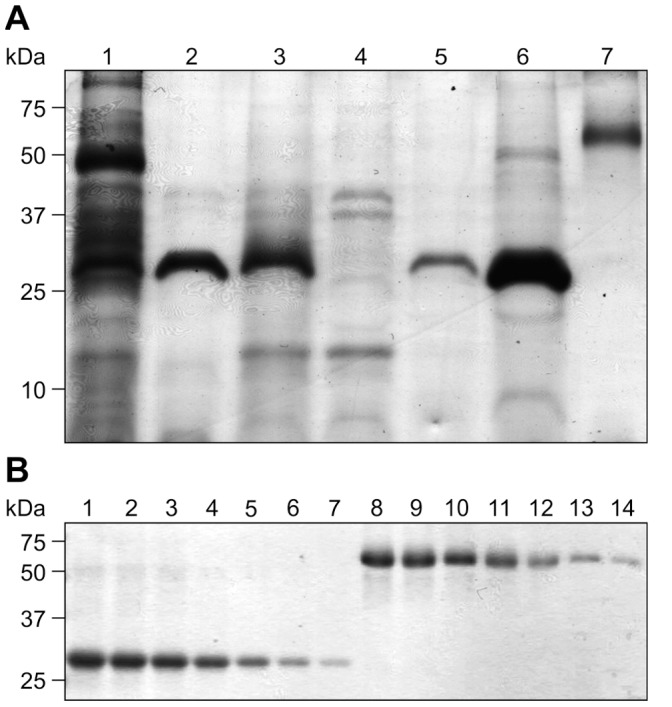
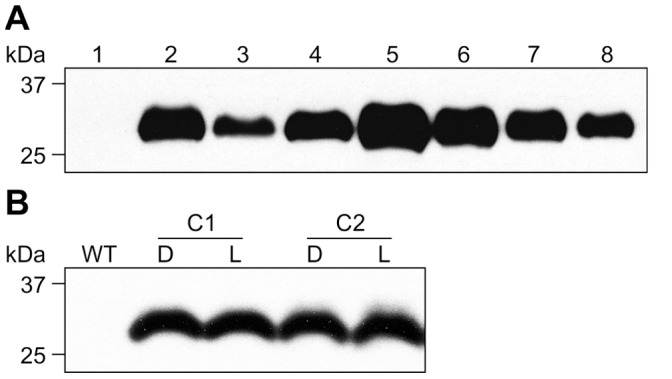
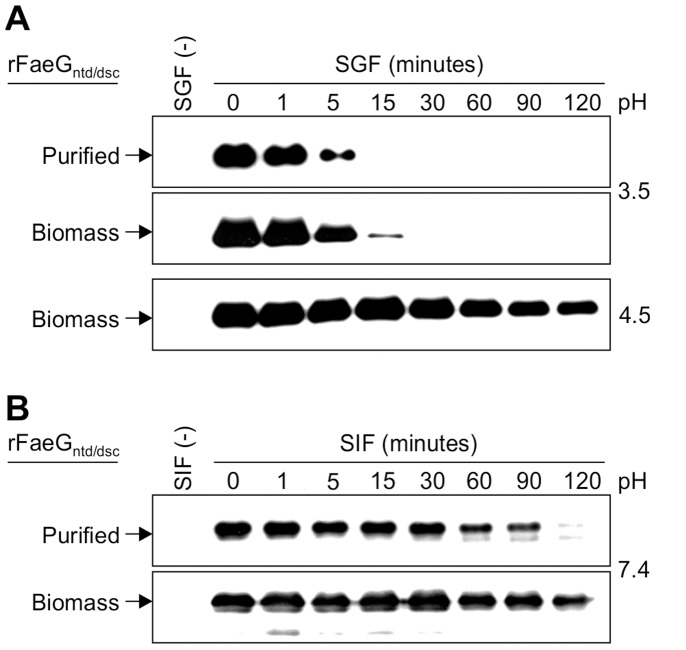
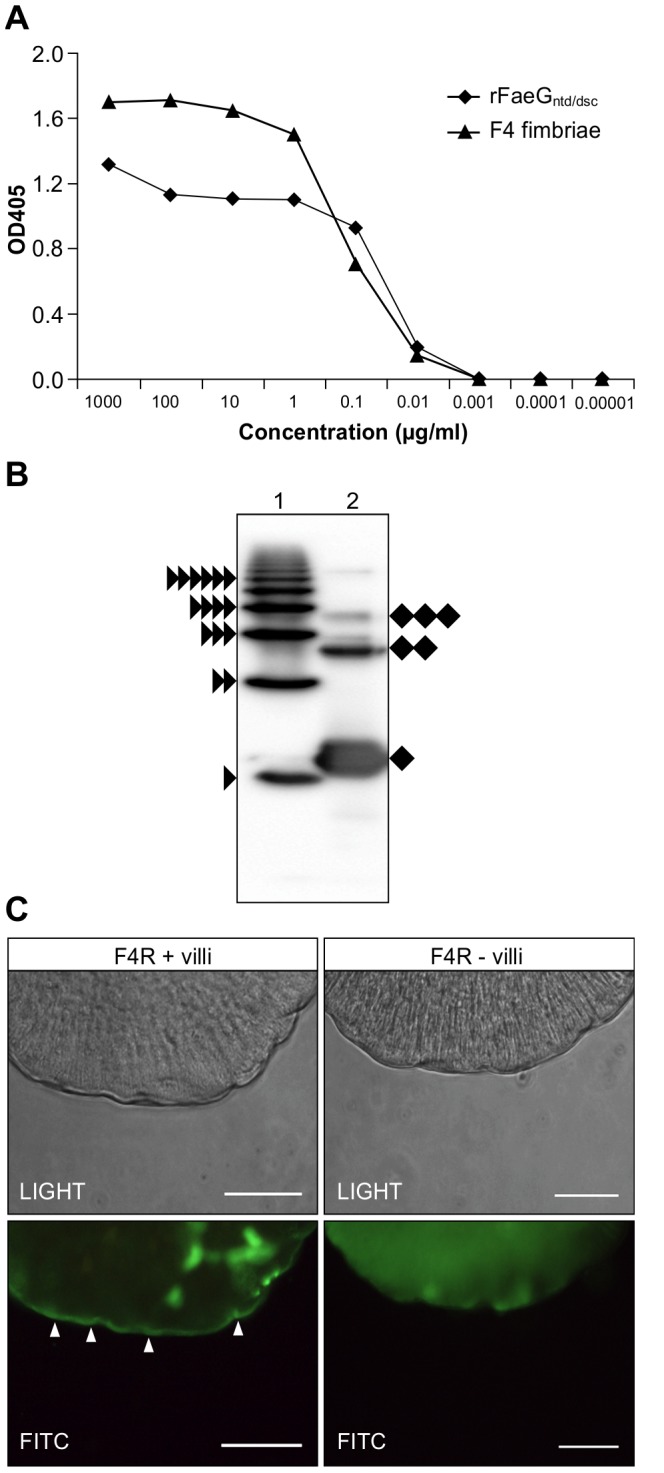
Post-weaning diarrhea (PWD) in piglets is a major problem in piggeries worldwide and results in severe economic losses. Infection with Enterotoxigenic Escherichia coli (ETEC) is the key culprit for the PWD disease. F4 fimbriae of ETEC are highly stable proteinaceous polymers, mainly composed of the major structural subunit FaeG, with a capacity to evoke mucosal immune responses, thus demonstrating a potential to act as an oral vaccine against ETEC-induced porcine PWD. In this study we used a transplastomic approach in tobacco to produce a recombinant variant of the FaeG protein, rFaeG(ntd/dsc), engineered for expression as a stable monomer by N-terminal deletion and donor strand-complementation (ntd/dsc). The generated transplastomic tobacco plants accumulated up to 2.0 g rFaeG(ntd/dsc) per 1 kg fresh leaf tissue (more than 1% of dry leaf tissue) and showed normal phenotype indistinguishable from wild type untransformed plants. We determined that chloroplast-produced rFaeG(ntd/dsc) protein retained the key properties of an oral vaccine, i.e. binding to porcine intestinal F4 receptors (F4R), and inhibition of the F4-possessing (F4+) ETEC attachment to F4R. Additionally, the plant biomass matrix was shown to delay degradation of the chloroplast-produced rFaeG(ntd/dsc) in gastrointestinal conditions, demonstrating a potential to function as a shelter-vehicle for vaccine delivery. These results suggest that transplastomic plants expressing the rFaeG(ntd/dsc) protein could be used for production and, possibly, delivery of an oral vaccine against porcine F4+ ETEC infections. Our findings therefore present a feasible approach for developing an oral vaccination strategy against porcine PWD.
断奶后腹泻(PWD)是全球养猪业的一个主要问题,会导致严重的经济损失。肠致病性大肠杆菌(ETEC)感染是 PWD 疾病的关键罪魁祸首。ETEC 的 F4 菌毛是高度稳定的蛋白质聚合物,主要由主要结构亚基 FaeG 组成,具有引发黏膜免疫反应的能力,因此具有作为针对 ETEC 诱导的猪 PWD 的口服疫苗的潜力。在这项研究中,我们使用质体转化方法在烟草中生产 FaeG 蛋白的重组变体 rFaeG(ntd/dsc),通过 N 端缺失和供体链互补(ntd/dsc)工程化表达为稳定的单体。生成的质体转化烟草植物每 1 公斤新鲜叶片组织可积累高达 2.0 克 rFaeG(ntd/dsc)(超过干叶组织的 1%),并且表现出与野生型未转化植物无法区分的正常表型。我们确定叶绿体产生的 rFaeG(ntd/dsc)蛋白保留了口服疫苗的关键特性,即与猪肠道 F4 受体(F4R)结合,并抑制具有 F4 的(F4+)ETEC 附着到 F4R。此外,植物生物量基质被证明可以在胃肠道条件下延迟叶绿体产生的 rFaeG(ntd/dsc)的降解,显示出作为疫苗传递的庇护载体的潜力。这些结果表明,表达 rFaeG(ntd/dsc)蛋白的质体转化植物可用于生产,并且可能用于传递针对猪 F4+ETEC 感染的口服疫苗。因此,我们的研究结果提出了一种可行的方法,用于开发针对猪 PWD 的口服疫苗接种策略。