Department of Clinical Oncology, Putuo Hospital and Interventional Cancer Institute of Integrative Medicine, Shanghai University of Traditional Chinese Medicine, Shanghai, China.
Int J Nanomedicine. 2012;7:3961-9. doi: 10.2147/IJN.S32063. Epub 2012 Jul 27.
Recent studies have shown that bufalin has a good antitumor effect but has high toxicity, poor water solubility, a short half-life, a narrow therapeutic window, and a toxic dose that is close to the therapeutic dose, which all limit its clinical application. This study aimed to determine the targeting efficacy of nanoparticles (NPs) made of methoxy polyethylene glycol (mPEG), polylactic-co-glycolic acid (PLGA), poly-L-lysine (PLL), and cyclic arginine-glycine-aspartic acid (cRGD) loaded with bufalin, ie, bufalin-loaded mPEG-PLGA-PLL-cRGD nanoparticles (BNPs), in SW620 colon cancer-bearing mice.
BNPs showed uniform size. The size, shape, zeta potential, drug loading, encapsulation efficiency, and release of these nanoparticles were studied in vitro. The tumor targeting, cellular uptake, and growth-inhibitory effect of BNPs in vivo were tested.
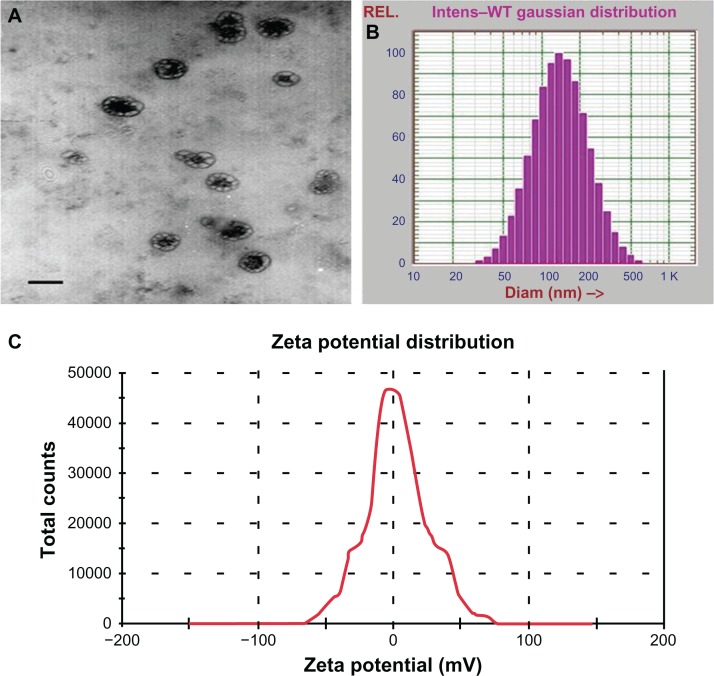
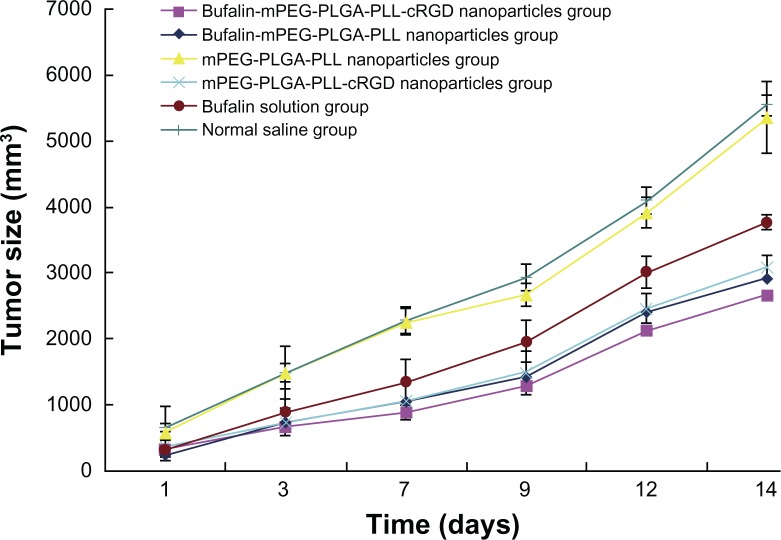
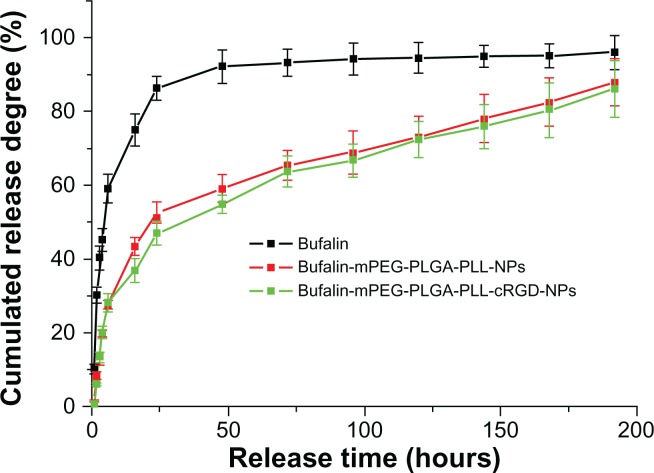
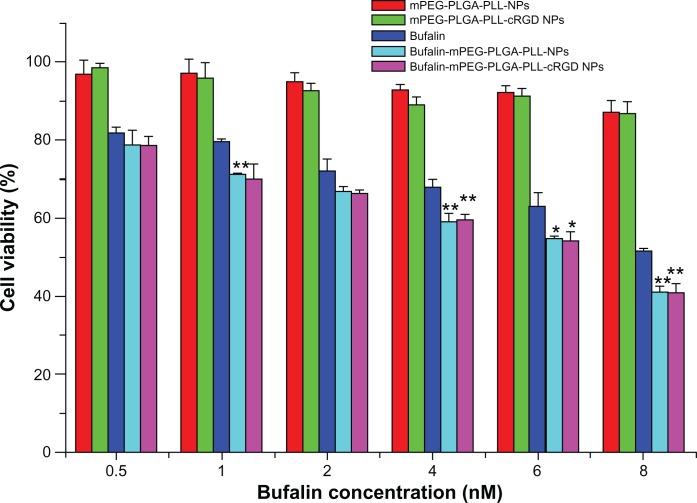
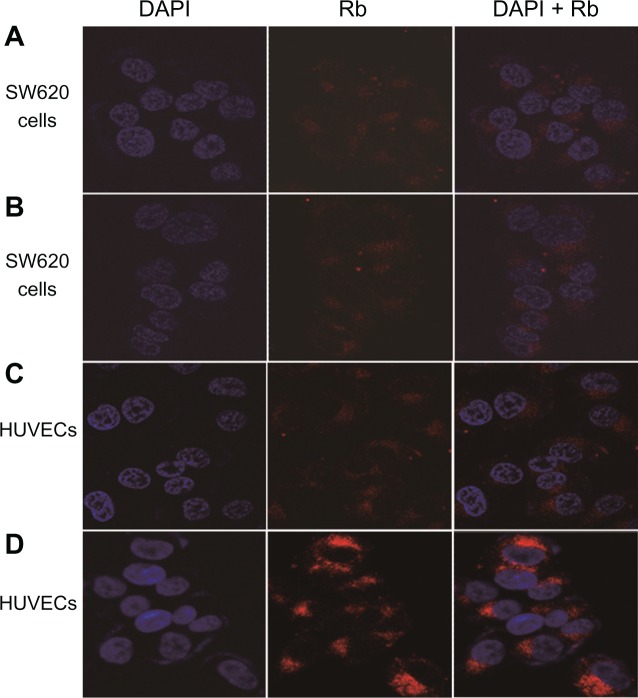
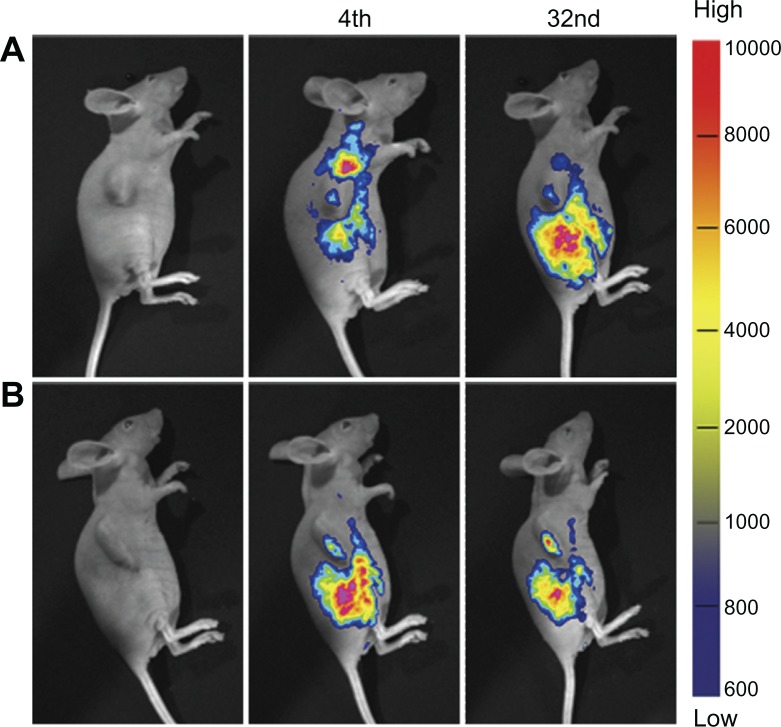
BNPs were of uniform size with an average particle size of 164 ± 84 nm and zeta potential of 2.77 mV. The encapsulation efficiency was 81.7% ± 0.89%, and the drug load was 3.92% ± 0.16%. The results of in vitro cytotoxicity studies showed that although the blank NPs were nontoxic, they enhanced the cytotoxicity of bufalin in BNPs. Drug release experiments showed that the release of the drug was prolonged and sustained. The results of confocal laser scanning microscopy indicated that BNPs could effectively bind to human umbilical vein endothelial cells. In the SW620 xenograft mice model, the BNPs could effectively target the tumor in vivo. The BNPs were significantly more effective than other NPs in preventing tumor growth.
BNPs had even size distribution, were stable, and had a slow-releasing and tumor-targeting effect. BNPs significantly inhibited colon cancer growth in vitro and in vivo. As a novel drug carrier system, BNPs are a potentially promising targeting treatment for colon cancer.
最近的研究表明,蟾毒灵具有良好的抗肿瘤作用,但毒性高、水溶性差、半衰期短、治疗窗窄,且中毒剂量接近治疗剂量,这都限制了其临床应用。本研究旨在确定载蟾毒灵的甲氧基聚乙二醇(mPEG)、聚乳酸-羟基乙酸共聚物(PLGA)、聚-L-赖氨酸(PLL)和环精氨酸-甘氨酸-天冬氨酸(cRGD)纳米粒(BNPs)的靶向效果,即载蟾毒灵的 mPEG-PLGA-PLL-cRGD 纳米粒(BNPs),在 SW620 结肠癌荷瘤小鼠中的靶向效果。
BNPs 呈均匀大小。研究了 BNPs 的体外大小、形状、Zeta 电位、载药、包封率和释放。测试了 BNPs 在体内的肿瘤靶向、细胞摄取和生长抑制作用。
BNPs 粒径均一,平均粒径为 164 ± 84nm,Zeta 电位为 2.77mV。包封率为 81.7%±0.89%,载药量为 3.92%±0.16%。体外细胞毒性研究结果表明,尽管空白 NPs 无毒,但能增强 BNPs 中蟾毒灵的细胞毒性。药物释放实验表明,药物释放得到了延长和持续。激光共聚焦扫描显微镜的结果表明,BNPs 能有效地与人脐静脉内皮细胞结合。在 SW620 异种移植小鼠模型中,BNPs 能有效地在体内靶向肿瘤。BNPs 明显比其他 NPs 更能有效地防止肿瘤生长。
BNPs 粒径分布均匀,稳定,具有缓慢释放和肿瘤靶向作用。BNPs 显著抑制了结肠癌的体内外生长。作为一种新型药物载体系统,BNPs 是一种很有前途的结肠癌靶向治疗方法。