Tsai Feng-Chou, Wang Mei-Chuan, Lo Jeng-Fan, Chou Chih-Ming, Lin Yi-Lu
Center for Mathematical Biology; Division of Plastic Surgery, Department of Surgery, Taipei Medical University Hospital, Taipei Medical University, Taipei, Taiwan.
Theor Biol Med Model. 2012 Aug 13;9:36. doi: 10.1186/1742-4682-9-36.
The invasion-metastasis cascade of cancer involves a process of parallel progression. A biological interface (module) in which cells is linked with ECM (extracellular matrix) by CAMs (cell adhesion molecules) has been proposed as a tool for tracing cancer spatiotemporal dynamics.
A mathematical model was established to simulate cancer cell migration. Human uterine leiomyoma specimens, in vitro cell migration assay, quantitative real-time PCR, western blotting, dynamic viscosity, and an in vivo C57BL6 mouse model were used to verify the predictive findings of our model.
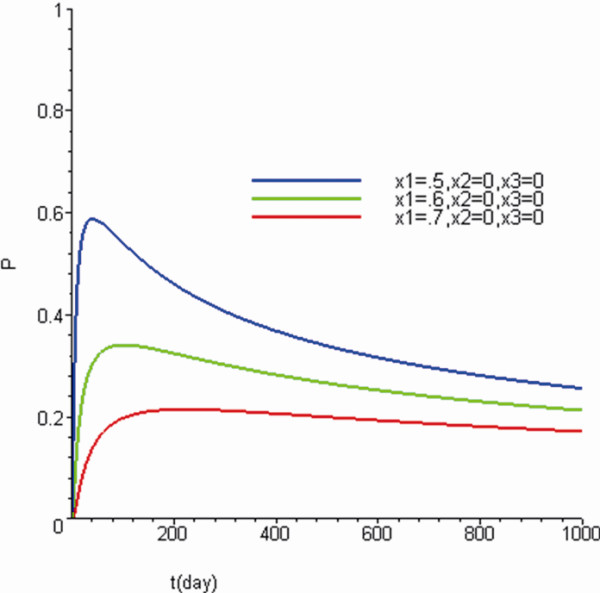
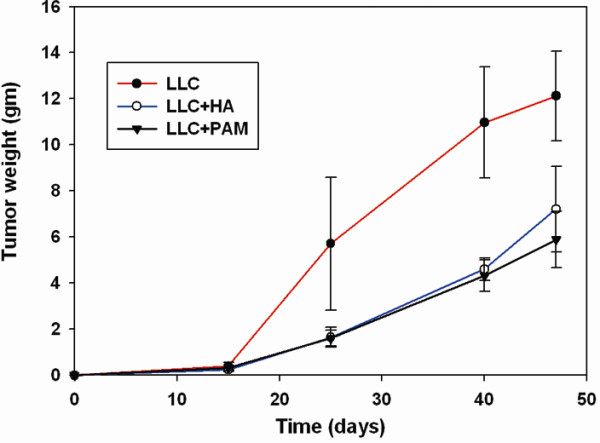
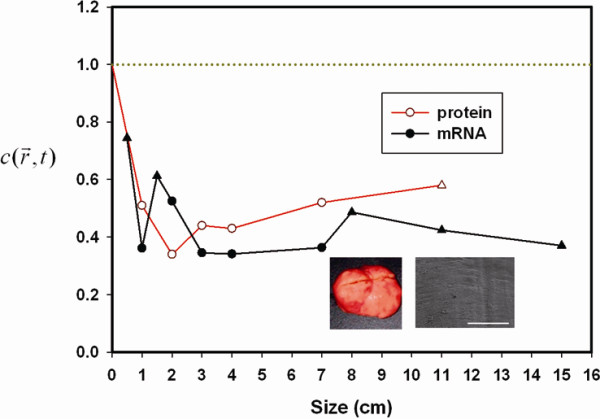
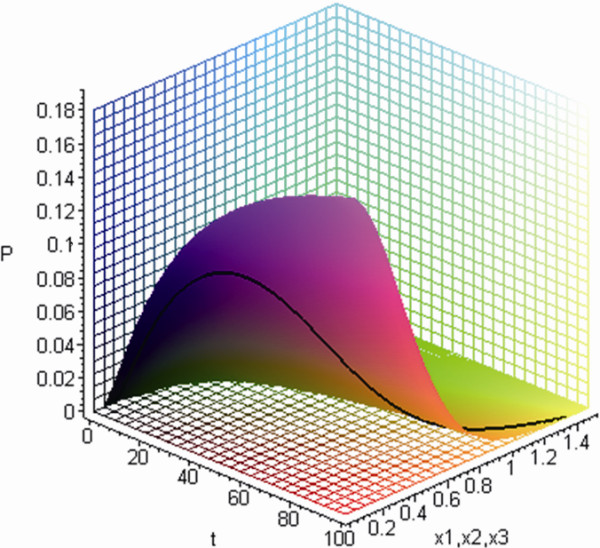
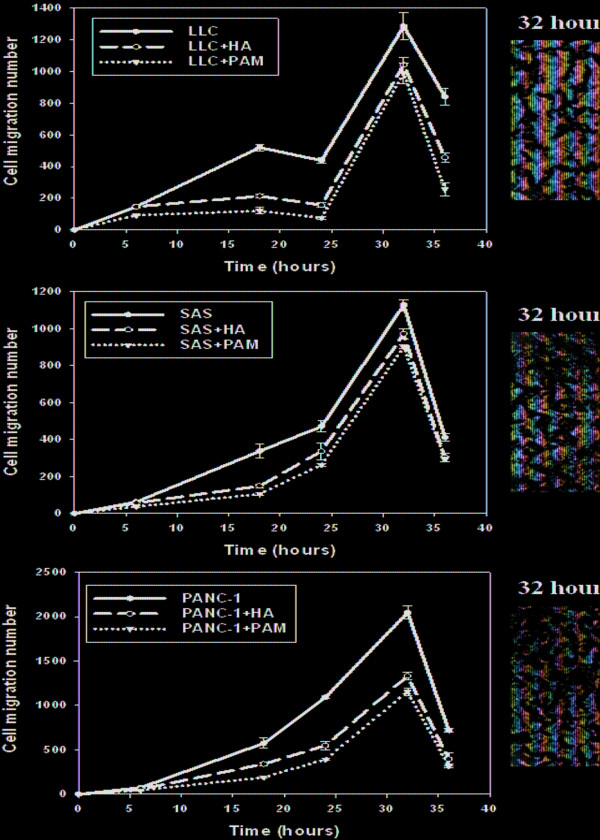
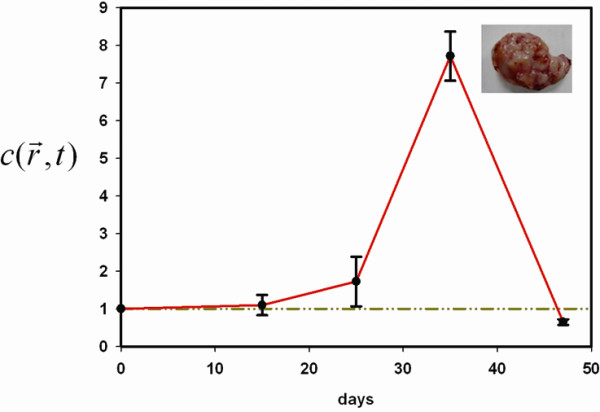
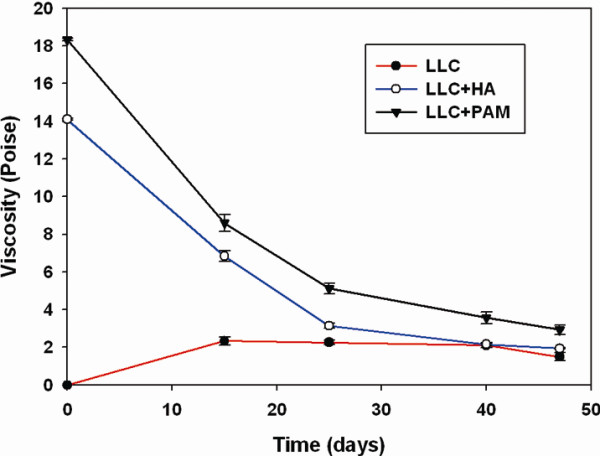
The return to origin probability (RTOP) and its related CAM expression ratio in tumors, so-called "tumor self-seeding", gradually decreased with increased tumor size, and approached the 3D Pólya random walk constant (0.340537) in a periodic structure. The biphasic pattern of cancer cell migration revealed that cancer cells initially grew together and subsequently began spreading. A higher viscosity of fillers applied to the cancer surface was associated with a significantly greater inhibitory effect on cancer migration, in accordance with the Stokes-Einstein equation.
The positional probability and cell-CAM-ECM interface (module) in the fractal framework helped us decipher cancer spatiotemporal dynamics; in addition we modeled the methods of cancer control by manipulating the microenvironment plasticity or inhibiting the CAM expression to the Pólya random walk, Pólya constant.
癌症的侵袭-转移级联反应涉及一个平行进展的过程。一种生物界面(模块)被提出作为追踪癌症时空动态的工具,在该界面中细胞通过细胞粘附分子(CAMs)与细胞外基质(ECM)相连。
建立一个数学模型来模拟癌细胞迁移。使用人子宫平滑肌瘤标本、体外细胞迁移试验、定量实时PCR、蛋白质印迹法、动态粘度以及体内C57BL6小鼠模型来验证我们模型的预测结果。
肿瘤中的归巢概率(RTOP)及其相关的CAM表达比率,即所谓的“肿瘤自我播种”,随着肿瘤大小的增加而逐渐降低,并在周期性结构中接近三维波利亚随机游走常数(0.340537)。癌细胞迁移的双相模式表明,癌细胞最初聚集生长,随后开始扩散。根据斯托克斯-爱因斯坦方程,应用于癌症表面的填充物具有更高的粘度与对癌症迁移的显著更大抑制作用相关。
分形框架中的位置概率和细胞-CAM-ECM界面(模块)帮助我们解读癌症的时空动态;此外,我们通过操纵微环境可塑性或抑制CAM表达使其达到波利亚随机游走、波利亚常数来模拟癌症控制方法。