Department of Genome Dynamics, Research Institute of Environmental Medicine, Nagoya University, Furo-cho, Chikusa-ku, Nagoya 464-8601, Japan.
Nucleic Acids Res. 2012 Nov 1;40(20):10394-407. doi: 10.1093/nar/gks763. Epub 2012 Aug 16.
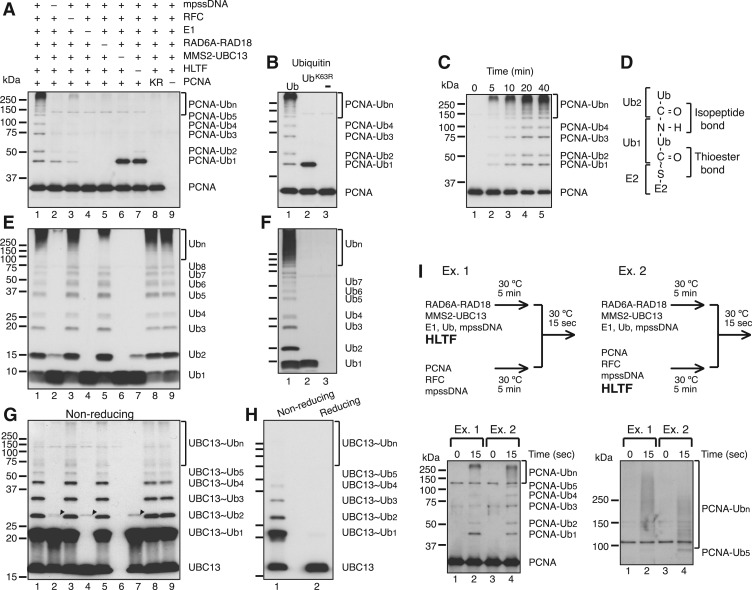
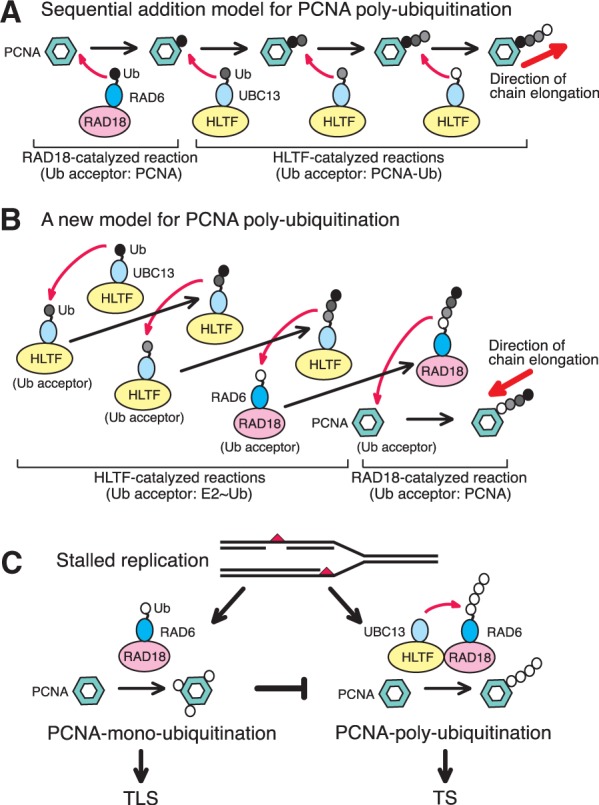
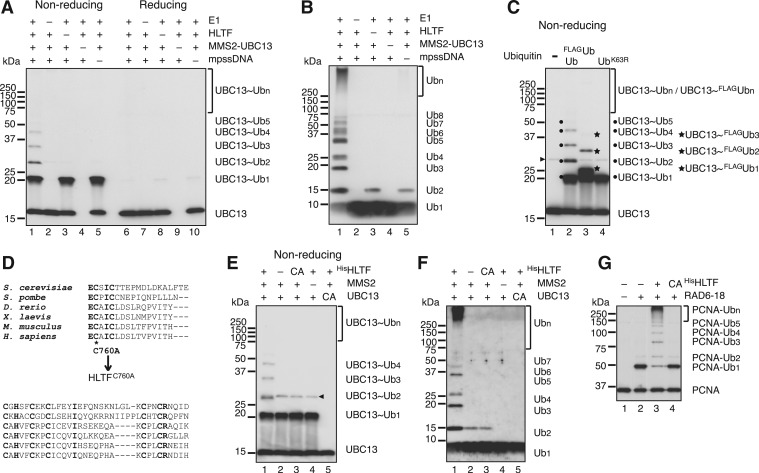
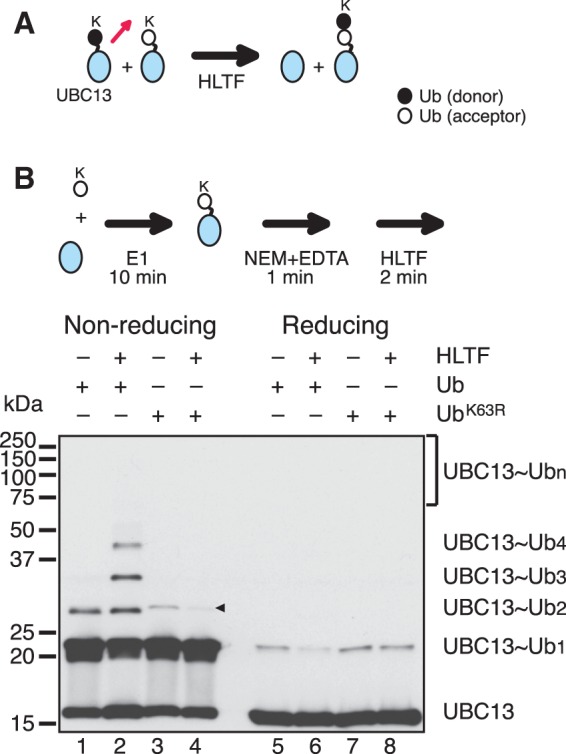
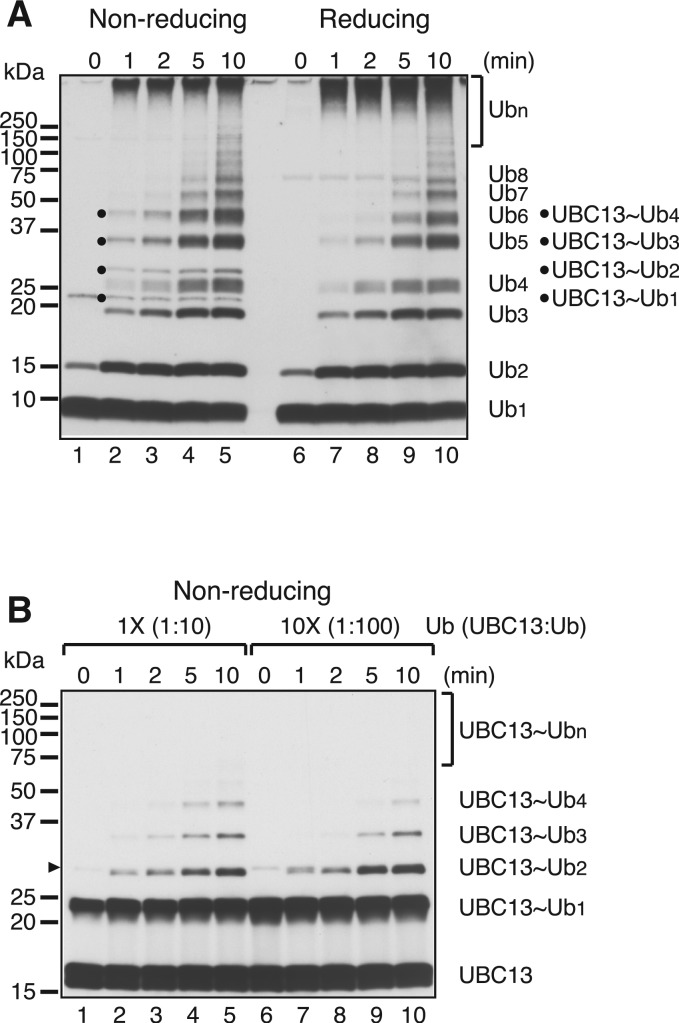
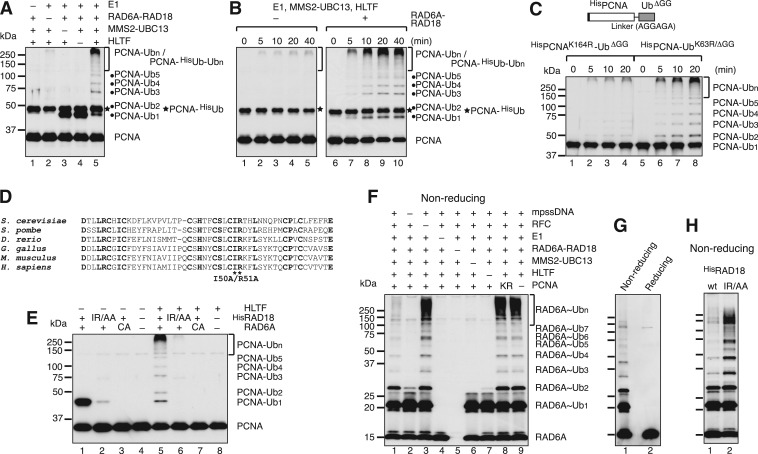
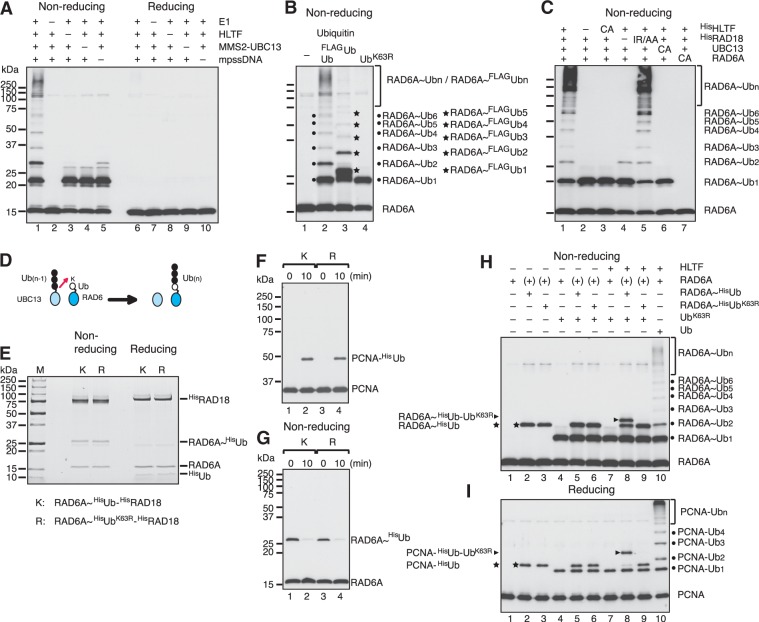
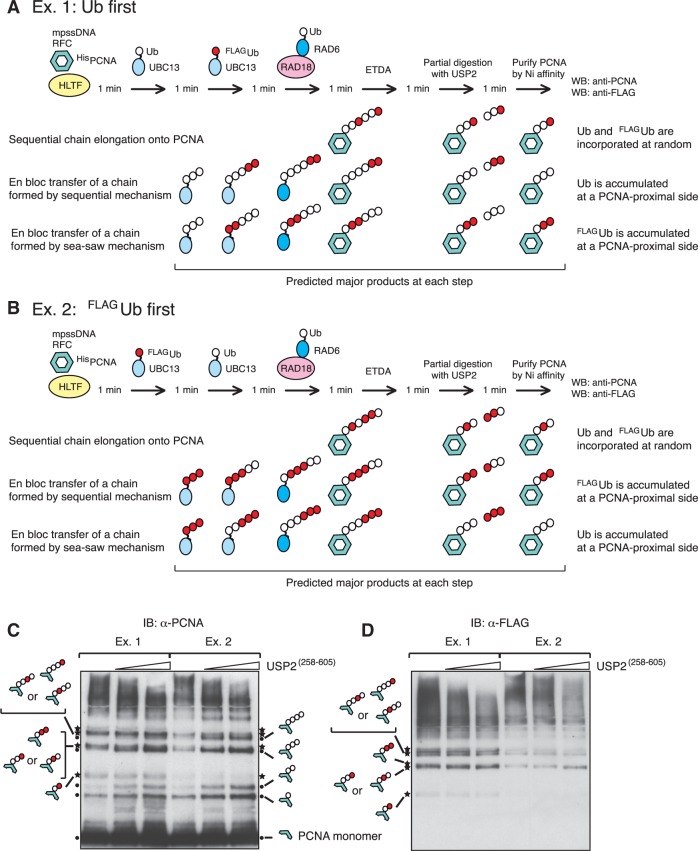
Post-replication DNA repair in eukaryotes is regulated by ubiquitination of proliferating cell nuclear antigen (PCNA). Monoubiquitination catalyzed by RAD6-RAD18 (an E2-E3 complex) stimulates translesion DNA synthesis, whereas polyubiquitination, promoted by additional factors such as MMS2-UBC13 (a UEV-E2 complex) and HLTF (an E3 ligase), leads to template switching in humans. Here, using an in vitro ubiquitination reaction system reconstituted with purified human proteins, we demonstrated that PCNA is polyubiquitinated predominantly via en bloc transfer of a pre-formed ubiquitin (Ub) chain rather than by extension of the Ub chain on monoubiquitinated PCNA. Our results support a model in which HLTF forms a thiol-linked Ub chain on UBC13 (UBC13∼Ubn) and then transfers the chain to RAD6∼Ub, forming RAD6∼Ubn+1. The resultant Ub chain is subsequently transferred to PCNA by RAD18. Thus, template switching may be promoted under certain circumstances in which both RAD18 and HLTF are coordinately recruited to sites of stalled replication.
真核生物复制后 DNA 修复受泛素化增殖细胞核抗原 (PCNA)的调控。RAD6-RAD18(E2-E3 复合物)催化的单泛素化刺激跨损伤 DNA 合成,而多泛素化则由其他因素(如 MMS2-UBC13(UEV-E2 复合物)和 HLTF(E3 连接酶))促进,导致人类模板转换。在这里,我们使用用纯化的人蛋白重建的体外泛素化反应系统,证明 PCNA 主要通过预先形成的泛素 (Ub) 链的整联转移而不是通过在单泛素化 PCNA 上延伸 Ub 链进行多泛素化。我们的结果支持这样一种模型,即 HLTF 在 UBC13 上形成硫醇连接的 Ub 链(UBC13∼Ubn),然后将链转移到 RAD6∼Ub 上,形成 RAD6∼Ubn+1。所得 Ub 链随后通过 RAD18 转移到 PCNA。因此,在某些情况下,RAD18 和 HLTF 协调募集到停滞复制的部位时,可能会促进模板转换。