Wake Forest University Health Sciences, Department of Internal Medicine, Section on Hematology and Oncology, Winston-Salem, North Carolina, United States of America.
PLoS One. 2012;7(8):e43185. doi: 10.1371/journal.pone.0043185. Epub 2012 Aug 14.
The transcriptional co-activator MN1 confers a worse prognosis for patients with acute myeloid leukemia (AML) when highly expressed; however, the mechanisms involved are unknown. We sought to model the effects of high MN1 expression in AML models to explore the underlying mechanisms.
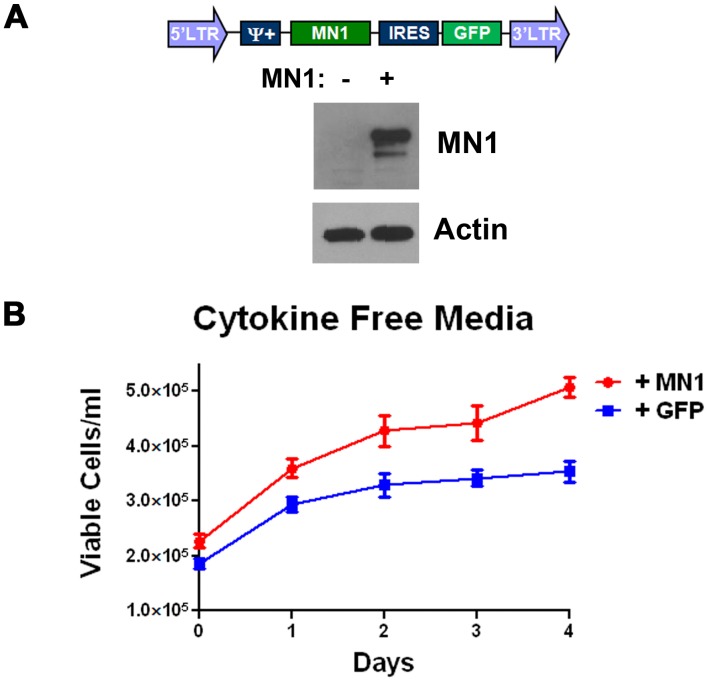
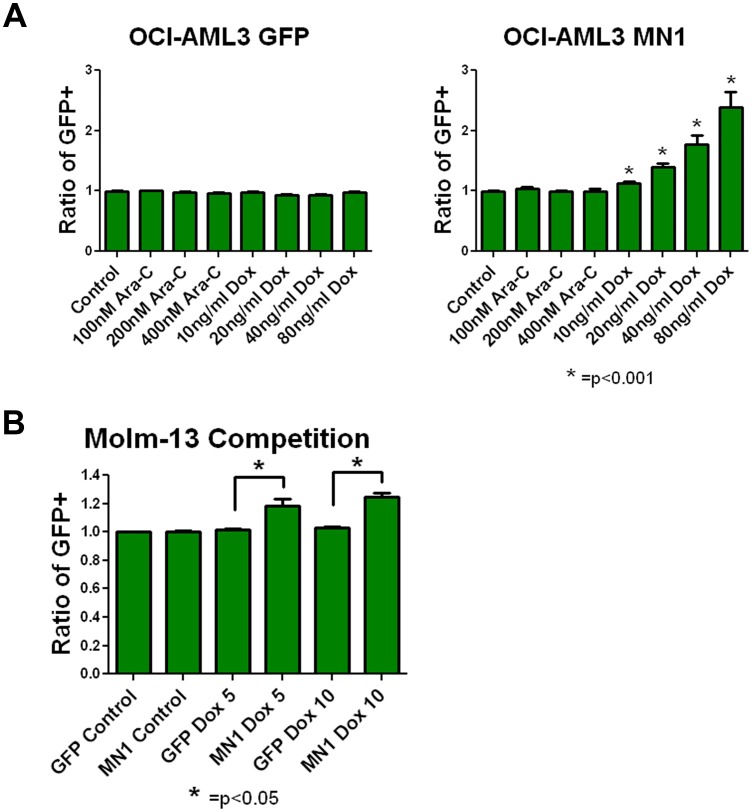
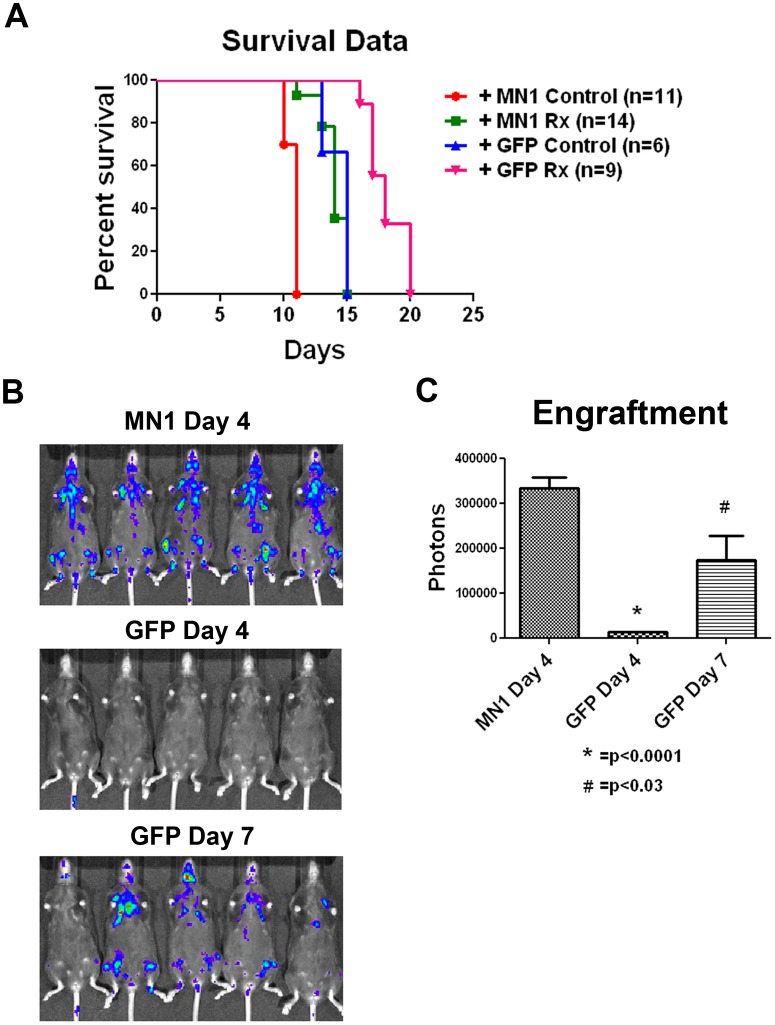
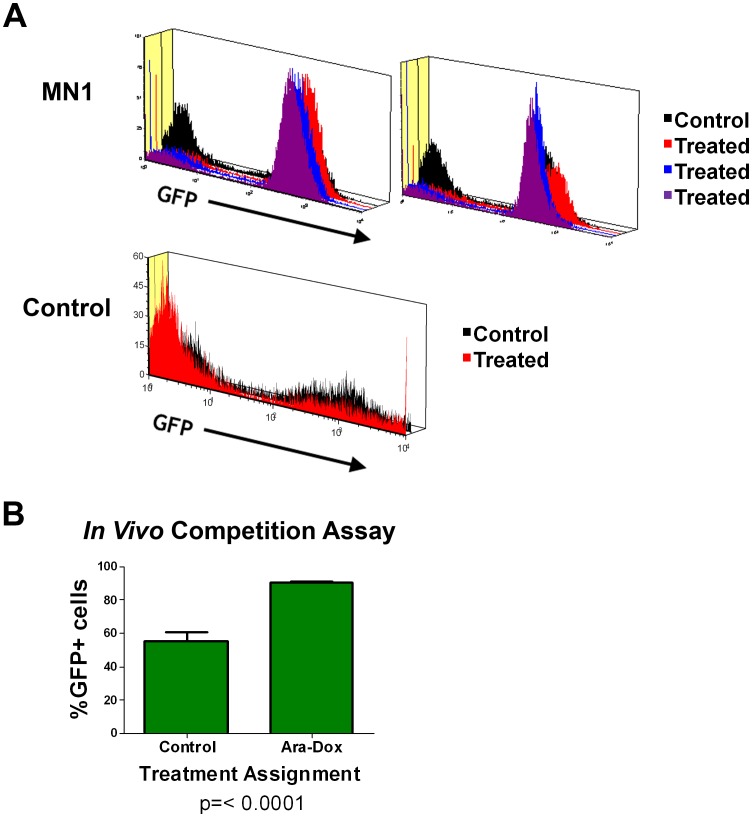
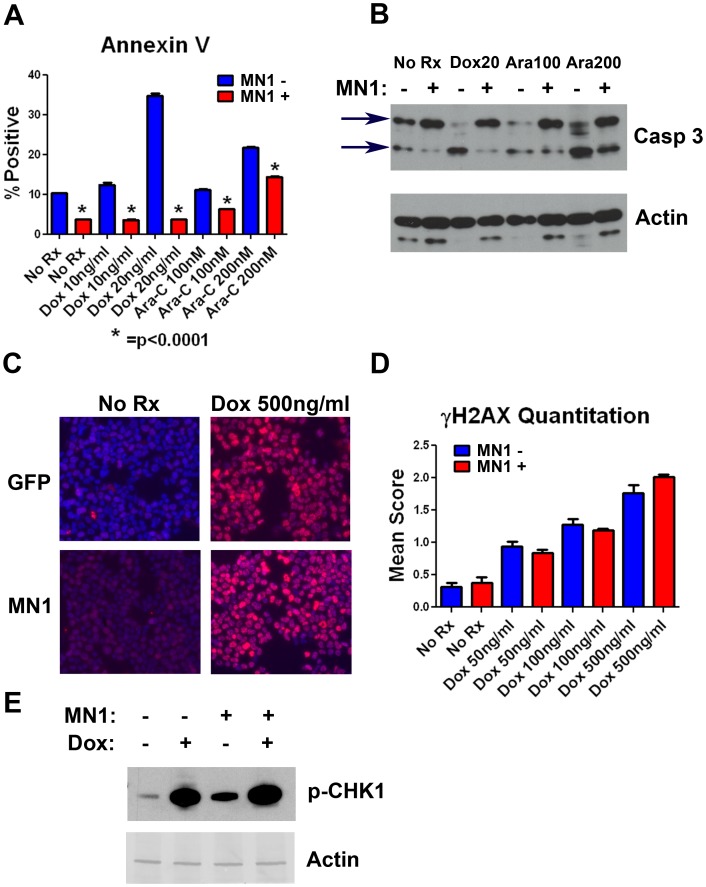
METHODOLOGY/PRINCIPAL FINDINGS: We used cell lines and a genetically defined mouse model of AML to examine the effects of MN1 overexpression on prognosis and response to cytarabine and doxorubicin in vitro and in vivo. Murine AML that was engineered to overexpress MN1 became more aggressive in vivo, leading to shortened survival in both treated and control groups. In vitro murine AML cells that overexpressed MN1 became resistant to treatment with cytarabine and highly resistant to doxorubicin. This resistant phenotype was also seen in vivo, where treatment with the combination of cytarabine and doxorubicin selected for cells expressing MN1. When therapy-induced DNA damage levels were assessed by γH2AX foci, no reduction was seen in MN1 expressing cells arguing against a drug efflux mechanism. Despite no reduction in DNA damage, MN1-expressing cells showed less apoptosis as assessed by annexin V and propidium iodide staining. Following treatment, p53 and BIM induction were markedly reduced in cells expressing MN1. Pharmacologic inhibition of the p53 E3 ligase MDM2 resulted in increased p53 levels and improved response to doxorubicin in vitro.
CONCLUSIONS/SIGNIFICANCE: MN1 overexpression accelerates an already aggressive leukemia, confers resistance to chemotherapy, and suppresses p53 and BIM induction, resulting in decreased apoptosis. This provides a mechanistic explanation of the poor prognosis observed with high MN1 expression and suggests that therapies directed at increasing p53 function may be useful for these patients.
当高度表达时,转录共激活因子 MN1 为急性髓系白血病(AML)患者带来更差的预后;然而,其涉及的机制尚不清楚。我们试图在 AML 模型中模拟高 MN1 表达的影响,以探索潜在的机制。
方法/主要发现:我们使用细胞系和遗传定义的 AML 小鼠模型,研究 MN1 过表达对体外和体内阿糖胞苷和多柔比星治疗的预后和反应的影响。在体内,过表达 MN1 的 AML 变得更具侵袭性,导致治疗组和对照组的存活时间缩短。在体外,过表达 MN1 的 AML 细胞对阿糖胞苷的治疗产生耐药性,并且对多柔比星高度耐药。这种耐药表型在体内也观察到,阿糖胞苷和多柔比星联合治疗选择表达 MN1 的细胞。通过 γH2AX 焦点评估治疗诱导的 DNA 损伤水平时,MN1 表达细胞未见减少,这表明不是药物外排机制。尽管 DNA 损伤没有减少,但 MN1 表达细胞的凋亡较少,如 Annexin V 和碘化丙啶染色所示。治疗后,MN1 表达细胞中 p53 和 BIM 的诱导明显减少。p53 E3 连接酶 MDM2 的药理学抑制导致 p53 水平增加,并改善了体外多柔比星的反应。
结论/意义:MN1 过表达加速了已经侵袭性的白血病,对化疗产生耐药性,并抑制了 p53 和 BIM 的诱导,导致凋亡减少。这为高 MN1 表达观察到的不良预后提供了机制解释,并表明针对增加 p53 功能的治疗可能对这些患者有用。