Laboratory of Clinical Biochemistry and Molecular Biology, University of Pisa, AOUP Santa Chiara, Via Roma, 67 I-56126 Pisa, Italy.
Neuropharmacology. 2013 Jan;64(1):305-13. doi: 10.1016/j.neuropharm.2012.07.003. Epub 2012 Aug 18.
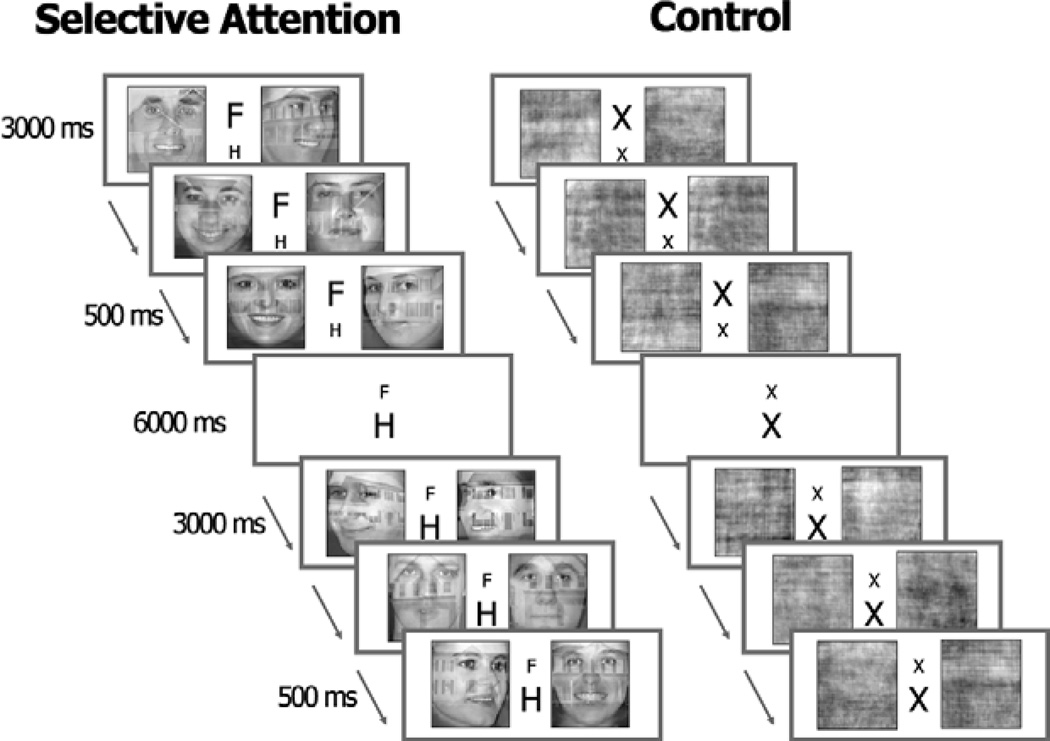
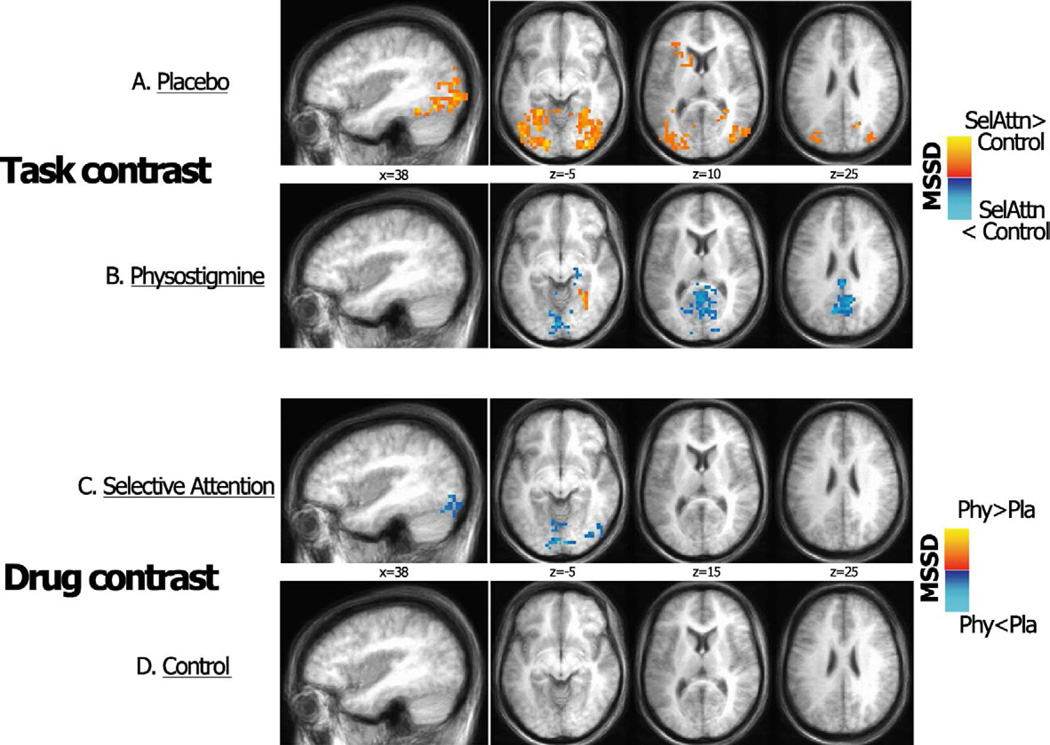
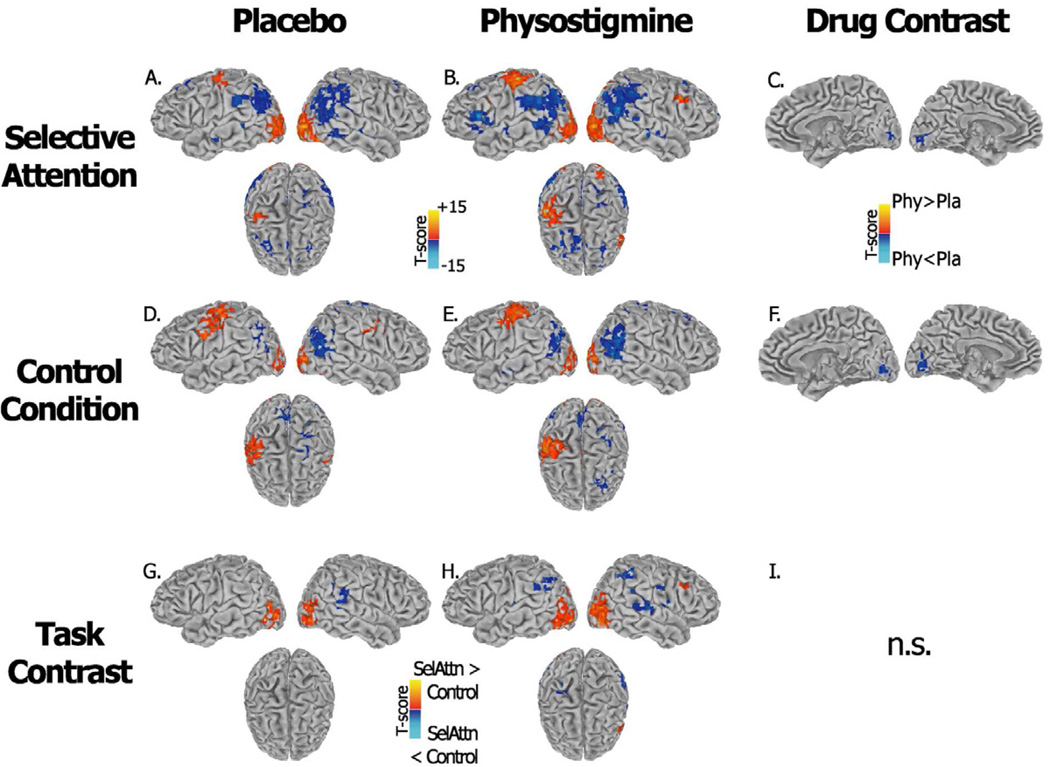
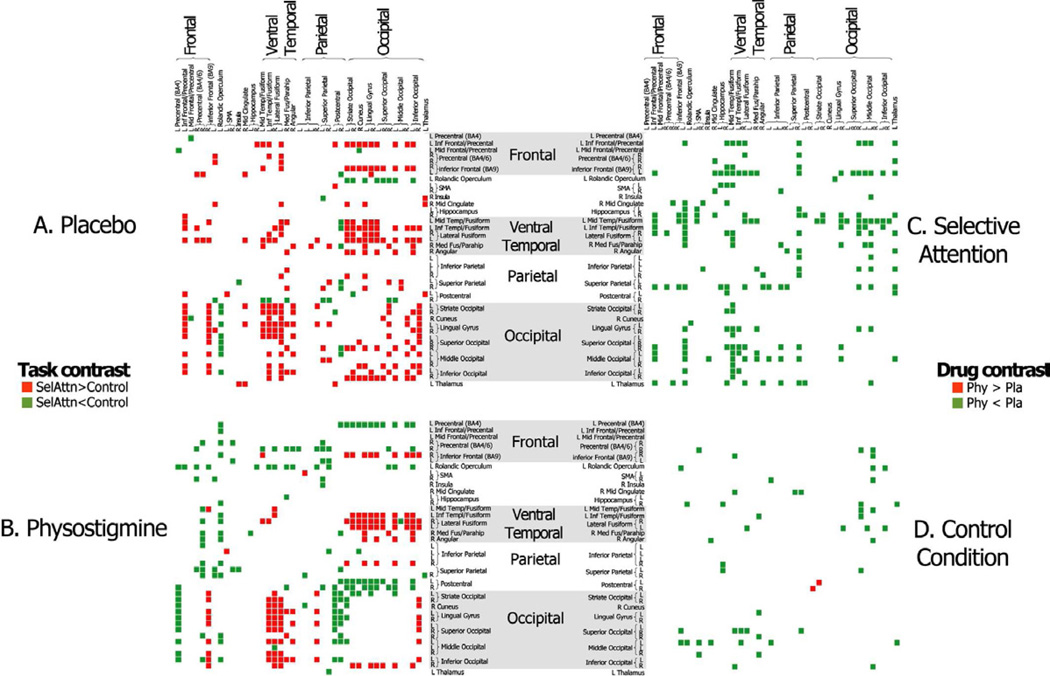
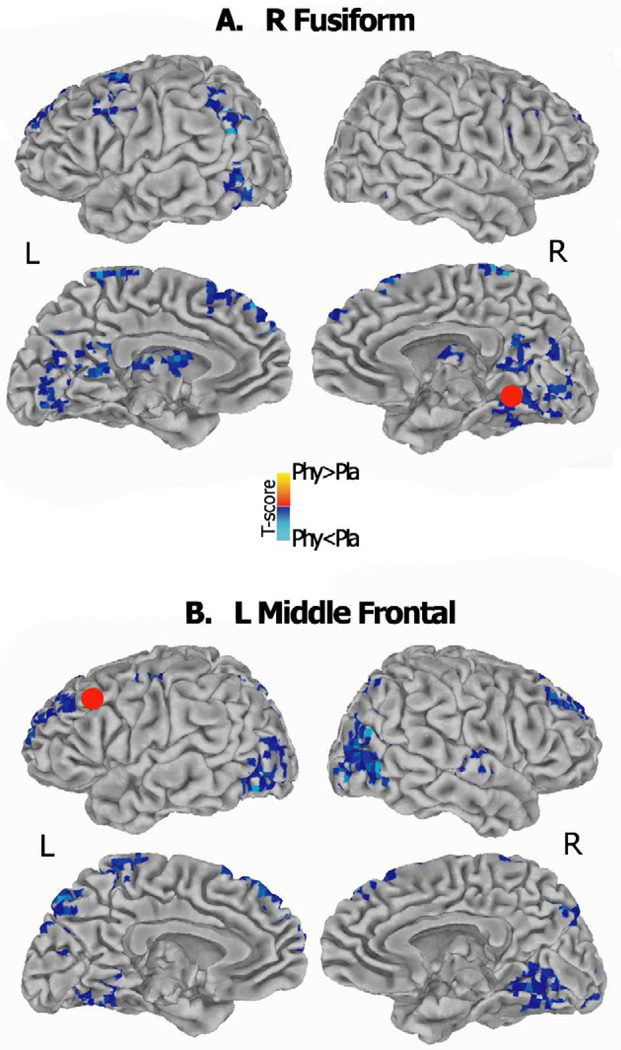
Enhancing cholinergic function improves performance on various cognitive tasks and alters neural responses in task specific brain regions. We have hypothesized that the changes in neural activity observed during increased cholinergic function reflect an increase in neural efficiency that leads to improved task performance. The current study tested this hypothesis by assessing neural efficiency based on cholinergically-mediated effects on regional brain connectivity and BOLD signal variability. Nine subjects participated in a double-blind, placebo-controlled crossover fMRI study. Following an infusion of physostigmine (1 mg/h) or placebo, echo-planar imaging (EPI) was conducted as participants performed a selective attention task. During the task, two images comprised of superimposed pictures of faces and houses were presented. Subjects were instructed periodically to shift their attention from one stimulus component to the other and to perform a matching task using hand held response buttons. A control condition included phase-scrambled images of superimposed faces and houses that were presented in the same temporal and spatial manner as the attention task; participants were instructed to perform a matching task. Cholinergic enhancement improved performance during the selective attention task, with no change during the control task. Functional connectivity analyses showed that the strength of connectivity between ventral visual processing areas and task-related occipital, parietal and prefrontal regions reduced significantly during cholinergic enhancement, exclusively during the selective attention task. Physostigmine administration also reduced BOLD signal temporal variability relative to placebo throughout temporal and occipital visual processing areas, again during the selective attention task only. Together with the observed behavioral improvement, the decreases in connectivity strength throughout task-relevant regions and BOLD variability within stimulus processing regions support the hypothesis that cholinergic augmentation results in enhanced neural efficiency. This article is part of a Special Issue entitled 'Cognitive Enhancers'.
增强胆碱能功能可以提高各种认知任务的表现,并改变特定大脑区域的神经反应。我们假设,在胆碱能功能增强期间观察到的神经活动变化反映了神经效率的提高,从而导致任务表现的改善。本研究通过评估基于胆碱能介导的区域脑连接和 BOLD 信号可变性的神经效率来检验这一假设。九名受试者参加了一项双盲、安慰剂对照的 fMRI 研究。在给予毒扁豆碱(1mg/h)或安慰剂后,在参与者执行选择性注意任务时进行了回波平面成像(EPI)。在任务期间,呈现了两张由面部和房屋叠加的图片组成的图像。要求受试者定期将注意力从一个刺激成分转移到另一个刺激成分,并使用手持响应按钮执行匹配任务。对照条件包括叠加的面部和房屋的相位随机化图像,以与注意任务相同的时间和空间方式呈现;要求参与者执行匹配任务。胆碱能增强改善了选择性注意任务的表现,而在对照任务中没有变化。功能连接分析表明,在胆碱能增强期间,腹侧视觉处理区域与任务相关的枕叶、顶叶和前额叶区域之间的连接强度显著降低,仅在选择性注意任务期间降低。与安慰剂相比,毒扁豆碱给药还降低了 BOLD 信号在整个时间和枕叶视觉处理区域的时间可变性,仅在选择性注意任务期间降低。与观察到的行为改善一起,整个任务相关区域的连接强度降低和刺激处理区域内的 BOLD 可变性降低支持胆碱能增强导致增强的神经效率的假设。本文是特刊“认知增强剂”的一部分。