Lutterschmidt Deborah I, Wilczynski Walter
Neuroscience Institute, Georgia State University, Atlanta, GA, USA.
Brain Behav Evol. 2012;80(3):222-32. doi: 10.1159/000341238. Epub 2012 Aug 17.
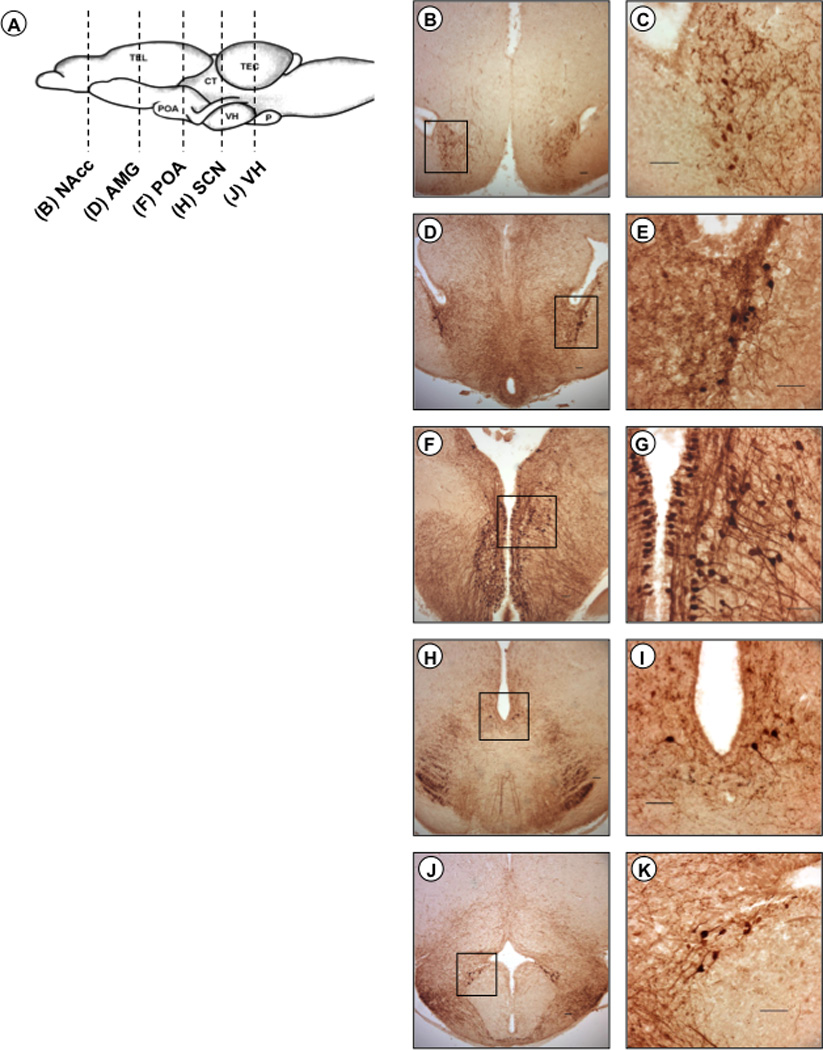
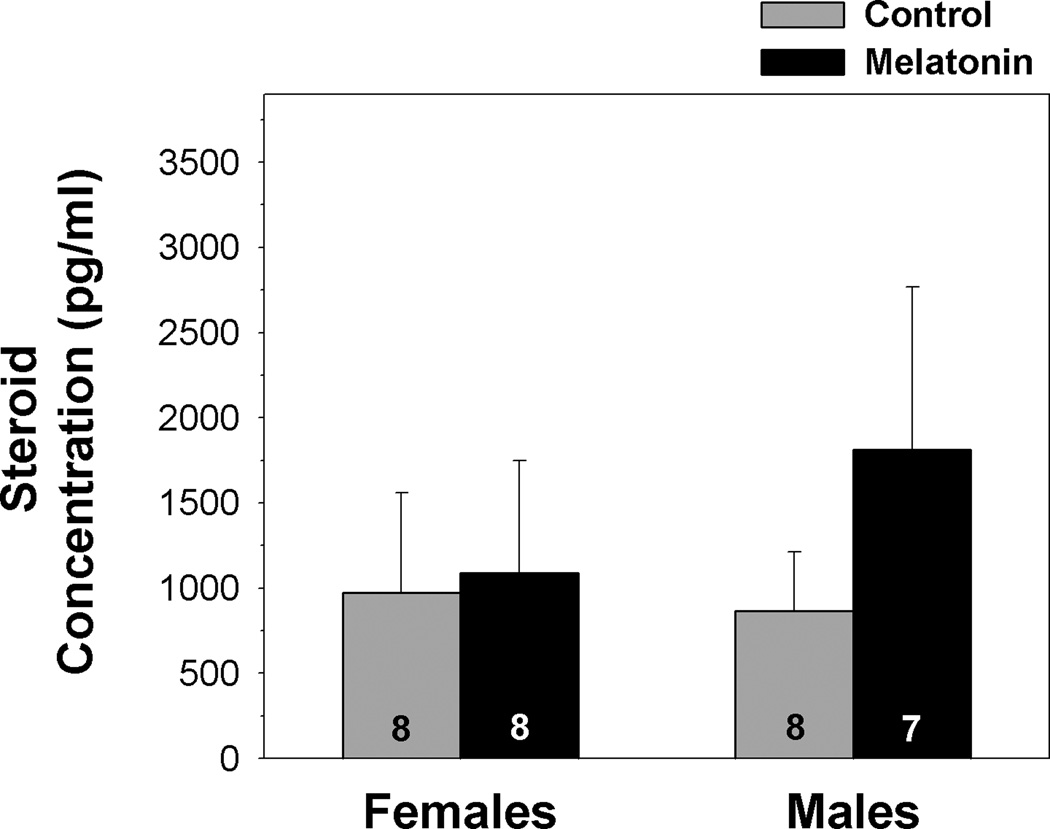
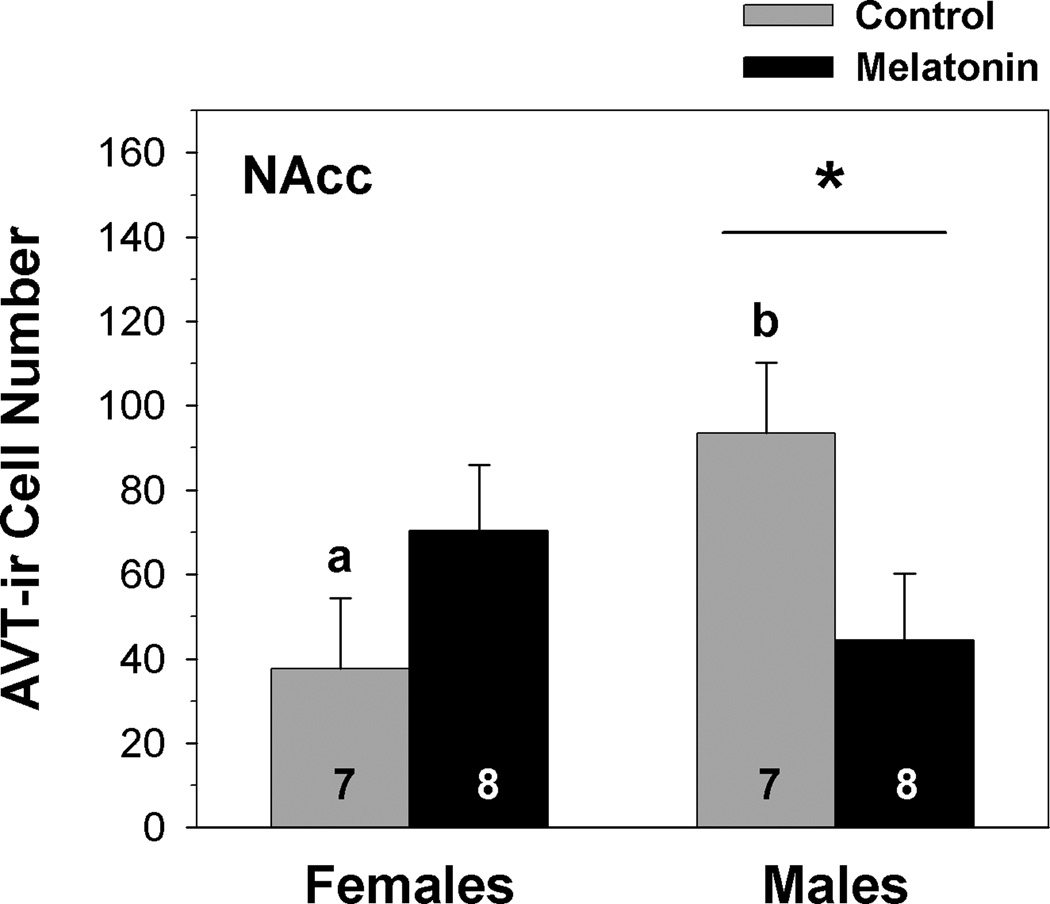
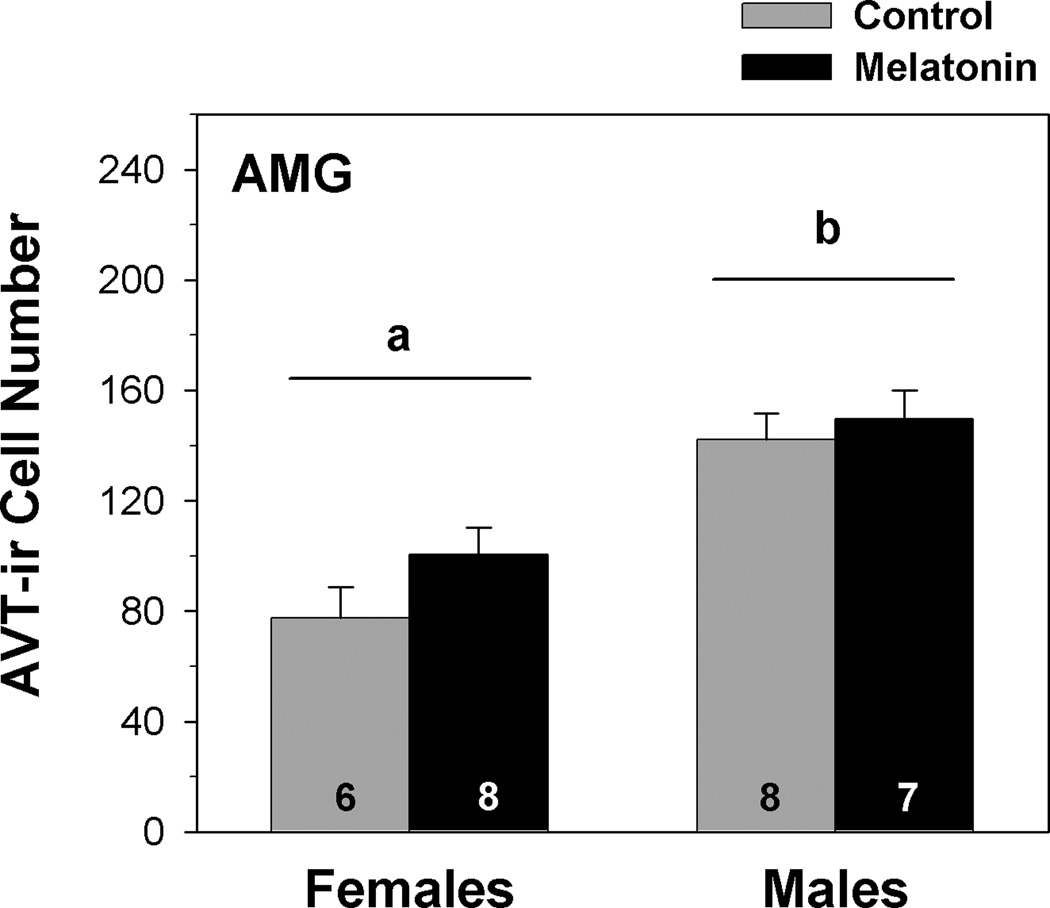
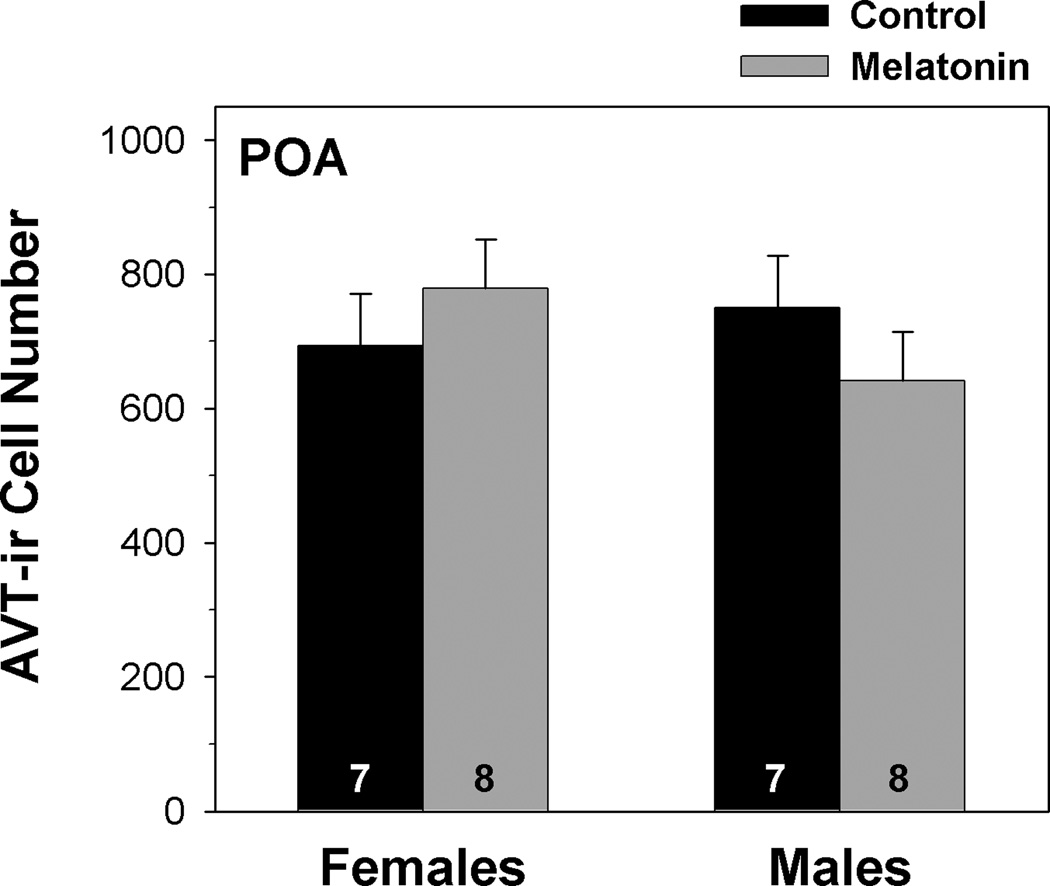
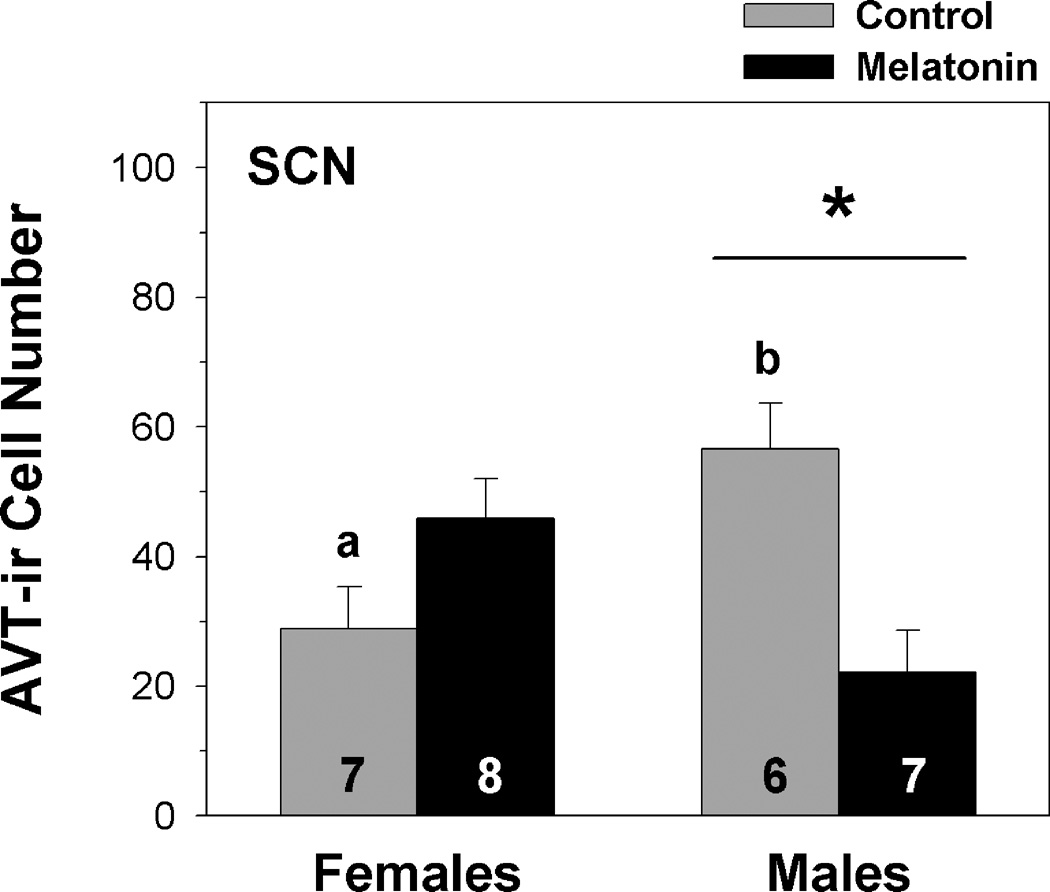
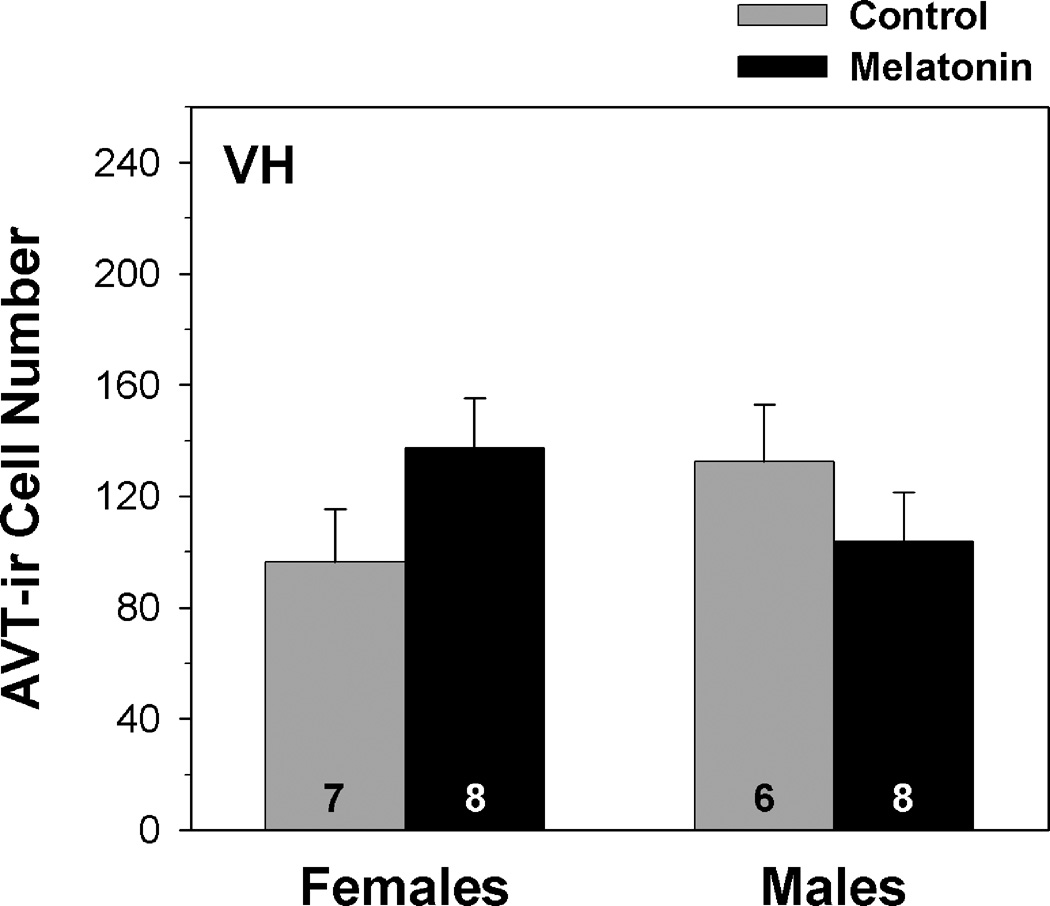
Arginine vasotocin (AVT) and its mammalian homologue, arginine vasopressin (AVP), regulate a variety of social and reproductive behaviors, often with complex species-, sex- and context-dependent effects. Despite extensive evidence documenting seasonal variation in brain AVT/AVP, relatively few studies have investigated the environmental and/or hormonal factors mediating these seasonal changes. In the present study, we investigated whether the pineal hormone melatonin alters brain AVT immunoreactivity in green treefrogs (Hyla cinerea). Reproductively active male and female frogs were collected during the summer breeding season and a melatonin-filled or blank silastic capsule was surgically implanted subcutaneously. The duration of hormone treatment was 4 weeks, at which time frogs were eutha-nized and the brains and blood collected and processed for AVT immunohistochemistry and steroid hormone assay. We quantified AVT-immunoreactive (AVT-ir) cell bodies in the nucleus accumbens (NAcc), caudal striatum and amygda- la (AMG), anterior preoptic area, suprachiasmatic nucleus (SCN) and infundibular region of the ventral hypothalamus. Sex differences in AVT-ir cell number were observed in all brain regions except in the anterior preoptic area and ventral hypothalamus, with males having more AVT-ir cells than females in the NAcc, amygdala and SCN. Brain AVT was sensitive to melatonin signaling during the breeding season, and the effects of melatonin varied significantly with both region and sex. Treatment with melatonin decreased AVT immunoreactivity in both the NAcc and SCN in male H. cinerea. In contrast, brain AVT was relatively insensitive to melatonin signaling in females, indicating that the regulation of the AVT/AVP neuropeptide system by melatonin may be sexually dimorphic. Finally, melatonin did not significantly influence testosterone or estradiol concentrations of male or female frogs, respectively, suggesting that the effects of melatonin on AVT immunoreactivity are independent of changes in gonadal sex steroid hormones. Collectively, our results indicate that the AVT/AVP neuronal system may be an important target for melatonin in facilitating seasonal changes in reproductive physiology and social behavior.
精氨酸血管催产素(AVT)及其哺乳动物同源物精氨酸加压素(AVP)调节多种社会行为和生殖行为,其影响通常具有复杂的物种、性别和环境依赖性。尽管有大量证据证明大脑中AVT/AVP存在季节性变化,但相对较少的研究调查了介导这些季节性变化的环境和/或激素因素。在本研究中,我们调查了松果体激素褪黑素是否会改变绿树蛙(灰树蛙)大脑中的AVT免疫反应性。在夏季繁殖季节收集生殖活跃的雄性和雌性青蛙,通过手术将填充褪黑素或空白的硅橡胶胶囊皮下植入。激素治疗持续4周,此时将青蛙安乐死,收集大脑和血液并进行AVT免疫组织化学和类固醇激素测定。我们对伏隔核(NAcc)、尾状纹状体、杏仁核(AMG)、视前区、视交叉上核(SCN)和下丘脑腹侧漏斗区中AVT免疫反应性(AVT-ir)细胞体进行了定量。除视前区和下丘脑腹侧外,在所有脑区均观察到AVT-ir细胞数量的性别差异,在NAcc、杏仁核和SCN中,雄性的AVT-ir细胞比雌性多。在繁殖季节,大脑中的AVT对褪黑素信号敏感,褪黑素的影响因脑区和性别而异。褪黑素处理降低了雄性灰树蛙NAcc和SCN中的AVT免疫反应性。相比之下,雌性大脑中的AVT对褪黑素信号相对不敏感,这表明褪黑素对AVT/AVP神经肽系统的调节可能存在性别差异。最后,褪黑素分别对雄性或雌性青蛙的睾酮或雌二醇浓度没有显著影响,这表明褪黑素对AVT免疫反应性的影响独立于性腺性类固醇激素的变化。总体而言,我们的结果表明,AVT/AVP神经元系统可能是褪黑素促进生殖生理和社会行为季节性变化的重要靶点。