Institute of Neurology (Edinger Institute) and 2 Institute for Cardiovascular Regeneration, Johann Wolfgang Goethe University Frankfurt Medical School, 60590 Frankfurt am Main, Germany.
J Exp Med. 2012 Aug 27;209(9):1611-27. doi: 10.1084/jem.20111580. Epub 2012 Aug 20.
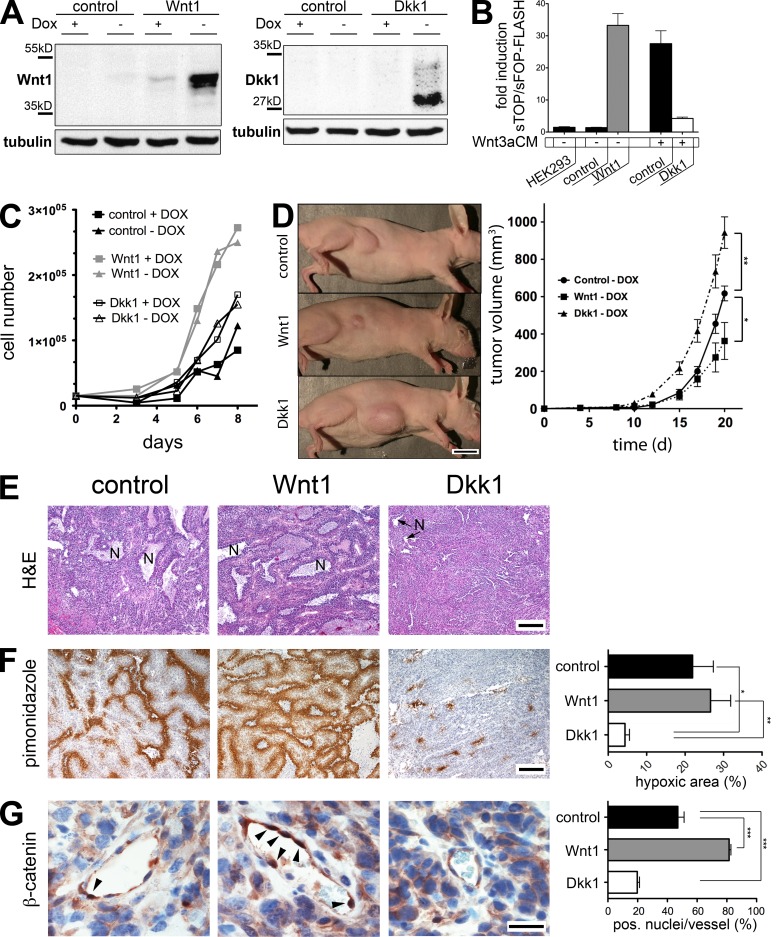
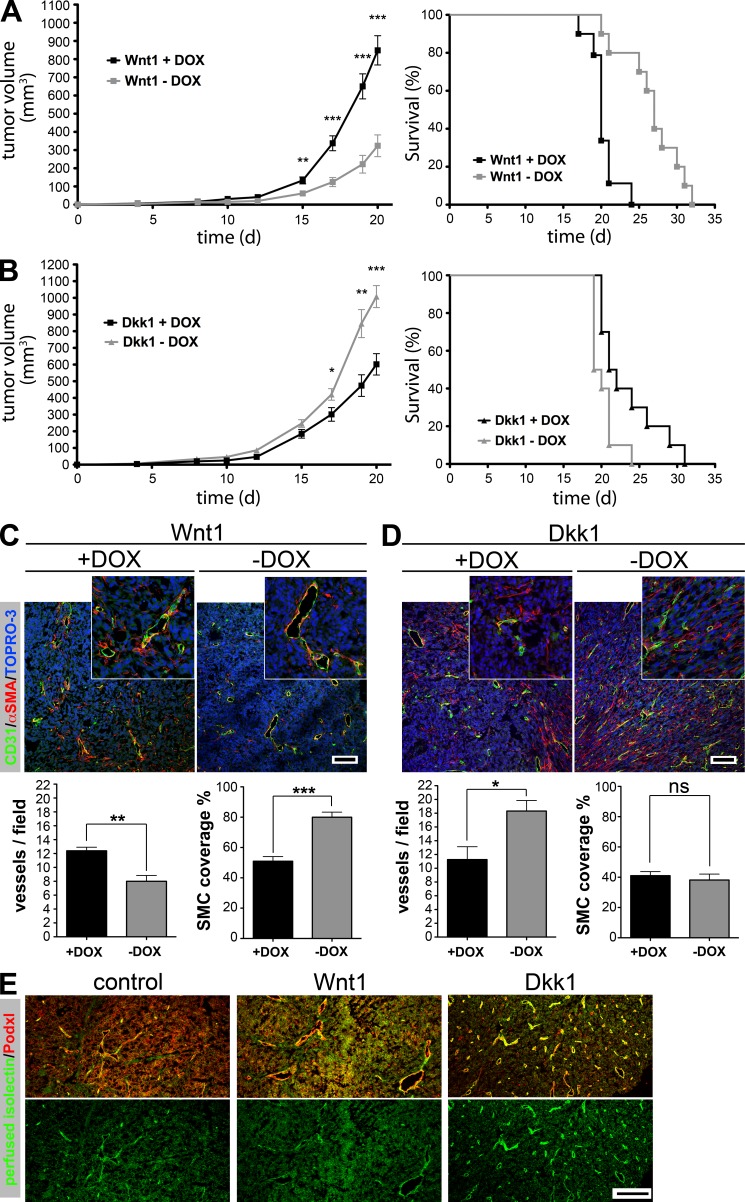
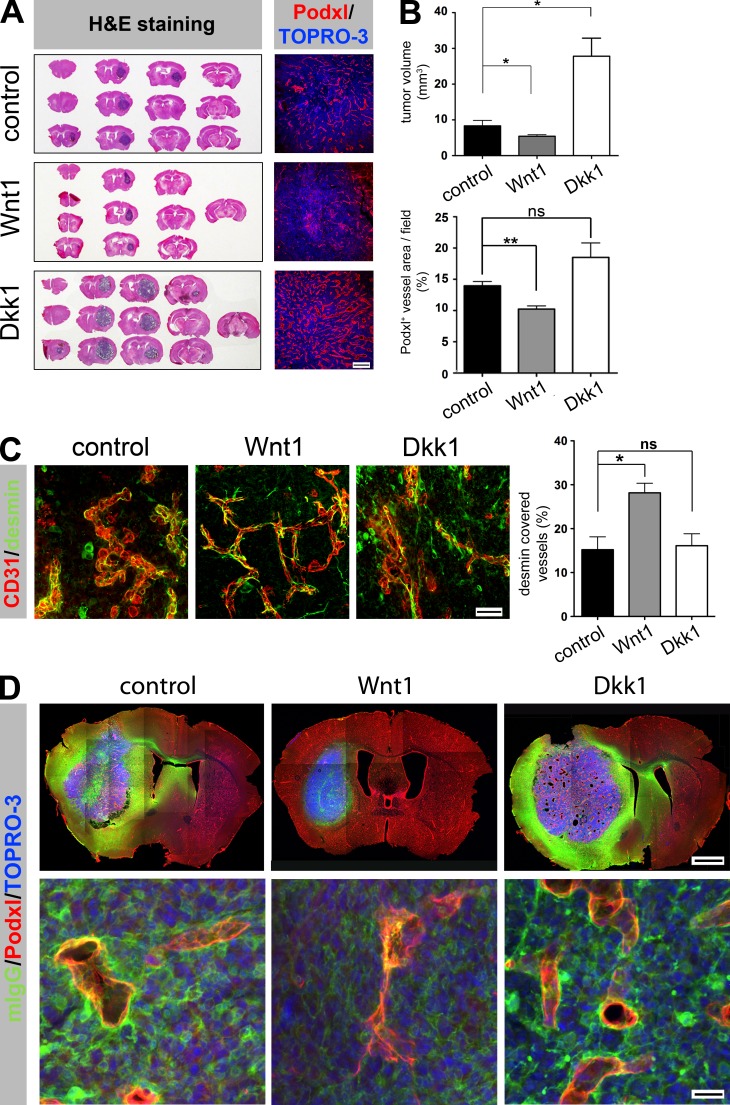
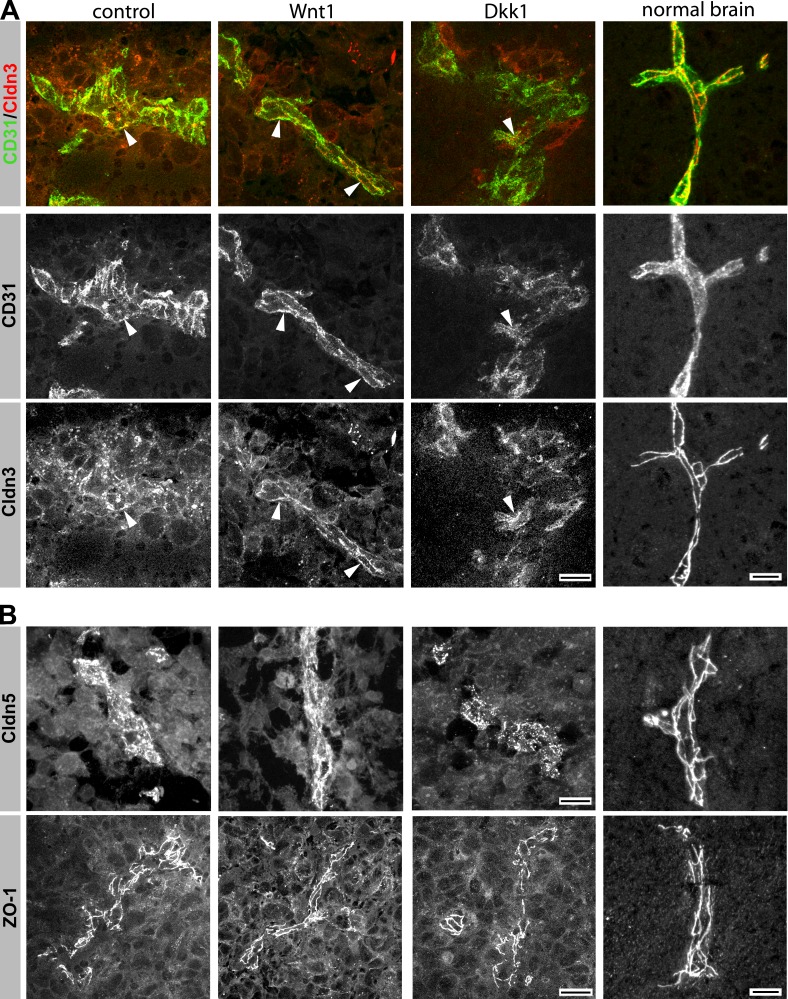
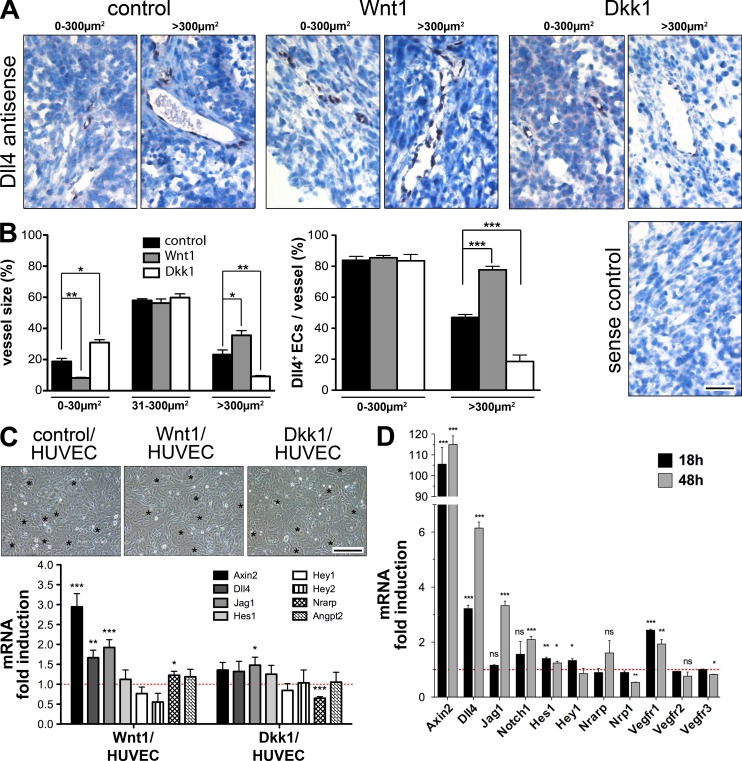
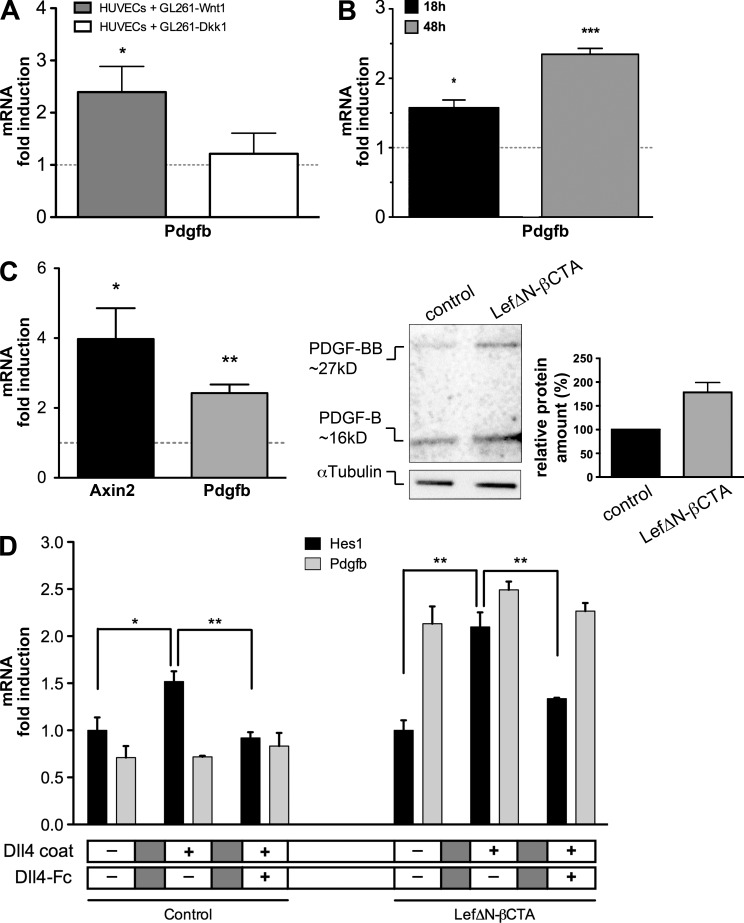
Endothelial Wnt/β-catenin signaling is necessary for angiogenesis of the central nervous system and blood-brain barrier (BBB) differentiation, but its relevance for glioma vascularization is unknown. In this study, we show that doxycycline-dependent Wnt1 expression in subcutaneous and intracranial mouse glioma models induced endothelial Wnt/β-catenin signaling and led to diminished tumor growth, reduced vascular density, and normalized vessels with increased mural cell attachment. These findings were corroborated in GL261 glioma cells intracranially transplanted in mice expressing dominant-active β-catenin specifically in the endothelium. Enforced endothelial β-catenin signaling restored BBB characteristics, whereas inhibition by Dkk1 (Dickkopf-1) had opposing effects. By overactivating the Wnt pathway, we induced the Wnt/β-catenin-Dll4/Notch signaling cascade in tumor endothelia, blocking an angiogenic and favoring a quiescent vascular phenotype, indicated by induction of stalk cell genes. We show that β-catenin transcriptional activity directly regulated endothelial expression of platelet-derived growth factor B (PDGF-B), leading to mural cell recruitment thereby contributing to vascular quiescence and barrier function. We propose that reinforced Wnt/β-catenin signaling leads to inhibition of angiogenesis with normalized and less permeable vessels, which might prove to be a valuable therapeutic target for antiangiogenic and edema glioma therapy.
内皮细胞 Wnt/β-连环蛋白信号通路对于中枢神经系统的血管生成和血脑屏障(BBB)分化是必需的,但它与神经胶质瘤血管生成的相关性尚不清楚。在这项研究中,我们表明,在皮下和颅内小鼠神经胶质瘤模型中,依赖多西环素的 Wnt1 表达诱导了内皮细胞 Wnt/β-连环蛋白信号通路,导致肿瘤生长减少、血管密度降低,并使血管正常化,增加了壁细胞附着。这些发现在 GL261 神经胶质瘤细胞中得到了证实,这些细胞在特异性表达于内皮细胞的显性激活β-连环蛋白的小鼠中被颅内移植。强制内皮β-连环蛋白信号通路恢复了 BBB 特征,而 Dkk1(Dickkopf-1)的抑制则有相反的效果。通过过度激活 Wnt 通路,我们在肿瘤内皮细胞中诱导了 Wnt/β-连环蛋白-Dll4/Notch 信号级联,阻断了血管生成,并促进了静止的血管表型,这表现为诱导茎细胞基因的表达。我们表明,β-连环蛋白转录活性直接调节血小板衍生生长因子 B(PDGF-B)在内皮细胞中的表达,导致壁细胞募集,从而有助于血管静止和屏障功能。我们提出,强化的 Wnt/β-连环蛋白信号通路导致血管生成抑制,形成正常且通透性较低的血管,这可能成为抗血管生成和脑水肿神经胶质瘤治疗的有价值的治疗靶点。