UPC Research Laboratories, Allergy Department, 2nd Pediatric Clinic, University of Athens, 41 Fidipidou str, Athens, 115 27, Greece.
Clin Transl Allergy. 2012 Aug 21;2(1):14. doi: 10.1186/2045-7022-2-14.
Human rhinoviruses, major precipitants of asthma exacerbations, induce lower airway inflammation and mediate angiogenesis. The purpose of this study was to assess the possibility that rhinoviruses may also contribute to the fibrotic component of airway remodeling.
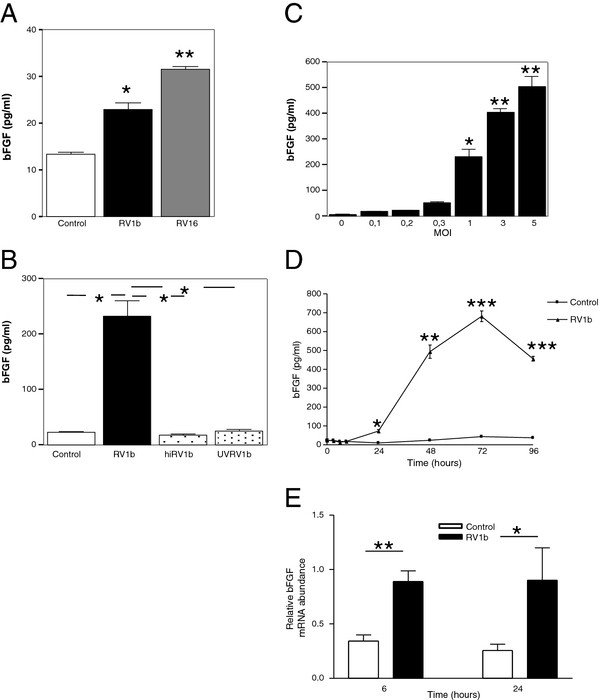
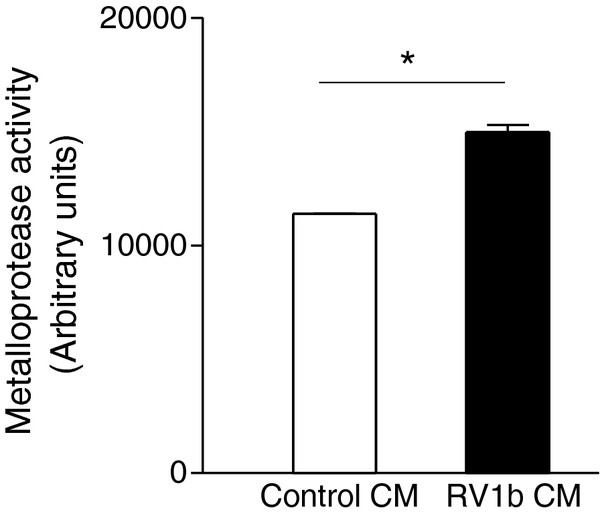
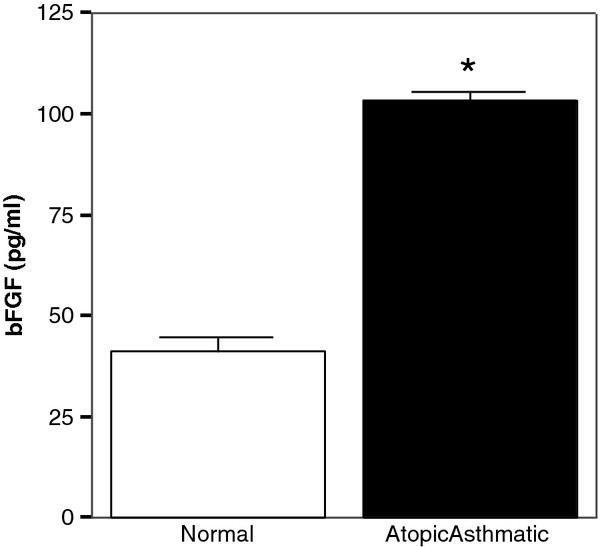
Levels of basic fibroblast growth factor (bFGF) mRNA and protein were measured following rhinovirus infection of bronchial epithelial cells. The profibrotic effect of epithelial products was assessed by DNA synthesis and matrix metalloproteinase activity assays. Moreover, epithelial cells were exposed to supernatants from cultured peripheral blood mononuclear cells, obtained from healthy donors or atopic asthmatic subjects and subsequently infected by rhinovirus and bFGF release was estimated. bFGF was also measured in respiratory secretions from atopic asthmatic patients before and during rhinovirus-induced asthma exacerbations.
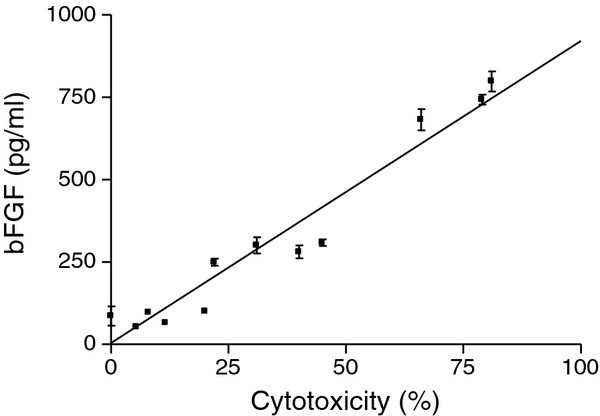
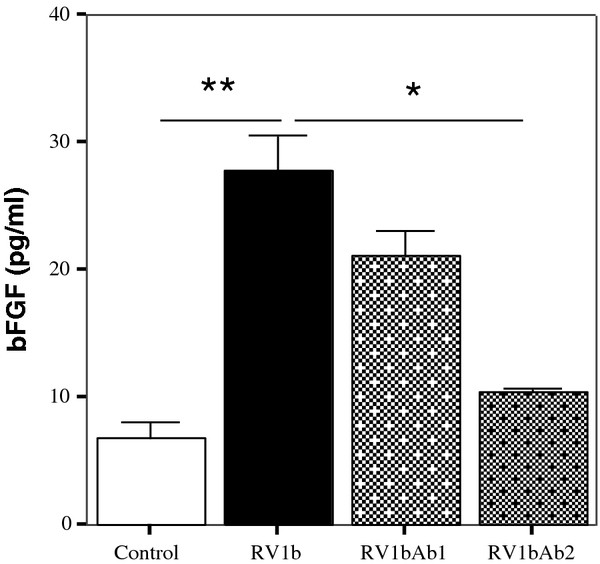
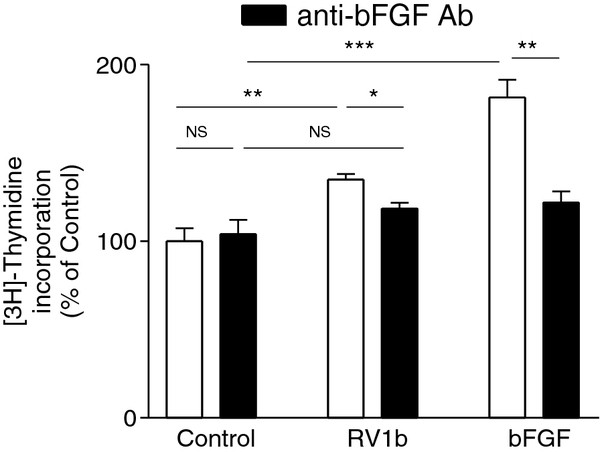
Rhinovirus epithelial infection stimulated mRNA expression and release of bFGF, the latter being positively correlated with cell death under conditions promoting rhinovirus-induced cytotoxicity. Supernatants from infected cultures induced lung fibroblast proliferation, which was inhibited by anti-bFGF antibody, and demonstrated increased matrix metalloproteinase activity. Rhinovirus-mediated bFGF release was significantly higher in an in vitro simulation of atopic asthmatic environment and, importantly, during rhinovirus-associated asthma exacerbations.
Rhinovirus infection induces bFGF release by airway epithelium, and stimulates stroma cell proliferation contributing to airway remodeling in asthma. Repeated rhinovirus infections may promote asthma persistence, particularly in the context of atopy; prevention of such infections may influence the natural history of asthma.
人类鼻病毒是哮喘恶化的主要诱因,可引起下呼吸道炎症并介导血管生成。本研究旨在评估鼻病毒是否也可能导致气道重塑的纤维化成分。
检测鼻病毒感染支气管上皮细胞后碱性成纤维细胞生长因子(bFGF)mRNA 和蛋白水平。通过 DNA 合成和基质金属蛋白酶活性测定评估上皮产物的促纤维化作用。此外,还将上皮细胞暴露于培养的外周血单个核细胞上清液中,该上清液来自健康供体或特应性哮喘患者,随后用鼻病毒感染并估计 bFGF 的释放。还测量了特应性哮喘患者呼吸道分泌物中鼻病毒诱导的哮喘加重前后 bFGF 的含量。
鼻病毒上皮感染刺激 bFGF 的 mRNA 表达和释放,在促进鼻病毒诱导细胞毒性的条件下,后者与细胞死亡呈正相关。感染培养物的上清液诱导肺成纤维细胞增殖,该增殖被抗 bFGF 抗体抑制,并显示出增加的基质金属蛋白酶活性。在特应性哮喘环境的体外模拟中,鼻病毒介导的 bFGF 释放显著更高,并且重要的是,在与鼻病毒相关的哮喘加重期间。
鼻病毒感染可诱导气道上皮释放 bFGF,并刺激基质细胞增殖,从而导致哮喘中的气道重塑。反复鼻病毒感染可能会促进哮喘的持续存在,尤其是在特应性的情况下;预防这种感染可能会影响哮喘的自然病程。