Thomas E. Starzl Transplantation Institute, University of Pittsburgh, Pittsburgh, PA, USA.
Xenotransplantation. 2012 Jul-Aug;19(4):221-32. doi: 10.1111/j.1399-3089.2012.00711.x.
CD154 blockade-based immunosuppression successfully prevents both humoral and cellular adaptive immune responses in baboons receiving α1,3-galactosyltransferase gene-knockout (GTKO) pig organs. Using a GTKO pig artery transplantation model in baboons, we evaluated the efficacy of CD28/B7 costimulatory pathway blockade in comparison with CD154 blockade.
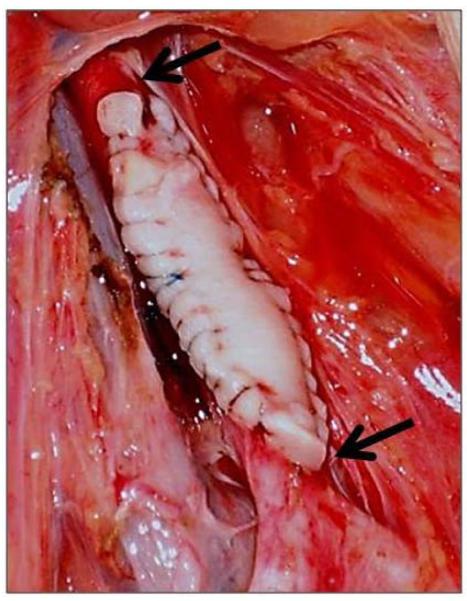
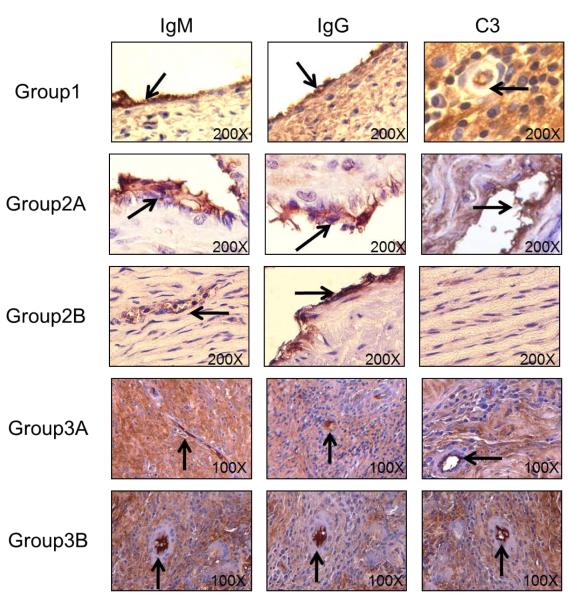
Baboons received artery patch grafts from GTKO pigs, with no (Group1), anti-CD154mAb-based (Group2), or CTLA4-Ig-based (Group3) immunosuppressive therapy. Anti-pig IgM and IgG antibody and cellular responses were monitored. Xenografts were immunohistologically evaluated for antibody and complement deposition, and cellular infiltration.
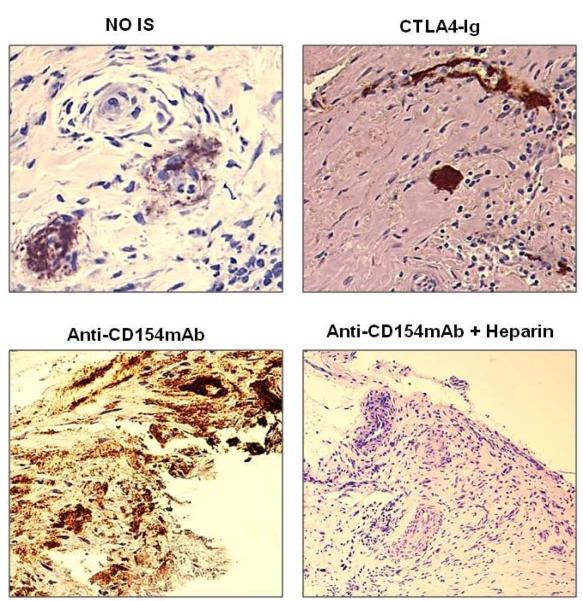
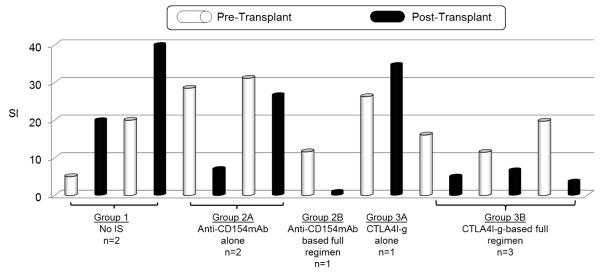
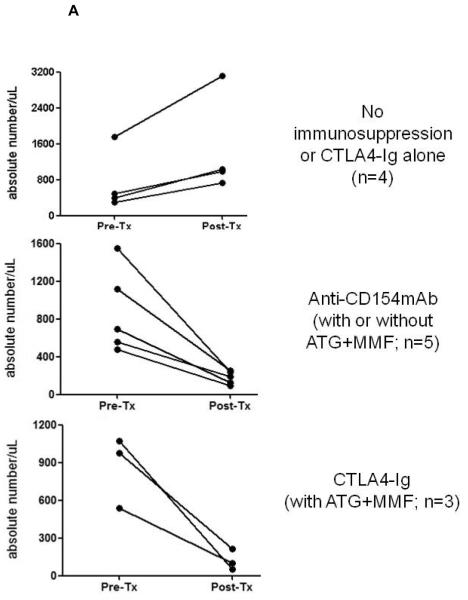
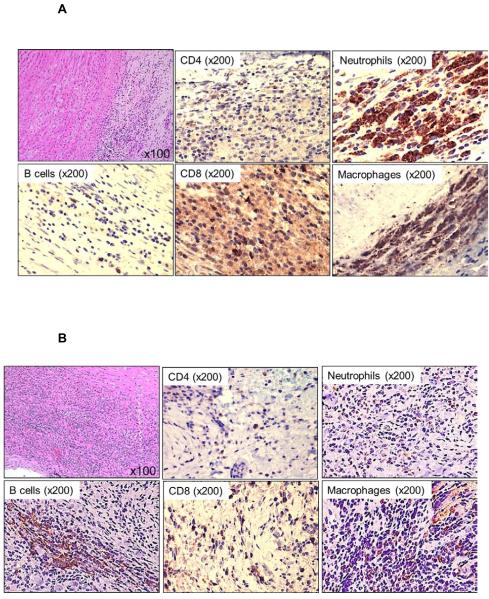
Group1 baboons developed increased IgM and IgG antibody and cellular responses against GTKO antigens. In Group2, anti-CD154mAb alone prevented the development of both IgM and IgG antibody and cellular responses,but not cellular infiltration of the graft. In the single baboon that received anti-thymocyte globulin (ATG) + mycophenolate mofetil (MMF) + anti-CD154mAb, cellular infiltration of the graft was not seen. In Group3, CTLA4-Ig with ATG + MMF inhibited the cellular proliferative response to pig antigens but did not prevent the IgG response or cellular infiltration.
(i) Artery patch transplantation is a simple model to monitor the adaptive immune response to xenografts; (ii) anti-CD154mAb prevents sensitization but not cellular infiltration (but, without anticoagulation, may result in early thrombosis of a pig xenograft); (iii) although in only one baboon, the addition of ATG and MMF prevents cellular infiltration and (iv) replacement of anti-CD154mAb by CTLA4-Ig (at the doses used), even in combination with ATG and MMF, prevents the cellular proliferative response to GTKO pig antigens but is insufficient to prevent the development of anti-pig antibodies.
基于 CD154 阻断的免疫抑制成功地防止了接受α1,3-半乳糖基转移酶基因敲除(GTKO)猪器官的狨猴的体液和细胞适应性免疫反应。在狨猴的 GTKO 猪动脉移植模型中,我们评估了 CD28/B7 共刺激途径阻断与 CD154 阻断的疗效。
狨猴接受 GTKO 猪的动脉贴片移植物,无(第 1 组)、抗 CD154mAb (第 2 组)或 CTLA4-Ig (第 3 组)免疫抑制治疗。监测抗猪 IgM 和 IgG 抗体和细胞反应。对异种移植物进行免疫组织化学评估,以检测抗体和补体沉积以及细胞浸润。
第 1 组狨猴对 GTKO 抗原产生增加的 IgM 和 IgG 抗体和细胞反应。在第 2 组中,单独使用抗 CD154mAb 可防止 IgM 和 IgG 抗体和细胞反应的发展,但不能防止移植物的细胞浸润。在接受抗胸腺细胞球蛋白(ATG)+霉酚酸酯(MMF)+抗 CD154mAb 的单个狨猴中,未观察到移植物的细胞浸润。在第 3 组中,CTLA4-Ig 与 ATG+MMF 抑制对猪抗原的细胞增殖反应,但不能阻止 IgG 反应或细胞浸润。
(i)动脉贴片移植是监测异种移植物适应性免疫反应的简单模型;(ii)抗 CD154mAb 可预防致敏但不能预防细胞浸润(但无抗凝,可能导致猪异种移植物早期血栓形成);(iii)尽管仅在一只狨猴中,添加 ATG 和 MMF 可防止细胞浸润,(iv)用 CTLA4-Ig (按所用剂量)替代抗 CD154mAb,即使与 ATG 和 MMF 联合使用,也可防止对 GTKO 猪抗原的细胞增殖反应,但不足以防止抗猪抗体的产生。