School of Health Sciences, University of Newcastle, Ourimbah, New South Wales 2258, Australia.
BMC Public Health. 2012 Aug 21;12:681. doi: 10.1186/1471-2458-12-681.
Early Childhood Caries (ECC) is a widespread problem in Australian Aboriginal communities causing severe pain and sepsis. In addition dental services are difficult to access for many Aboriginal children and trying to obtain care can be stressful for the parents. The control of dental caries has been identified as a key indictor in the reduction of Indigenous disadvantage. Thus, there is a need for new approaches to prevent ECC, which reflect the cultural norms of Aboriginal communities.
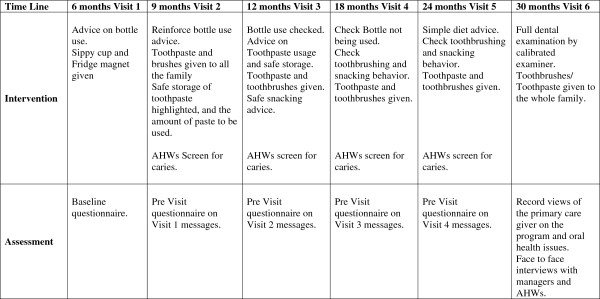
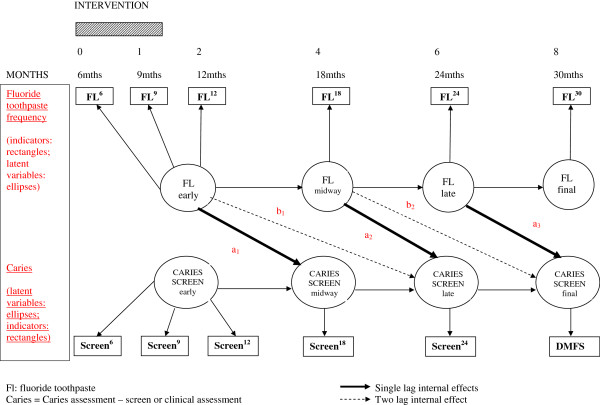
METHODS/DESIGN: This is a Phase II single arm trial designed to gather information on the effectiveness of a dental health education program for Aboriginal children aged 6 months, followed over 2 years. The program will deliver advice from Aboriginal Health Workers on tooth brushing, diet and the use of fluoride toothpaste to Aboriginal families. Six waves of data collection will be conducted to enable estimates of change in parental knowledge and their views on the acceptability of the program. The Aboriginal Health Workers will also be interviewed to record their views on the acceptability and program feasibility. Clinical data on the child participants will be recorded when they are 30 months old and compared with a reference population of similar children when the study began. Latent variable modeling will be used to interpret the intervention effects on disease outcome.
The research project will identify barriers to the implementation of a family centered Aboriginal oral health strategy, as well as the development of evidence to assist in the planning of a Phase III cluster randomized study.
ACTRN12612000712808.
婴幼儿龋(ECC)是澳大利亚原住民社区普遍存在的问题,会导致严重的疼痛和败血症。此外,许多原住民儿童难以获得牙科服务,父母在寻求护理时可能会感到压力。控制龋齿已被确定为减少原住民劣势的关键指标。因此,需要采取新的方法来预防 ECC,这些方法反映原住民社区的文化规范。
方法/设计:这是一项 II 期单臂试验,旨在收集关于针对 6 个月大的原住民儿童的口腔健康教育计划有效性的信息,该计划将持续 2 年以上。该计划将由原住民健康工作者向原住民家庭提供关于刷牙、饮食和使用氟化物牙膏的建议。将进行六轮数据收集,以估计父母知识变化及其对该计划可接受性的看法。还将采访原住民健康工作者,以记录他们对该计划的可接受性和可行性的看法。当孩子 30 个月大时,将记录他们的临床数据,并将其与研究开始时类似儿童的参考人群进行比较。潜变量建模将用于解释干预对疾病结果的影响。
该研究项目将确定实施以家庭为中心的原住民口腔健康策略的障碍,并为规划 III 期集群随机研究提供证据。
ACTRN12612000712808。