Cognitive Neurosciences Department, Bielefeld University, Bielefeld, Germany.
PLoS One. 2012;7(8):e42518. doi: 10.1371/journal.pone.0042518. Epub 2012 Aug 9.
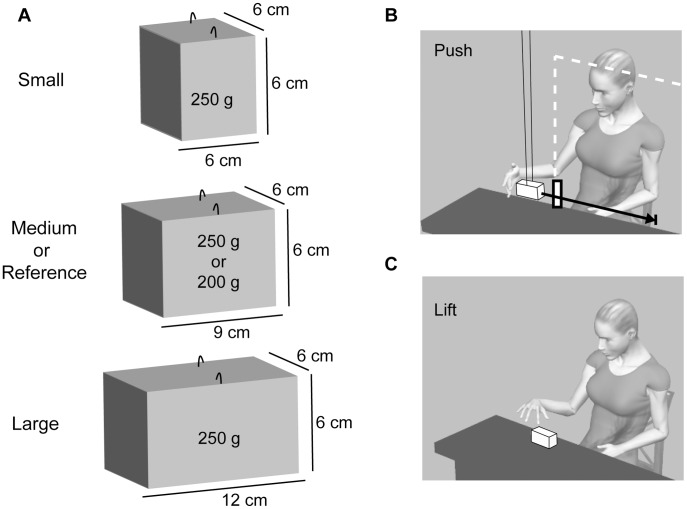
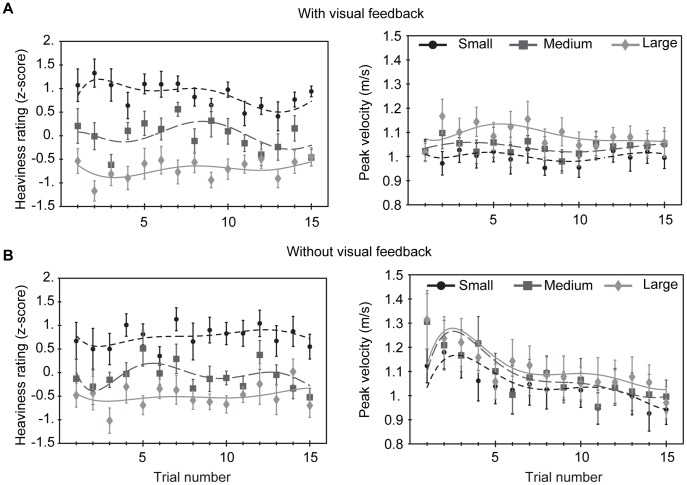
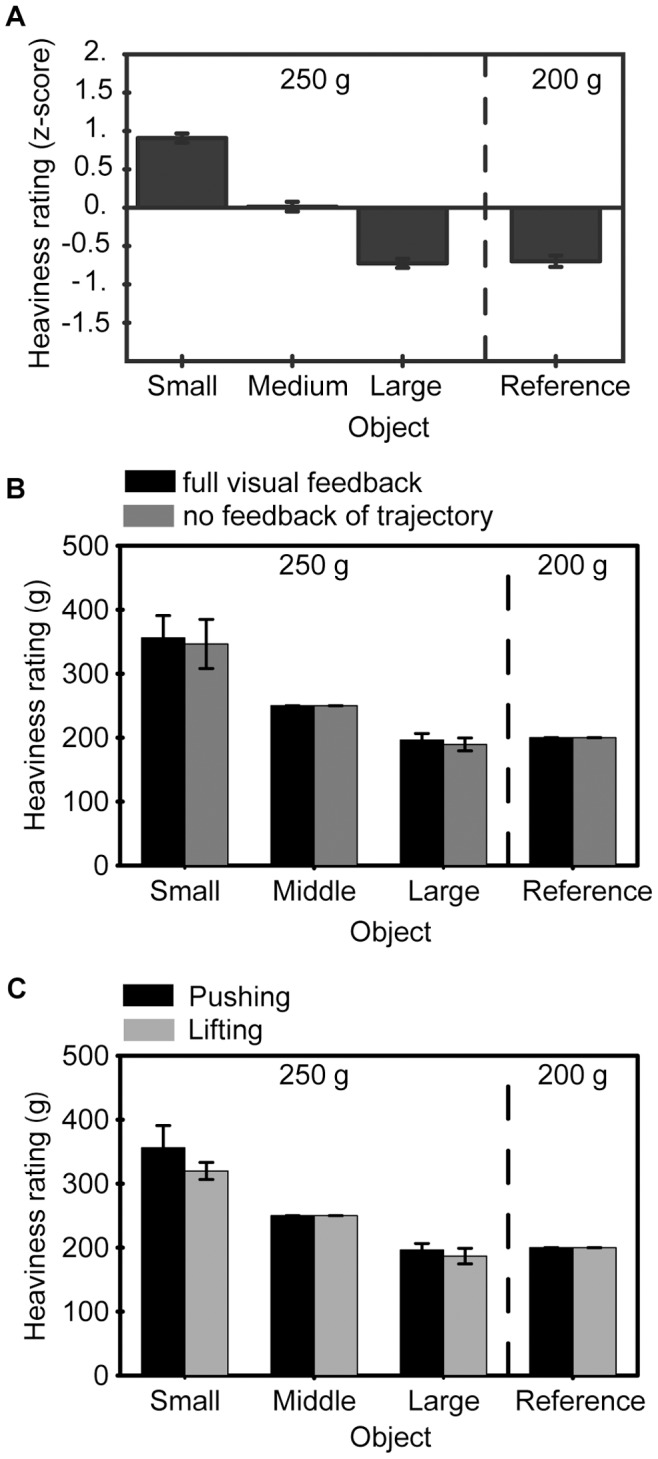
An object in outer space is weightless due to the absence of gravity, but astronauts can still judge whether one object is heavier than another one by accelerating the object. How heavy an object feels depends on the exploration mode: an object is perceived as heavier when holding it against the pull of gravity than when accelerating it. At the same time, perceiving an object's size influences the percept: small objects feel heavier than large objects with the same mass (size-weight illusion). Does this effect depend on perception of the pull of gravity? To answer this question, objects were suspended from a long wire and participants were asked to push an object and rate its heaviness. This way the contribution of gravitational forces on the percept was minimised. Our results show that weight is not at all necessary for the illusion because the size-weight illusion occurred without perception of weight. The magnitude of the illusion was independent of whether inertial or gravitational forces were perceived. We conclude that the size-weight illusion does not depend on prior knowledge about weights of object, but instead on a more general knowledge about the mass of objects, independent of the contribution of gravity. Consequently, the size-weight illusion will have the same magnitude on Earth as it should have on the Moon or even under conditions of weightlessness.
太空中的物体由于没有重力而处于失重状态,但宇航员仍然可以通过加速物体来判断一个物体比另一个物体重。物体的重量感觉取决于探测模式:与抵抗重力的拉力相比,当加速物体时,物体感觉更重。同时,对物体大小的感知会影响感知:与具有相同质量(大小重量错觉)的大物体相比,小物体感觉更重。这种效应是否取决于对重力的感知?为了回答这个问题,我们将物体悬挂在一根长线上,并要求参与者推动物体并对其重量进行评级。这样,重力的影响就被最小化了。我们的结果表明,重量对错觉并不是必需的,因为即使没有感知到重量,大小重量错觉也会发生。错觉的大小与感知到的惯性力或重力无关。我们得出结论,大小重量错觉不依赖于对物体重量的先验知识,而是依赖于对物体质量的更一般的知识,而与重力的贡献无关。因此,大小重量错觉在地球上应该与在月球上甚至在失重状态下具有相同的大小。