Clément Gilles
International Space University, Illkirch-Graffenstaden, France.
PLoS One. 2014 Jun 5;9(6):e99188. doi: 10.1371/journal.pone.0099188. eCollection 2014.
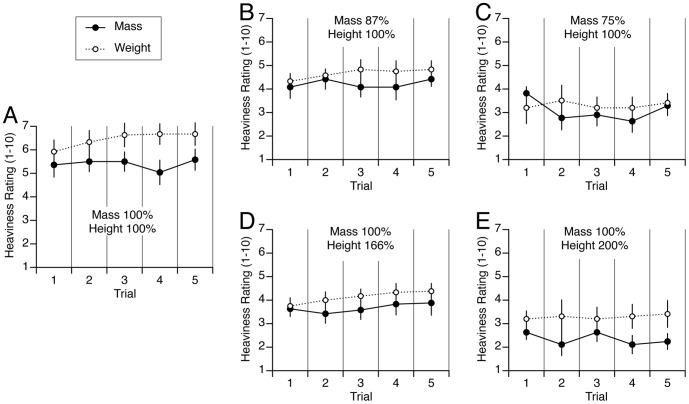
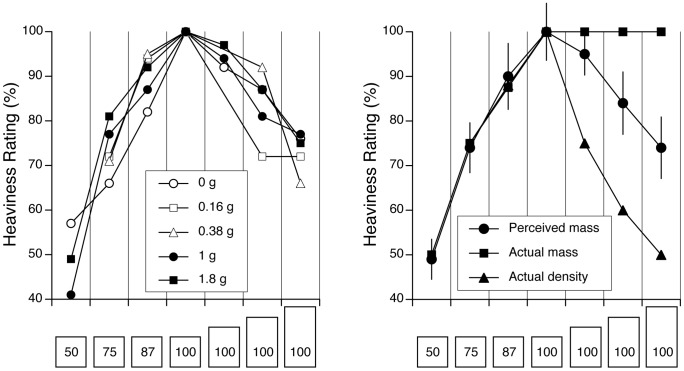
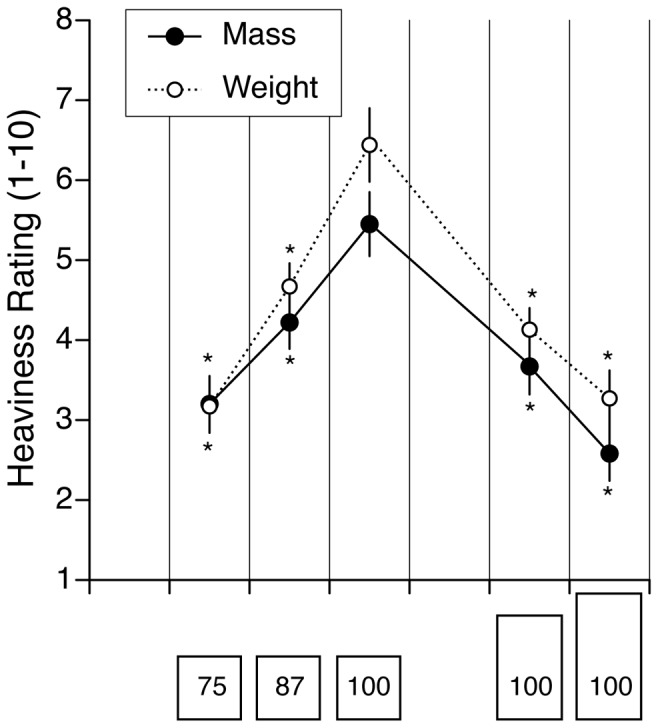
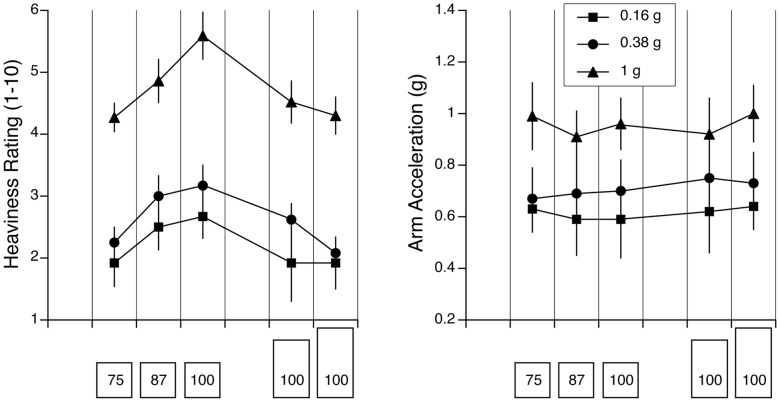
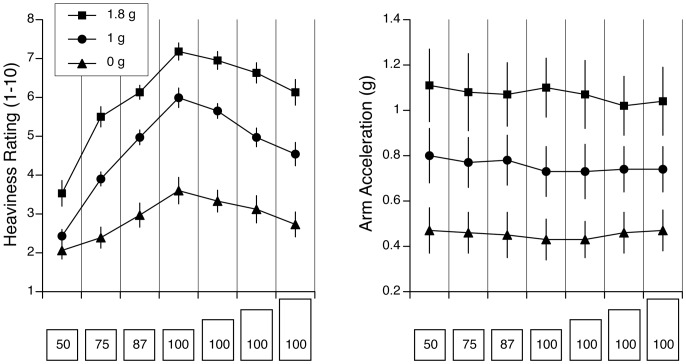
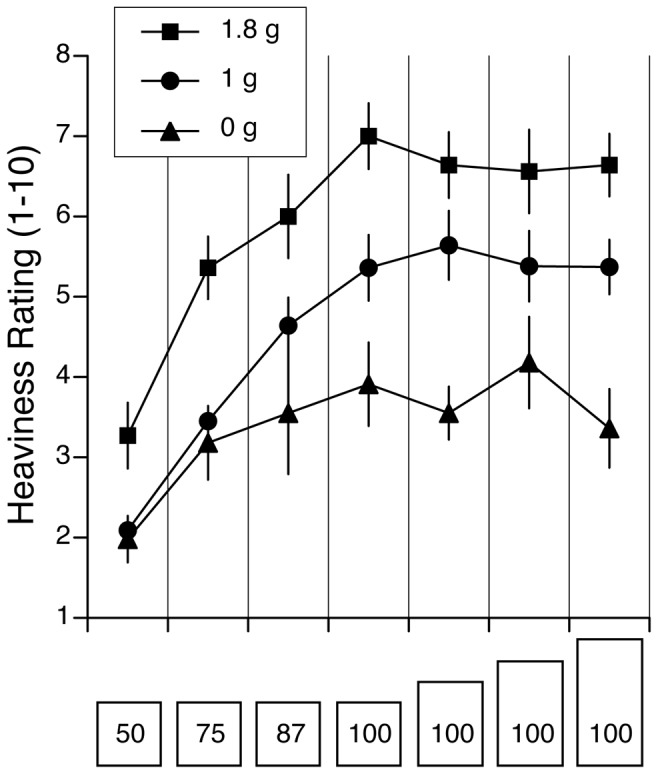
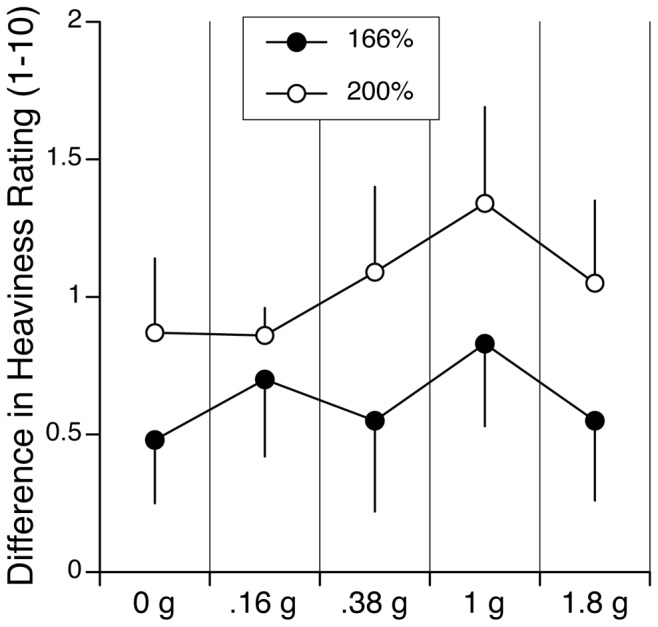
When an observer lifts two objects with the same weight but different sizes, the smaller object is consistently reported to feel heavier than the larger object even after repeated trials. Here we explored the effect of reduced and increased gravity on this perceptual size-mass illusion. Experiments were performed on board the CNES Airbus A300 Zero-G during parabolic flights eliciting repeated exposures to short periods of zero g, 0.16 g, 0.38 g, one g, and 1.8 g. Subjects were asked to assess perceived heaviness by actively oscillating objects with various sizes and masses. The results showed that a perceptual size-mass illusion was clearly present at all gravity levels. During the oscillations, the peak arm acceleration varied as a function of the gravity level, irrespective of the mass and size of the objects. In other words we did not observe a sensorimotor size-mass illusion. These findings confirm dissociation between the sensorimotor and perceptual systems for determining object mass. In addition, they suggest that astronauts on the Moon or Mars with the eyes closed will be able to accurately determine the relative difference in mass between objects.
当一名观察者拿起两个重量相同但大小不同的物体时,即使经过多次试验,较小的物体始终被报告感觉比大的物体更重。在这里,我们探究了重力减小和增加对这种感知大小-质量错觉的影响。实验是在法国国家空间研究中心(CNES)的空中客车A300零重力飞机上进行的,在抛物线飞行过程中,会反复经历短时间的零重力、0.16g、0.38g、1g和1.8g环境。要求受试者通过主动摆动各种大小和质量的物体来评估所感知到的重量。结果表明,在所有重力水平下都明显存在感知大小-质量错觉。在摆动过程中,峰值手臂加速度随重力水平而变化,与物体的质量和大小无关。换句话说,我们没有观察到感觉运动大小-质量错觉。这些发现证实了在确定物体质量时感觉运动系统和感知系统之间的分离。此外,它们表明,在月球或火星上的宇航员即使闭上眼睛也能够准确确定物体之间质量的相对差异。