Department of Internal Medicine, Saint Louis University, St Louis, Missouri, United States of America.
PLoS One. 2012;7(8):e43098. doi: 10.1371/journal.pone.0043098. Epub 2012 Aug 17.
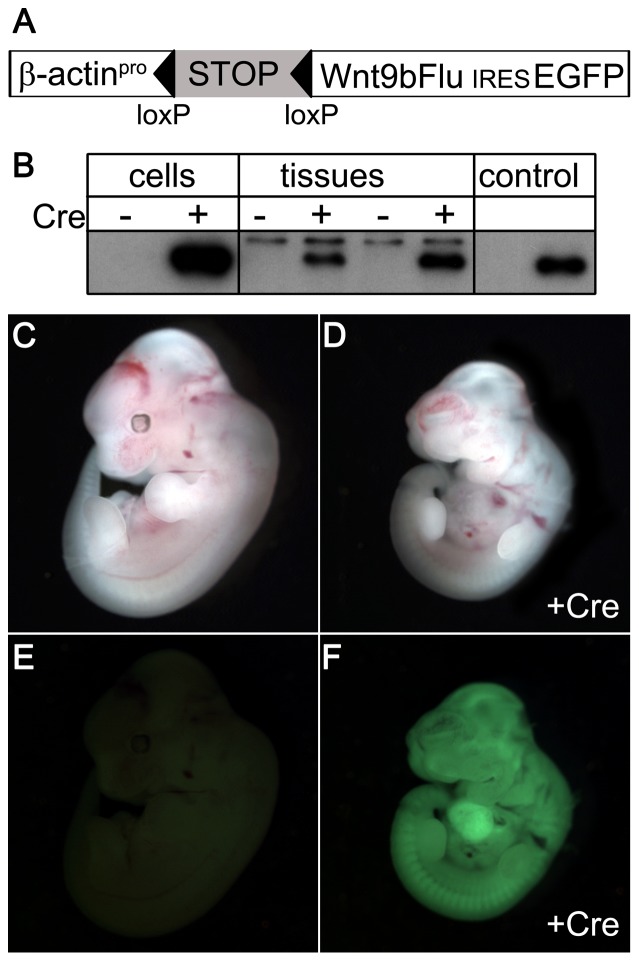
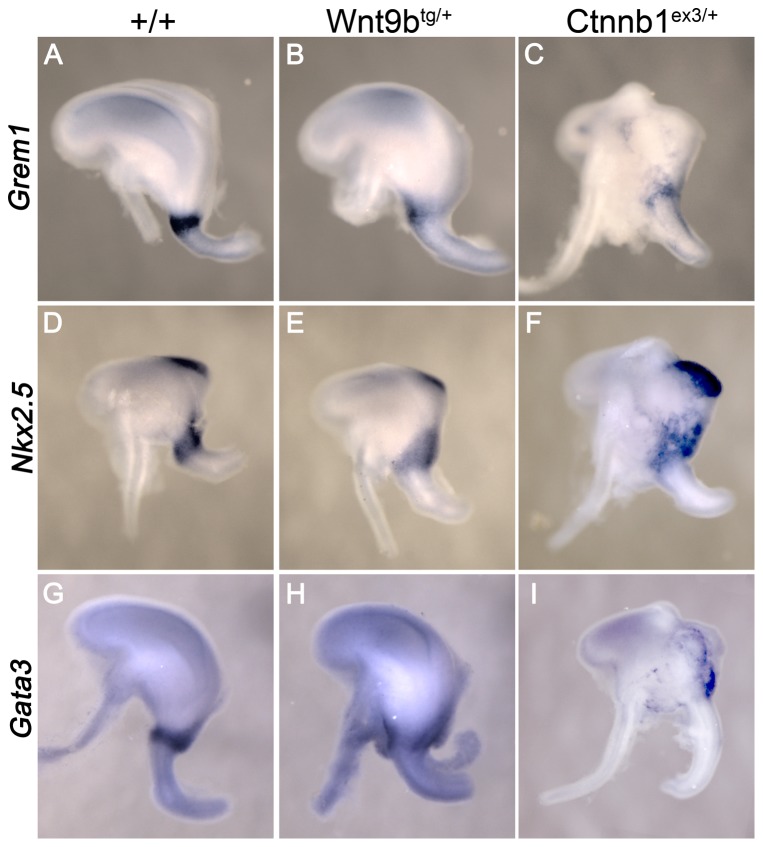
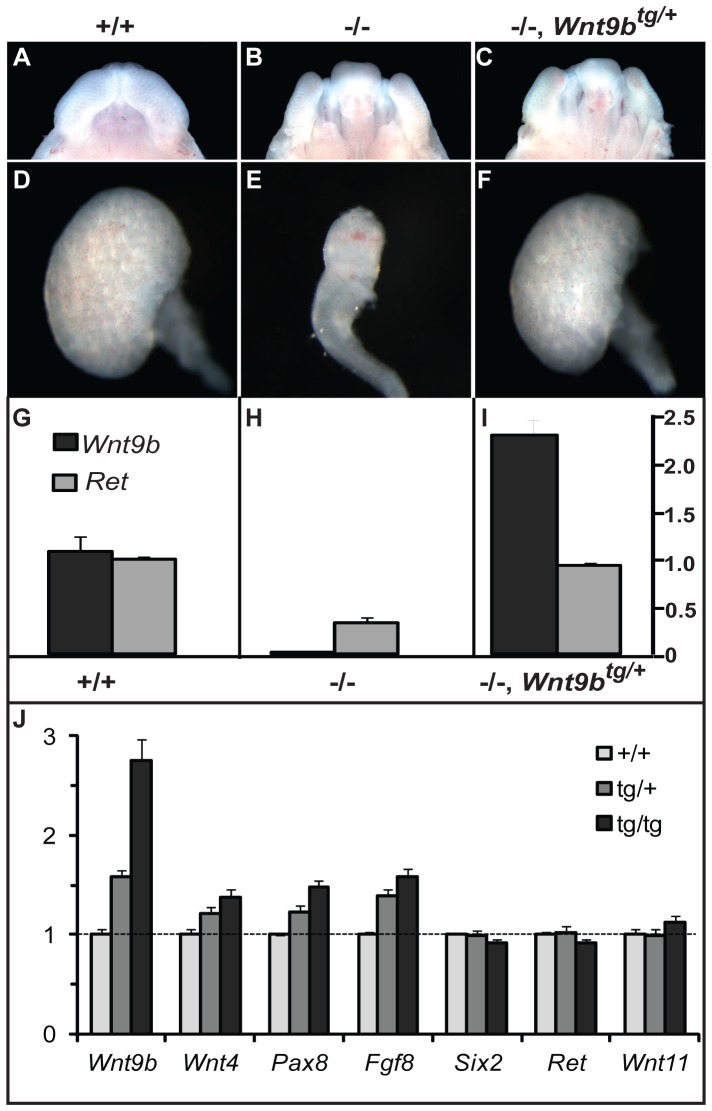
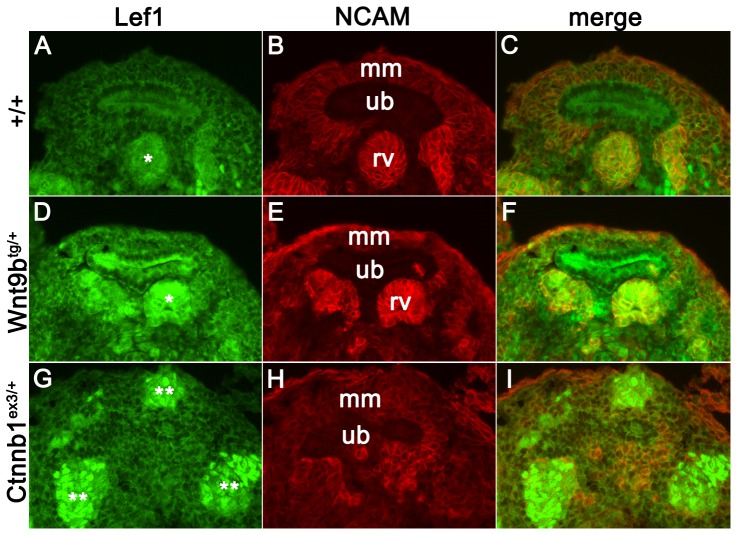
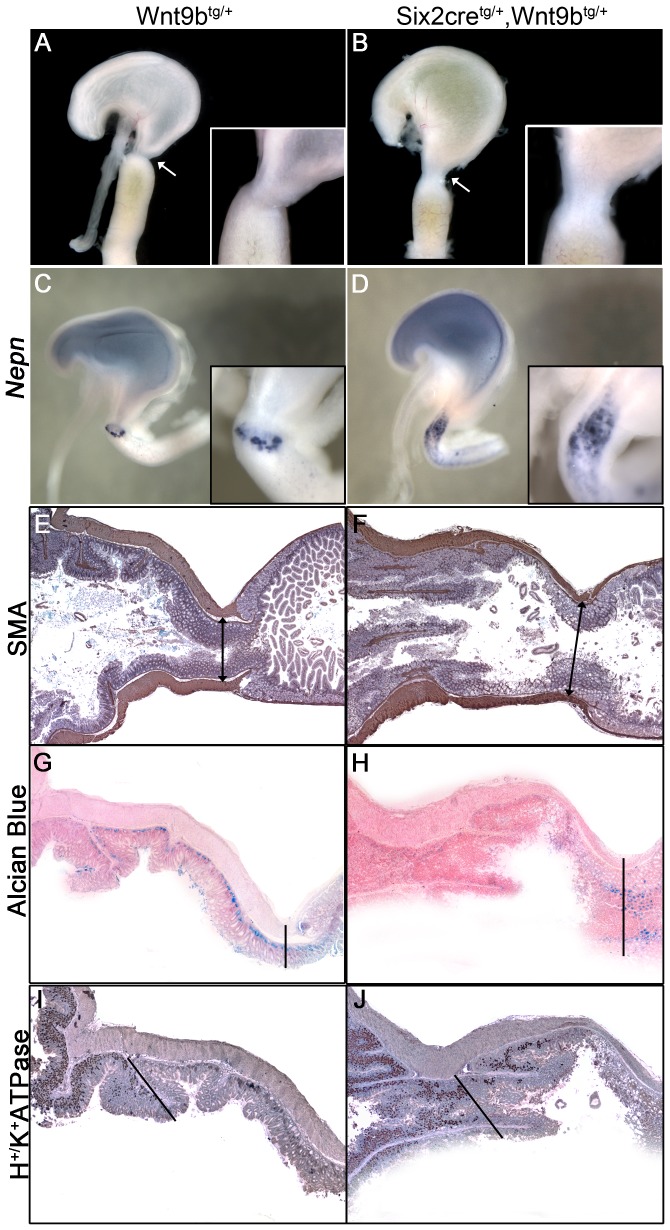
During kidney development, canonical Wnt signaling activates differentiation, while the transcription factor Six2 maintains the progenitor pool. These opposing signals help to regulate nephron formation and ensure the full complement of nephrons are formed. Since these two factors control differing fates in kidney mesenchyme, we hypothesized that overexpression of Wnt9b in Six2-expressing cells would disrupt kidney formation and may alter cell differentiation decisions in other tissues. We created a transgenic mouse that conditionally expressed the canonical Wnt ligand in the developing kidney, Wnt9b. The transgene is activated by cre recombinase and expresses GFP. We first tested its biological activity using Hoxb7-cre and found that transgenic Wnt9b was capable of inducing differentiation genes and of rescuing kidney development in Wnt9b(-/-) homozygous deficient mice. In contrast, expression of Wnt9b in cells using Six2-cre caused gastrointestinal distress and severe renal failure in adult mice. Transgenic kidneys had numerous cystic tubules and elevated creatinine values (0.652 ± 0.044) compared to wild-type mice (0.119 ± 0.002). These animals also exhibited a malformed pyloric sphincter, duodenogastric reflux, and a transformation of the distal stomach into proximal fate. The gene expression changes observed for the Wnt9b:EGFP transgene were compared to a stabilized β-catenin allele to determine that Wnt9b is activating the canonical Wnt pathway in the tissues analyzed. These results demonstrate that expression of Wnt9b in Six2-positive cells disrupts cell fate decisions in the kidney and the gastrointestinal tract.
在肾脏发育过程中,经典 Wnt 信号激活分化,而转录因子 Six2 则维持祖细胞库。这些相反的信号有助于调节肾单位的形成,并确保形成完整的肾单位数量。由于这两个因素控制着肾脏间质中不同的命运,我们假设在 Six2 表达细胞中过表达 Wnt9b 会破坏肾脏形成,并可能改变其他组织中的细胞分化决定。我们创建了一种条件性表达经典 Wnt 配体 Wnt9b 的转基因小鼠。该转基因由 cre 重组酶激活,并表达 GFP。我们首先使用 Hoxb7-cre 测试了其生物学活性,发现转基因 Wnt9b 能够诱导分化基因,并能挽救 Wnt9b(-/-)纯合缺陷小鼠的肾脏发育。相比之下,使用 Six2-cre 在细胞中表达 Wnt9b 会导致成年小鼠出现胃肠道不适和严重的肾衰竭。转基因肾脏有许多囊性小管,肌酐值升高(0.652 ± 0.044)与野生型小鼠相比(0.119 ± 0.002)。这些动物还表现出幽门括约肌畸形、十二指肠胃反流以及远端胃向近端命运的转变。与稳定的β-连环蛋白等位基因相比,观察到 Wnt9b:EGFP 转基因的基因表达变化,以确定 Wnt9b 正在分析的组织中激活经典 Wnt 途径。这些结果表明,在 Six2 阳性细胞中表达 Wnt9b 会破坏肾脏和胃肠道中的细胞命运决定。