Electrical Engineering Department, University of California, Los Angeles, CA, USA.
Lab Chip. 2012 Oct 21;12(20):4102-6. doi: 10.1039/c2lc40614d.
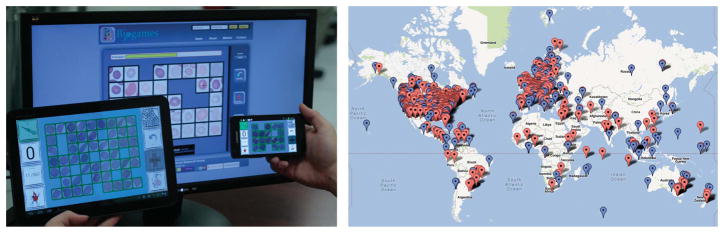
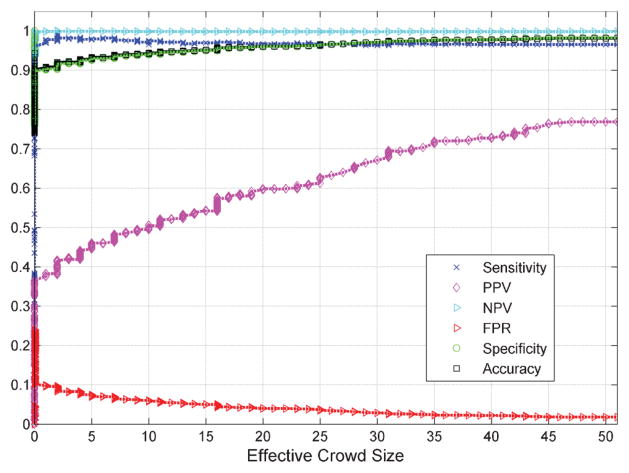
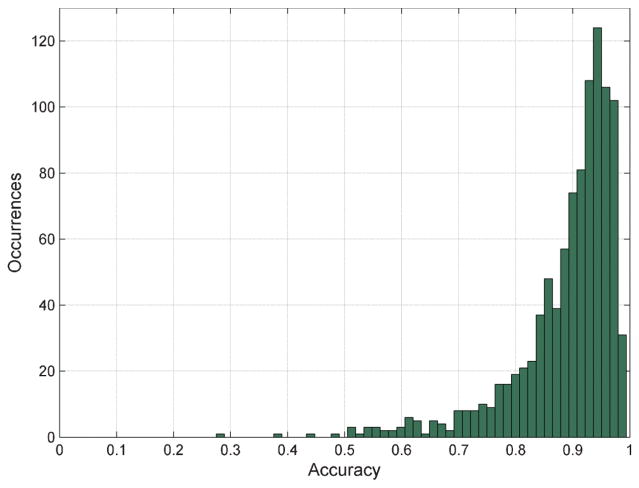
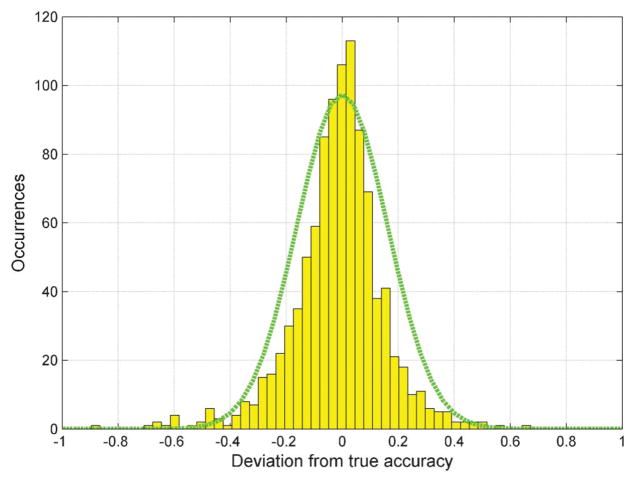
We describe a crowd-sourcing based solution for handling large quantities of data that are created by e.g., emerging digital imaging and sensing devices, including next generation lab-on-a-chip platforms. We show that in cases where the diagnosis is a binary decision (e.g., positive vs. negative, or infected vs. uninfected), it is possible to make accurate diagnosis by crowd-sourcing the raw data (e.g., microscopic images of specimens/cells) using entertaining digital games (i.e., ) that are played on PCs, tablets or mobile phones. We report the results and the analysis of a large-scale public experiment toward diagnosis of malaria infected human red blood cells (RBCs), where binary responses from approximately 1000 untrained individuals from more than 60 different countries are combined together (corresponding to more than 1 million cell diagnoses), resulting in an accuracy level that is comparable to those of expert medical professionals. This platform holds promise toward cost-effective and accurate tele-pathology, improved training of medical personnel, and can also be used to manage the "Big Data" problem that is emerging through next generation digital lab-on-a-chip devices.
我们描述了一种基于众包的解决方案,用于处理大量数据,这些数据由新兴的数字成像和传感设备生成,包括下一代芯片实验室平台。我们表明,在诊断是二进制决策的情况下(例如阳性与阴性,或感染与未感染),通过使用在个人电脑、平板电脑或移动电话上玩的有趣的数字游戏(即)来对原始数据(例如,标本/细胞的显微镜图像)进行众包,可以做出准确的诊断。我们报告了一项针对疟疾感染的人类红细胞(RBC)诊断的大规模公开实验的结果和分析,来自 60 多个不同国家的大约 1000 名未经训练的个体的二进制响应被组合在一起(相当于超过 100 万次细胞诊断),得到的准确性与专家医疗专业人员相当。该平台有望实现经济高效和准确的远程病理学、医疗人员培训的改善,并且还可以用于管理通过下一代数字芯片实验室设备产生的“大数据”问题。