Papaioannou Vasilios E, Verkerk Arie O, Amin Ahmed S, de Bakker Jaques M T
Democritus University of Thrace, Alexandroupolis University Hospital, Intensive Care Unit, Alexandroupolis Medical School, Dragana 68100, Greece.
Curr Cardiol Rev. 2013 Feb 1;9(1):82-96. doi: 10.2174/157340313805076359.
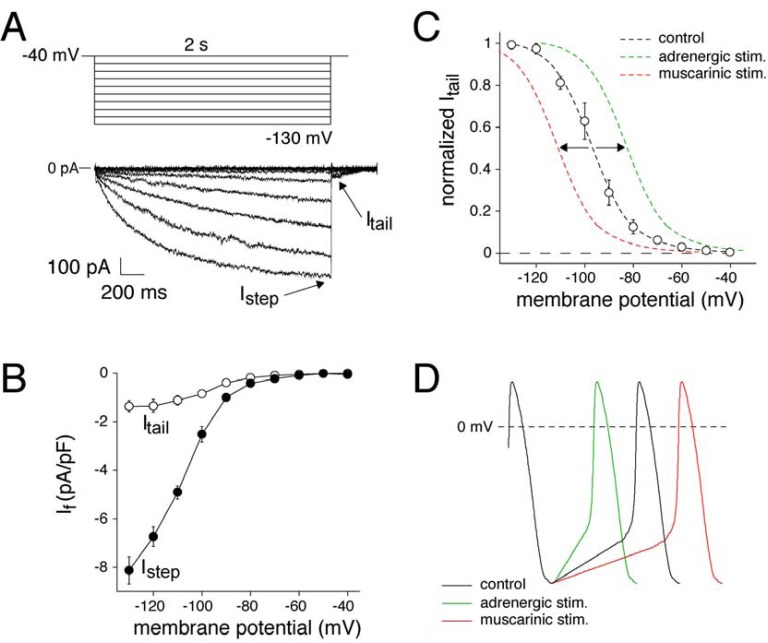
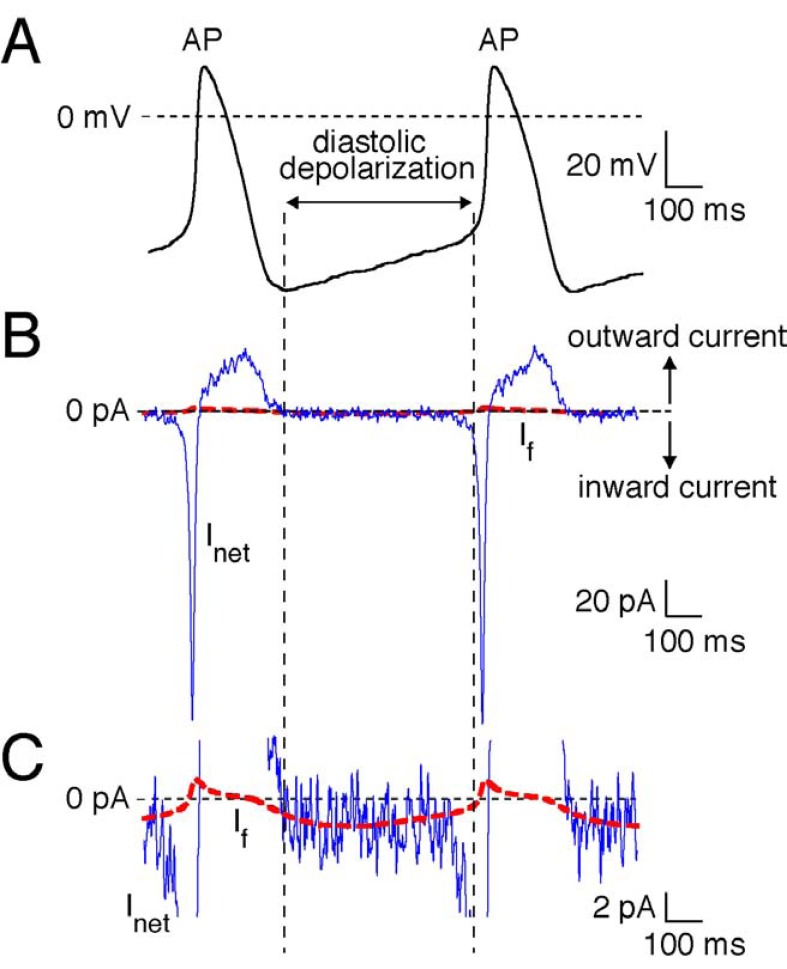
Heart rate variability (HRV) is an indirect estimator of autonomic modulation of heart rate and is considered a risk marker in critical illness, particularly in heart failure and severe sepsis. A reduced HRV has been found in critically ill patients and has been associated with neuro-autonomic uncoupling or decreased baroreflex sensitivity. However, results from human and animal experimental studies indicate that intracardiac mechanisms might also be responsible for interbeat fluctuations. These studies have demonstrated that different membrane channel proteins and especially the so-called 'funny' current (If), an hyperpolarization-activated, inward current that drives diastolic depolarization resulting in spontaneous activity in cardiac pacemaker cells, are altered during critical illness. Furthermore, membrane channels kinetics seem to have significant impact upon HRV, whose early decrease might reflect a cellular metabolic stress. In this review article we present research findings regarding intracardiac origin of HRV, at the cellular level and in both isolated sinoatrial node and whole ex vivo heart preparations. In addition, we will review results from various experimental studies that support the interrelation between If and HRV during endotoxemia. We suggest that reduced HRV during sepsis could also be associated with altered pacemaker cell membrane properties, due to ionic current remodeling.
心率变异性(HRV)是心率自主调节的一种间接评估指标,被认为是危重病尤其是心力衰竭和严重脓毒症的风险标志物。在危重病患者中发现HRV降低,且与神经自主解耦或压力反射敏感性降低有关。然而,人和动物实验研究的结果表明,心内机制也可能是心跳间期波动的原因。这些研究表明,在危重病期间,不同的膜通道蛋白,特别是所谓的“起搏电流”(If),一种超极化激活的内向电流,它驱动舒张期去极化,导致心脏起搏细胞的自发活动,会发生改变。此外,膜通道动力学似乎对HRV有重大影响,HRV的早期降低可能反映了细胞代谢应激。在这篇综述文章中,我们展示了关于HRV心内起源的研究结果,涉及细胞水平以及分离的窦房结和完整的离体心脏标本。此外,我们将回顾各种实验研究的结果,这些结果支持在内毒素血症期间If与HRV之间的相互关系。我们认为,脓毒症期间HRV降低也可能与起搏细胞膜特性改变有关,这是由于离子电流重塑所致。