Yang Fuquan, Gaudio Eugenio, Onori Paolo, Wise Candace, Alpini Gianfranco, Glaser Shannon S
Department of Medicine, Scott & White and Texas A&M Health Science Center, College of Medicine, Temple, Texas.
J Cell Death. 2010 Mar 17;3:13-21. doi: 10.4137/JCD.S2785.
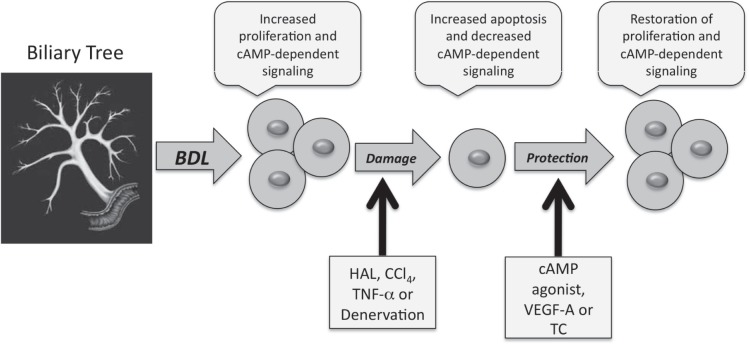
Bile duct damage is present in virtually all cholangiopathies, which share the biliary epithelial cells (i.e. cholangiocytes) as a common pathogenic target. Cholangiocyte cell death largely occurs through the process of apoptosis. In this review, we will summarize the mechanisms through which biliary damage occurs in a variety of animal and in vitro models, such as extrahepatic cholestasis induced by bile duct ligation (BDL), cytotoxin- and hepatotoxin-induced liver injury, and biliary atresia. Although we have increased our knowledge of the factors that regulate cholangiocyte cell death mechanisms during cholangiopathies, especially in experimental models, there is still a lack of effective treatment modalities for these biliary disorders. However, future studies will hopefully provide for new therapeutic modalities for the prevention or restoration of biliary mass and function lost during the progression of cholangiopathies.
几乎所有胆管疾病中都存在胆管损伤,这些疾病都将胆管上皮细胞(即胆管细胞)作为共同的致病靶点。胆管细胞死亡主要通过凋亡过程发生。在本综述中,我们将总结在各种动物和体外模型中胆管损伤发生的机制,如胆管结扎(BDL)诱导的肝外胆汁淤积、细胞毒素和肝毒素诱导的肝损伤以及胆道闭锁。尽管我们对胆管疾病期间调节胆管细胞死亡机制的因素的认识有所增加,尤其是在实验模型中,但对于这些胆管疾病仍缺乏有效的治疗方法。然而,未来的研究有望提供新的治疗方法,以预防或恢复胆管疾病进展过程中丧失的胆管质量和功能。