Dupclay Leon, Eaddy Michael, Jackson James, Raju Aditya, Shim Andrew
Novartis Pharmaceuticals, East Hanover, NJ.
Patient Prefer Adherence. 2012;6:499-507. doi: 10.2147/PPA.S31417. Epub 2012 Jul 18.
Patient medication adherence is multidimensional and poses significant concerns to health care professionals. One aspect of adherence is a patient forgetting to take their prescribed medication, which may be improved with reminder packaging (RP). The objective of this analysis was to assess the impact of RP on patient adherence to antihypertensive therapy.
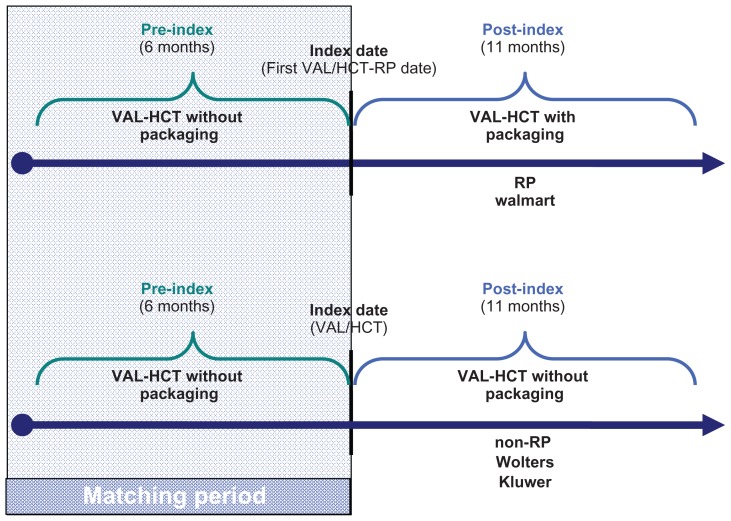
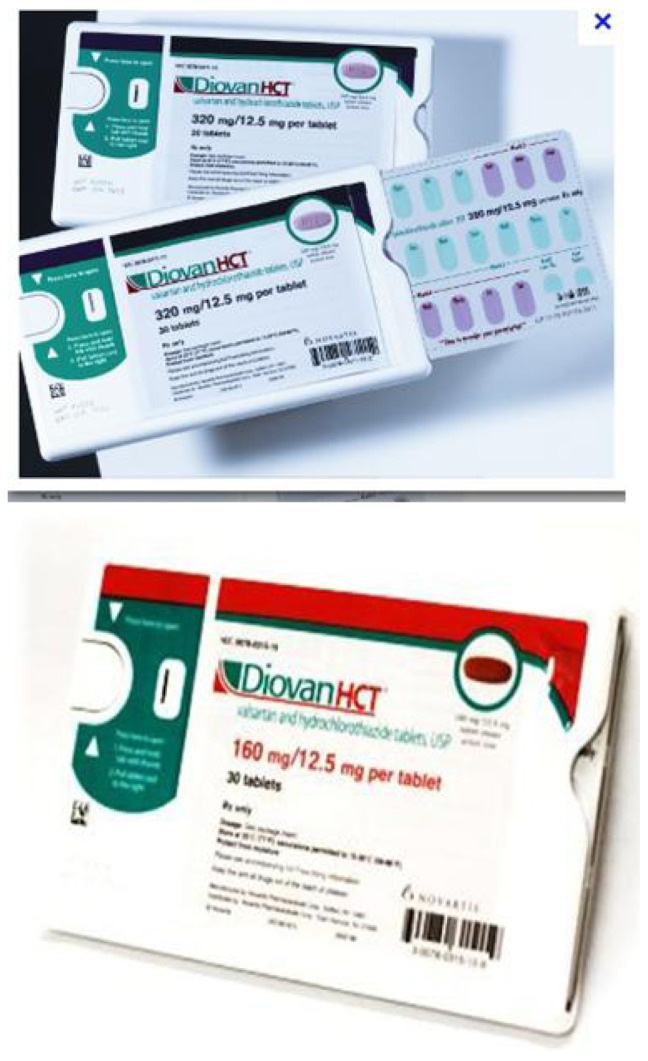
This retrospective, propensity score-matched study evaluated patients switching to a single-pill combination of valsartan-hydrochlorothiazide in RP compared with patients remaining on the combination without reminder packaging (non-RP). Patients receiving combination therapy between April 1, 2009 and July 31, 2010 were eligible for inclusion. Patients were propensity score-matched on baseline adherence and background demographic variables, including comorbidities. Medication possession ratio, proportion of days covered, time to refill, and time to discontinuation were evaluated as primary measures of subsequent adherence and persistence.
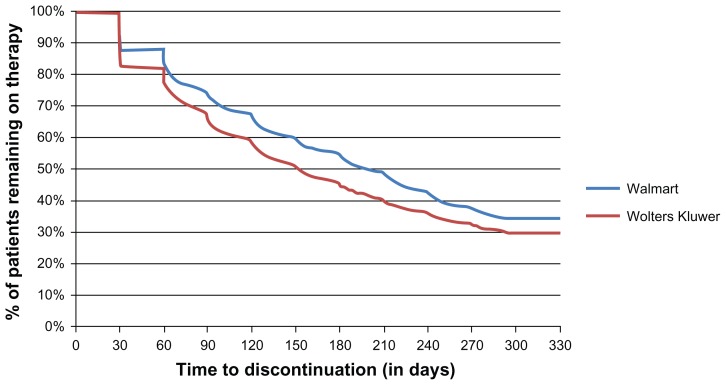
In a total of 9266 matched patients (4633 participants in both cohorts), adherence was significantly higher in the RP cohort compared with patients in the non-RP cohort (medication possession ratio, RP 80% versus non-RP 73%; proportion of days covered, RP 76% versus non-RP 63%; both P < 0.001). Refill timing was 10 days for RP patients versus 16 days for non-RP patients (P < 0.001). Similar trends were observed with respect to time to discontinuation (RP 196 days, non-RP 174 days; P < 0.001). A higher proportion of RP patients remained on therapy compared with non-RP patients, with patients in the RP group being 17% less likely to discontinue therapy compared with patients in the non-RP group (hazards ratio 0.833; 95% confidence interval 0.793-0.875).
This real-world assessment of differences in adherence and persistence rates demonstrated that patients receiving RP were more adherent and persistent with their treatment regimens.
患者的用药依从性具有多维度特点,这给医疗保健专业人员带来了重大担忧。依从性的一个方面是患者忘记服用规定药物,提醒包装(RP)可能会改善这一情况。本分析的目的是评估提醒包装对患者抗高血压治疗依从性的影响。
这项回顾性、倾向评分匹配研究评估了改用缬沙坦 - 氢氯噻嗪单 Pill 组合的提醒包装患者,并与继续使用无提醒包装(非 RP)组合的患者进行比较。2009 年 4 月 1 日至 2010 年 7 月 31 日期间接受联合治疗的患者符合纳入条件。患者在基线依从性和背景人口统计学变量(包括合并症)方面进行倾向评分匹配。药物持有率、覆盖天数比例、再次配药时间和停药时间被评估为后续依从性和持续性的主要指标。
在总共 9266 名匹配患者(两个队列各 4633 名参与者)中,提醒包装队列的依从性显著高于非提醒包装队列的患者(药物持有率,提醒包装组为 80%,非提醒包装组为 73%;覆盖天数比例,提醒包装组为 76%,非提醒包装组为 63%;两者 P < 0.001)。提醒包装患者的再次配药时间为 10 天,而非提醒包装患者为 16 天(P < 0.001)。在停药时间方面也观察到类似趋势(提醒包装组为 196 天,非提醒包装组为 174 天;P < 0.001)。与非提醒包装患者相比,提醒包装患者继续治疗的比例更高,提醒包装组患者停药的可能性比非提醒包装组患者低 17%(风险比 0.833;95%置信区间 0.793 - 0.875)。
这项对依从性和持续率差异的真实世界评估表明,接受提醒包装的患者对其治疗方案的依从性和持续性更高。