Joint IRB BSC Program in Computational Biology, Institute for Research in Biomedicine, Barcelona, Spain.
PLoS Comput Biol. 2012;8(8):e1002647. doi: 10.1371/journal.pcbi.1002647. Epub 2012 Aug 23.
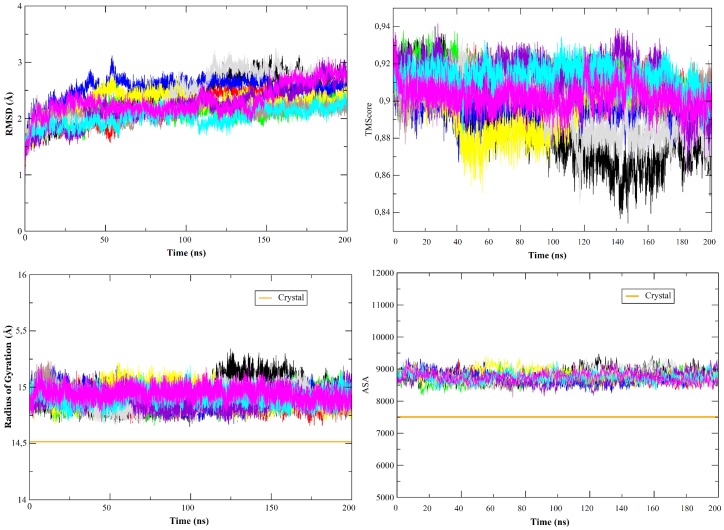
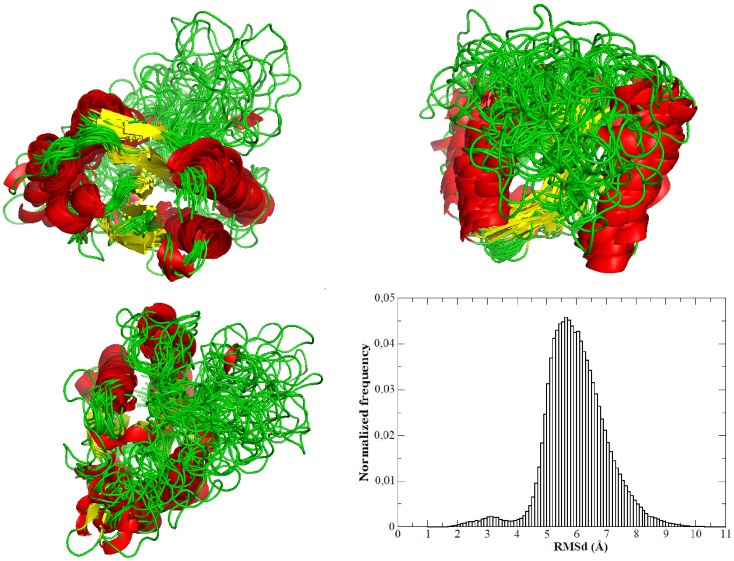
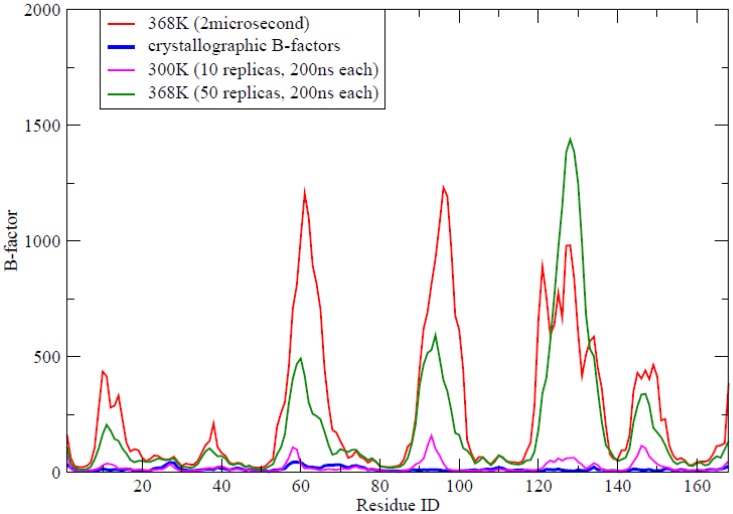
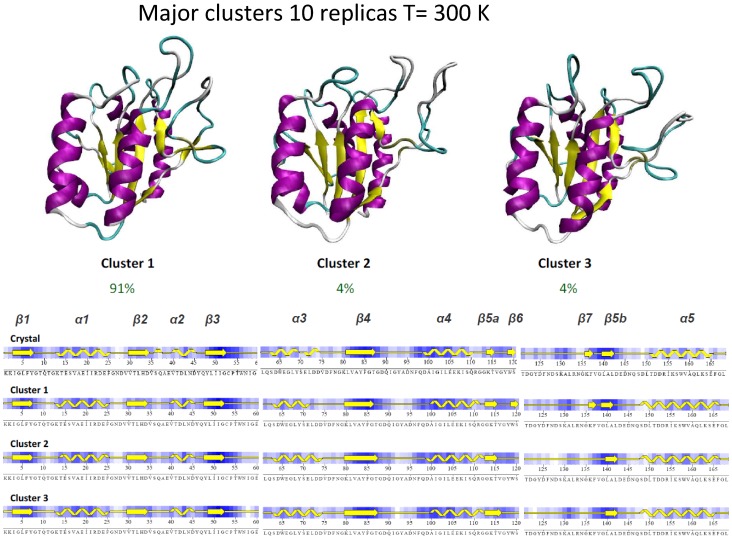
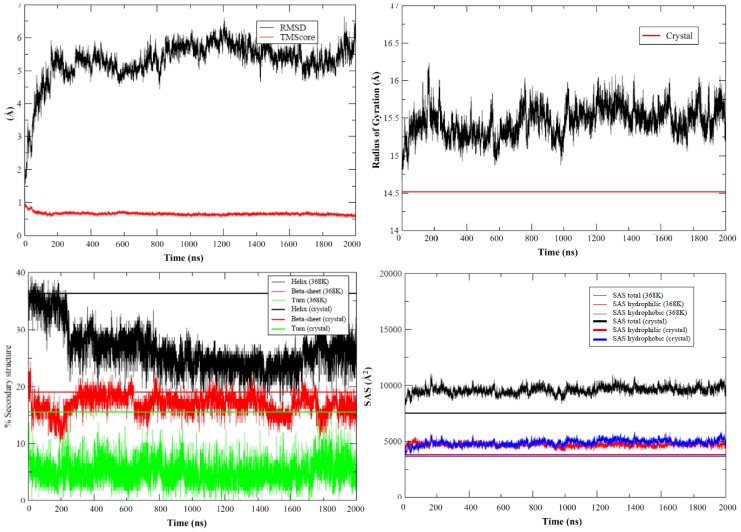
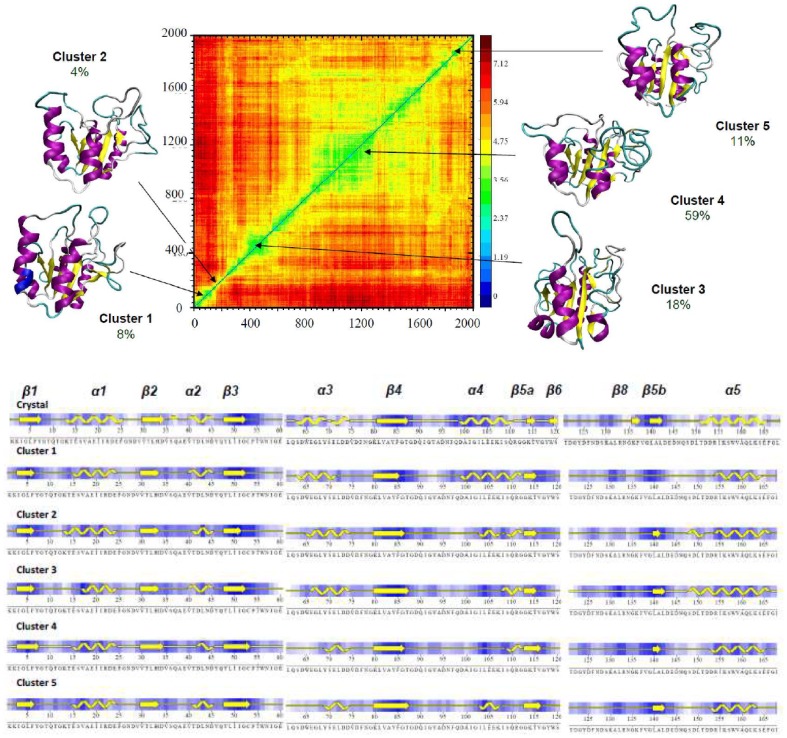
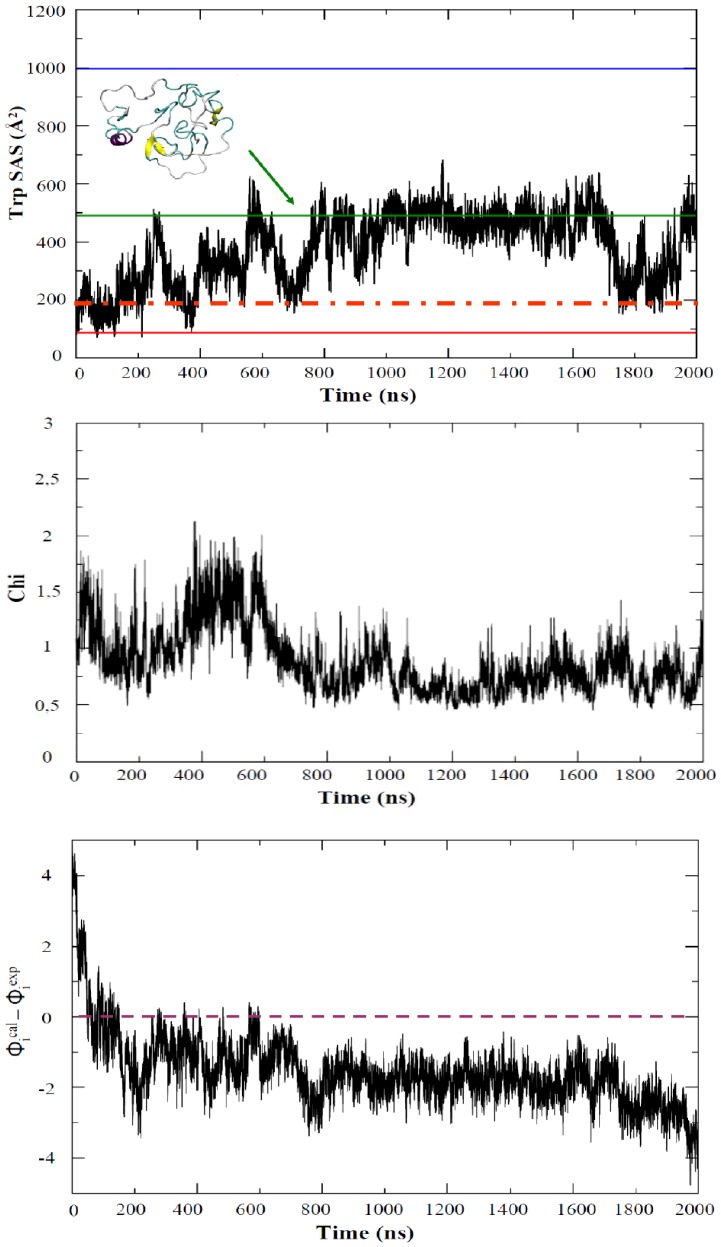
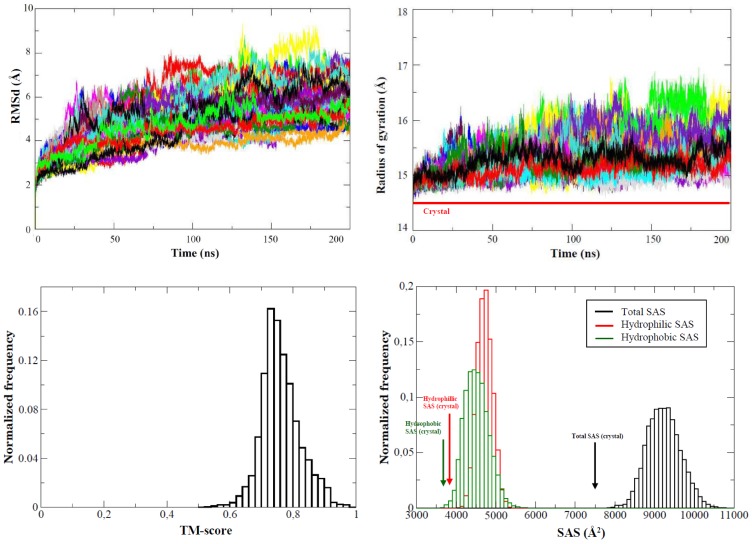
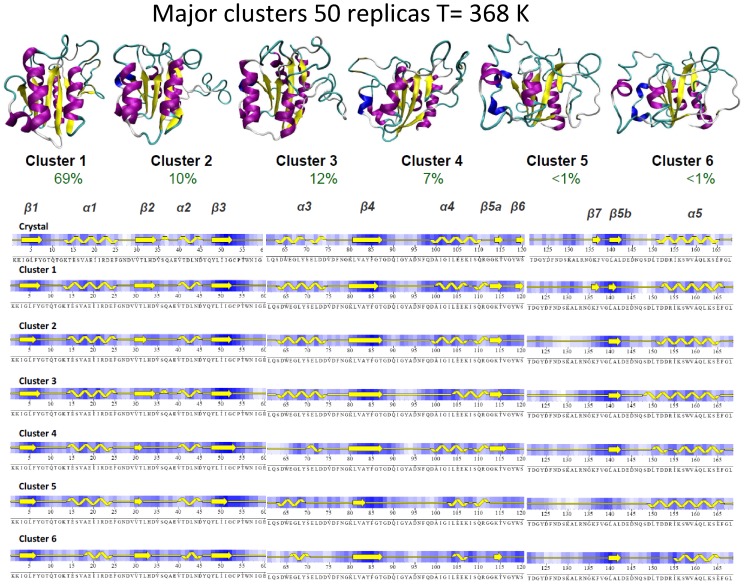
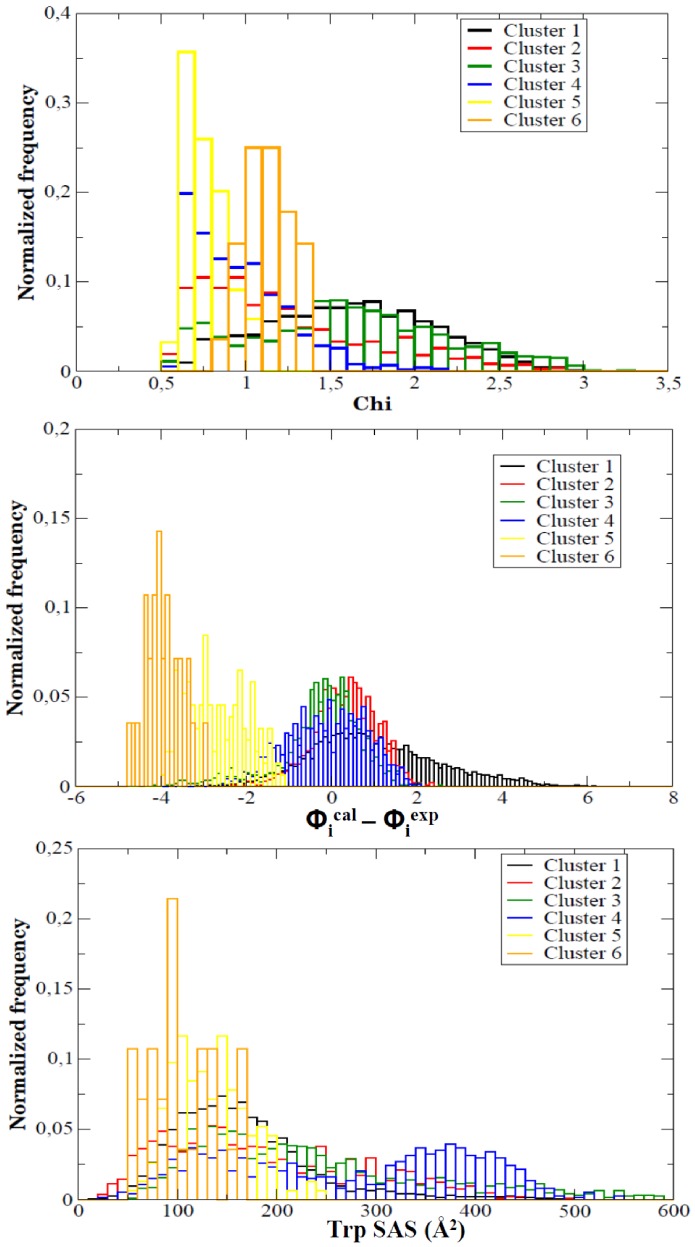
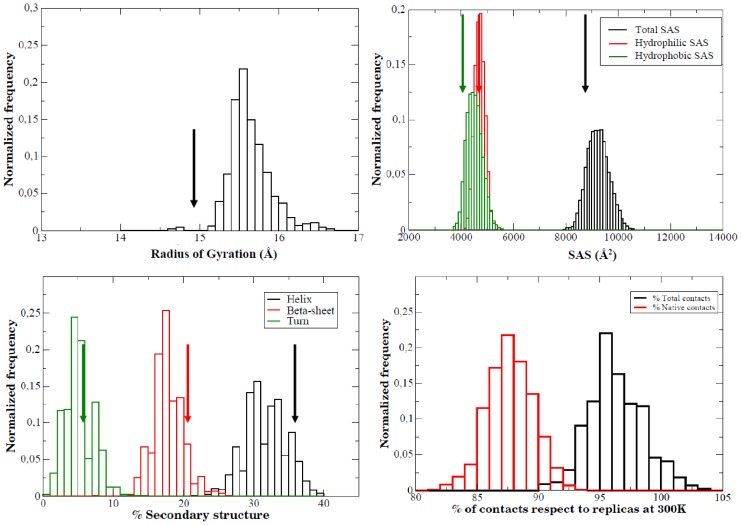
The early stages of the thermal unfolding of apoflavodoxin have been determined by using atomistic multi microsecond-scale molecular dynamics (MD) simulations complemented with a variety of experimental techniques. Results strongly suggest that the intermediate is reached very early in the thermal unfolding process and that it has the properties of an "activated" form of the native state, where thermal fluctuations in the loops break loop-loop contacts. The unrestrained loops gain then kinetic energy corrupting short secondary structure elements without corrupting the core of the protein. The MD-derived ensembles agree with experimental observables and draw a picture of the intermediate state inconsistent with a well-defined structure and characteristic of a typical partially disordered protein. Our results allow us to speculate that proteins with a well packed core connected by long loops might behave as partially disordered proteins under native conditions, or alternatively behave as three state folders. Small details in the sequence, easily tunable by evolution, can yield to one or the other type of proteins.
已通过使用原子级多微秒尺度分子动力学 (MD) 模拟并辅以多种实验技术来确定脱辅基 flavodoxin 的热变性的早期阶段。结果强烈表明,中间产物在热变性过程中很早就达到了,并且它具有天然状态的“激活”形式的特性,其中环中的热波动打破了环-环接触。无约束的环获得了动能,破坏了短二级结构元件而没有破坏蛋白质的核心。MD 得出的集合与实验可观察结果一致,并描绘了与明确定义的结构不一致的中间状态,这是典型的部分无序蛋白质的特征。我们的结果使我们能够推测,具有由长环连接的紧密堆积核心的蛋白质在天然条件下可能表现为部分无序的蛋白质,或者表现为三态折叠。序列中的小细节,很容易通过进化进行调整,可以产生一种或另一种类型的蛋白质。