Institute of Neuroscience and Medicine, Research Centre Jülich, Jülich, Germany.
PLoS One. 2012;7(8):e43537. doi: 10.1371/journal.pone.0043537. Epub 2012 Aug 22.
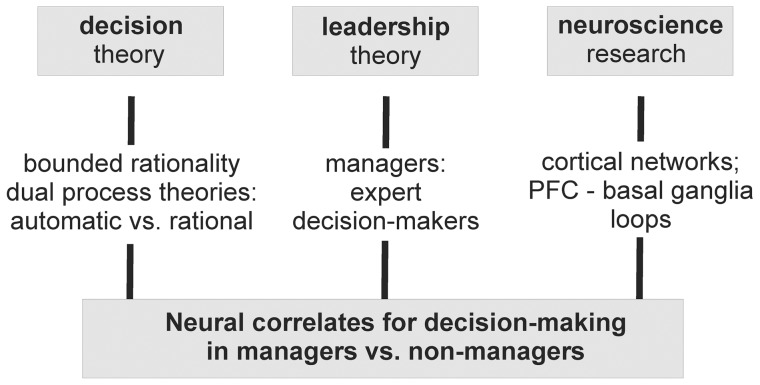
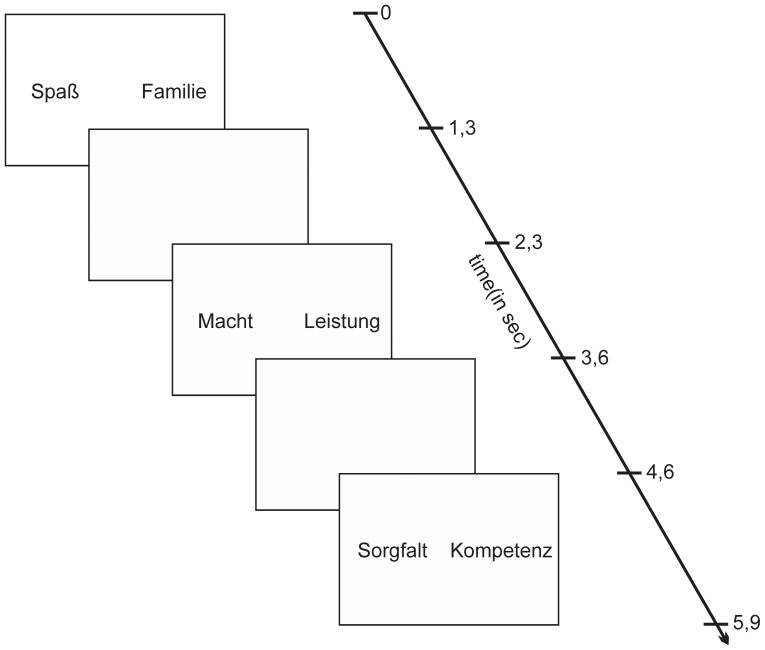
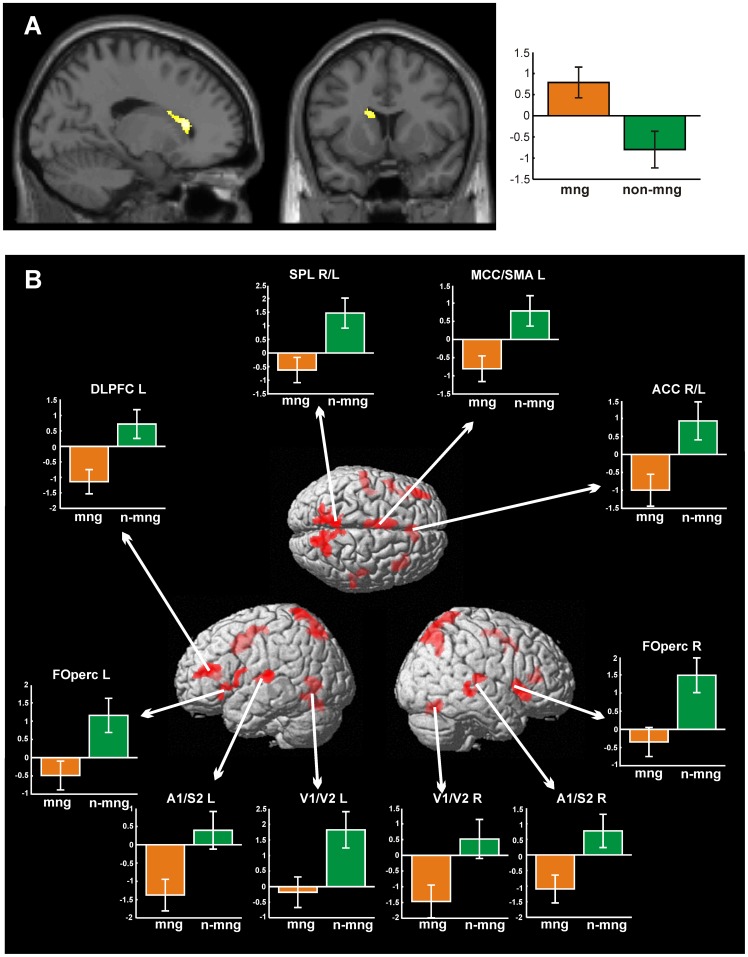
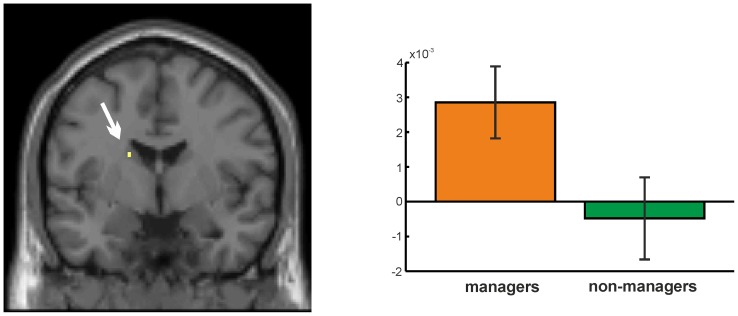
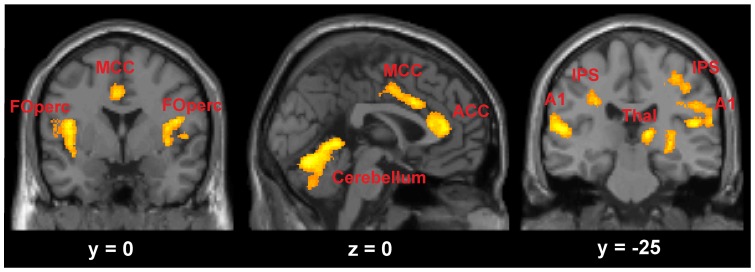
Functional neuroimaging studies of decision-making so far mainly focused on decisions under uncertainty or negotiation with other persons. Dual process theory assumes that, in such situations, decision making relies on either a rapid intuitive, automated or a slower rational processing system. However, it still remains elusive how personality factors or professional requirements might modulate the decision process and the underlying neural mechanisms. Since decision making is a key task of managers, we hypothesized that managers, facing higher pressure for frequent and rapid decisions than non-managers, prefer the heuristic, automated decision strategy in contrast to non-managers. Such different strategies may, in turn, rely on different neural systems. We tested managers and non-managers in a functional magnetic resonance imaging study using a forced-choice paradigm on word-pairs. Managers showed subcortical activation in the head of the caudate nucleus, and reduced hemodynamic response within the cortex. In contrast, non-managers revealed the opposite pattern. With the head of the caudate nucleus being an initiating component for process automation, these results supported the initial hypothesis, hinting at automation during decisions in managers. More generally, the findings reveal how different professional requirements might modulate cognitive decision processing.
迄今为止,关于决策的功能性神经影像学研究主要集中在不确定情境下的决策或与他人的谈判。双加工理论假设,在这种情况下,决策依赖于快速的直觉、自动化或较慢的理性加工系统。然而,个性因素或职业要求如何调节决策过程和潜在的神经机制仍然难以捉摸。由于决策是管理者的关键任务,我们假设与非管理者相比,面临更多频繁和快速决策压力的管理者更倾向于启发式、自动化的决策策略。这种不同的策略可能反过来依赖于不同的神经系统。我们在一项功能磁共振成像研究中测试了管理者和非管理者,他们使用词汇对的强制选择范式进行决策。研究发现,管理者在尾状核头部呈现出皮质下激活,而大脑皮层的血液动力学反应减少。相比之下,非管理者则呈现出相反的模式。由于尾状核头部是自动化过程的起始组成部分,这些结果支持了最初的假设,暗示了管理者在决策中的自动化。更普遍地说,这些发现揭示了不同的职业要求如何调节认知决策过程。