Institute of Radiology, Clinical Centre of University of Sarajevo, Sarajevo, Bosnia and Herzegovina.
Radiol Oncol. 2010 Dec;44(4):220-7. doi: 10.2478/v10019-010-0046-4. Epub 2010 Oct 14.
Fistula is considered to be any abnormal passage which connects two epithelial surfaces. Parks' fistulae classification demonstrates the biggest practical significance and divides fistulae into: intersphincteric, transsphincteric, suprasphincteric and extrasphincteric. Etiology of perianal fistulae is most commonly linked with the inflammation of anal glands in Crohn's disease, tuberculosis, pelvic infections, pelvic malignant tumours, and with the radiotherapy. Diagnostic method options are: RTG fistulography, CT fistulography and magnetic resonance imaging (MRI) of pelvic organs.
We have included 24 patients with perirectal fistulae in the prospective study. X-rays fistulography, CT fistulography, and then MRI of the pelvic cavity have been performed on all patients. Accuracy of each procedure in regards to the patients and the etiologic cause have been statistically determined.
29.16% of transphincteric fistulae have been found, followed by 25% of intersphincteric, 25% of recto-vaginal, 12.5% of extrasphincteric, and 8.33% of suprasphincteric. Abscess collections have been found in 16.6% patients. The most frequent etiologic cause of perianal fistulae was Crohn's disease in 37.5%, where the accuracy of classification of MRI was 100%, CT was 11% and X-rays 0%. Ulcerous colitis was the second cause, with 20.9% where the accuracy of MRI was 100%, while CT was 80% and X-rays was 0%. All other etiologic causes of fistulae were found in 41.6% patients.
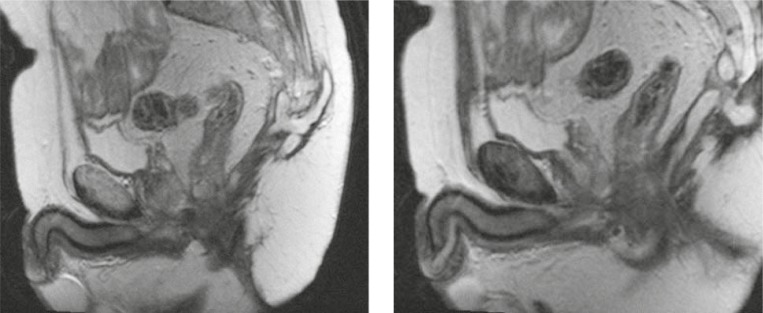
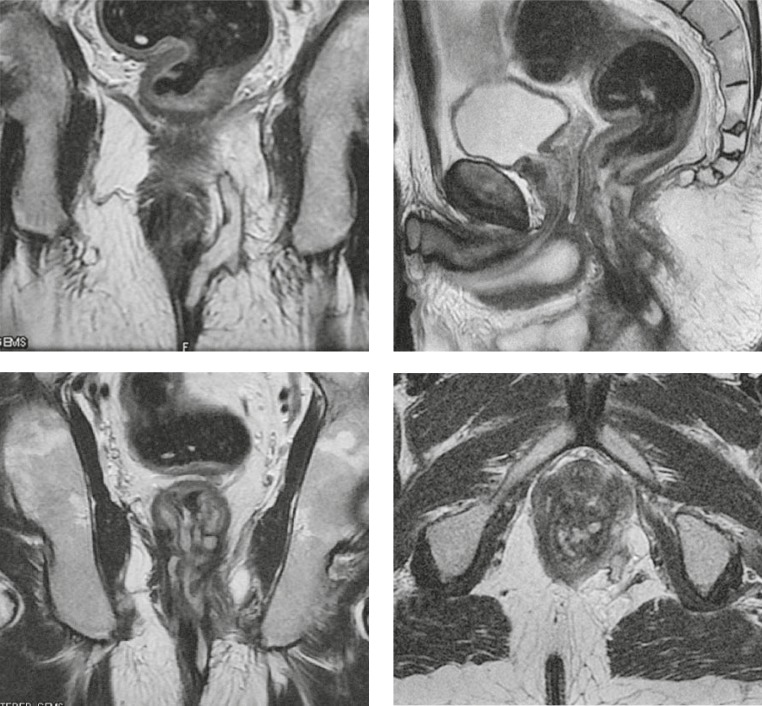
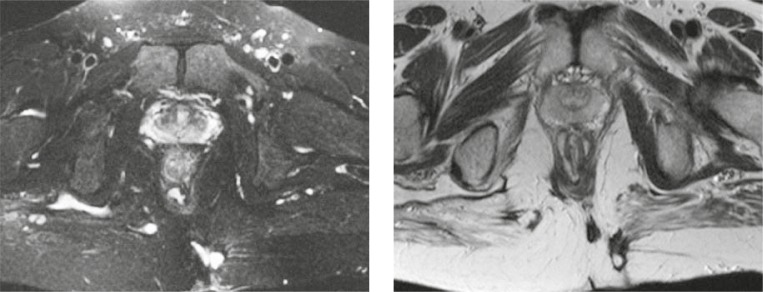
MRI is a reliable diagnostic modality in the classification of perirectal fistulae and can be an excellent diagnostic guide for successful surgical interventions with the aim to reduce the number of recurrences. Its advantage is that fistulae and abscess are visible without the need to apply any contrast medium.
瘘管被认为是连接两个上皮表面的任何异常通道。Parks 瘘管分类法具有最大的实际意义,将瘘管分为:经括约肌、括约肌间、括约肌上和括约肌外。肛周瘘管的病因最常见于克罗恩病、结核病、盆腔感染、盆腔恶性肿瘤和放疗相关的肛门腺炎症。诊断方法的选择有:直肠瘘管 X 射线造影、CT 瘘管造影和盆腔器官磁共振成像(MRI)。
我们对 24 例直肠周围瘘患者进行了前瞻性研究。所有患者均进行了 X 射线瘘管造影、CT 瘘管造影,然后进行盆腔 MRI。统计确定了每种方法对患者和病因的准确性。
发现经括约肌瘘 29.16%,其次是括约肌间瘘 25%、直肠阴道瘘 25%、括约肌外瘘 12.5%和括约肌上瘘 8.33%。脓肿患者占 16.6%。肛周瘘的最常见病因是克罗恩病,占 37.5%,MRI 分类的准确率为 100%,CT 为 11%,X 射线为 0%。溃疡性结肠炎是第二大病因,占 20.9%,MRI 的准确率为 100%,CT 为 80%,X 射线为 0%。其他瘘管病因占 41.6%。
MRI 是一种可靠的直肠周围瘘分类诊断方法,可为成功的手术干预提供极好的诊断指导,以减少复发的数量。其优点是瘘管和脓肿无需应用造影剂即可显示。