Bramsen Jesper B, Kjems Jørgen
Interdisciplinary Nanoscience Center, Department of Molecular Biology and Genetics, Aarhus University Aarhus C, Denmark.
Front Genet. 2012 Aug 20;3:154. doi: 10.3389/fgene.2012.00154. eCollection 2012.
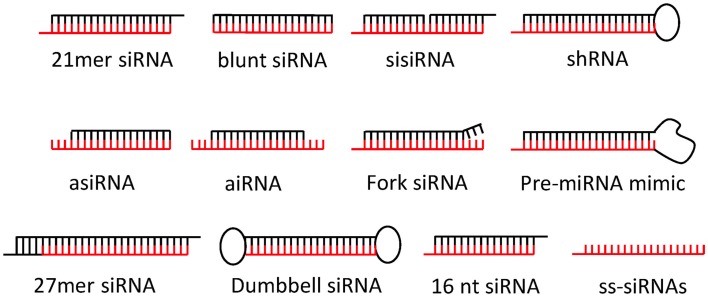
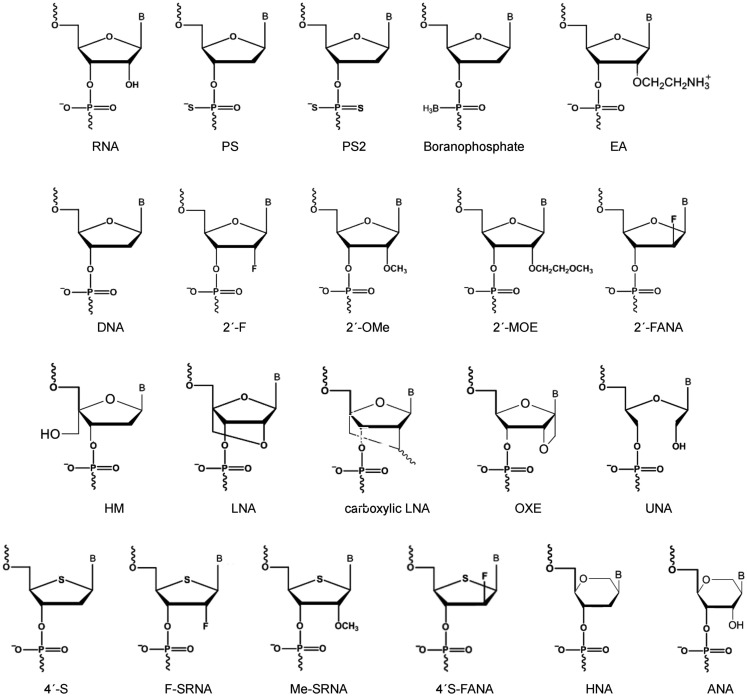
Recent successes in clinical trials have provided important proof of concept that small interfering RNAs (siRNAs) indeed constitute a new promising class of therapeutics. Although great efforts are still needed to ensure efficient means of delivery in vivo, the siRNA molecule itself has been successfully engineered by chemical modification to meet initial challenges regarding specificity, stability, and immunogenicity. To date, a great wealth of siRNA architectures and types of chemical modification are available for promoting safe siRNA-mediated gene silencing in vivo and, consequently, the choice of design and modification types can be challenging to individual experimenters. Here we review the literature and devise how to improve siRNA performance by structural design and specific chemical modification to ensure potent and specific gene silencing without unwarranted side-effects and hereby complement the ongoing efforts to improve cell targeting and delivery by other carrier molecules.
近期临床试验的成功提供了重要的概念验证,即小干扰RNA(siRNA)确实构成了一类新的、有前景的治疗药物。尽管仍需付出巨大努力以确保在体内的有效递送方式,但siRNA分子本身已通过化学修饰成功改造,以应对有关特异性、稳定性和免疫原性的初步挑战。迄今为止,有大量的siRNA结构和化学修饰类型可用于促进体内安全的siRNA介导的基因沉默,因此,设计和修饰类型的选择对个体实验者来说可能具有挑战性。在这里,我们回顾文献并设计如何通过结构设计和特定的化学修饰来提高siRNA性能,以确保有效的和特异性的基因沉默而无不必要的副作用,从而补充目前通过其他载体分子改善细胞靶向和递送的努力。