Department of Immunity and Infection, London School of Hygiene & Tropical Medicine, London, United Kingdom.
PLoS One. 2012;7(8):e42821. doi: 10.1371/journal.pone.0042821. Epub 2012 Aug 22.
In the era of malaria elimination and eradication, drug-based and vaccine-based approaches to reduce malaria transmission are receiving greater attention. Such interventions require assays that reliably measure the transmission of Plasmodium from humans to Anopheles mosquitoes.
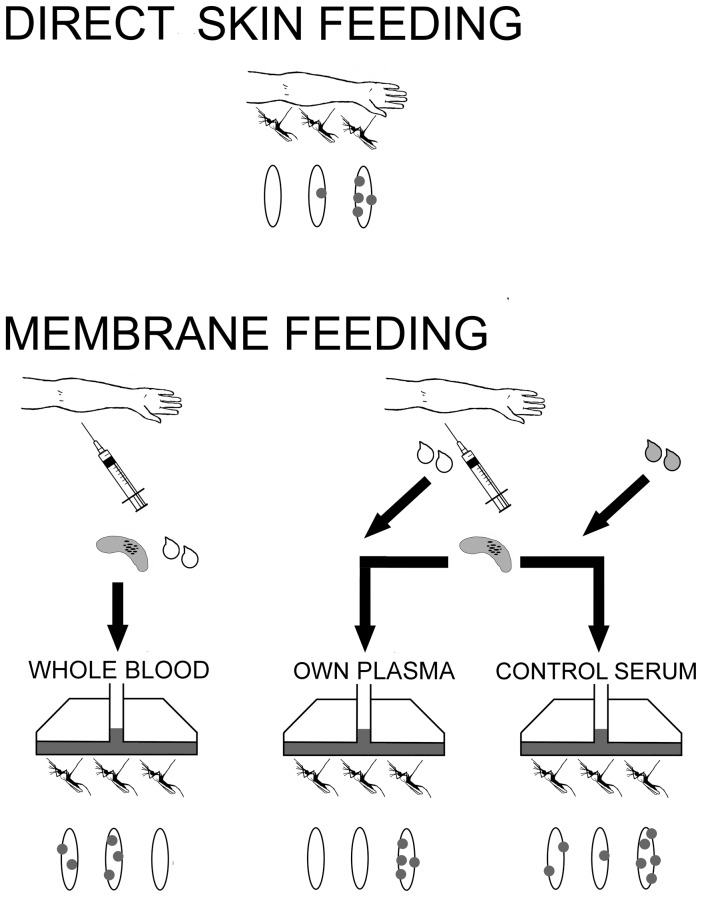
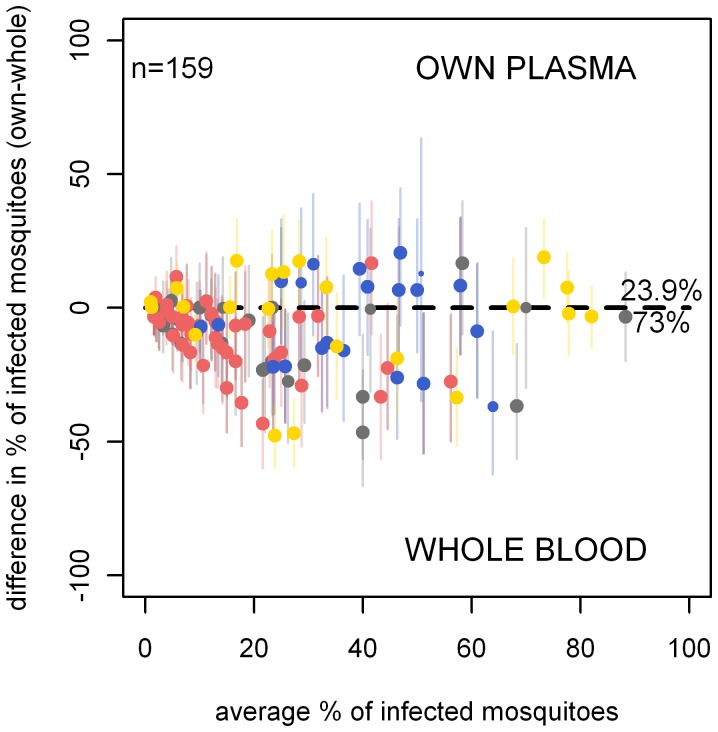
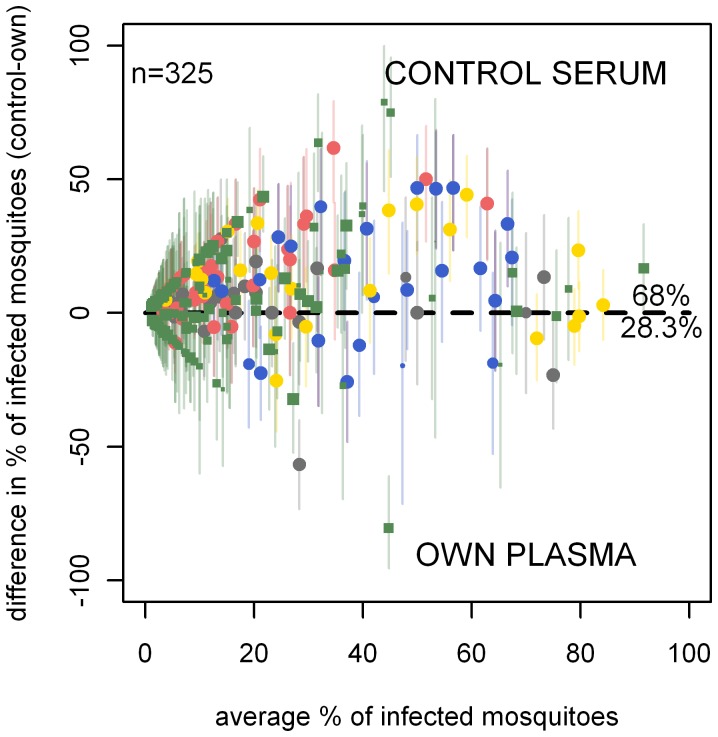
WE COMPARED TWO COMMONLY USED MOSQUITO FEEDING ASSAY PROCEDURES: direct skin feeding assays and membrane feeding assays. Three conditions under which membrane feeding assays are performed were examined: assays with i) whole blood, ii) blood pellets resuspended with autologous plasma of the gametocyte carrier, and iii) blood pellets resuspended with heterologous control serum.
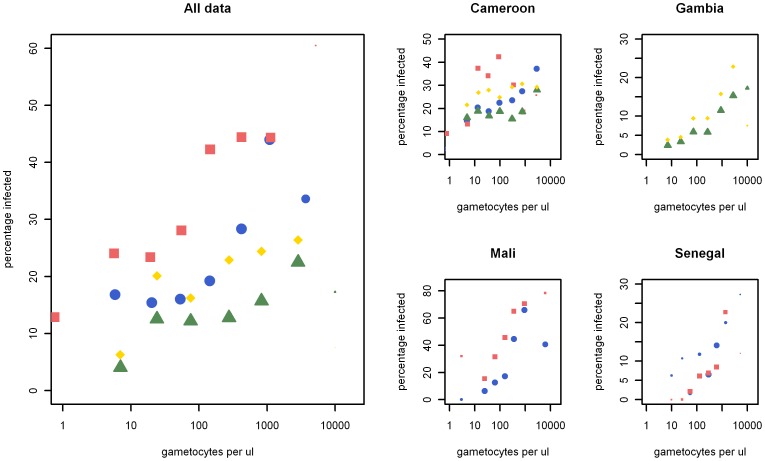
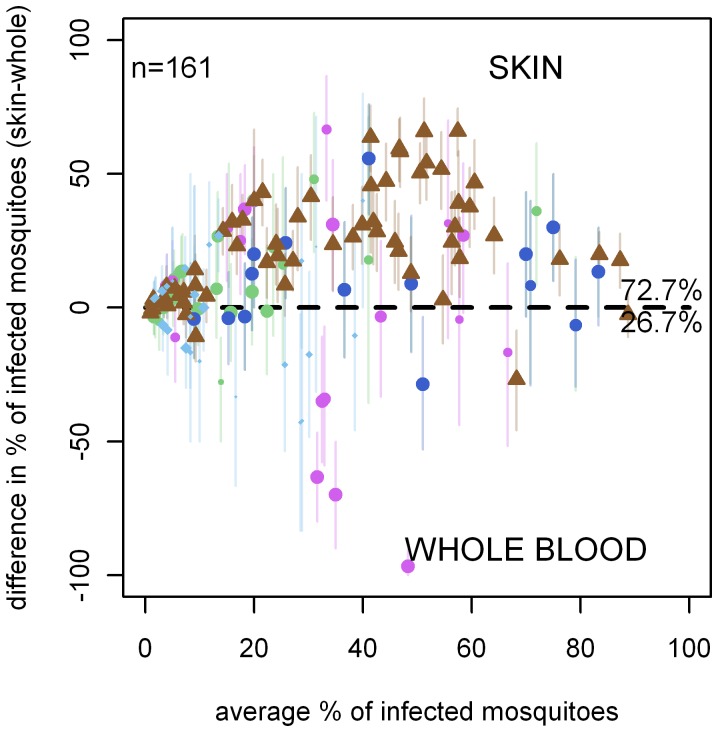
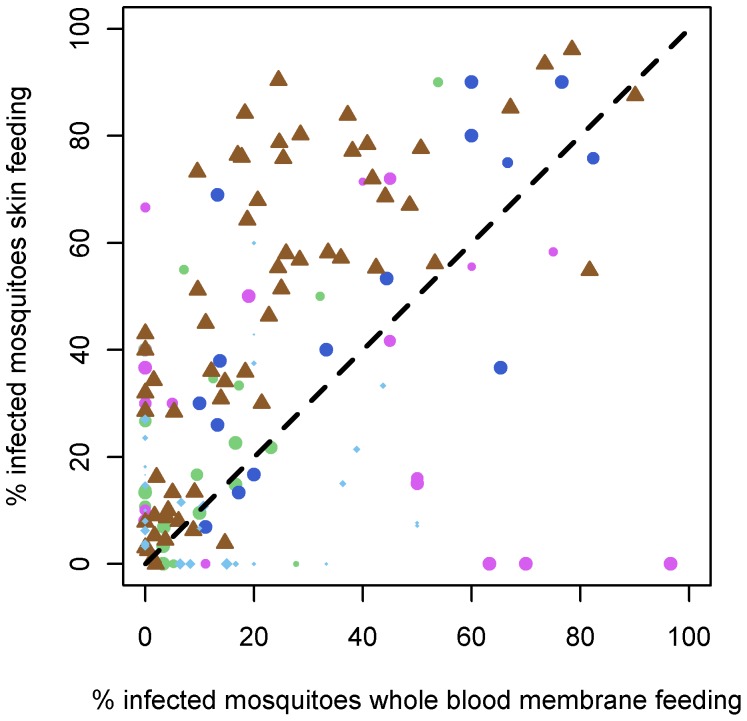
930 transmission experiments from Cameroon, The Gambia, Mali and Senegal were included in the analyses. Direct skin feeding assays resulted in higher mosquito infection rates compared to membrane feeding assays (odds ratio 2.39, 95% confidence interval 1.94-2.95) with evident heterogeneity between studies. Mosquito infection rates in membrane feeding assays and direct skin feeding assays were strongly correlated (p<0.0001). Replacing the plasma of the gametocyte donor with malaria naïve control serum resulted in higher mosquito infection rates compared to own plasma (OR 1.92, 95% CI 1.68-2.19) while the infectiousness of gametocytes may be reduced during the replacement procedure (OR 0.60, 95% CI 0.52-0.70).
Despite a higher efficiency of direct skin feeding assays, membrane feeding assays appear suitable tools to compare the infectiousness between individuals and to evaluate transmission-reducing interventions. Several aspects of membrane feeding procedures currently lack standardization; this variability makes comparisons between laboratories challenging and should be addressed to facilitate future testing of transmission-reducing interventions.
在疟疾消除和根除的时代,基于药物和疫苗的方法来降低疟疾传播受到了越来越多的关注。这些干预措施需要可靠地测量疟原虫从人类传播到按蚊的检测方法。
我们比较了两种常用的蚊子喂食检测方法:直接皮肤喂食检测和膜喂食检测。检查了膜喂食检测进行的三种条件:i)全血、ii)用配子体携带者的自体血浆重新悬浮的血球和 iii)用异体对照血清重新悬浮的血球。
共纳入来自喀麦隆、冈比亚、马里和塞内加尔的 930 次传播实验进行分析。与膜喂食检测相比,直接皮肤喂食检测导致更高的蚊子感染率(优势比 2.39,95%置信区间 1.94-2.95),且研究之间存在明显的异质性。膜喂食检测和直接皮肤喂食检测中的蚊子感染率呈强相关性(p<0.0001)。用疟疾未感染的对照血清代替配子体供体的血浆会导致比自身血浆更高的蚊子感染率(OR 1.92,95%CI 1.68-2.19),而配子体的感染力可能在替代过程中降低(OR 0.60,95%CI 0.52-0.70)。
尽管直接皮肤喂食检测效率更高,但膜喂食检测似乎是比较个体之间传染性和评估降低传播干预措施的合适工具。膜喂食程序的几个方面目前缺乏标准化;这种变异性使得实验室之间的比较具有挑战性,应该解决这个问题,以促进未来降低传播干预措施的测试。