Durrell Institute of Conservation and Ecology, School of Anthropology and Conservation, University of Kent, Canterbury, Kent, United Kingdom.
PLoS One. 2012;7(8):e43387. doi: 10.1371/journal.pone.0043387. Epub 2012 Aug 22.
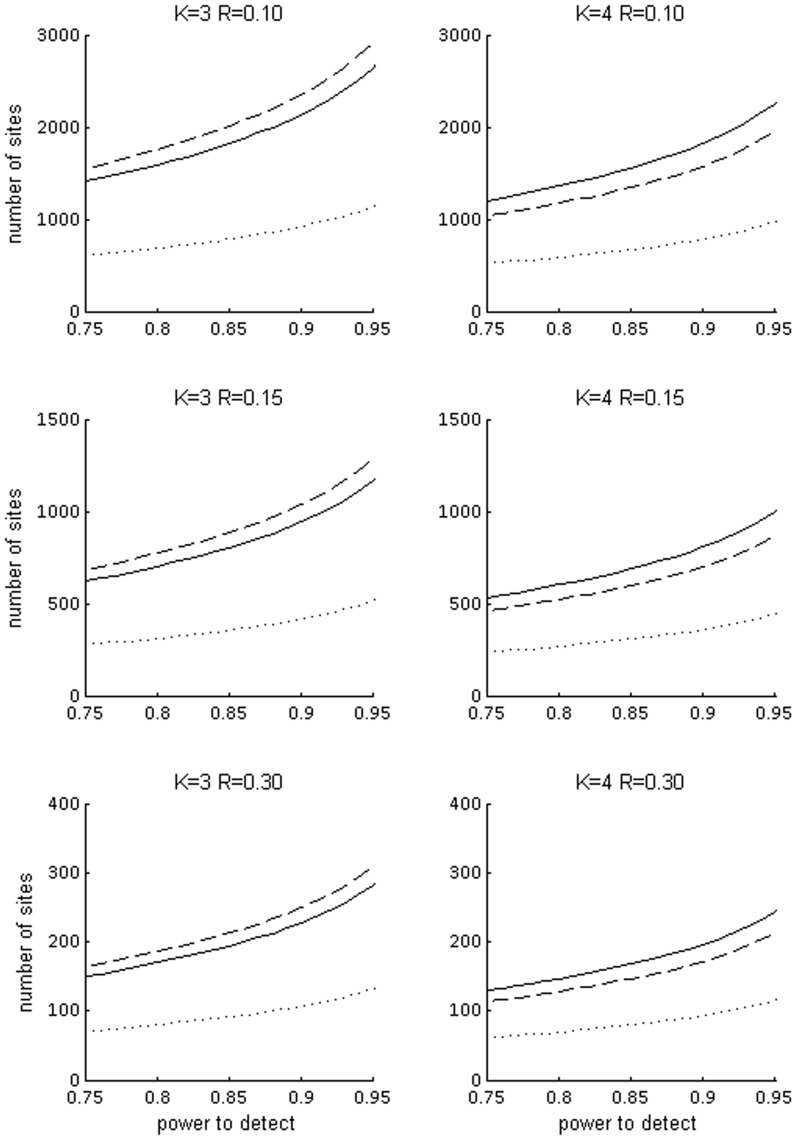
Biodiversity monitoring programs need to be designed so that population changes can be detected reliably. This can be problematical for species that are cryptic and have imperfect detection. We used occupancy modeling and power analysis to optimize the survey design for reptile monitoring programs in the UK. Surveys were carried out six times a year in 2009-2010 at multiple sites. Four out of the six species--grass snake, adder, common lizard, slow-worm -were encountered during every survey from March-September. The exceptions were the two rarest species--sand lizard and smooth snake--which were not encountered in July 2009 and March 2010 respectively. The most frequently encountered and most easily detected species was the slow-worm. For the four widespread reptile species in the UK, three to four survey visits that used a combination of directed transect walks and artificial cover objects resulted in 95% certainty that a species would be detected if present. Using artificial cover objects was an effective detection method for most species, considerably increased the detection rate of some, and reduced misidentifications. To achieve an 85% power to detect a decline in any of the four widespread species when the true decline is 15%, three surveys at a total of 886 sampling sites, or four surveys at a total of 688 sites would be required. The sampling effort needed reduces to 212 sites surveyed three times, or 167 sites surveyed four times, if the target is to detect a true decline of 30% with the same power. The results obtained can be used to refine reptile survey protocols in the UK and elsewhere. On a wider scale, the occupancy study design approach can be used to optimize survey effort and help set targets for conservation outcomes for regional or national biodiversity assessments.
生物多样性监测计划需要精心设计,以便能够可靠地检测到种群变化。对于那些隐蔽且难以察觉的物种来说,这可能是一个问题。我们使用占据模型和功效分析来优化英国爬行动物监测计划的调查设计。2009 年至 2010 年,在多个地点每年进行六次调查。在 3 月至 9 月的每次调查中,都遇到了 6 种中的 4 种物种——草蛇、蝰蛇、普通蜥蜴、慢蛇。例外的是两种最稀有的物种——沙蜥和光滑蛇——它们分别于 2009 年 7 月和 2010 年 3 月未被发现。最常遇到且最容易被发现的物种是慢蛇。对于英国四种分布广泛的爬行动物来说,三到四次使用定向样带行走和人工覆盖物相结合的调查访问,有 95%的把握可以检测到一个物种的存在。对于大多数物种来说,使用人工覆盖物是一种有效的检测方法,可以极大地提高某些物种的检测率,并减少误识别。为了在四种广泛分布的物种中,当实际下降率为 15%时,以 85%的功效检测到任何一种物种的下降,需要在总共 886 个采样点进行三次调查,或在总共 688 个采样点进行四次调查。如果目标是用相同的功效检测到真实下降 30%,则需要减少到调查三次的 212 个采样点,或调查四次的 167 个采样点。在更广泛的范围内,可以使用占用研究设计方法来优化调查工作,并帮助确定区域或国家生物多样性评估的保护结果目标。