Litras Stacey, Moore Dennis W, Anderson Angelika
Faculty of Education, Monash University, Melbourne 3166, Australia.
Autism Res Treat. 2010;2010:834979. doi: 10.1155/2010/834979. Epub 2010 Jun 9.
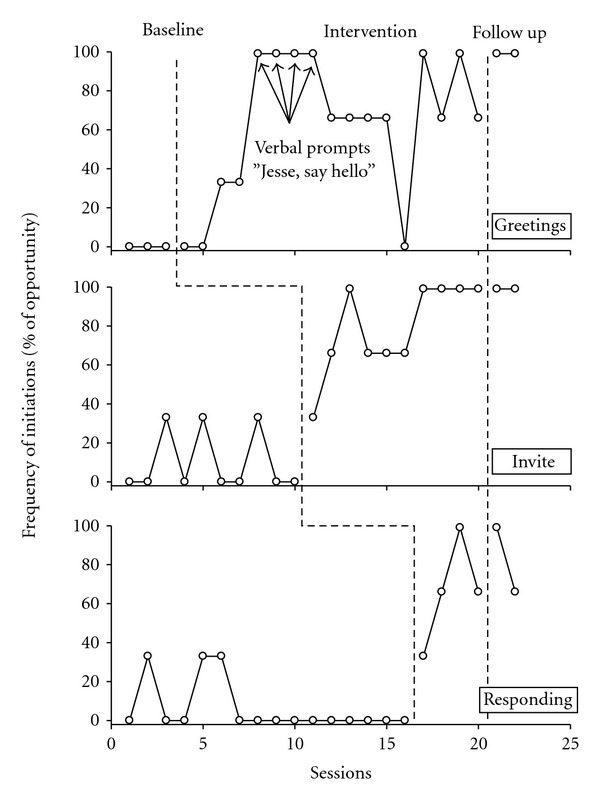
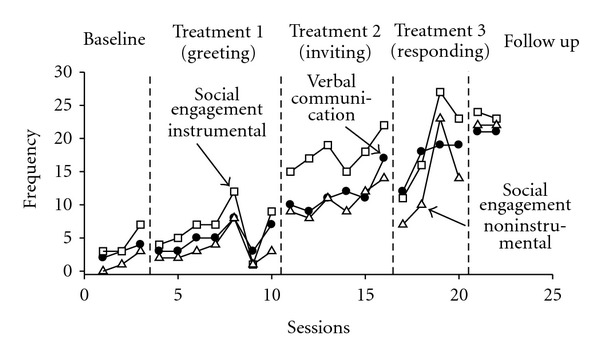
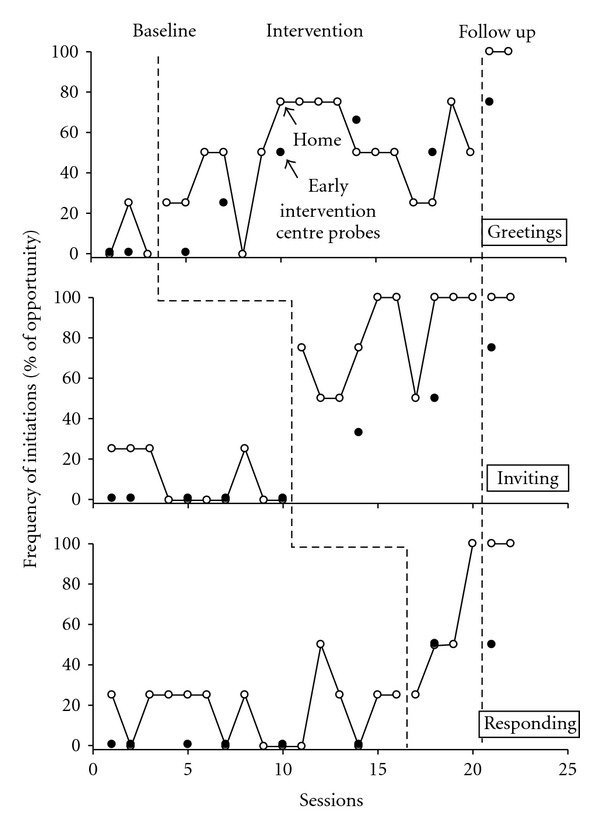
The present study investigated the effectiveness of combining Social Stories and Video Self-Modelling (VSM) to teach social skills to a three-year-old child with autism. A multiple-baseline across behaviors design revealed that video self-modelled Social Stories were effective at improving all three target behaviors: greeting, inviting to play, and contingent responding. In addition, these behaviors successfully generalized across settings, toys, and communication partners. Concomitant behavior changes, namely, increased levels of communicative behavior and levels of social engagement were also observed. These results support the effectiveness of video self-modelled Social Stories and illustrate the potential of combined intervention techniques for remedying the social deficits faced by this population.
本研究调查了将社交故事与视频自我示范(VSM)相结合,对一名三岁自闭症儿童进行社交技能教学的有效性。一项跨行为多基线设计表明,视频自我示范的社交故事在改善所有三个目标行为方面是有效的:打招呼、邀请玩耍和应急反应。此外,这些行为在不同场景、玩具和交流伙伴之间成功实现了泛化。同时还观察到伴随的行为变化,即沟通行为水平和社交参与度的提高。这些结果支持了视频自我示范社交故事的有效性,并说明了联合干预技术在弥补该群体所面临的社交缺陷方面的潜力。