Wright Caroline F, Wei Yinghui, Higgins Julian P T, Sagoo Gurdeep S
PHG Foundation, 2 Worts Causeway, Cambridge, UK.
BMC Res Notes. 2012 Sep 1;5:476. doi: 10.1186/1756-0500-5-476.
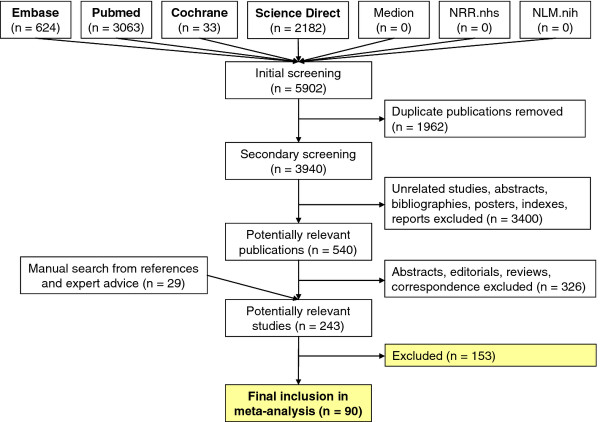
Cell-free fetal DNA (cffDNA) can be detected in maternal blood during pregnancy, opening the possibility of early non-invasive prenatal diagnosis for a variety of genetic conditions. Since 1997, many studies have examined the accuracy of prenatal fetal sex determination using cffDNA, particularly for pregnancies at risk of an X-linked condition. Here we report a review and meta-analysis of the published literature to evaluate the use of cffDNA for prenatal determination (diagnosis) of fetal sex. We applied a sensitive search of multiple bibliographic databases including PubMed (MEDLINE), EMBASE, the Cochrane library and Web of Science.
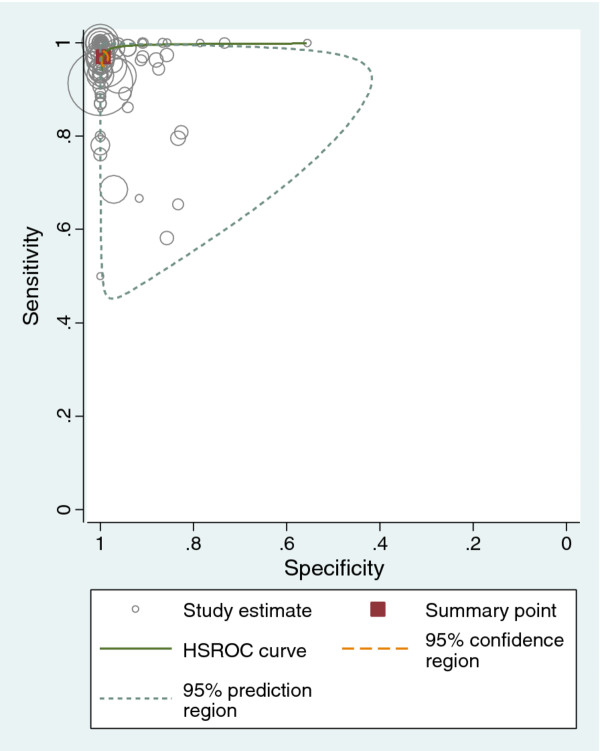
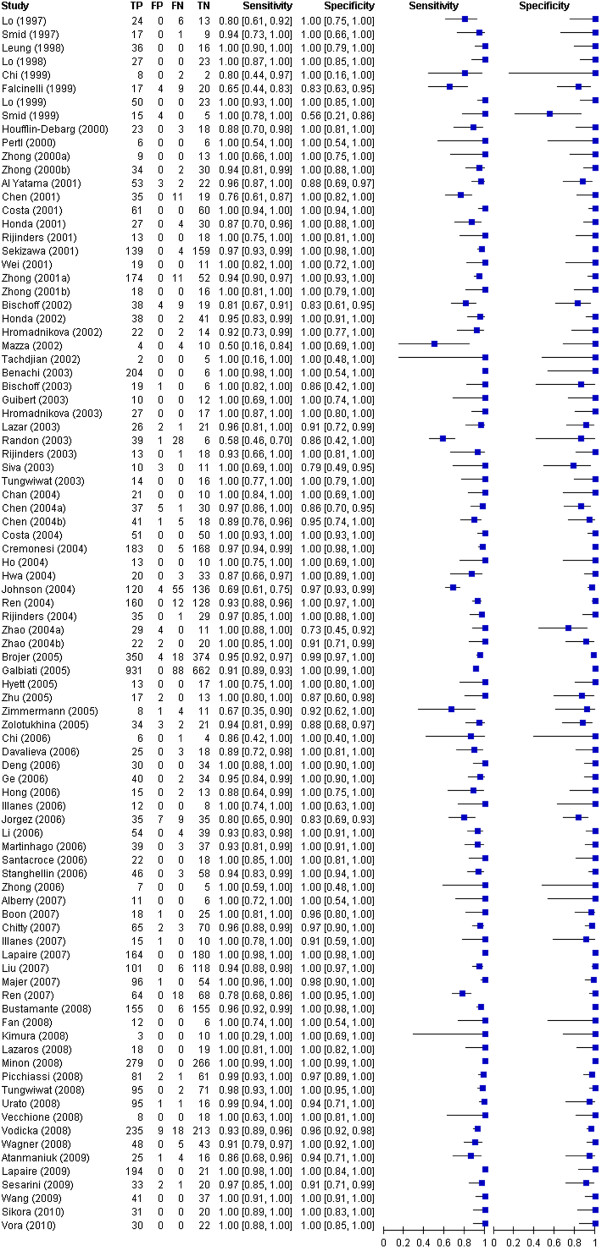
Ninety studies, incorporating 9,965 pregnancies and 10,587 fetal sex results met our inclusion criteria. Overall mean sensitivity was 96.6% (95% credible interval 95.2% to 97.7%) and mean specificity was 98.9% (95% CI = 98.1% to 99.4%). These results vary very little with trimester or week of testing, indicating that the performance of the test is reliably high.
Based on this review and meta-analysis we conclude that fetal sex can be determined with a high level of accuracy by analyzing cffDNA. Using cffDNA in prenatal diagnosis to replace or complement existing invasive methods can remove or reduce the risk of miscarriage. Future work should concentrate on the economic and ethical considerations of implementing an early non-invasive test for fetal sex.
孕期可在母血中检测到游离胎儿DNA(cffDNA),这为多种遗传疾病的早期非侵入性产前诊断开辟了可能性。自1997年以来,许多研究探讨了使用cffDNA进行产前胎儿性别鉴定的准确性,特别是对于有X连锁疾病风险的妊娠。在此,我们报告对已发表文献的综述和荟萃分析,以评估cffDNA在产前鉴定(诊断)胎儿性别中的应用。我们对多个文献数据库进行了全面检索,包括PubMed(MEDLINE)、EMBASE、Cochrane图书馆和Web of Science。
90项研究纳入了9965例妊娠和10587例胎儿性别结果,符合我们的纳入标准。总体平均敏感性为96.6%(95%可信区间95.2%至97.7%),平均特异性为98.9%(95%CI = 98.1%至99.4%)。这些结果在孕期或检测周数方面变化很小,表明该检测的性能始终很高。
基于本综述和荟萃分析,我们得出结论,通过分析cffDNA可以高精度地确定胎儿性别。在产前诊断中使用cffDNA替代或补充现有的侵入性方法可以消除或降低流产风险。未来的工作应集中在实施胎儿性别早期非侵入性检测的经济和伦理考量上。