Division of Allergy and Immunology, Department of Molecular Biology, University of Salzburg, Salzburg, Austria.
Allergy. 2012 Nov;67(11):1365-74. doi: 10.1111/all.12005. Epub 2012 Sep 5.
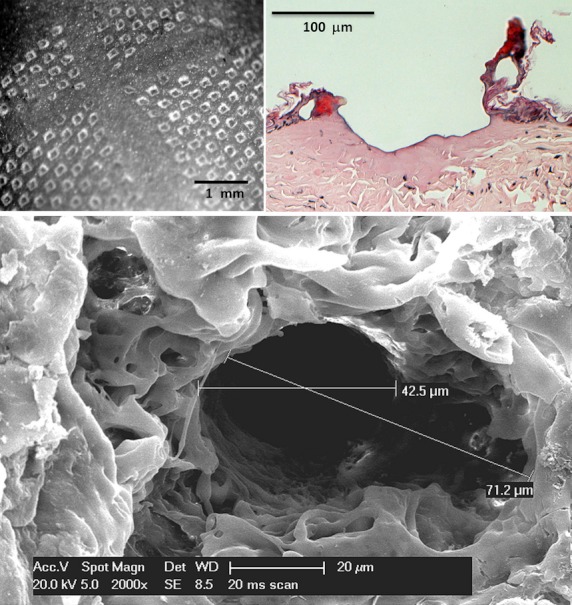
Specific immunotherapy via the subcutaneous or oral route is associated with local and, in some cases, systemic side effects and suffers from low patient compliance. Due to its unique immunological features, the skin represents a promising target tissue for effective and painless treatment of type I allergy. The current study was performed to compare the efficacy of transcutaneous immunotherapy via laser-generated micropores to subcutaneous injection.
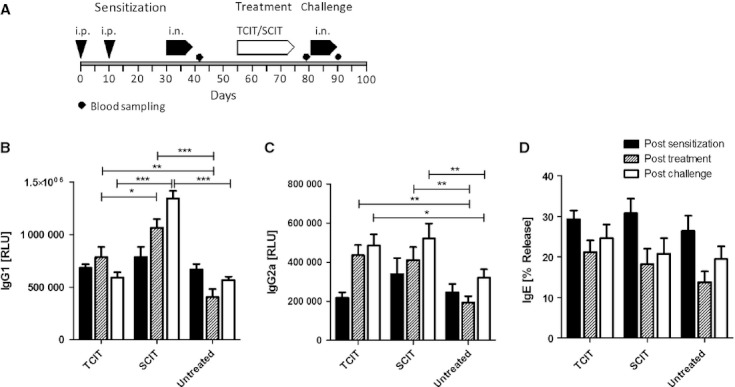
BALB/c mice were sensitized by intraperitoneal injection of recombinant grass pollen allergen Phl p 5 together with alum. Subsequently, lung inflammation was induced by repeated intranasal challenge. During the treatment phase, adjuvant-free Phl p 5 was applied in solution to microporated skin or was subcutaneously injected. Lung function and cellular infiltration; Phl p 5-specific serum levels of IgG1, IgG2a, and IgE; and cytokine levels in bronchoalveolar lavage fluids as well as in supernatants of splenocyte cultures were assessed.
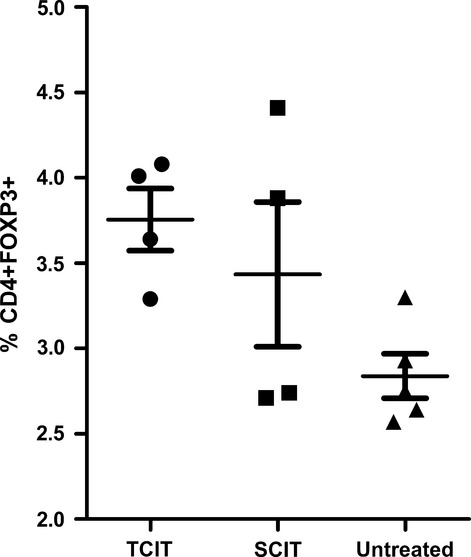
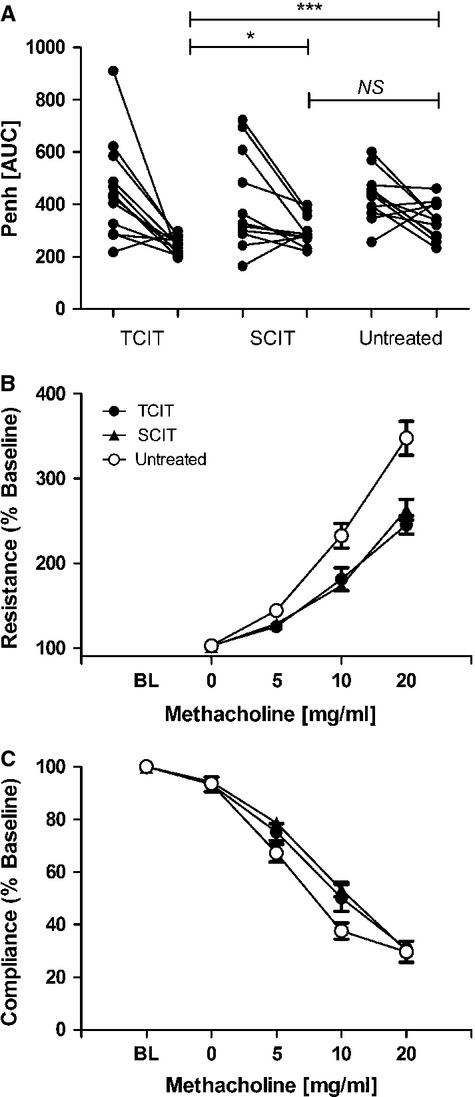
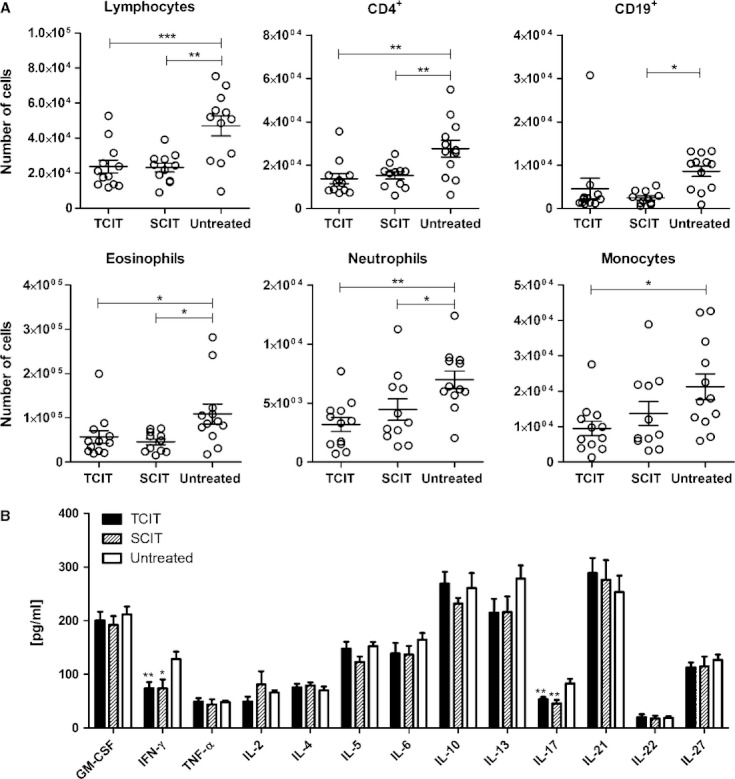
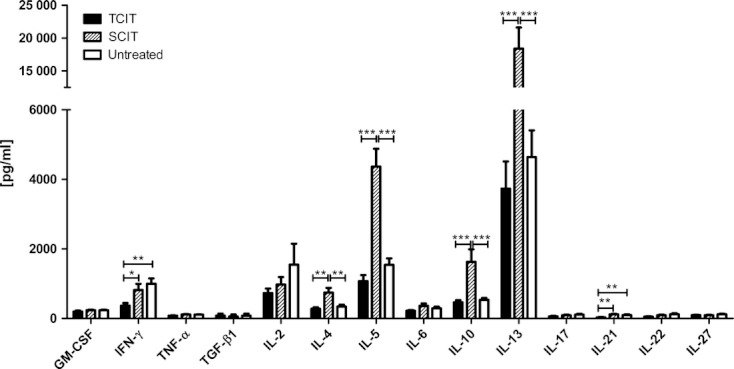
Both therapeutic approaches reduced airway hyperresponsiveness and leukocyte infiltration into the lungs. Whereas subcutaneous immunotherapy induced a systemic increase in Th2-associated cytokine secretion, transcutaneous application revealed a general downregulation of Th1/Th2/Th17 responses. Successful therapy was associated with induction of IgG2a and an increase in FOXP3+ CD4+ T cells.
Transcutaneous immunotherapy via laser microporation is equally efficient compared with conventional subcutaneous treatment but avoids therapy-associated boosting of systemic Th2 immunity. Immunotherapy via laser-microporated skin combines a painless application route with the high efficacy known from subcutaneous injections and therefore represents a promising alternative to established forms of immunotherapy.
通过皮下或口服途径进行特异性免疫治疗与局部副作用相关,在某些情况下还会出现全身副作用,并且患者顺应性低。由于其独特的免疫学特征,皮肤是一种有前途的靶组织,可用于有效且无痛地治疗 I 型过敏。本研究旨在比较经皮激光微穿孔免疫疗法与皮下注射的疗效。
BALB/c 小鼠通过腹腔内注射重组草花粉过敏原 Phl p 5 与明矾进行致敏。随后,通过重复鼻内挑战诱导肺部炎症。在治疗阶段,将无佐剂的 Phl p 5 溶液应用于微孔化皮肤或皮下注射。评估肺功能和细胞浸润;Phl p 5 特异性血清 IgG1、IgG2a 和 IgE 水平;以及支气管肺泡灌洗液和脾细胞培养物上清液中的细胞因子水平。
两种治疗方法均降低了气道高反应性和白细胞浸润到肺部。虽然皮下免疫治疗会引起系统性 Th2 相关细胞因子分泌增加,但经皮应用则显示出 Th1/Th2/Th17 反应的普遍下调。成功的治疗与 IgG2a 的诱导和 FOXP3+CD4+T 细胞的增加有关。
与传统的皮下治疗相比,经皮激光微穿孔免疫治疗同样有效,但避免了与治疗相关的全身 Th2 免疫增强。经激光微穿孔皮肤进行免疫治疗结合了无痛的应用途径和皮下注射的高效性,因此是一种有前途的替代传统免疫疗法的方法。