Department of Molecular Pharmacology and Biological Chemistry, Northwestern University Feinberg School of Medicine, Chicago, Illinois 60611, USA.
Nat Rev Neurosci. 2012 Oct;13(10):675-86. doi: 10.1038/nrn3335.
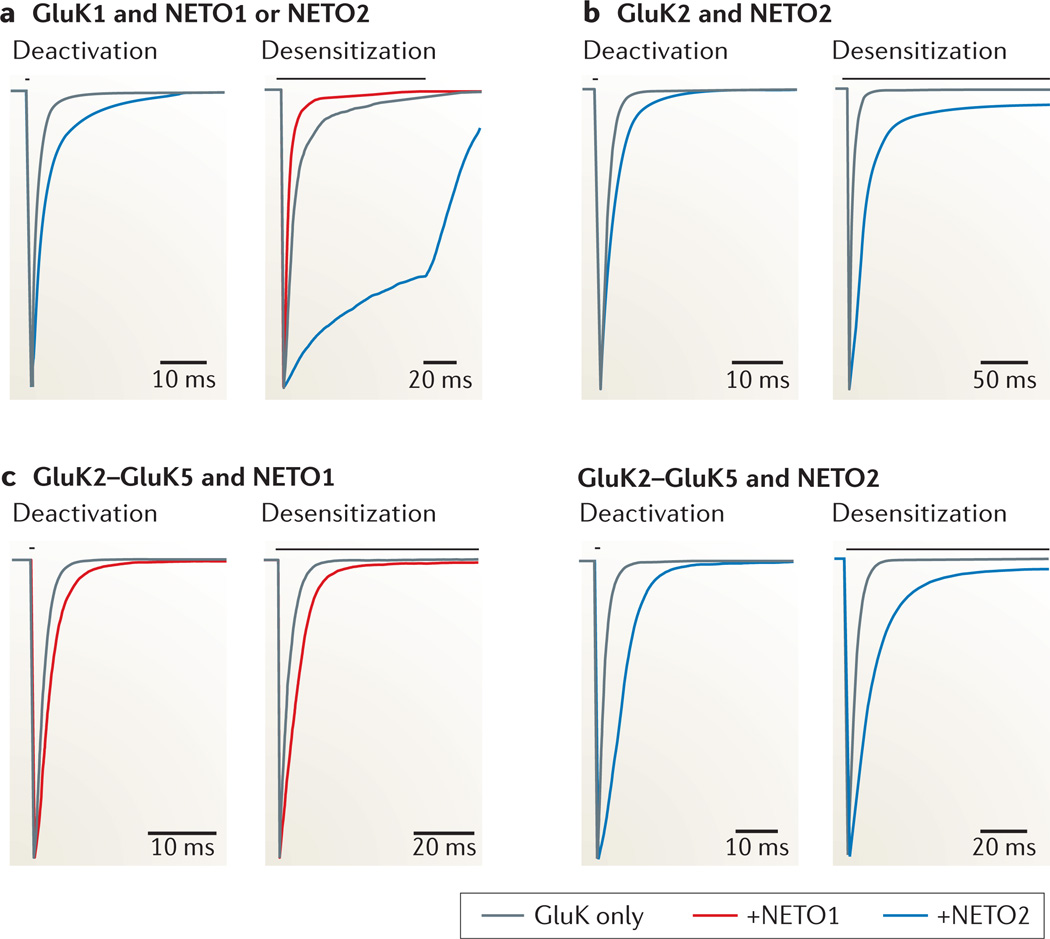
Kainate receptors are a family of ionotropic glutamate receptors whose physiological roles differ from those of other subtypes of glutamate receptors in that they predominantly serve as modulators, rather than mediators, of synaptic transmission. Neuronal kainate receptors exhibit unusually slow kinetic properties that have been difficult to reconcile with the behaviour of recombinant kainate receptors. Recently, however, the neuropilin and tolloid-like 1 (NETO1) and NETO2 proteins were identified as auxiliary kainate receptor subunits that shape both the biophysical properties and synaptic localization of these receptors.
kainate 受体是离子型谷氨酸受体家族的一员,其生理作用不同于其他亚型的谷氨酸受体,因为它们主要作为突触传递的调节剂,而不是介质。神经元 kainate 受体表现出异常缓慢的动力学特性,这与重组 kainate 受体的行为难以协调。然而,最近发现神经钙黏蛋白和 tolloid 样 1(NETO1)和 NETO2 蛋白是辅助 kainate 受体亚基,它们塑造了这些受体的生物物理特性和突触定位。