Johns Hopkins University Applied Physics Laboratory, 11100 Johns Hopkins Road, Laurel, MD 20723, USA.
BMC Med Inform Decis Mak. 2012 Sep 6;12:99. doi: 10.1186/1472-6947-12-99.
Emerging public health threats often originate in resource-limited countries. In recognition of this fact, the World Health Organization issued revised International Health Regulations in 2005, which call for significantly increased reporting and response capabilities for all signatory nations. Electronic biosurveillance systems can improve the timeliness of public health data collection, aid in the early detection of and response to disease outbreaks, and enhance situational awareness.
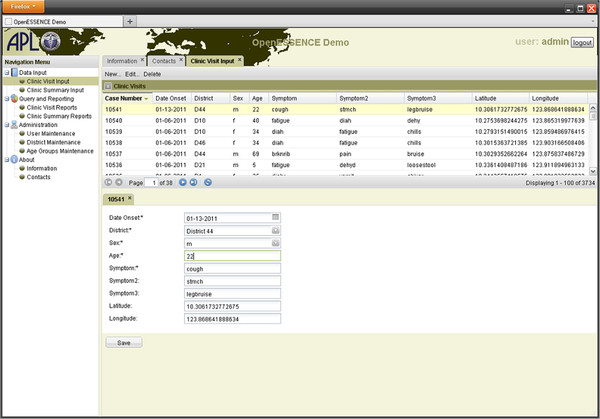
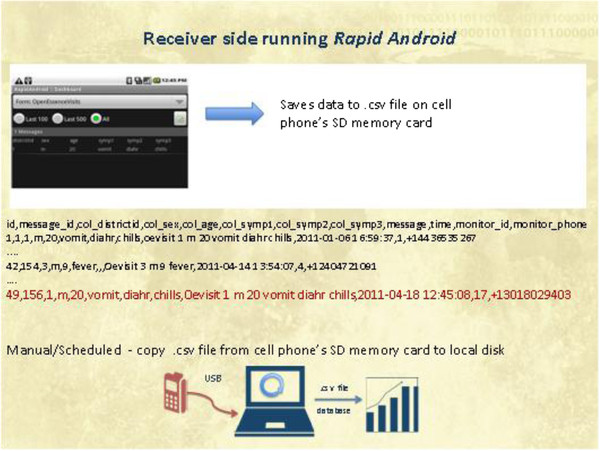
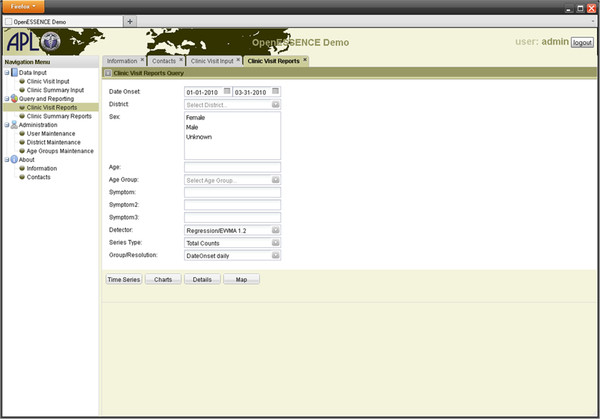
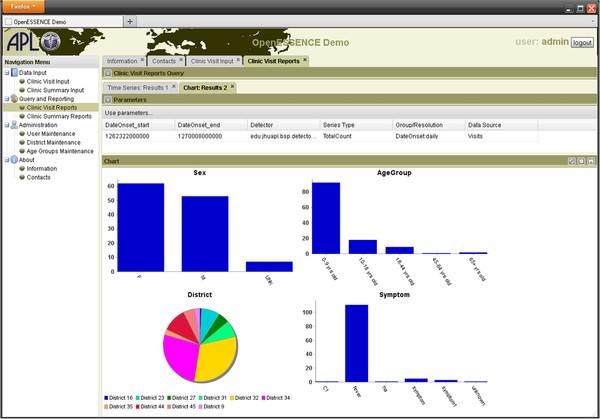
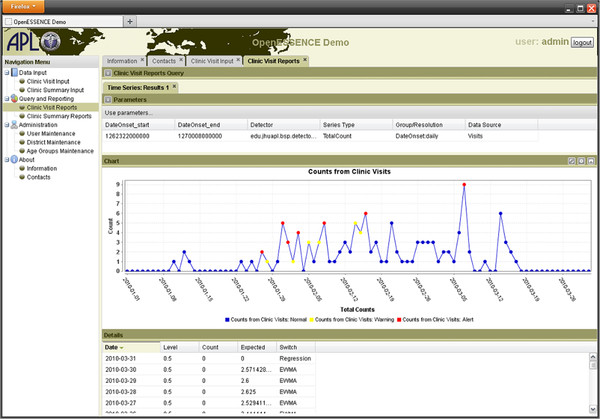
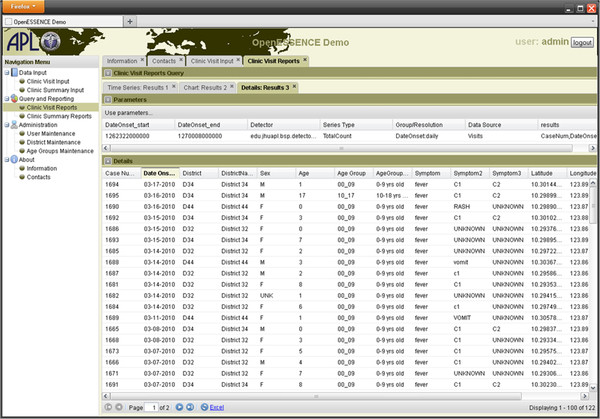
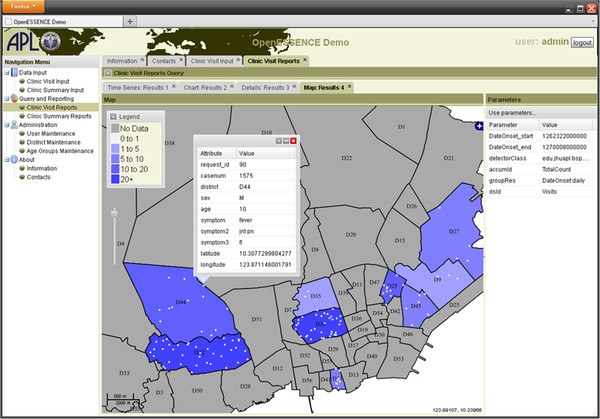
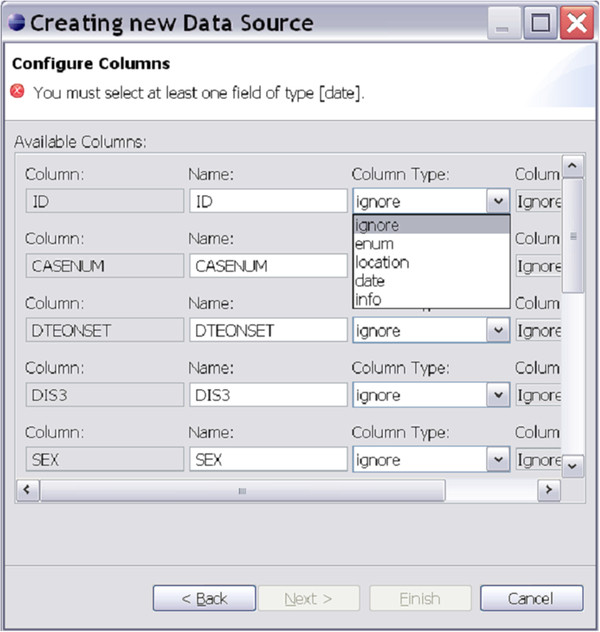
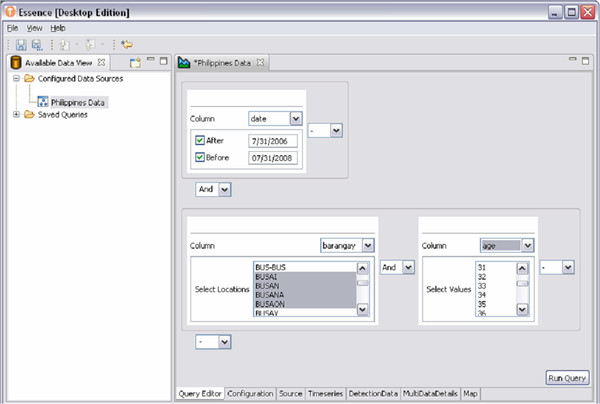
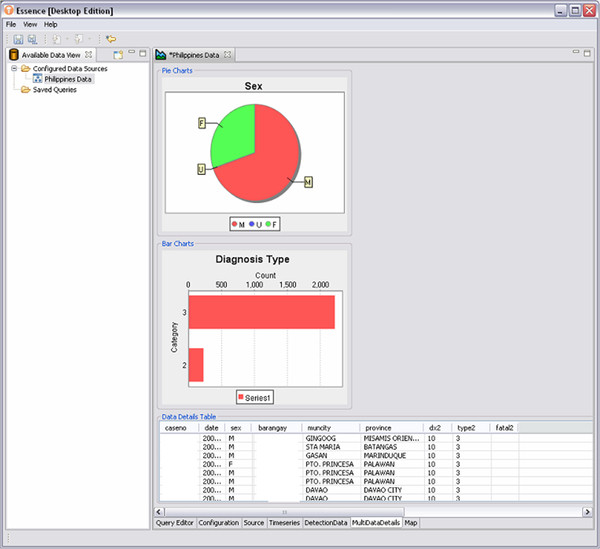
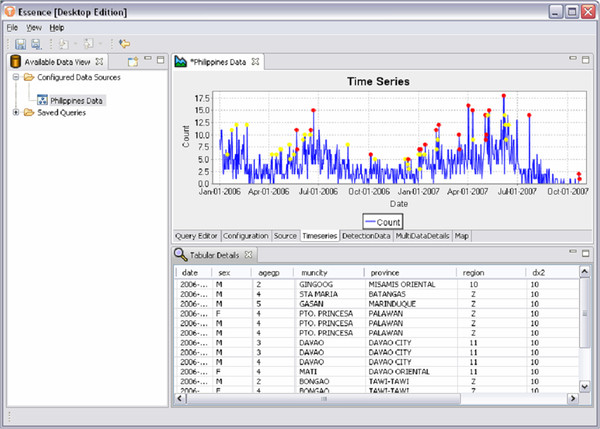
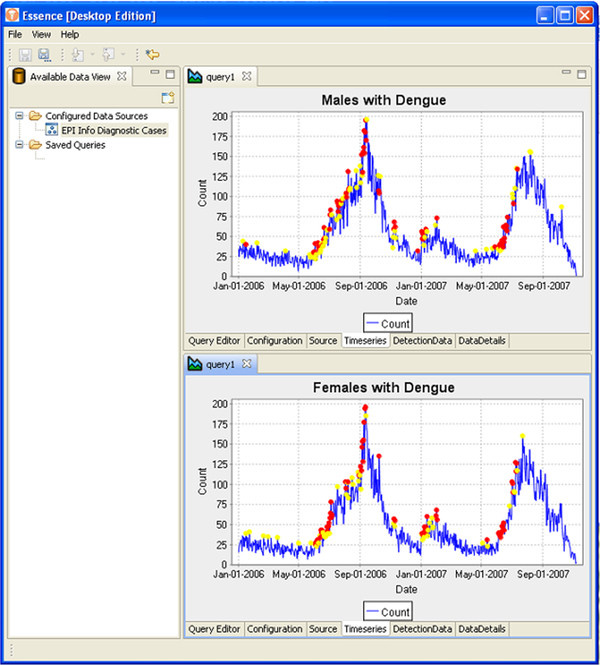
As components of its Suite for Automated Global bioSurveillance (SAGES) program, The Johns Hopkins University Applied Physics Laboratory developed two open-source, electronic biosurveillance systems for use in resource-limited settings. OpenESSENCE provides web-based data entry, analysis, and reporting. ESSENCE Desktop Edition provides similar capabilities for settings without internet access. Both systems may be configured to collect data using locally available cell phone technologies.
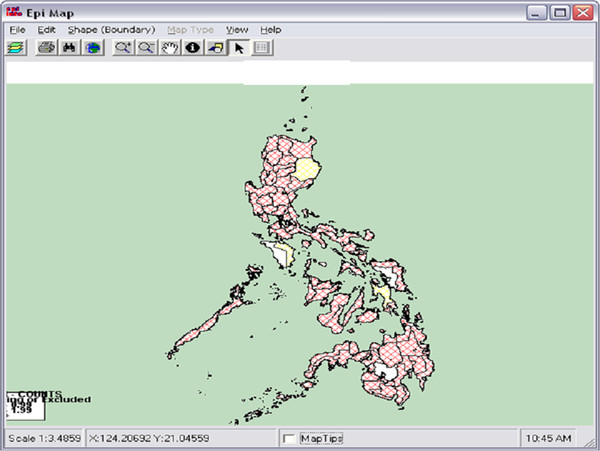
ESSENCE Desktop Edition has been deployed for two years in the Republic of the Philippines. Local health clinics have rapidly adopted the new technology to provide daily reporting, thus eliminating the two-to-three week data lag of the previous paper-based system.
OpenESSENCE and ESSENCE Desktop Edition are two open-source software products with the capability of significantly improving disease surveillance in a wide range of resource-limited settings. These products, and other emerging surveillance technologies, can assist resource-limited countries compliance with the revised International Health Regulations.
新出现的公共卫生威胁通常源自资源有限的国家。有鉴于此,世界卫生组织在 2005 年修订了《国际卫生条例》,呼吁所有签署国都显著提高报告和应对能力。电子生物监测系统可以提高公共卫生数据收集的及时性,有助于及早发现和应对疾病暴发,并增强态势感知能力。
约翰霍普金斯大学应用物理实验室作为其全球自动生物监测系统套件(SAGES)计划的一部分,开发了两种用于资源有限环境的开源电子生物监测系统。OpenESSENCE 提供基于网络的数据输入、分析和报告。ESSENCE Desktop Edition 为没有互联网接入的环境提供类似的功能。这两个系统都可以配置为使用本地可用的手机技术收集数据。
ESSENCE Desktop Edition 已在菲律宾共和国部署了两年。当地卫生诊所迅速采用了新技术,每天进行报告,从而消除了以前基于纸张的系统长达两到三周的延迟。
OpenESSENCE 和 ESSENCE Desktop Edition 是两个具有显著提高广泛资源有限环境中疾病监测能力的开源软件产品。这些产品和其他新兴监测技术可以帮助资源有限的国家遵守修订后的《国际卫生条例》。