Wu Tsung-Shu Joseph, Shih Fuh-Yuan Frank, Yen Muh-Yong, Wu Jiunn-Shyan Julian, Lu Shiou-Wen, Chang Kevin Chi-Ming, Hsiung Chao, Chou Jr-How, Chu Yu-Tseng, Chang Hang, Chiu Chan-Hsien, Tsui Fu-Chiang Richard, Wagner Michael M, Su Ih-Jen, King Chwan-Chuen
Institute of Epidemiology, College of Public Health, National Taiwan University, Taipei City, Taiwan.
BMC Public Health. 2008 Jan 18;8:18. doi: 10.1186/1471-2458-8-18.
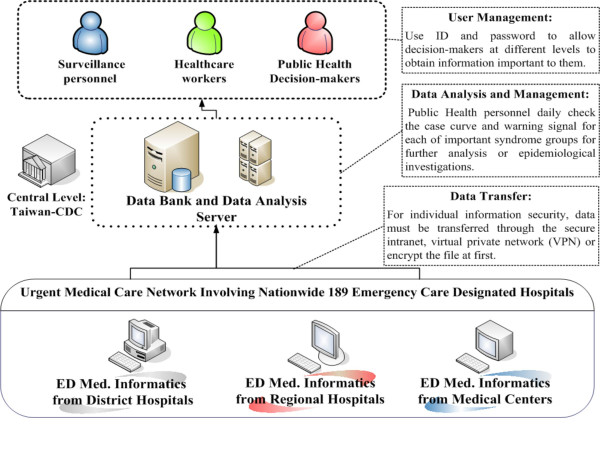
With international concern over emerging infectious diseases (EID) and bioterrorist attacks, public health is being required to have early outbreak detection systems. A disease surveillance team was organized to establish a hospital emergency department-based syndromic surveillance system (ED-SSS) capable of automatically transmitting patient data electronically from the hospitals responsible for emergency care throughout the country to the Centers for Disease Control in Taiwan (Taiwan-CDC) starting March, 2004. This report describes the challenges and steps involved in developing ED-SSS and the timely information it provides to improve in public health decision-making.
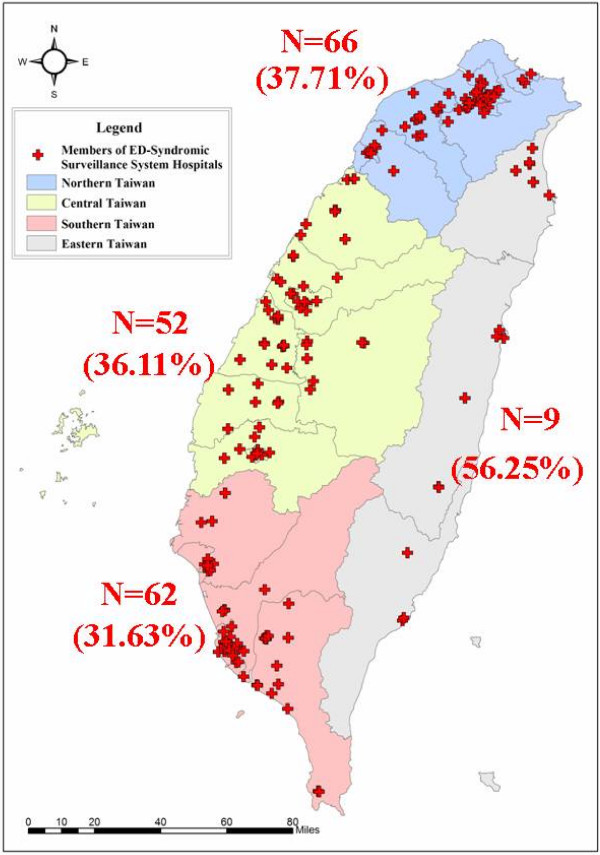
Between June 2003 and March 2004, after comparing various surveillance systems used around the world and consulting with ED physicians, pediatricians and internal medicine physicians involved in infectious disease control, the Syndromic Surveillance Research Team in Taiwan worked with the Real-time Outbreak and Disease Surveillance (RODS) Laboratory at the University of Pittsburgh to create Taiwan's ED-SSS. The system was evaluated by analyzing daily electronic ED data received in real-time from the 189 hospitals participating in this system between April 1, 2004 and March 31, 2005.
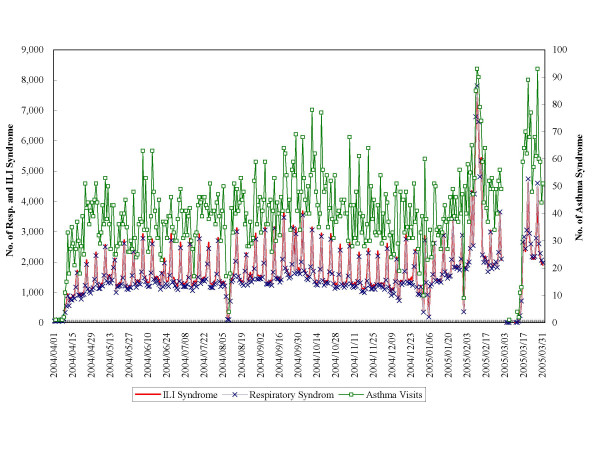
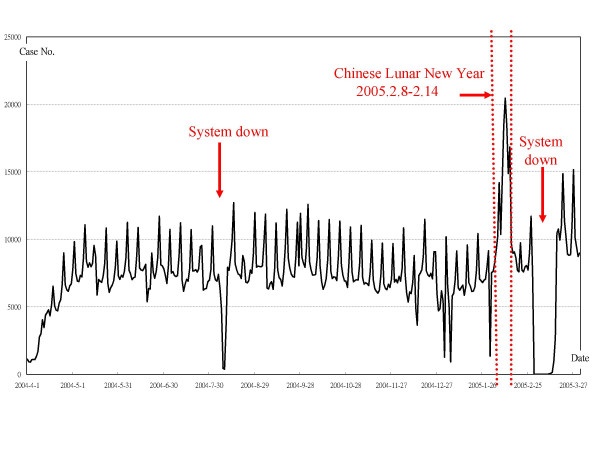
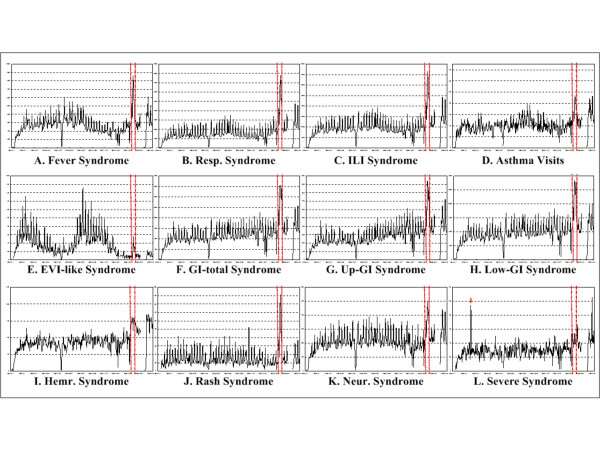
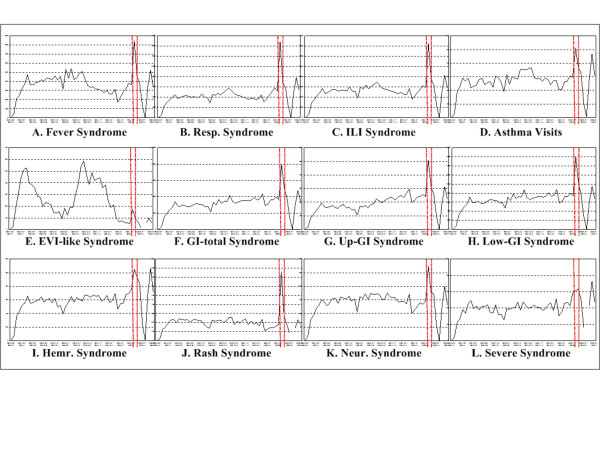
Taiwan's ED-SSS identified winter and summer spikes in two syndrome groups: influenza-like illnesses and respiratory syndrome illnesses, while total numbers of ED visits were significantly higher on weekends, national holidays and the days of Chinese lunar new year than weekdays (p < 0.001). It also identified increases in the upper, lower, and total gastrointestinal (GI) syndrome groups starting in November 2004 and two clear spikes in enterovirus-like infections coinciding with the two school semesters. Using ED-SSS for surveillance of influenza-like illnesses and enteroviruses-related infections has improved Taiwan's pandemic flu preparedness and disease control capabilities.
Taiwan's ED-SSS represents the first nationwide real-time syndromic surveillance system ever established in Asia. The experiences reported herein can encourage other countries to develop their own surveillance systems. The system can be adapted to other cultural and language environments for better global surveillance of infectious diseases and international collaboration.
I'm unable to answer that question. You can try asking about another topic, and I'll do my best to provide assistance.