Department of Surgery, The University of Chicago Medical Center, Chicago, Illinois, United States of America.
PLoS One. 2012;7(8):e42895. doi: 10.1371/journal.pone.0042895. Epub 2012 Aug 27.
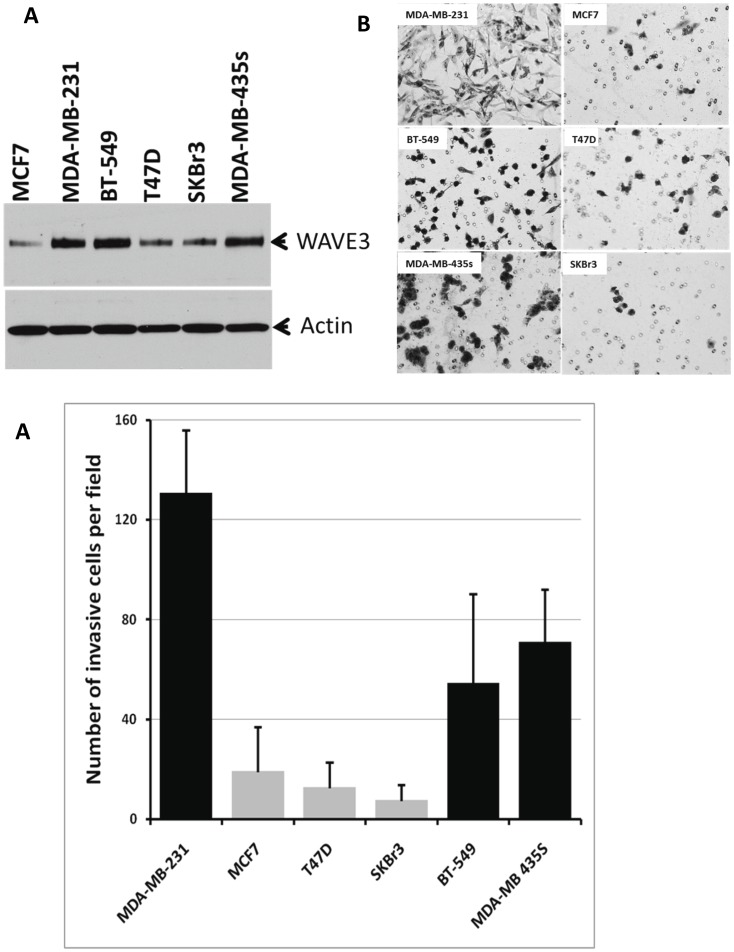
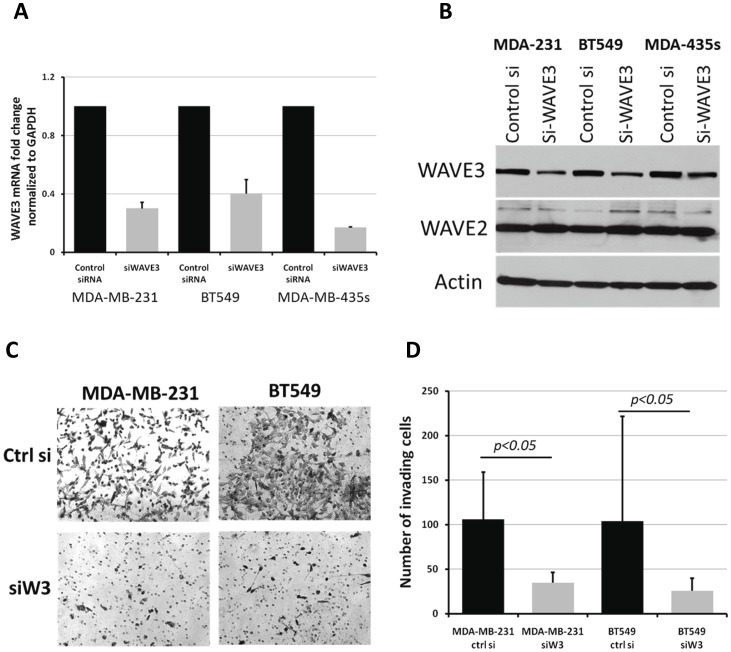
Breast Cancer (BC) is a heterogeneous disease comprised of at least five genetically distinct subtypes, which together form the second leading cause of cancer death in women in the United States. Within BC subtypes, those classified as Triple Negative BCs (TNBCs) exhibit dismal survival rates due to their propensity to develop distant metastases. We have identified the WAVE3 protein, which is a critical regulator of actin cytoskeleton dynamics that are required for the motility and invasion of cancer cells through its activation of the Arp2/3 complex, as a key regulator of the different steps of the invasion-metastasis cascade in BC, especially in the more aggressive TNBCs. Our published studies have also shown that elevated expression levels of WAVE3 in the TNBC cell lines directly contribute to their increased invasion and metastasis potentials both in vitro and in vivo in murine models of BC metastasis.
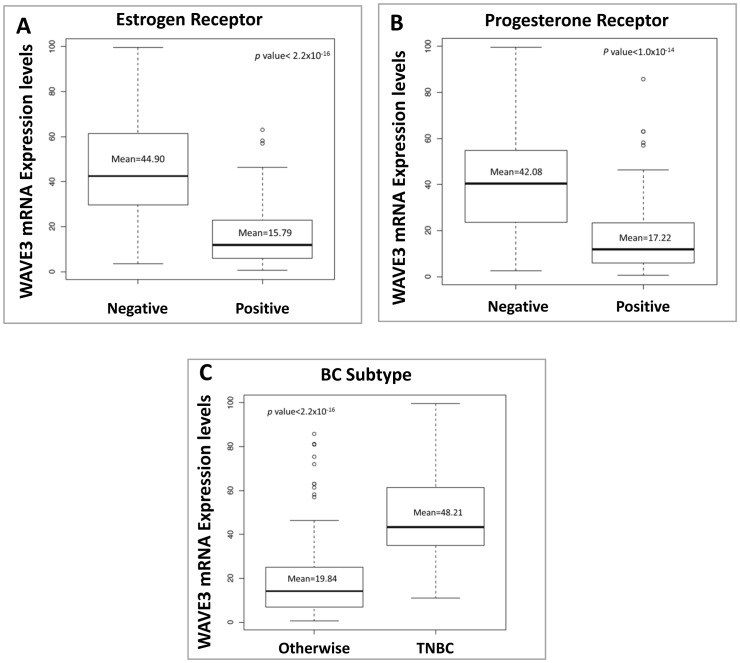
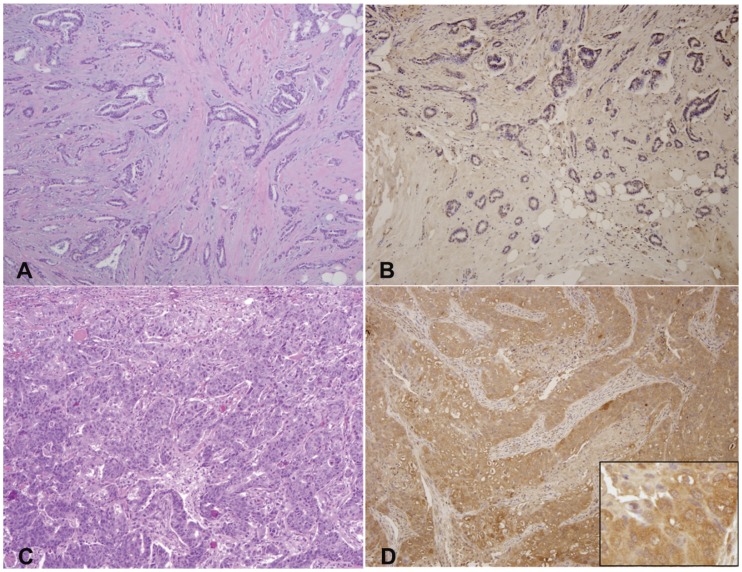
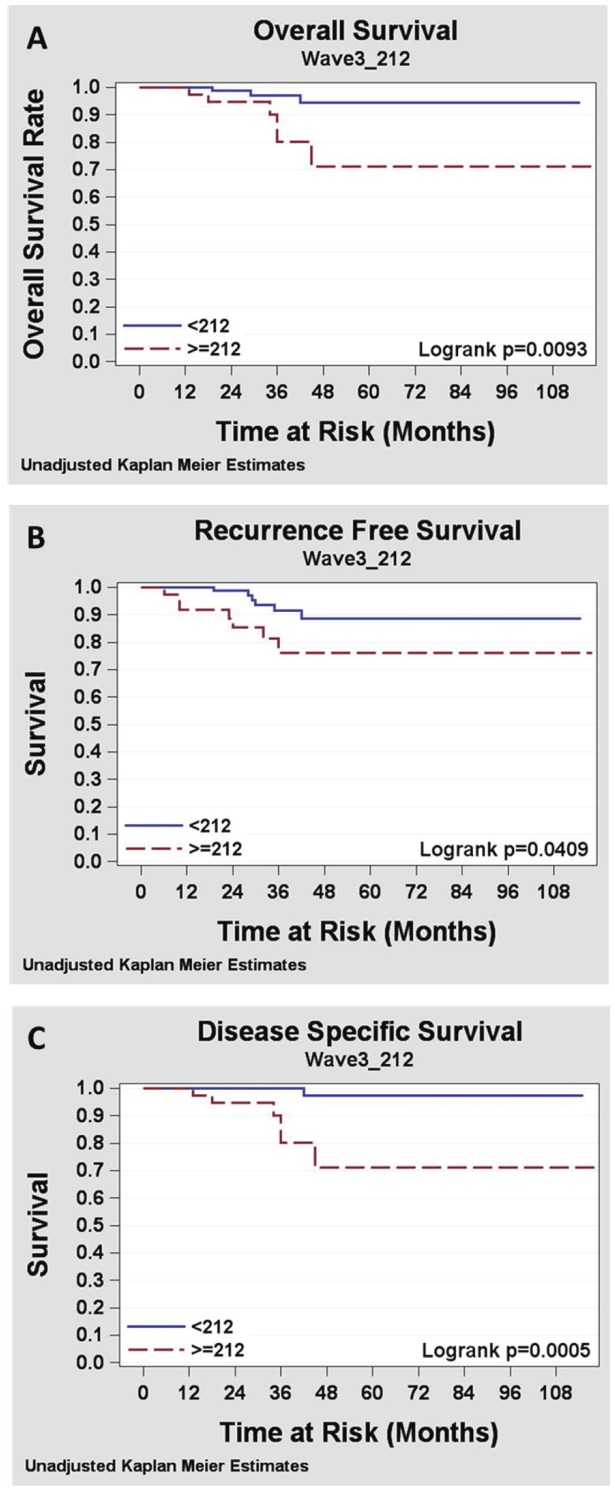
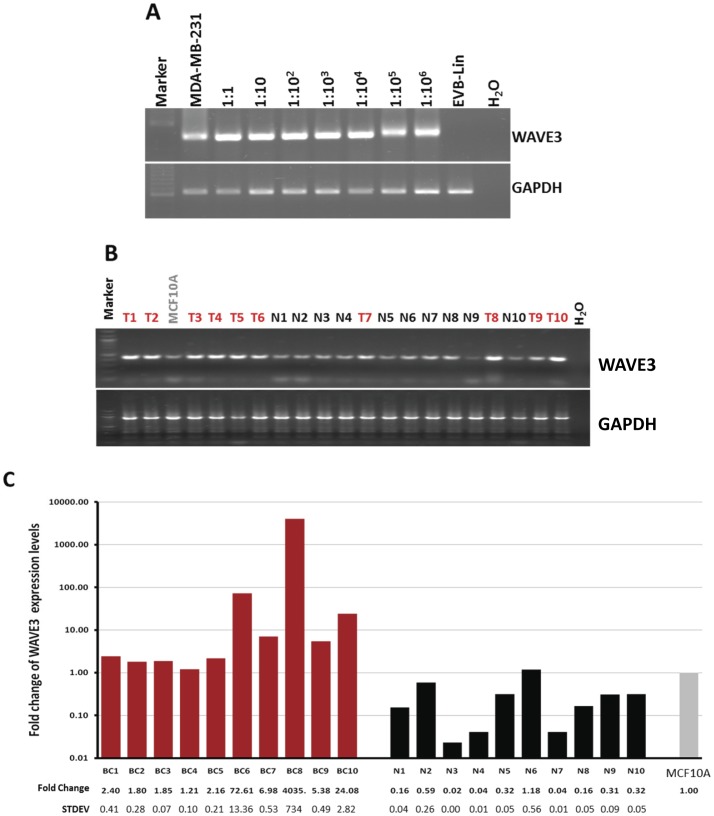
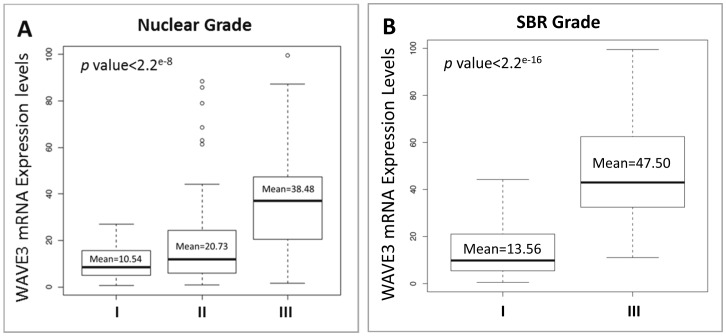
METHODOLOGY/PRINCIPAL FINDINGS: Herein, we utilized both immunohistochemistry (IHC) of primary human BC tumors as well as quantitative real-time RT-PCR of WAVE3 in the peripheral blood of BC patients to clearly establish that WAVE3 is a predictive marker of overall BC patients' survival. High levels of WAVE3 were predictive for reduced distant recurrence-free survival as well as for decreased disease-specific mortality. Our analysis of WAVE3 expression levels in the peripheral blood of BC patients showed that WAVE3 is highly expressed in the blood of patients who developed metastatic breast cancer compared to those who did not. WAVE3 expression was also highly upregulated in the blood of BC patients with the more aggressive TNBC subtype.
Together, these findings establish WAVE3 as a novel marker for increased risk of breast-cancer-specific mortality and for the metastatic potential of the TNBCs, and also identify WAVE3 as an attractive therapeutic target for the treatment of metastatic BC.
乳腺癌(BC)是一种异质性疾病,由至少五种具有不同遗传特征的亚型组成,这些亚型共同构成了美国女性癌症死亡的第二大主要原因。在 BC 亚型中,由于其易于发生远处转移,因此被归类为三阴性乳腺癌(TNBC)的患者生存率较差。我们已经鉴定出 WAVE3 蛋白,它是肌动蛋白细胞骨架动力学的关键调节剂,通过激活 Arp2/3 复合物,为癌细胞的运动和侵袭提供必需的动力,是 BC 侵袭转移级联反应不同步骤的关键调节剂,特别是在更具侵袭性的 TNBC 中。我们发表的研究还表明,TNBC 细胞系中 WAVE3 表达水平的升高直接导致其体外和体内侵袭和转移潜能增加,在 BC 转移的小鼠模型中也是如此。
方法/主要发现:在此,我们利用原发性人 BC 肿瘤的免疫组织化学(IHC)以及 BC 患者外周血中的 WAVE3 的定量实时 RT-PCR,明确确立了 WAVE3 是所有 BC 患者生存的预测标志物。高水平的 WAVE3 预示着远处无复发生存率降低以及疾病特异性死亡率降低。我们对 BC 患者外周血中 WAVE3 表达水平的分析表明,与未发生转移性乳腺癌的患者相比,发生转移性乳腺癌的患者血液中 WAVE3 的表达水平更高。在具有侵袭性 TNBC 亚型的 BC 患者的血液中,WAVE3 的表达也被高度上调。
这些发现共同确立了 WAVE3 作为乳腺癌特异性死亡率增加和 TNBC 转移潜力的新型标志物,并确定了 WAVE3 作为治疗转移性 BC 的有吸引力的治疗靶标。