Institute of Medicinal Plant Development, Chinese Academy of Medical Sciences, Peking Union Medical College, Beijing, China.
PLoS One. 2012;7(8):e43971. doi: 10.1371/journal.pone.0043971. Epub 2012 Aug 30.
Internal transcribed spacer of nuclear ribosomal DNA (nrDNA) is already one of the most popular phylogenetic and DNA barcoding markers. However, the existence of its multiple copies has complicated such usage and a detailed characterization of intra-genomic variations is critical to address such concerns.
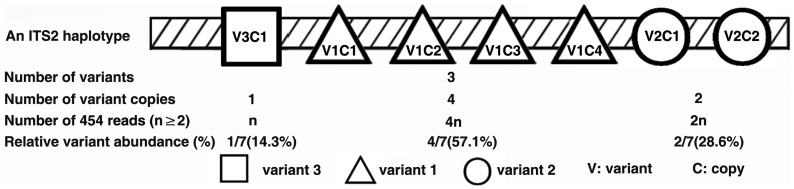
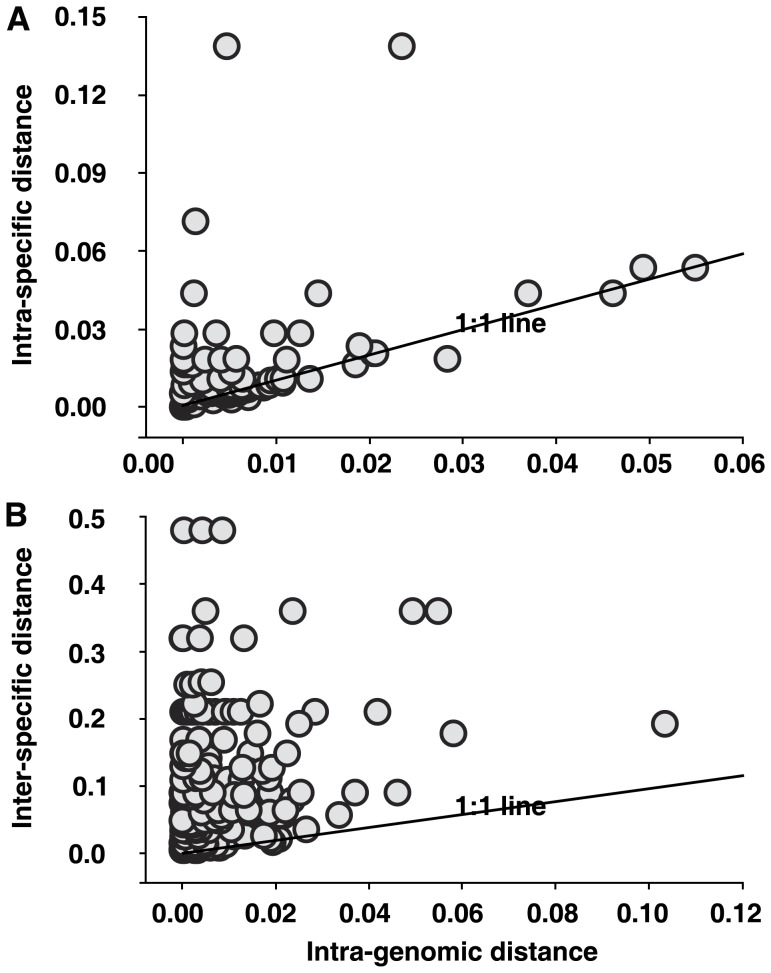
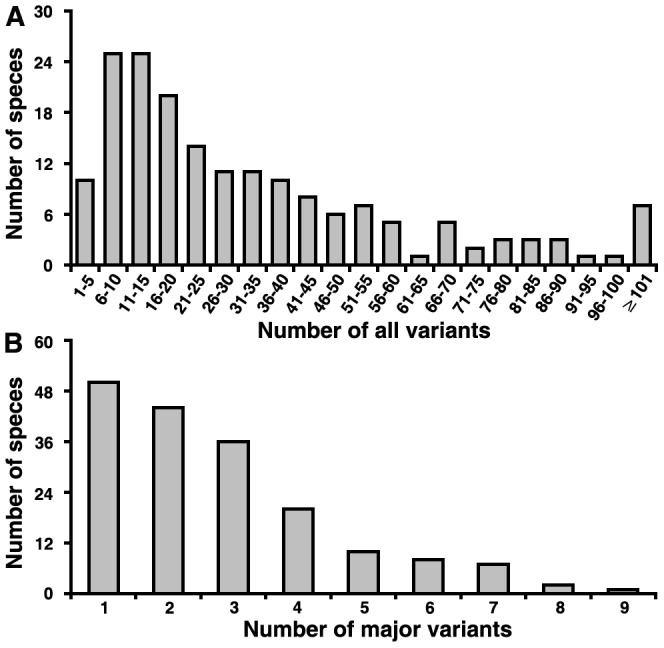
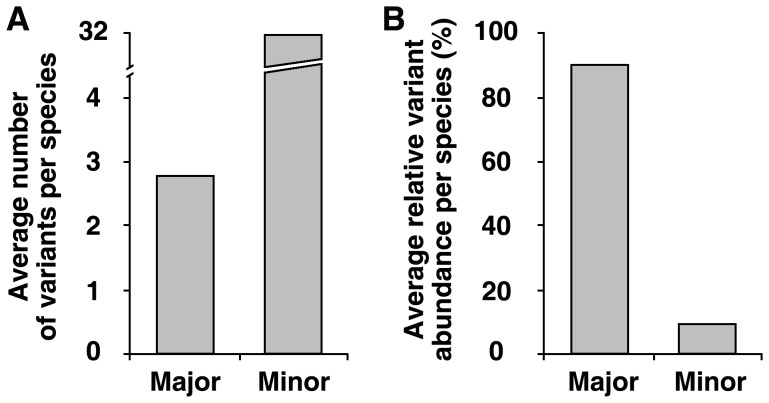
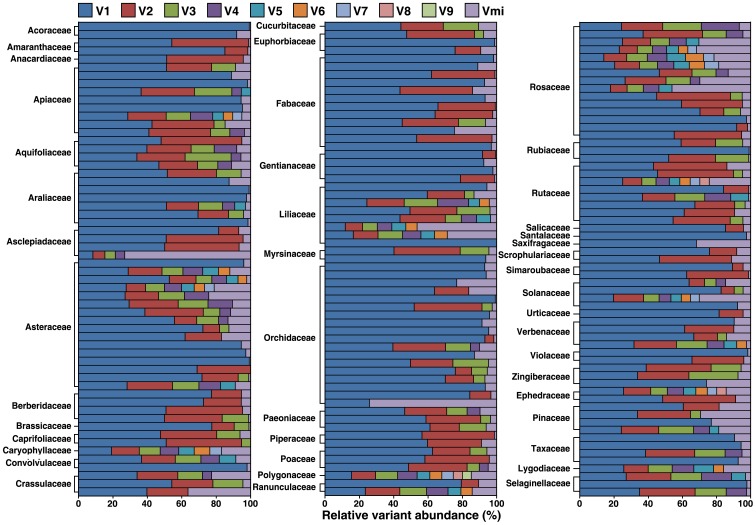
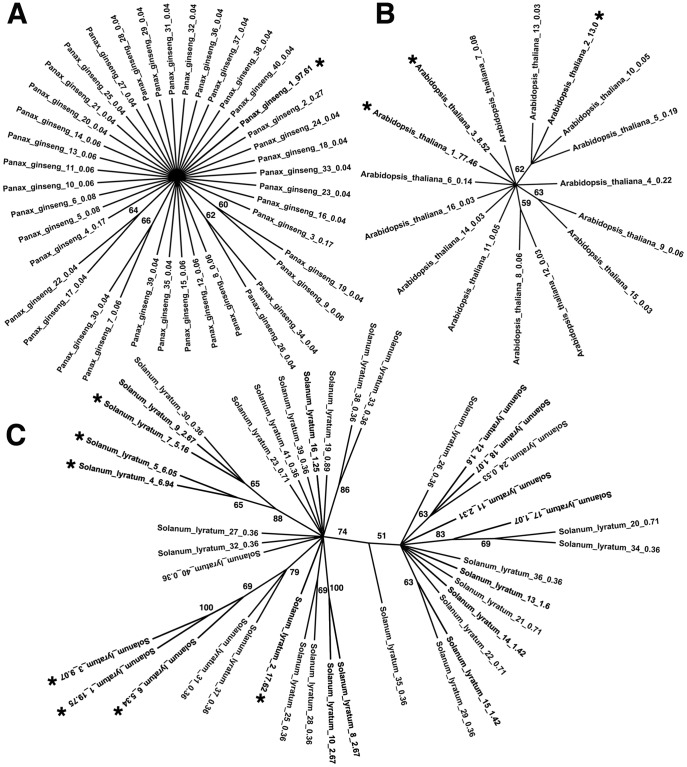
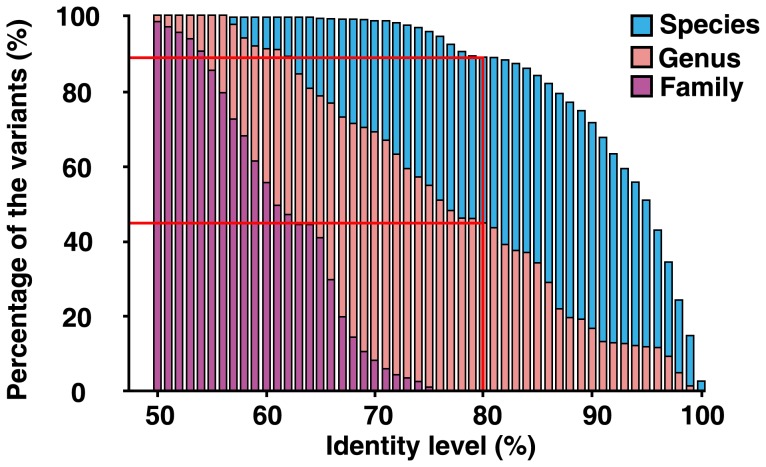
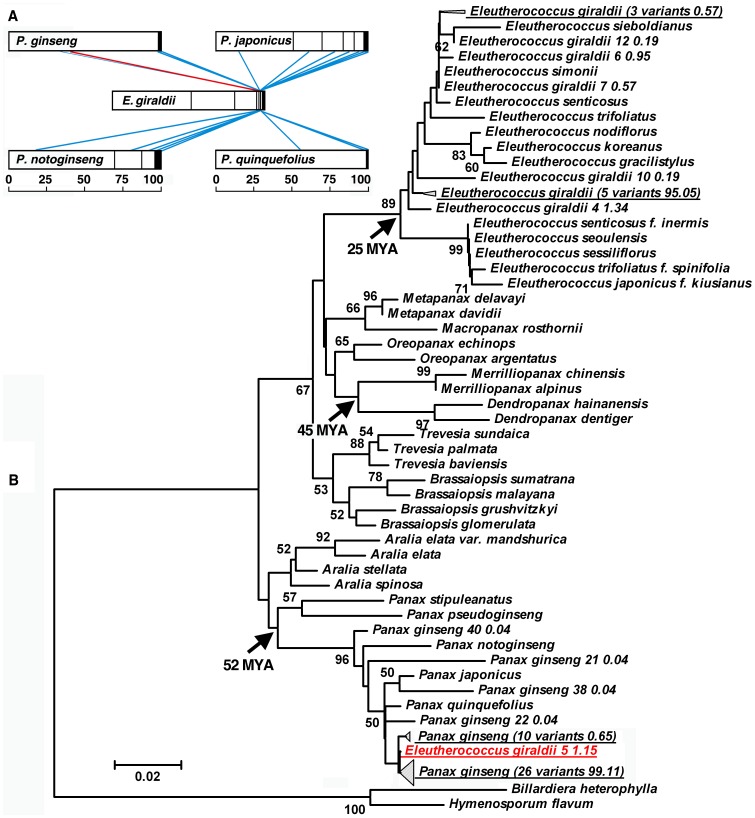
METHODOLOGY/PRINCIPAL FINDINGS: In this study, we used sequence-tagged pyrosequencing and genome-wide analyses to characterize intra-genomic variations of internal transcribed spacer 2 (ITS2) regions from 178 plant species. We discovered that mutation of ITS2 is frequent, with a mean of 35 variants per species. And on average, three of the most abundant variants make up 91% of all ITS2 copies. Moreover, we found different congeneric species share identical variants in 13 genera. Interestingly, different species across different genera also share identical variants. In particular, one minor variant of ITS2 in Eleutherococcus giraldii was found identical to the ITS2 major variant of Panax ginseng, both from Araliaceae family. In addition, DNA barcoding gap analysis showed that the intra-genomic distances were markedly smaller than those of the intra-specific or inter-specific variants. When each of 5543 variants were examined for its species discrimination efficiency, a 97% success rate was obtained at the species level.
Identification of identical ITS2 variants across intra-generic or inter-generic species revealed complex species evolutionary history, possibly, horizontal gene transfer and ancestral hybridization. Although intra-genomic multiple variants are frequently found within each genome, the usage of the major variants alone is sufficient for phylogeny construction and species determination in most cases. Furthermore, the inclusion of minor variants further improves the resolution of species identification.
核核糖体 DNA(nrDNA)的内部转录间隔区(ITS)已经是最流行的系统发育和 DNA 条形码标记之一。然而,其多个拷贝的存在使得这种用途变得复杂,因此详细描述基因组内的变异情况对于解决这些问题至关重要。
方法/主要发现:在这项研究中,我们使用测序标签焦磷酸测序和全基因组分析,对来自 178 种植物的内部转录间隔区 2(ITS2)区域的基因组内变异进行了特征描述。我们发现 ITS2 的突变很频繁,每个物种平均有 35 个变体。而且,最丰富的三个变体平均占所有 ITS2 拷贝的 91%。此外,我们发现 13 个属的同属物种具有相同的变体。有趣的是,不同属的不同物种也具有相同的变体。特别是,在五加科的刺五加(Eleutherococcus giraldii)中发现了 ITS2 的一个次要变体,与人参(Panax ginseng)的 ITS2 主要变体相同。此外,DNA 条形码间隙分析显示,基因组内的距离明显小于种内或种间变异的距离。当检查 5543 个变体中的每一个的物种鉴别效率时,在物种水平上获得了 97%的成功率。
在属内或属间物种中发现相同的 ITS2 变体,揭示了复杂的物种进化历史,可能涉及水平基因转移和祖先杂交。虽然在每个基因组内都经常发现基因组内的多个变体,但在大多数情况下,仅使用主要变体就足以构建系统发育和确定物种。此外,包含次要变体可进一步提高物种识别的分辨率。