Howard Hughes Medical Institute, Department of Stem Cell and Regenerative Biology, Harvard University, Harvard Stem Cell Institute, and Joslin Diabetes Center, Cambridge, Massachusetts, USA.
PLoS One. 2012;7(8):e44044. doi: 10.1371/journal.pone.0044044. Epub 2012 Aug 31.
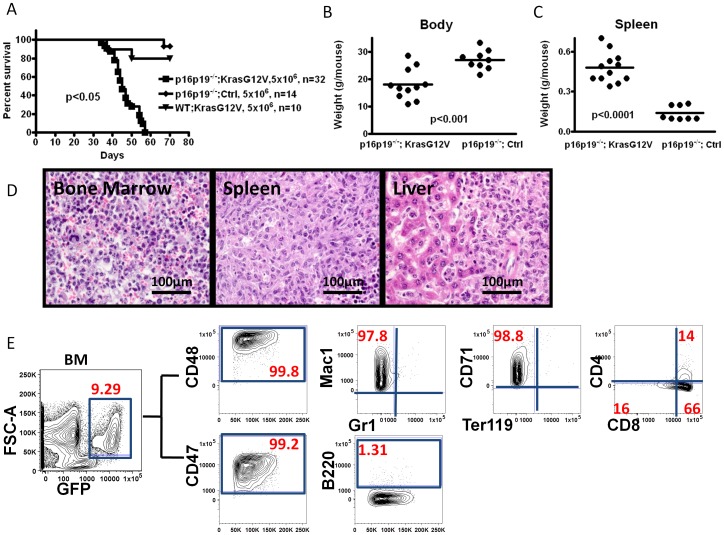
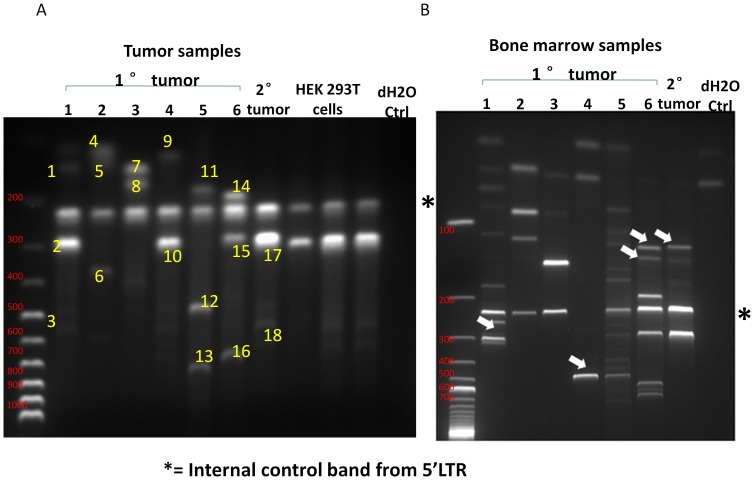
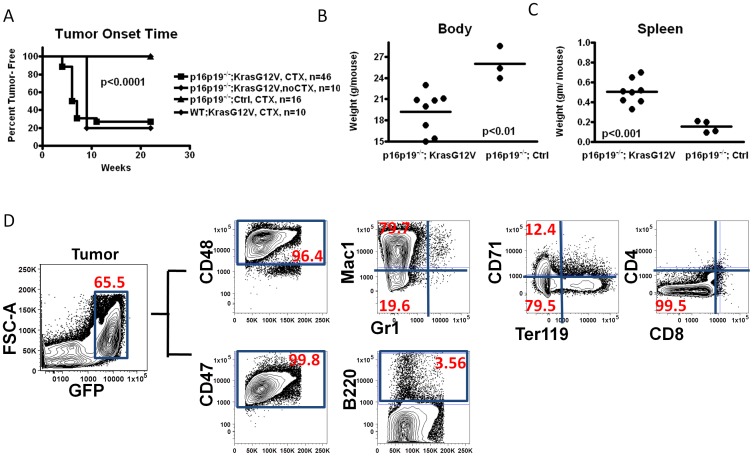
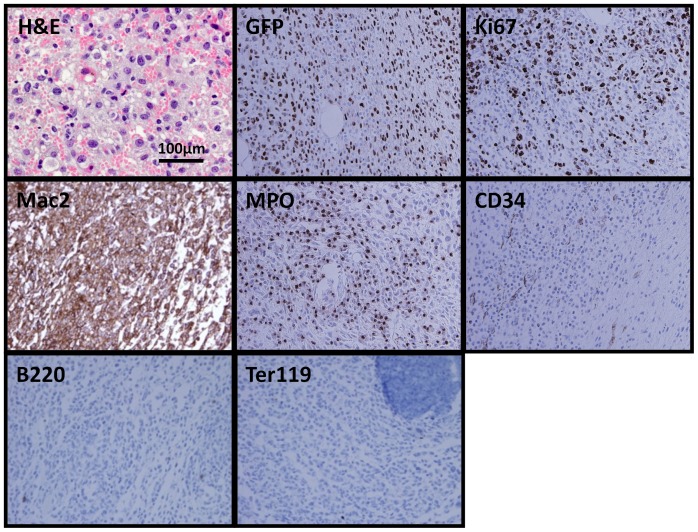
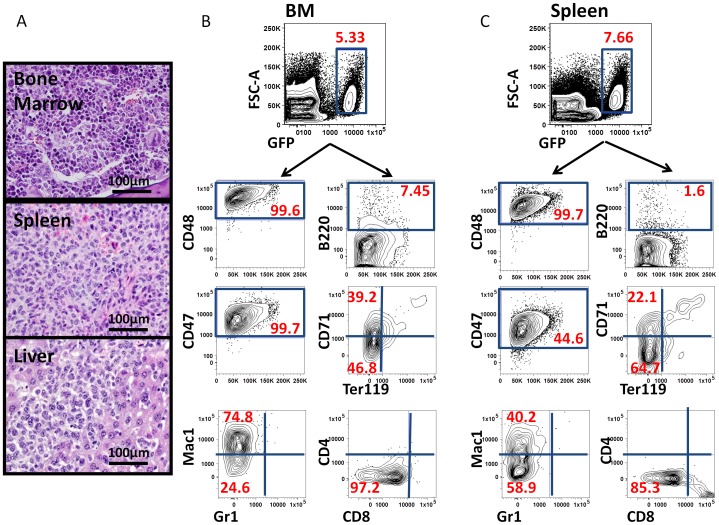
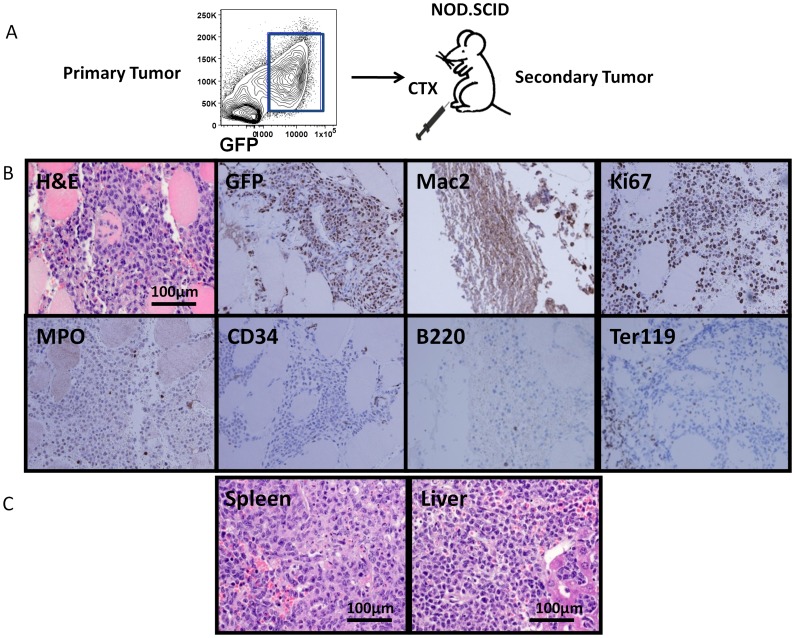
Myeloid sarcomas are extramedullary accumulations of immature myeloid cells that may present with or without evidence of pathologic involvement of the bone marrow or peripheral blood, and often coincide with or precede a diagnosis of acute myeloid leukemia (AML). A dearth of experimental models has hampered the study of myeloid sarcomas and led us to establish a new system in which tumor induction can be evaluated in an easily accessible non-hematopoietic tissue compartment. Using ex-vivo transduction of oncogenic Kras(G12V) into p16/p19(-/-) bone marrow cells, we generated transplantable leukemia-initiating cells that rapidly induced tumor formation in the skeletal muscle of immunocompromised NOD.SCID mice. In this model, murine histiocytic sarcomas, equivalent to human myeloid sarcomas, emerged at the injection site 30-50 days after cell implantation and consisted of tightly packed monotypic cells that were CD48+, CD47+ and Mac1+, with low or absent expression of other hematopoietic lineage markers. Tumor cells also infiltrated the bone marrow, spleen and other non-hematopoietic organs of tumor-bearing animals, leading to systemic illness (leukemia) within two weeks of tumor detection. P16/p19(-/-); Kras(G12V) myeloid sarcomas were multi-clonal, with dominant clones selected during secondary transplantation. The systemic leukemic phenotypes exhibited by histiocytic sarcoma-bearing mice were nearly identical to those of animals in which leukemia was introduced by intravenous transplantation of the same donor cells. Moreover, murine histiocytic sarcoma could be similarly induced by intramuscular injection of MLL-AF9 leukemia cells. This study establishes a novel, transplantable model of murine histiocytic/myeloid sarcoma that recapitulates the natural progression of these malignancies to systemic disease and indicates a cell autonomous leukemogenic mechanism.
髓肉瘤是不成熟髓细胞的髓外积聚,可能有或无骨髓或外周血的病理性累及证据,并且通常与急性髓细胞白血病 (AML) 的诊断同时发生或先于其发生。缺乏实验模型阻碍了髓肉瘤的研究,促使我们建立了一种新系统,可在易于接近的非造血组织隔室中评估肿瘤诱导。我们通过将致癌 Kras(G12V) 体外转导到 p16/p19(-/-) 骨髓细胞中,生成了可移植的白血病起始细胞,这些细胞可迅速在免疫缺陷的 NOD.SCID 小鼠的骨骼肌中诱导肿瘤形成。在该模型中,鼠组织细胞肉瘤,相当于人类髓肉瘤,在细胞植入后 30-50 天出现在注射部位,由紧密堆积的单型细胞组成,这些细胞 CD48+、CD47+ 和 Mac1+,其他造血谱系标志物的表达低或缺失。肿瘤细胞还浸润骨髓、脾脏和其他非造血器官的肿瘤-bearing 动物,导致在肿瘤检测后两周内出现全身疾病(白血病)。P16/p19(-/-);Kras(G12V) 髓肉瘤是多克隆的,在二次移植期间选择优势克隆。携带组织细胞肉瘤的小鼠表现出的全身性白血病表型与通过静脉内移植相同供体细胞引入白血病的动物几乎相同。此外,通过肌肉内注射 MLL-AF9 白血病细胞也可以类似地诱导鼠组织细胞/髓肉瘤。这项研究建立了一种新颖的、可移植的鼠组织细胞/髓肉瘤模型,该模型再现了这些恶性肿瘤向全身性疾病的自然进展,并表明存在细胞自主的白血病发生机制。