Department of Neuroscience, Carleton University, Ottawa, Ontario, Canada.
PLoS One. 2012;7(8):e44073. doi: 10.1371/journal.pone.0044073. Epub 2012 Aug 29.
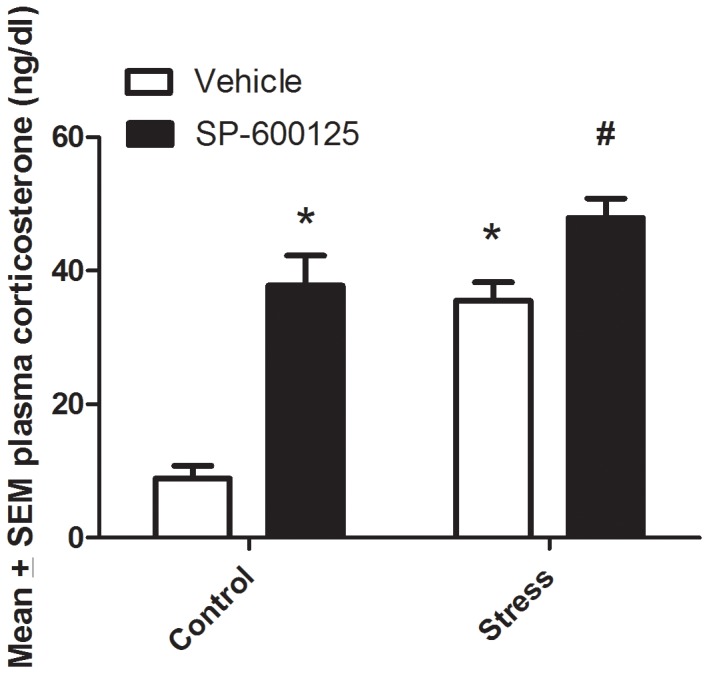
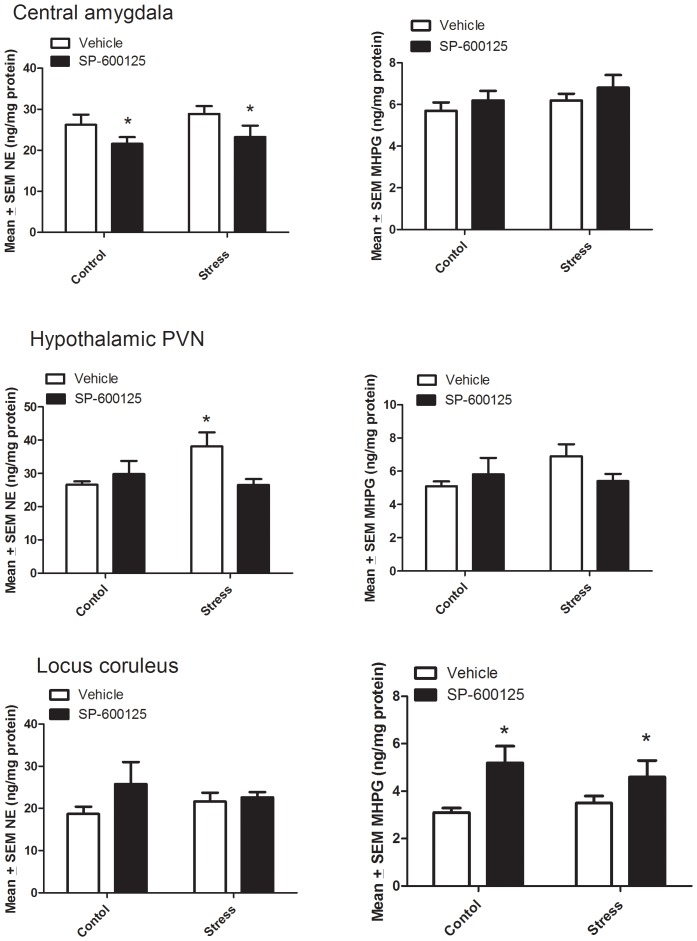
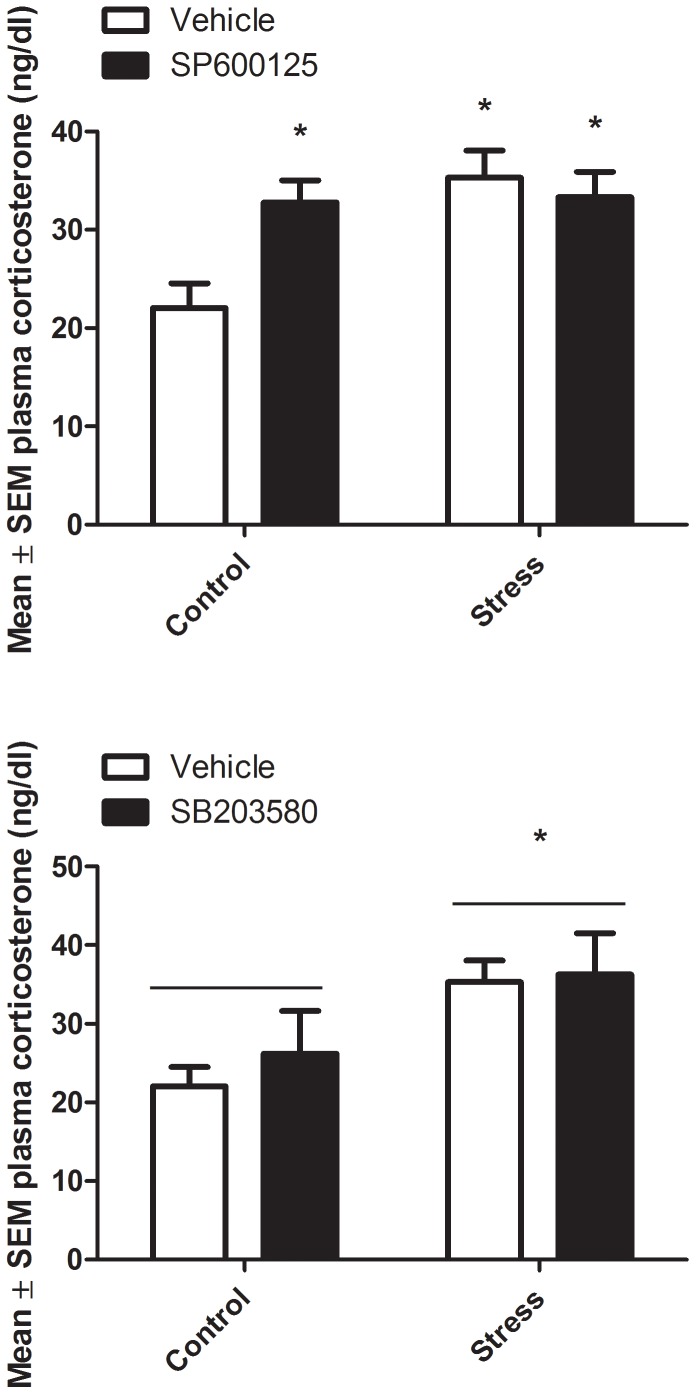
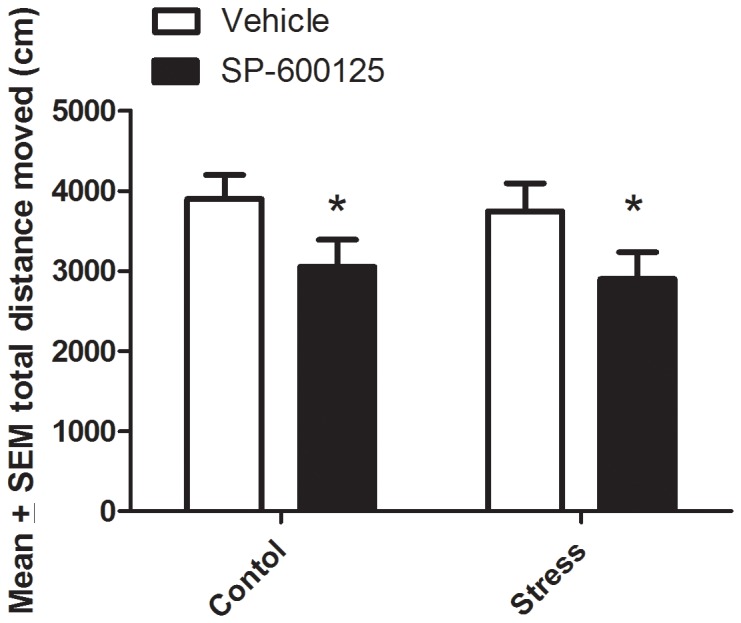
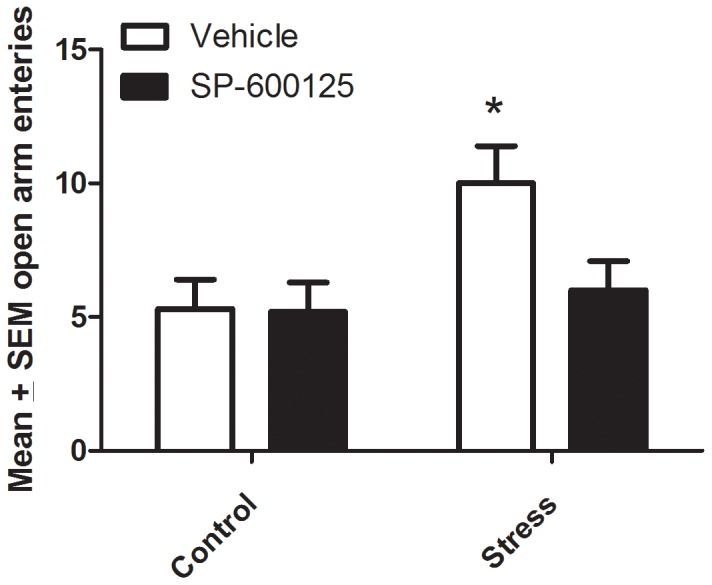
There is an urgent need for novel treatment strategies for stressor related disorders, particularly depression and anxiety disorders. Indeed, existing drug treatments are only clinically successful in a subset of patients and relapse is common. This likely stems from the fact that stressor disorders are heterogeneous with multiple biological pathways being affected. To this end, the present investigation sought to assess in mice the contribution of the c-Jun N terminal kinase (JNK) pathway to the behavioral, hormonal and neurochemical effects of an acute stressor. Indeed, although JNK has been shown to modulate glucocorticoid receptors in vitro, virtually nothing is known of the role for JNK in affecting stressor induced pathology. We presently found that the JNK antagonist, SP600125, (but not the p38 antagonist, SB203580) increased plasma corticosterone levels under resting conditions and in the context of an acute stressor (wet bedding + restraint). SP600125 also reduced exploration in an open field arena, but prevented the stressor induced increase in open arm exploration in an elevated plus maze. Finally, SP600125 affected noradrenergic activity in the central amygdala and locus coruleus under resting condition, but prevented the noradrenergic effects within the paraventricular nucleus of the hypothalamus that were induced by the acute stressor exposure. These data suggest inhibiting endogenous JNK can have stressor-like corticoid, behavioral and central monoamine effects under basal conditions, but can actually reverse some behavioral and neurochemical effects of an acute stressor. Thus, endogenous JNK appears to affect stress relevant processes in a context-dependent manner.
目前非常需要针对应激相关障碍(尤其是抑郁和焦虑障碍)的新型治疗策略。事实上,现有的药物治疗在一部分患者中仅具有临床疗效,且复发较为常见。这可能源于应激障碍具有异质性,涉及多种生物学途径。为此,本研究旨在评估 c-Jun N 端激酶(JNK)通路在急性应激源对小鼠行为、激素和神经化学影响中的作用。事实上,尽管已经证明 JNK 可在体外调节糖皮质激素受体,但对于 JNK 在影响应激源诱导的病理学中的作用几乎一无所知。我们目前发现,JNK 拮抗剂 SP600125(而非 p38 拮抗剂 SB203580)在静息状态和急性应激(湿垫+束缚)下增加了血浆皮质酮水平。SP600125 还减少了开阔场中的探索行为,但可防止在高架十字迷宫中因急性应激源暴露而增加的开放臂探索。最后,SP600125 在静息状态下影响了杏仁中央核和蓝斑核中的去甲肾上腺素能活性,但可防止下丘脑室旁核内由急性应激源暴露引起的去甲肾上腺素能效应。这些数据表明,抑制内源性 JNK 在基础条件下可产生应激样皮质激素、行为和中枢单胺效应,但实际上可逆转急性应激的某些行为和神经化学效应。因此,内源性 JNK 似乎以依赖于情境的方式影响与应激相关的过程。