Department of Chemical & Materials Engineering, Faculty of Engineering, University of Alberta, Edmonton, Alberta, Canada.
PLoS One. 2012;7(8):e44197. doi: 10.1371/journal.pone.0044197. Epub 2012 Aug 31.
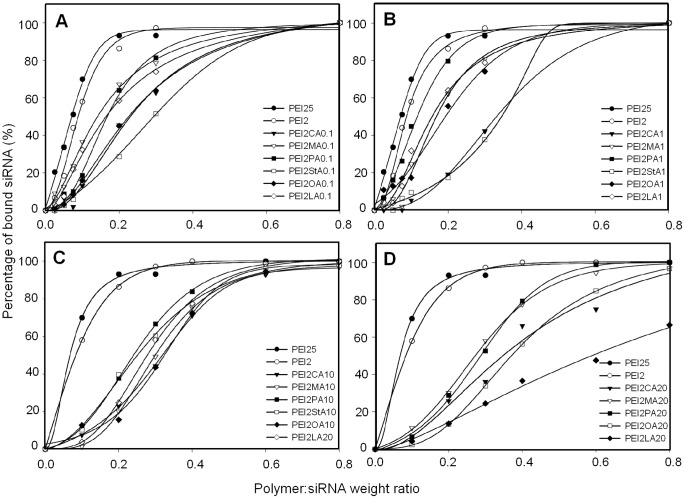
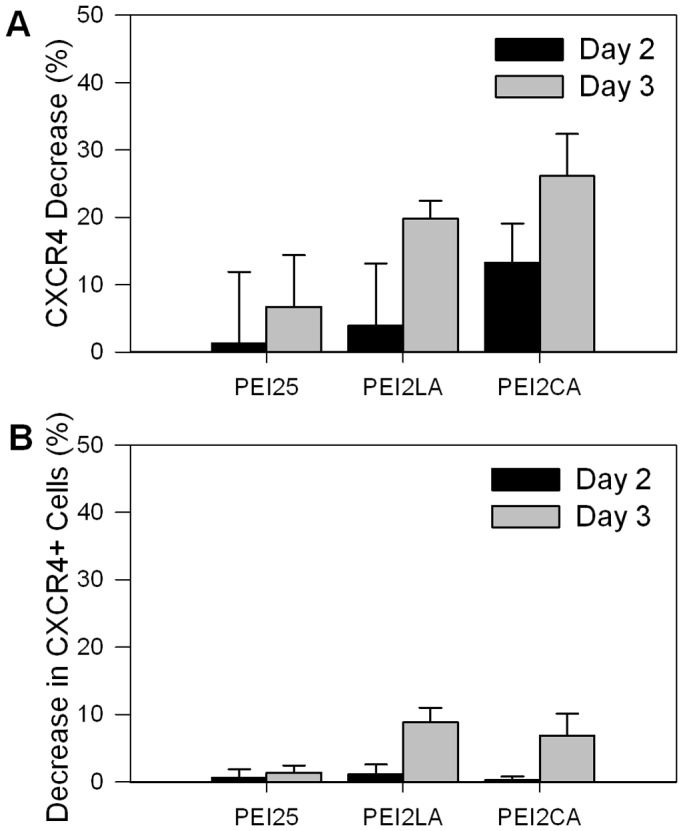
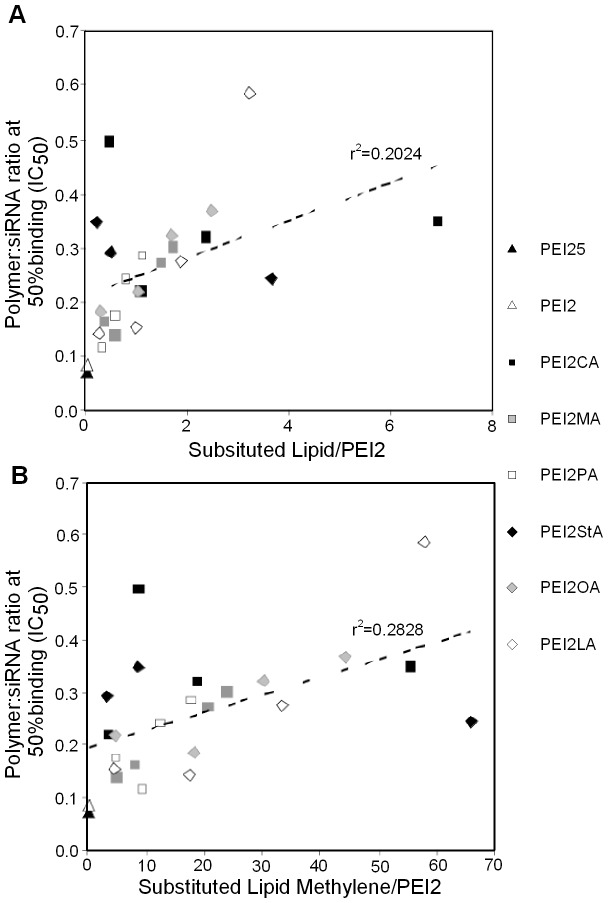
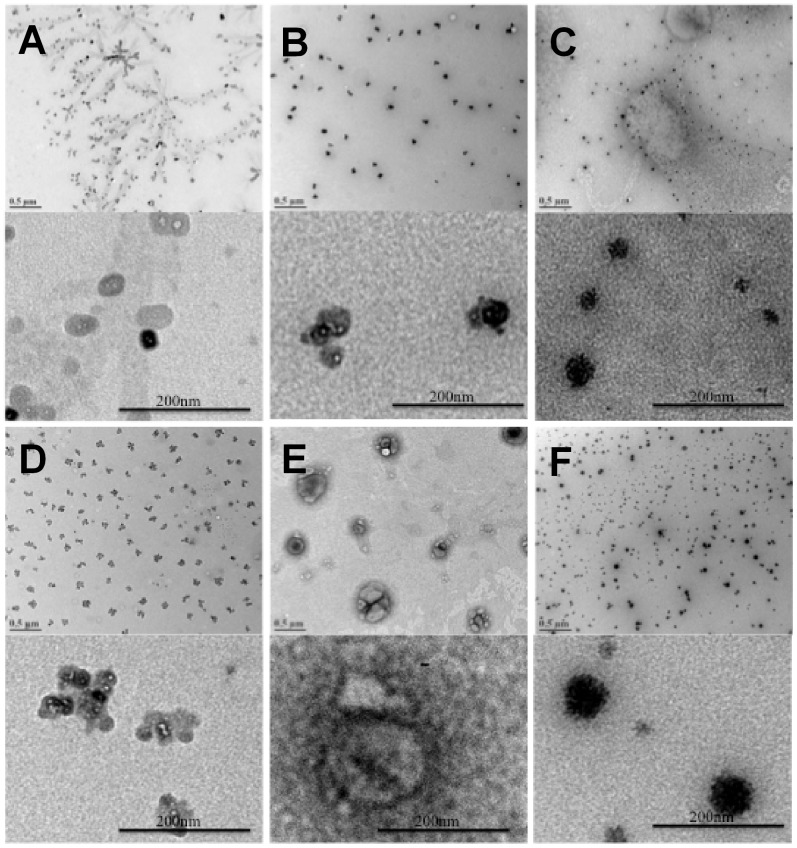
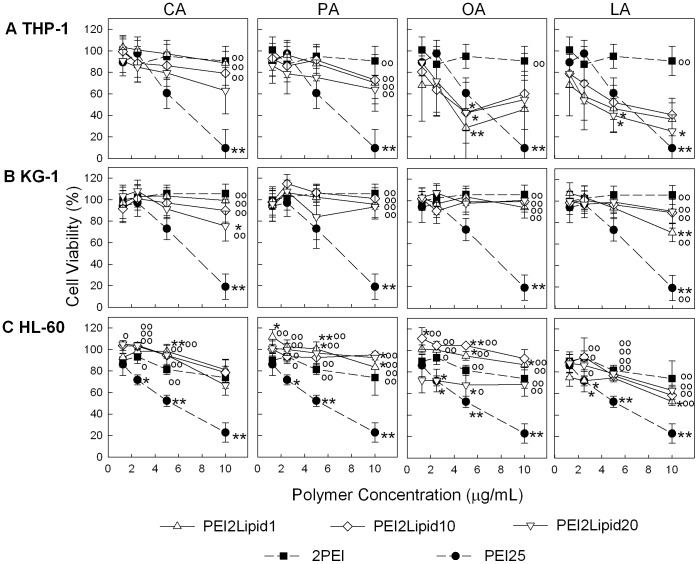
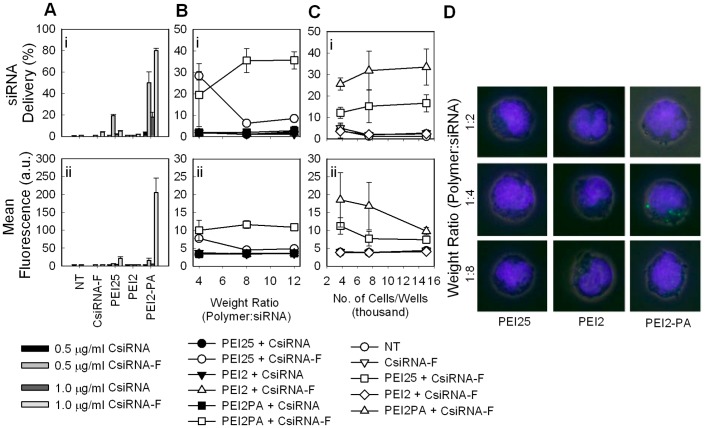
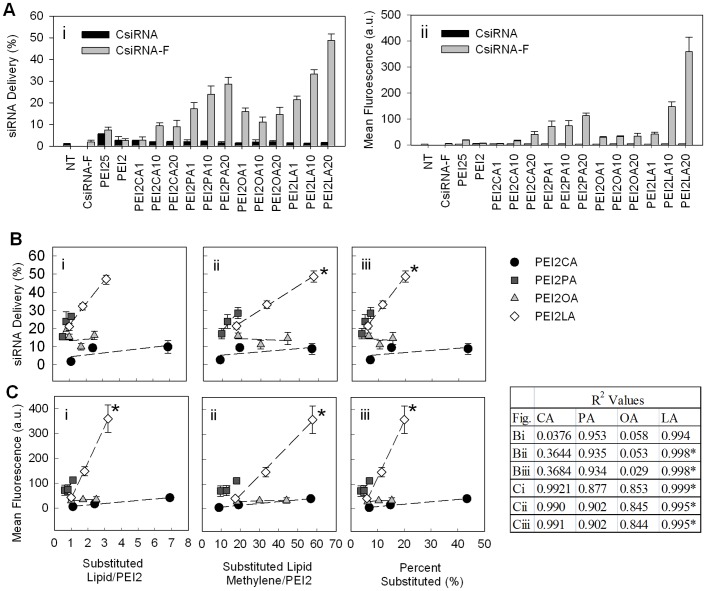
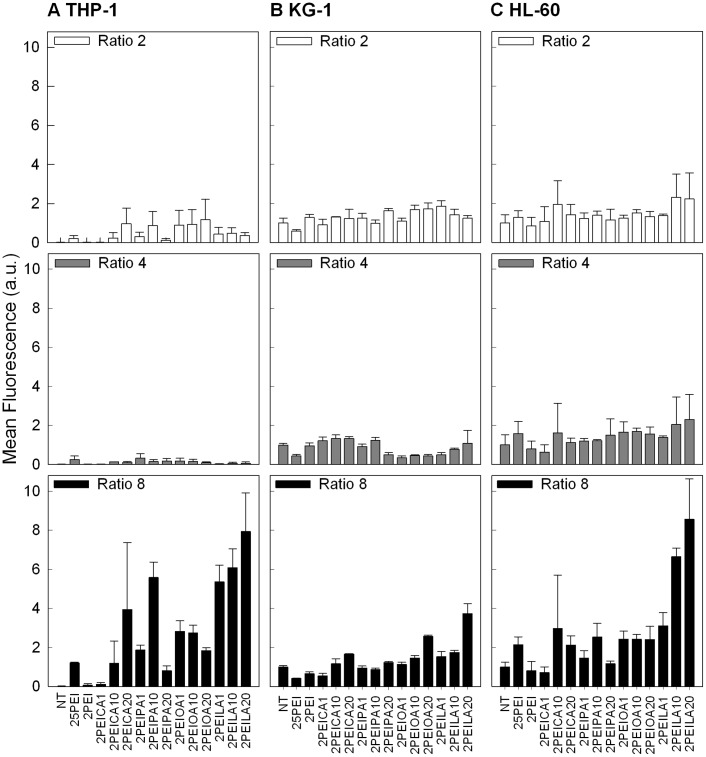
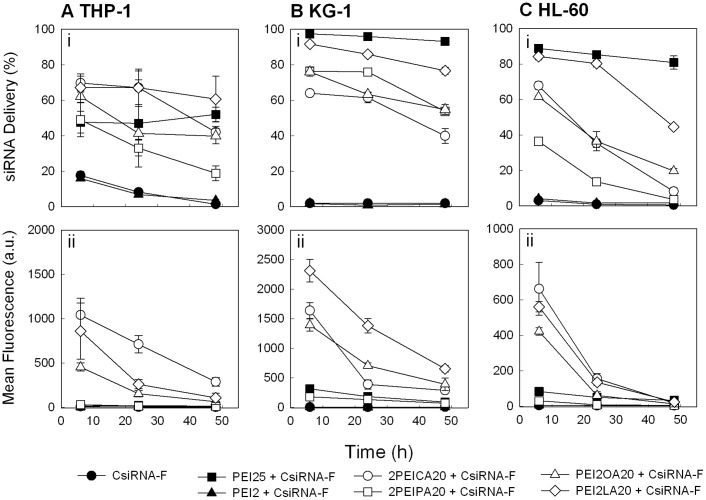
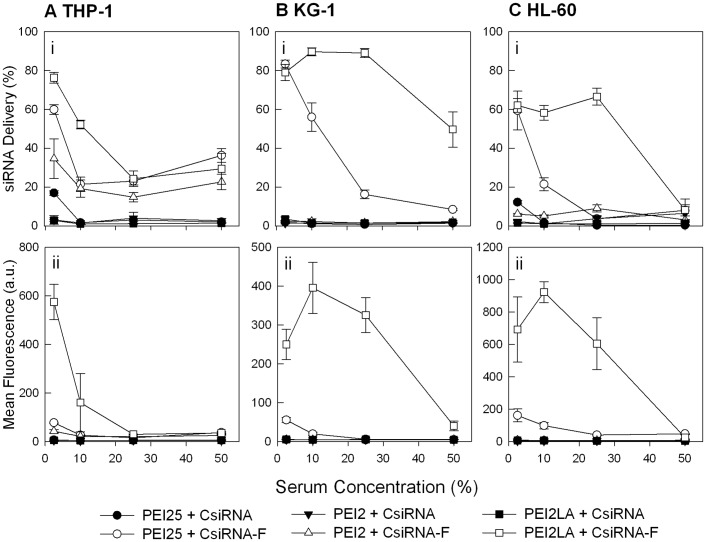
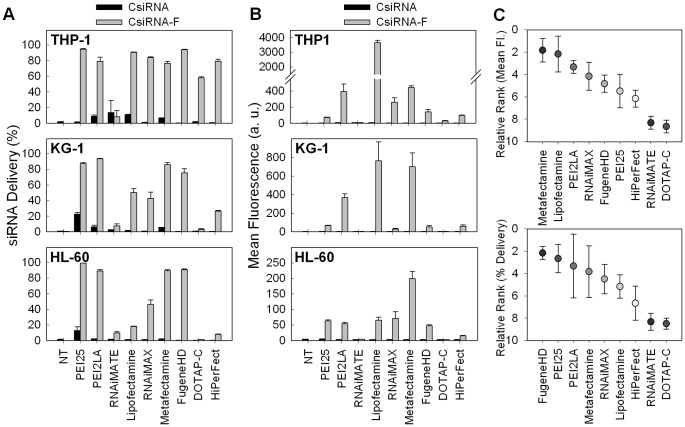
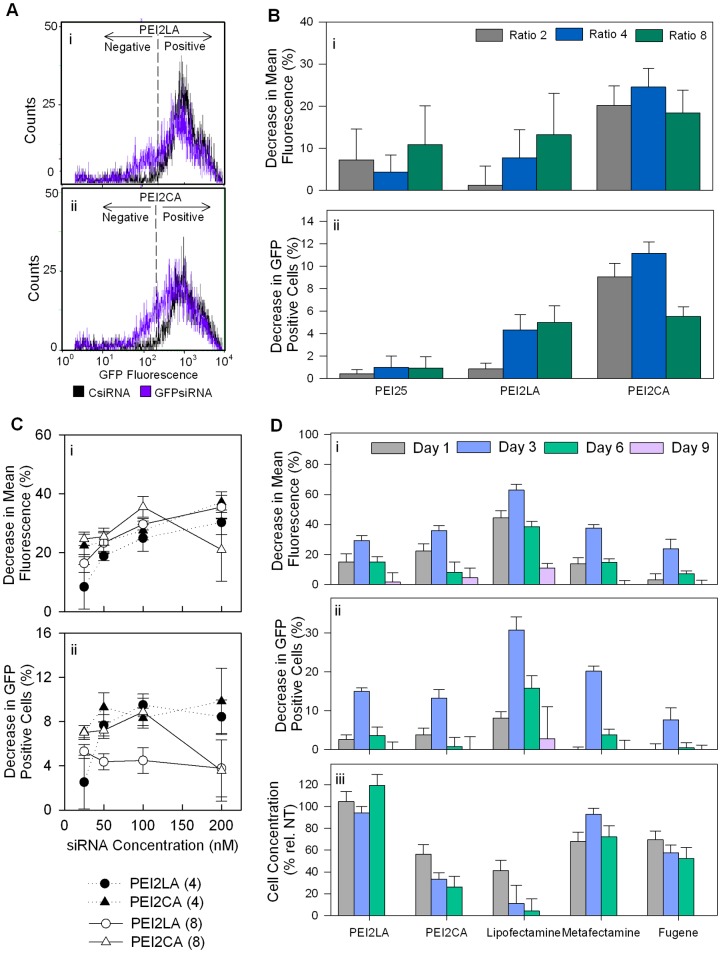
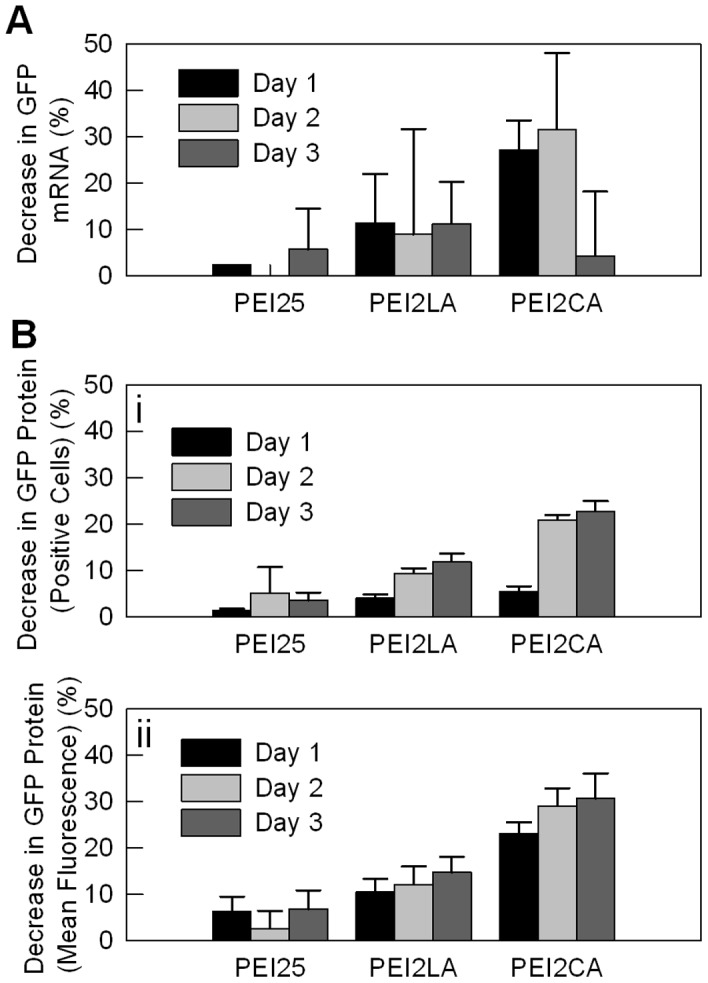
Use of small interfering RNA (siRNA) is a promising approach for AML treatment as the siRNA molecule can be designed to specifically target proteins that contribute to aberrant cell proliferation in this disease. However, a clinical-relevant means of delivering siRNA molecules must be developed, as the cellular delivery of siRNA is problematic. Here, we report amphiphilic carriers combining a cationic polymer (2 kDa polyethyleneimine, PEI2) with lipophilic moieties to facilitate intracellular delivery of siRNA to AML cell lines. Complete binding of siRNA by the designed carriers was achieved at a polymer:siRNA ratio of ≈ 0.5 and led to siRNA/polymer complexes of ≈ 100 nm size. While the native PEI2 did not display cytotoxicity on AML cell lines THP-1, KG-1 and HL-60, lipid-modification on PEI2 slightly increased the cytotoxicity, which was consistent with increased interaction of polymers with cell membranes. Cellular delivery of siRNA was dependent on the nature of lipid substituent and the extent of lipid substitution, and varied among the three AML cell lines used. Linoleic acid-substituted polymers performed best among the prepared polymers and gave a siRNA delivery equivalent to better performing commercial reagents. Using THP-1 cells and a reporter (GFP) and an endogenous (CXCR4) target, effective silencing of the chosen targets was achieved with 25 to 50 nM of siRNA concentrations, and without adversely affecting subsequent cell growth. We conclude that lipid-substituted PEI2 can serve as an effective delivery of siRNA to leukemic cells and could be employed in molecular therapy of leukemia.
使用小干扰 RNA(siRNA)是治疗 AML 的一种很有前途的方法,因为 siRNA 分子可以被设计成专门针对导致这种疾病中异常细胞增殖的蛋白质。然而,必须开发出一种与临床相关的 siRNA 分子传递方法,因为 siRNA 的细胞传递存在问题。在这里,我们报告了一种两亲性载体,它将阳离子聚合物(2 kDa 聚乙烯亚胺,PEI2)与亲脂性部分结合,以促进 siRNA 向 AML 细胞系的细胞内传递。设计的载体可以在聚合物:siRNA 比约为 0.5 时完全结合 siRNA,并导致 siRNA/聚合物复合物的大小约为 100nm。虽然天然 PEI2 对 AML 细胞系 THP-1、KG-1 和 HL-60 没有显示出细胞毒性,但 PEI2 的脂质修饰略微增加了细胞毒性,这与聚合物与细胞膜的相互作用增加一致。siRNA 的细胞内传递取决于脂质取代基的性质和脂质取代的程度,并在使用的三种 AML 细胞系中有所不同。亚油酸取代的聚合物在制备的聚合物中表现最好,并且提供了与表现更好的商业试剂相当的 siRNA 传递。使用 THP-1 细胞和报告基因(GFP)和内源性(CXCR4)靶标,用 25 至 50 nM 的 siRNA 浓度可以有效地沉默所选靶标,而不会对随后的细胞生长产生不利影响。我们得出结论,脂质取代的 PEI2 可以作为向白血病细胞传递 siRNA 的有效方法,并可用于白血病的分子治疗。