Department of Oral and Maxillofacial Pathobiology, Graduate School of Biomedical Sciences, Hiroshima University, Hiroshima, Japan.
PLoS One. 2012;7(8):e44488. doi: 10.1371/journal.pone.0044488. Epub 2012 Aug 30.
Metastasis to regional lymph nodes via lymphatic vessels plays a key role in cancer progression. Tumor lymphangiogenesis is known to promote lymphatic metastasis, and vascular endothelial growth factor C (VEGF-C) is a critical activator of tumor lymphangiogenesis during the process of metastasis. We previously identified periostin as an invasion- and angiogenesis-promoting factor in head and neck squamous cell carcinoma (HNSCC). In this study, we discovered a novel role for periostin in tumor lymphangiogenesis.
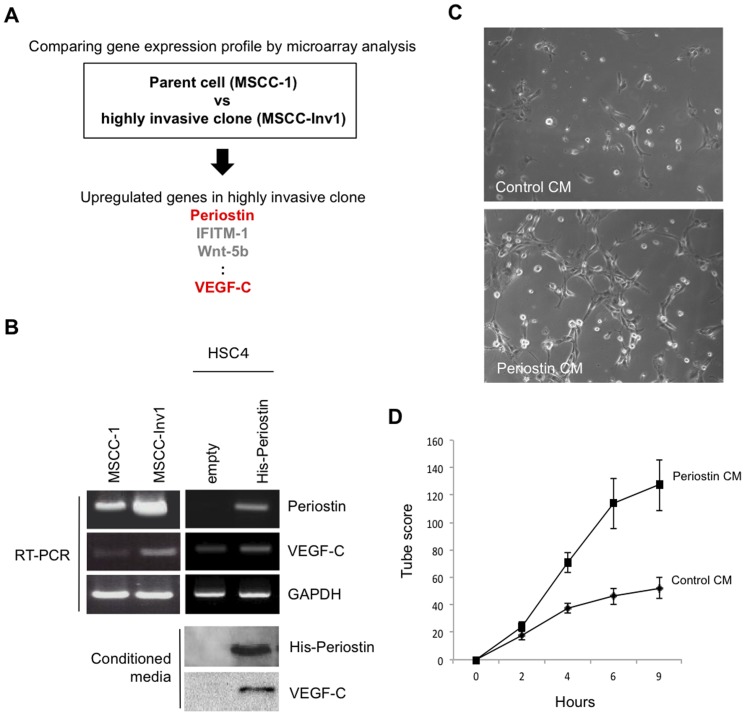
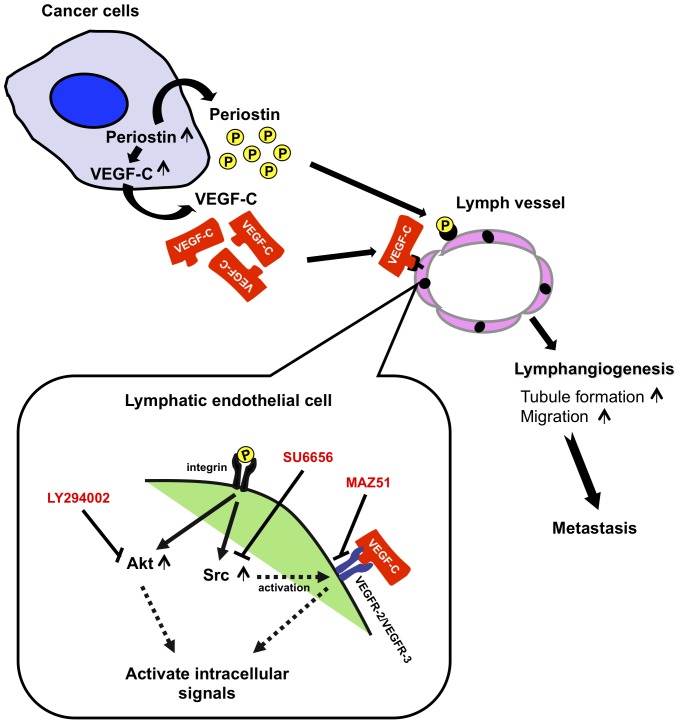
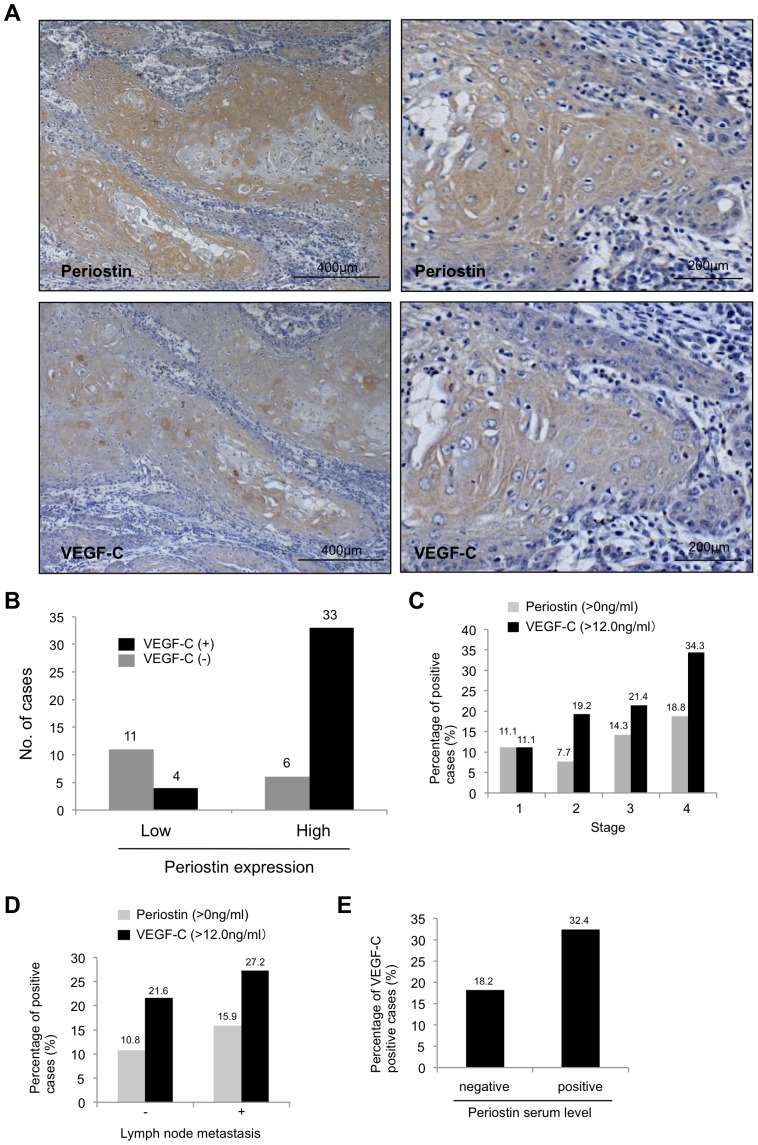
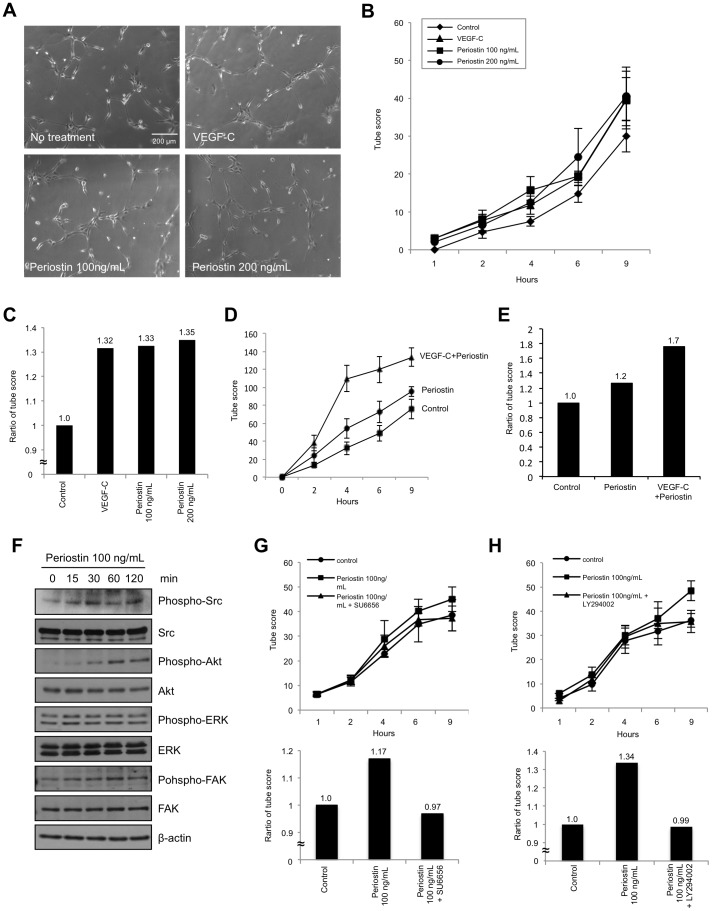
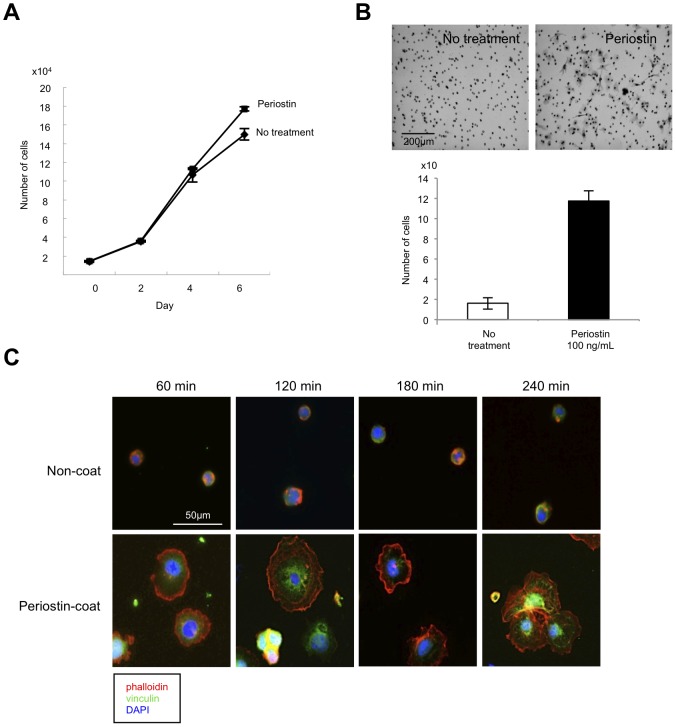
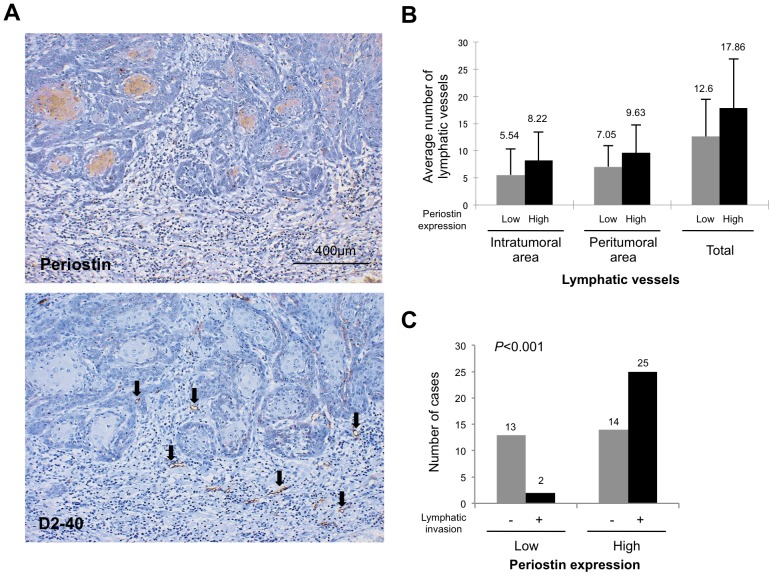
Periostin overexpression upregulated VEGF-C mRNA expression in HNSCC cells. By using conditioned media from periostin-overexpressing HNSCC cells, we examined tube formation of lymphatic endothelial cells. Conditioned media from periostin-overexpressing cells promoted tube formation. To know the correlation between periostin and VEGF-C, we compared Periostin expression with VEGF-C expression in 54 HNSCC cases by immunohistochemistry. Periostin expression was correlated well with VEGF-C expression in HNSCC cases. Moreover, correlation between periostin and VEGF-C secretion was observed in serum from HNSCC patients. Interestingly, periostin itself promoted tube formation of lymphatic endothelial cells independently of VEGF-C. Periostin-promoted lymphangiogenesis was mediated by Src and Akt activity. Indeed possible correlation between periostin and lymphatic status in periostin-overexpressing xenograft tumors and HNSCC cases was observed.
Our findings suggest that periostin itself as well as periostin-induced upregulation of VEGF-C may promote lymphangiogenesis. We suggest that periostin may be a marker for prediction of malignant behaviors in HNSCC and a potential target for future therapeutic intervention to obstruct tumoral lymphatic invasion and lymphangiogenesis in HNSCC patients.
通过淋巴管转移至区域淋巴结在癌症进展中起着关键作用。肿瘤淋巴管生成被认为促进了淋巴转移,而血管内皮生长因子 C(VEGF-C)是转移过程中肿瘤淋巴管生成的关键激活剂。我们之前发现,在头颈部鳞状细胞癌(HNSCC)中,骨膜蛋白是一种促进侵袭和血管生成的因子。在这项研究中,我们发现了骨膜蛋白在肿瘤淋巴管生成中的一个新作用。
骨膜蛋白过表达在上皮性癌细胞中上调 VEGF-C mRNA 的表达。通过使用骨膜蛋白过表达的上皮性癌细胞的条件培养基,我们检测了淋巴管内皮细胞的管形成。骨膜蛋白过表达细胞的条件培养基促进了管形成。为了了解骨膜蛋白和 VEGF-C 之间的相关性,我们通过免疫组化比较了 54 例 HNSCC 病例中的骨膜蛋白表达与 VEGF-C 表达。在 HNSCC 病例中,骨膜蛋白表达与 VEGF-C 表达密切相关。此外,在 HNSCC 患者的血清中观察到骨膜蛋白与 VEGF-C 分泌之间的相关性。有趣的是,骨膜蛋白本身可以独立于 VEGF-C 促进淋巴管内皮细胞的管形成。骨膜蛋白促进的淋巴管生成是通过 Src 和 Akt 活性介导的。事实上,在骨膜蛋白过表达的异种移植肿瘤和 HNSCC 病例中观察到了骨膜蛋白与淋巴管状态之间的可能相关性。
我们的研究结果表明,骨膜蛋白本身以及骨膜蛋白诱导的 VEGF-C 上调可能促进淋巴管生成。我们认为,骨膜蛋白可能是预测 HNSCC 恶性行为的标志物,也是未来治疗干预以阻断 HNSCC 患者肿瘤性淋巴管侵犯和淋巴管生成的潜在靶点。