Laboratório Nacional de Biociências, Centro Nacional de Pesquisa em Energia e Materiais, Campinas, São Paulo, Brazil.
PLoS One. 2012;7(9):e44282. doi: 10.1371/journal.pone.0044282. Epub 2012 Sep 5.
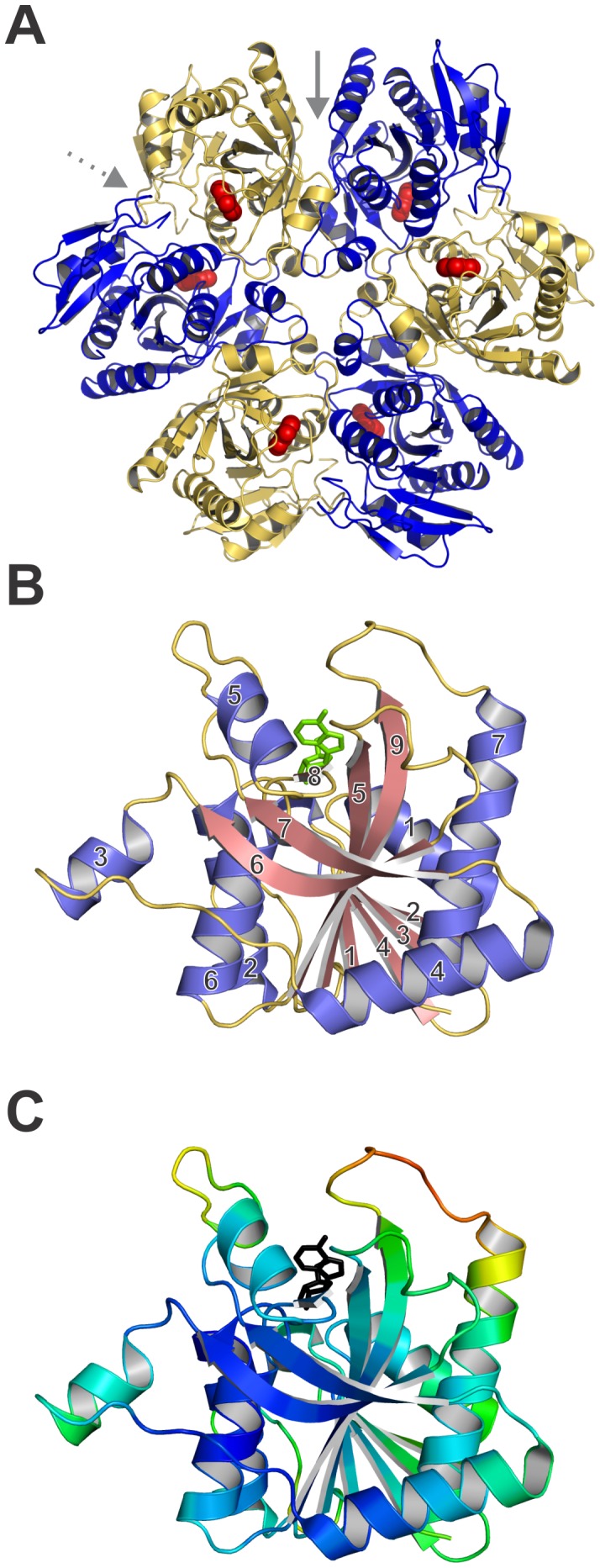
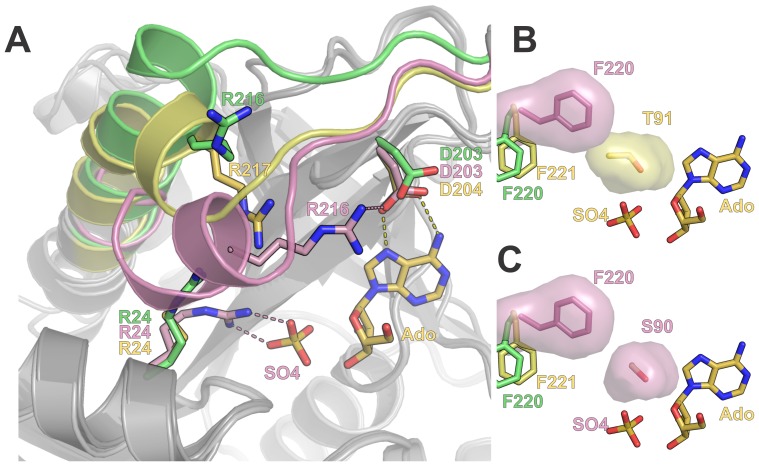
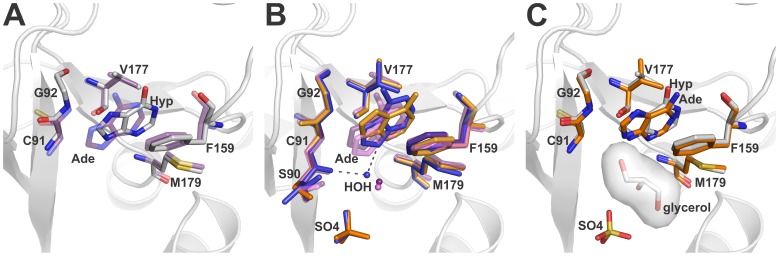
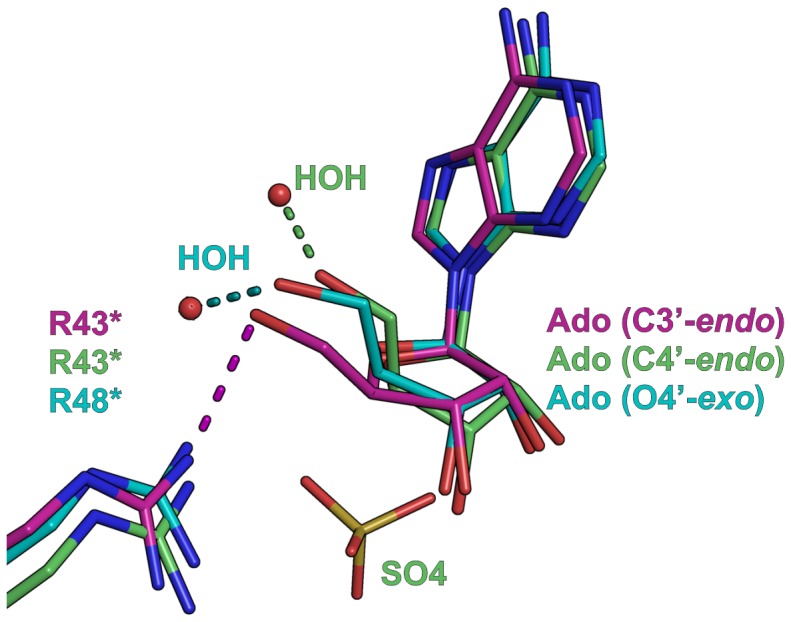
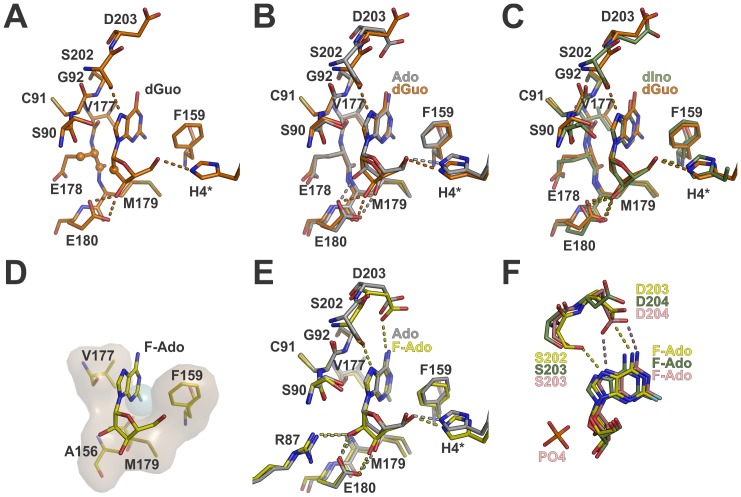
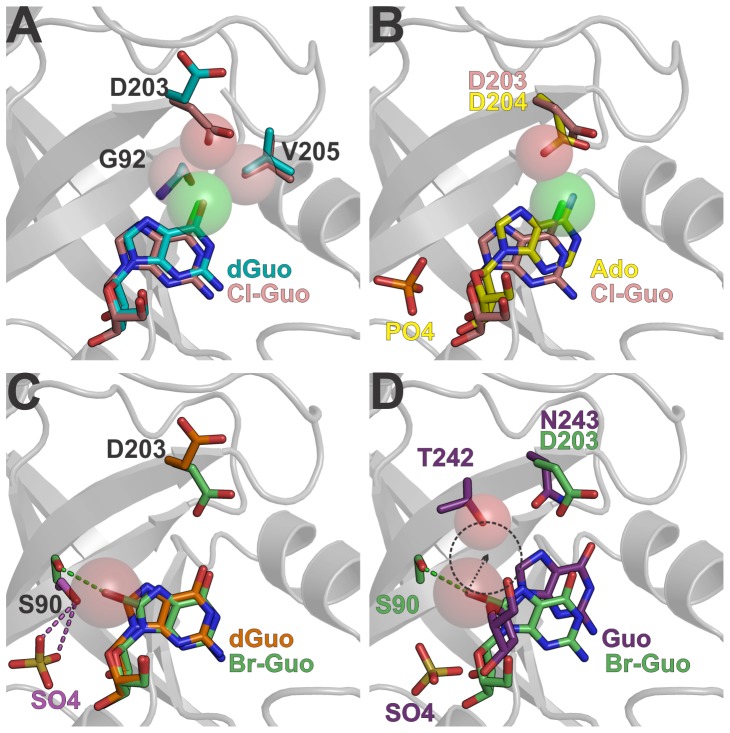
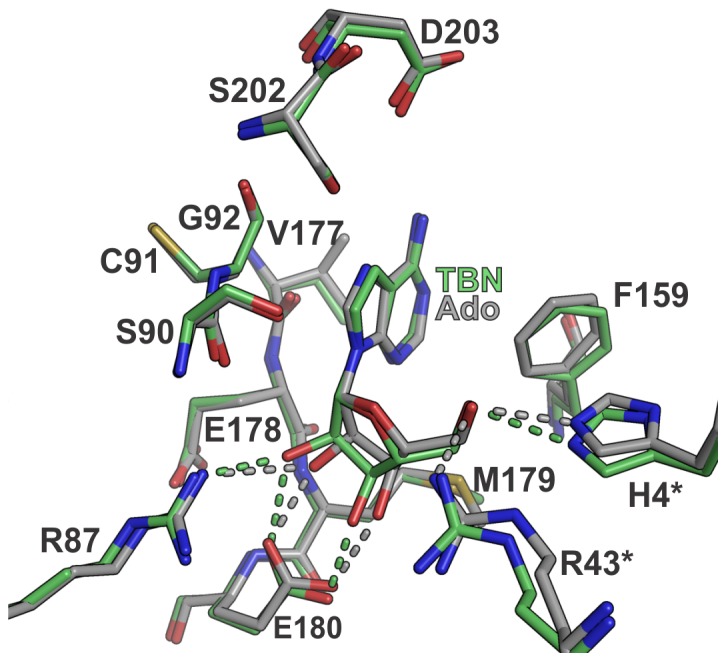
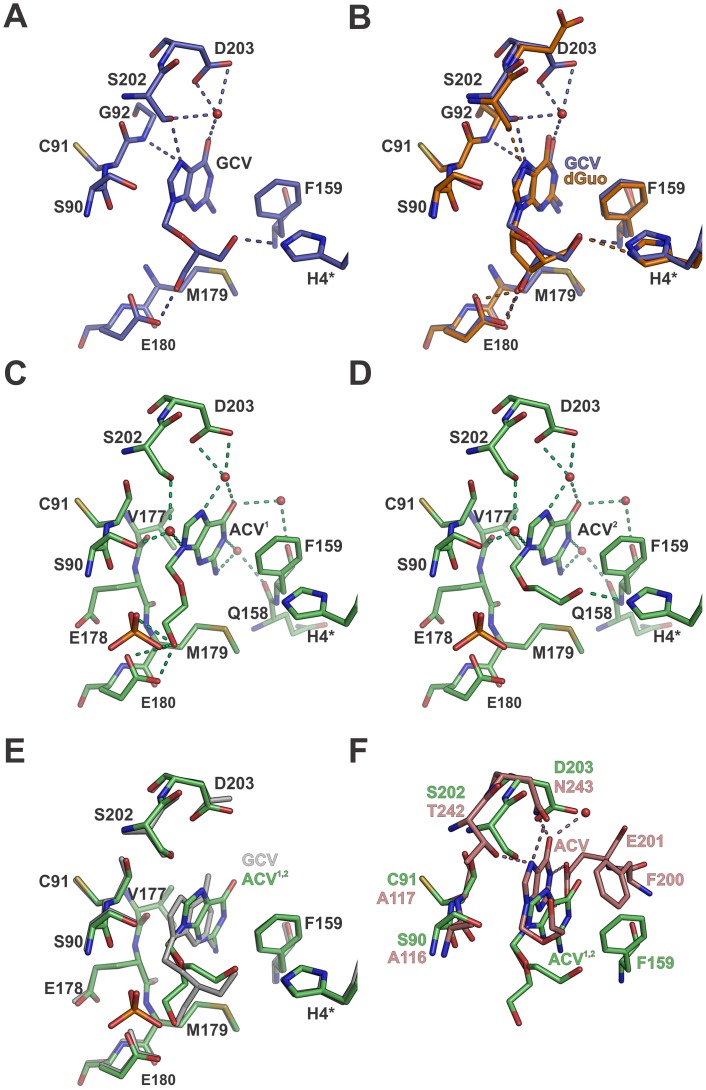
The hexameric purine nucleoside phosphorylase from Bacillus subtilis (BsPNP233) displays great potential to produce nucleoside analogues in industry and can be exploited in the development of new anti-tumor gene therapies. In order to provide structural basis for enzyme and substrates rational optimization, aiming at those applications, the present work shows a thorough and detailed structural description of the binding mode of substrates and nucleoside analogues to the active site of the hexameric BsPNP233. Here we report the crystal structure of BsPNP233 in the apo form and in complex with 11 ligands, including clinically relevant compounds. The crystal structure of six ligands (adenine, 2'deoxyguanosine, aciclovir, ganciclovir, 8-bromoguanosine, 6-chloroguanosine) in complex with a hexameric PNP are presented for the first time. Our data showed that free bases adopt alternative conformations in the BsPNP233 active site and indicated that binding of the co-substrate (2'deoxy)ribose 1-phosphate might contribute for stabilizing the bases in a favorable orientation for catalysis. The BsPNP233-adenosine complex revealed that a hydrogen bond between the 5' hydroxyl group of adenosine and Arg(43*) side chain contributes for the ribosyl radical to adopt an unusual C3'-endo conformation. The structures with 6-chloroguanosine and 8-bromoguanosine pointed out that the Cl(6) and Br(8) substrate modifications seem to be detrimental for catalysis and can be explored in the design of inhibitors for hexameric PNPs from pathogens. Our data also corroborated the competitive inhibition mechanism of hexameric PNPs by tubercidin and suggested that the acyclic nucleoside ganciclovir is a better inhibitor for hexameric PNPs than aciclovir. Furthermore, comparative structural analyses indicated that the replacement of Ser(90) by a threonine in the B. cereus hexameric adenosine phosphorylase (Thr(91)) is responsible for the lack of negative cooperativity of phosphate binding in this enzyme.
枯草芽孢杆菌六聚体嘌呤核苷磷酸化酶(BsPNP233)在工业上具有很大的潜力,可以用来生产核苷类似物,并可以应用于新的抗肿瘤基因治疗的开发。为了为酶和底物的合理优化提供结构基础,针对这些应用,本工作对六聚体 BsPNP233 活性位点与底物和核苷类似物的结合模式进行了彻底和详细的结构描述。在这里,我们报告了 BsPNP233 的apo 形式和与 11 种配体(包括临床相关化合物)复合物的晶体结构。首次报道了 6 种配体(腺嘌呤、2'-脱氧鸟苷、阿昔洛韦、更昔洛韦、8-溴鸟苷、6-氯鸟苷)与六聚体 PNP 复合物的晶体结构。我们的数据表明,游离碱基在 BsPNP233 活性部位采用替代构象,并且表明辅底物(2'-脱氧)核糖 1-磷酸的结合可能有助于将碱基稳定在有利于催化的有利取向。BsPNP233-腺嘌呤复合物表明,腺嘌呤的 5' 羟基与 Arg(43*)侧链之间的氢键有助于核糖基自由基采用异常的 C3'-endo 构象。6-氯鸟苷和 8-溴鸟苷的结构表明,Cl(6)和 Br(8)底物修饰似乎不利于催化,可以探索用于设计病原体六聚体 PNPs 的抑制剂。我们的数据还证实了六聚体 PNPs 被 tubercidin 的竞争性抑制机制,并表明无环核苷更昔洛韦是六聚体 PNPs 的比阿昔洛韦更好的抑制剂。此外,比较结构分析表明,在解淀粉芽孢杆菌六聚体腺苷磷酸化酶中,Ser(90)被苏氨酸取代(Thr(91))是导致该酶中磷酸盐结合缺乏负协同性的原因。