Division of Immunology, Department of Microbiology and Immunobiology, Harvard Medical School, Boston, Massachusetts, USA.
Nat Immunol. 2012 Oct;13(10):972-80. doi: 10.1038/ni.2420. Epub 2012 Sep 9.
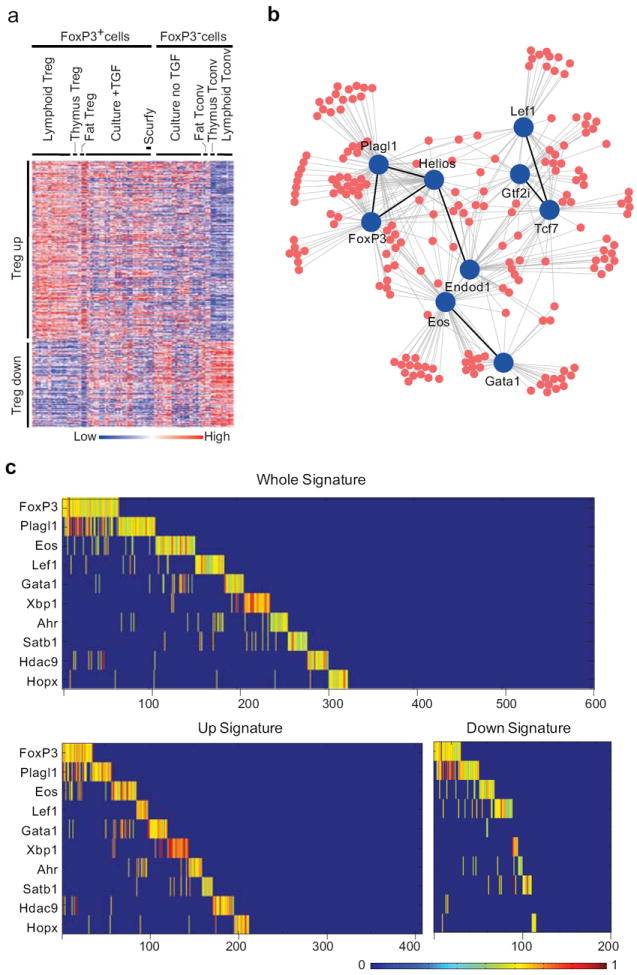
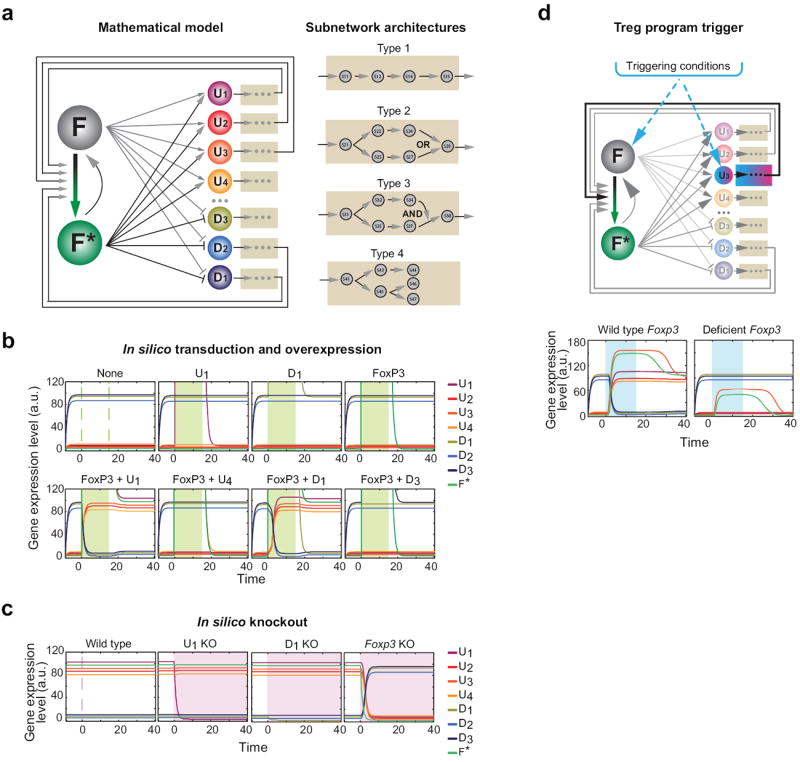
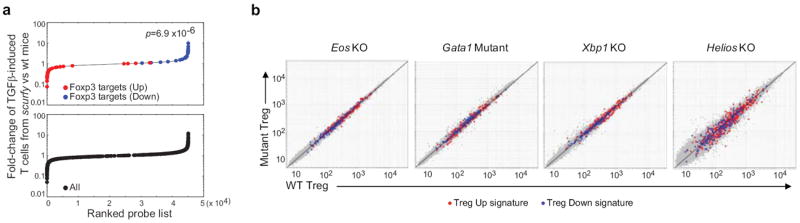
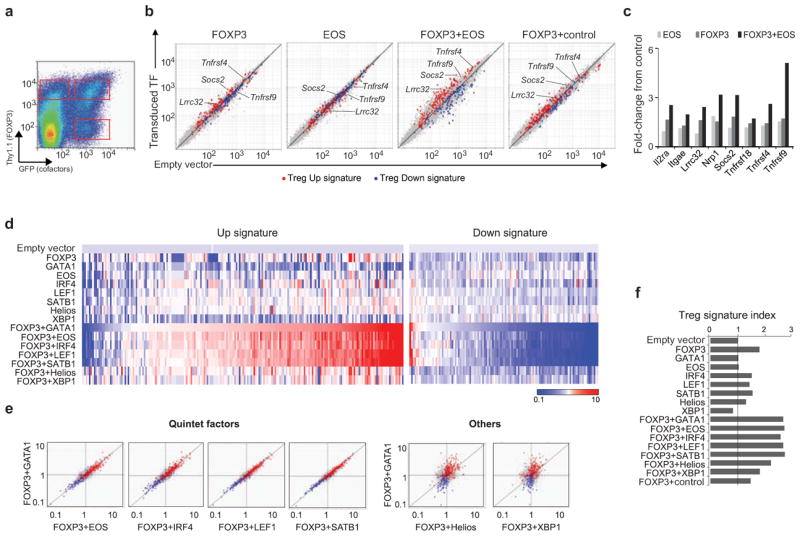
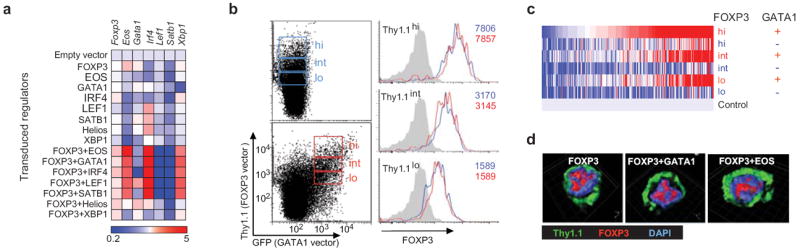
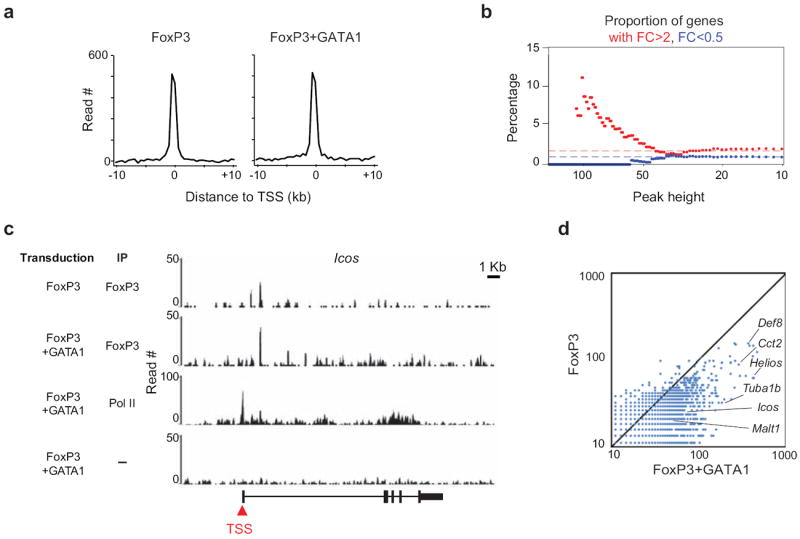
The transcription factor Foxp3 participates dominantly in the specification and function of Foxp3(+)CD4(+) regulatory T cells (T(reg) cells) but is neither strictly necessary nor sufficient to determine the characteristic T(reg) cell signature. Here we used computational network inference and experimental testing to assess the contribution of other transcription factors to this. Enforced expression of Helios or Xbp1 elicited distinct signatures, but Eos, IRF4, Satb1, Lef1 and GATA-1 elicited exactly the same outcome, acting in synergy with Foxp3 to activate expression of most of the T(reg) cell signature, including key transcription factors, and enhancing occupancy by Foxp3 at its genomic targets. Conversely, the T(reg) cell signature was robust after inactivation of any single cofactor. A redundant genetic switch thus 'locked in' the T(reg) cell phenotype, a model that would account for several aspects of T(reg) cell physiology, differentiation and stability.
转录因子 Foxp3 主要参与 Foxp3(+)CD4(+)调节性 T 细胞 (Treg 细胞) 的特异性和功能,但既不是确定 Treg 细胞特征所必需的,也不是充分的。在这里,我们使用计算网络推断和实验测试来评估其他转录因子对此的贡献。强制表达 Helios 或 Xbp1 可引发不同的特征,但 Eos、IRF4、Satb1、Lef1 和 GATA-1 则产生完全相同的结果,与 Foxp3 协同作用激活大多数 Treg 细胞特征的表达,包括关键转录因子,并增强 Foxp3 在其基因组靶标上的占据。相反,在失活任何单个共因子后,Treg 细胞特征仍然很稳健。因此,这种冗余的遗传开关“锁定”了 Treg 细胞表型,这一模型可以解释 Treg 细胞生理学、分化和稳定性的几个方面。