Center of Animal Biotechnology and Gene Therapy, Universitat Autònoma de Barcelona, Barcelona, Spain.
Diabetes. 2012 Nov;61(11):2851-61. doi: 10.2337/db12-0134. Epub 2012 Sep 6.
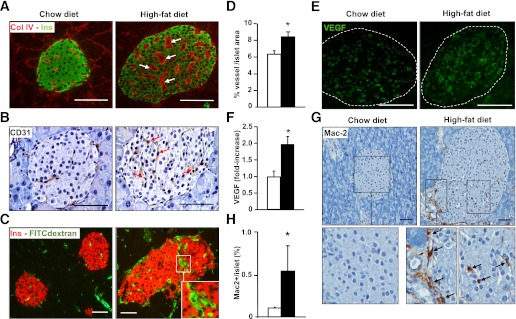
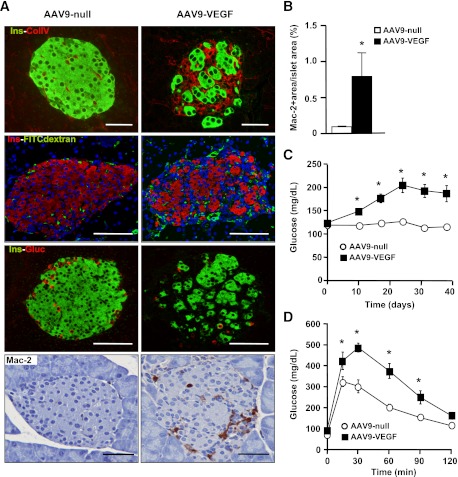
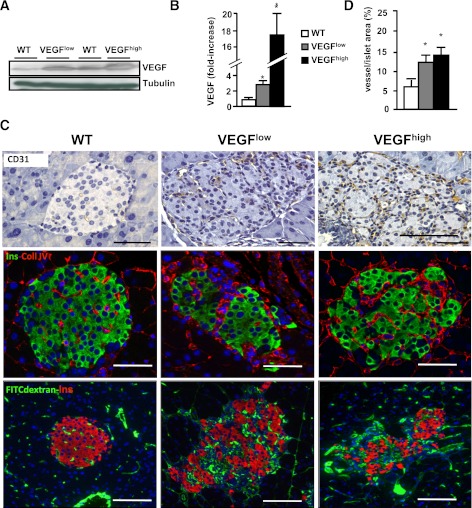
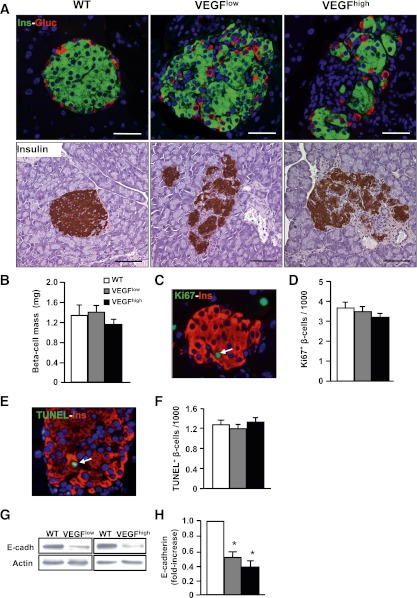
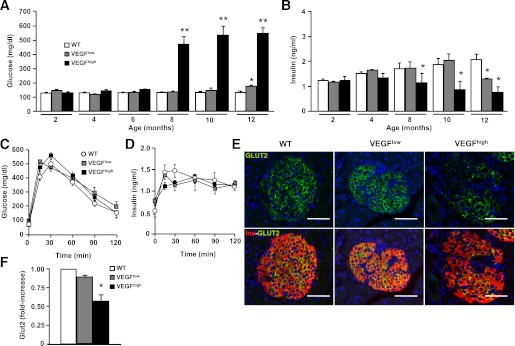
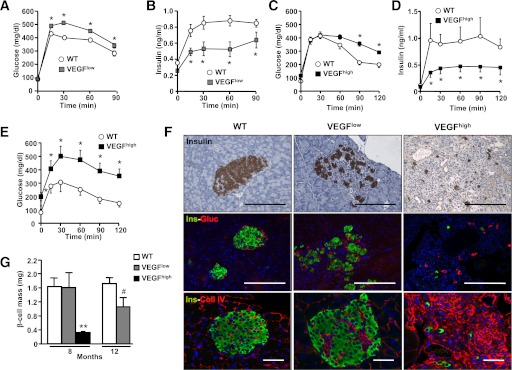
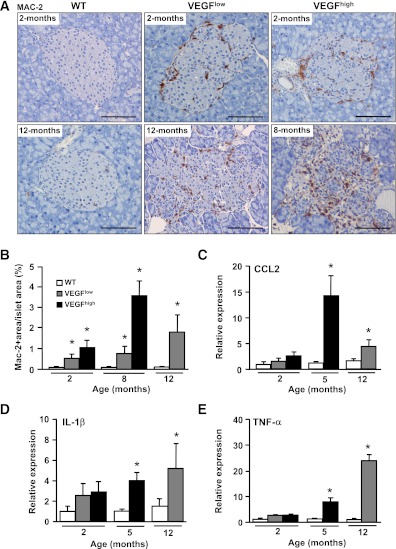
Type 2 diabetes (T2D) results from insulin resistance and inadequate insulin secretion. Insulin resistance initially causes compensatory islet hyperplasia that progresses to islet disorganization and altered vascularization, inflammation, and, finally, decreased functional β-cell mass and hyperglycemia. The precise mechanism(s) underlying β-cell failure remain to be elucidated. In this study, we show that in insulin-resistant high-fat diet-fed mice, the enhanced islet vascularization and inflammation was parallel to an increased expression of vascular endothelial growth factor A (VEGF). To elucidate the role of VEGF in these processes, we have genetically engineered β-cells to overexpress VEGF (in transgenic mice or after adeno-associated viral vector-mediated gene transfer). We found that sustained increases in β-cell VEGF levels led to disorganized, hypervascularized, and fibrotic islets, progressive macrophage infiltration, and proinflammatory cytokine production, including tumor necrosis factor-α and interleukin-1β. This resulted in impaired insulin secretion, decreased β-cell mass, and hyperglycemia with age. These results indicate that sustained VEGF upregulation may participate in the initiation of a process leading to β-cell failure and further suggest that compensatory islet hyperplasia and hypervascularization may contribute to progressive inflammation and β-cell mass loss during T2D.
2 型糖尿病(T2D)是由胰岛素抵抗和胰岛素分泌不足引起的。胰岛素抵抗最初导致胰岛代偿性增生,继而导致胰岛组织紊乱、血管化改变、炎症,最终导致功能性β细胞数量减少和高血糖。β细胞衰竭的确切机制仍有待阐明。在这项研究中,我们表明,在胰岛素抵抗的高脂肪饮食喂养的小鼠中,增强的胰岛血管生成和炎症与血管内皮生长因子 A(VEGF)的表达增加平行。为了阐明 VEGF 在这些过程中的作用,我们通过基因工程使β细胞过表达 VEGF(在转基因小鼠或腺相关病毒载体介导的基因转移后)。我们发现,β细胞 VEGF 水平的持续升高导致胰岛组织紊乱、血管化过度和纤维化,巨噬细胞浸润和促炎细胞因子产生(包括肿瘤坏死因子-α和白细胞介素-1β)。这导致胰岛素分泌受损、β细胞数量减少和高血糖随年龄增长而加重。这些结果表明,持续的 VEGF 上调可能参与导致β细胞衰竭的过程,并进一步表明代偿性胰岛增生和高血管化可能导致 T2D 期间的炎症和β细胞数量减少的进行性发展。