Division of Cardiovascular Medicine, Department of Medicine, Oregon Health & Science University, Portland, OR 97239, USA.
J Mol Cell Cardiol. 2012 Nov;53(5):725-33. doi: 10.1016/j.yjmcc.2012.08.021. Epub 2012 Sep 3.
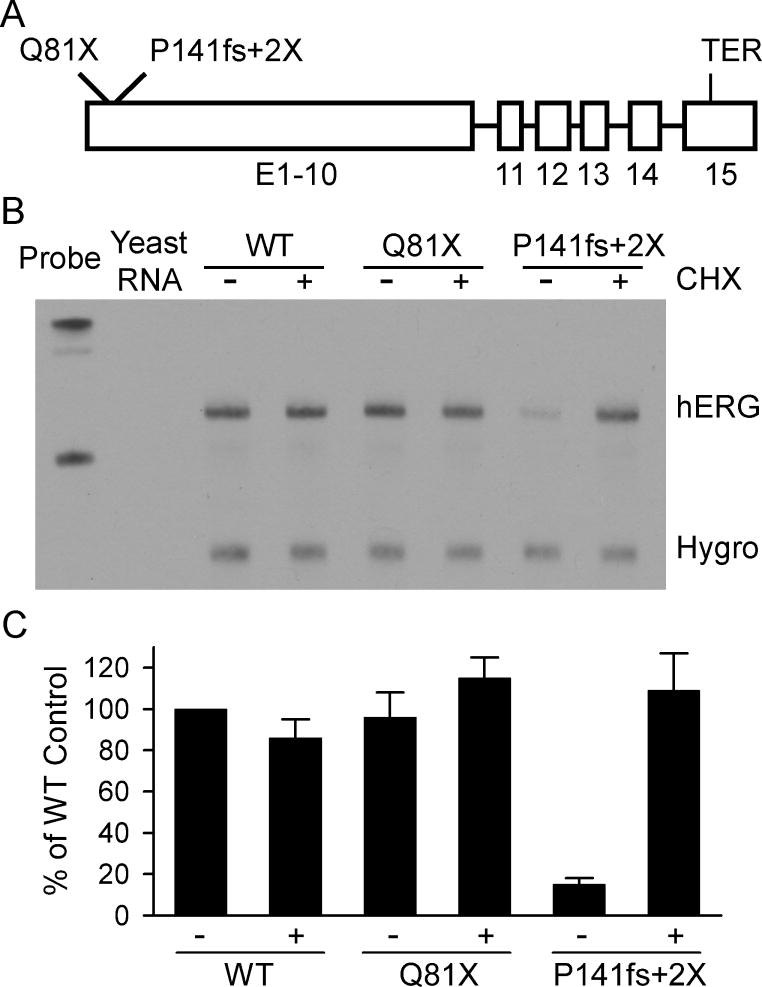
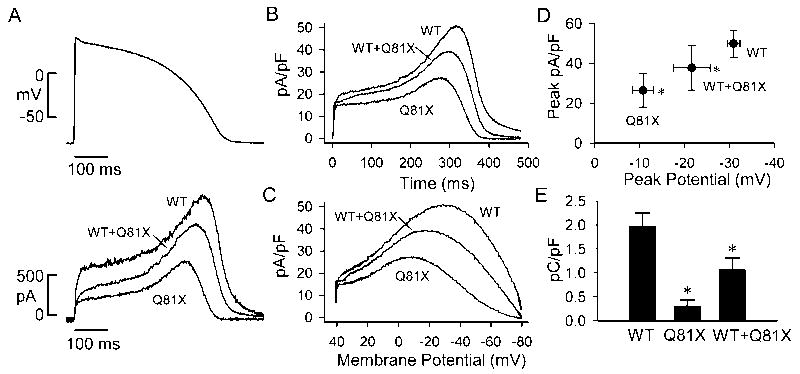
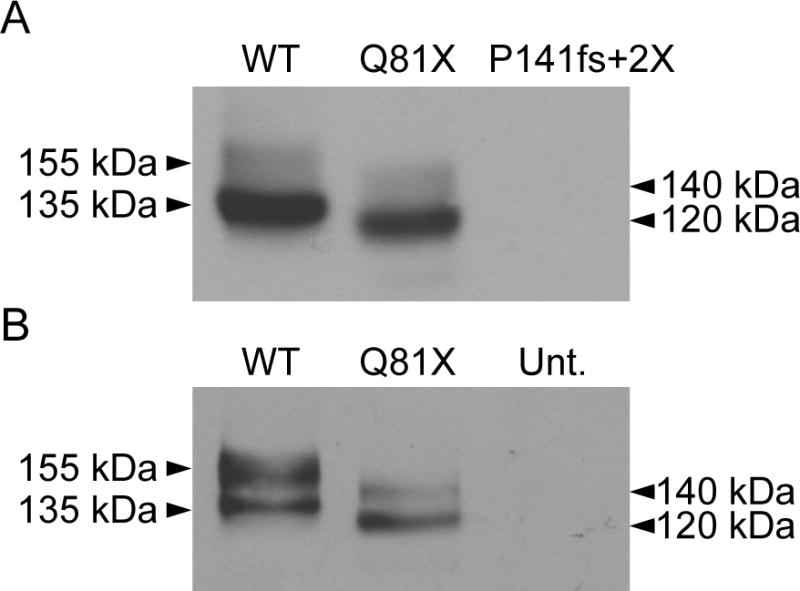
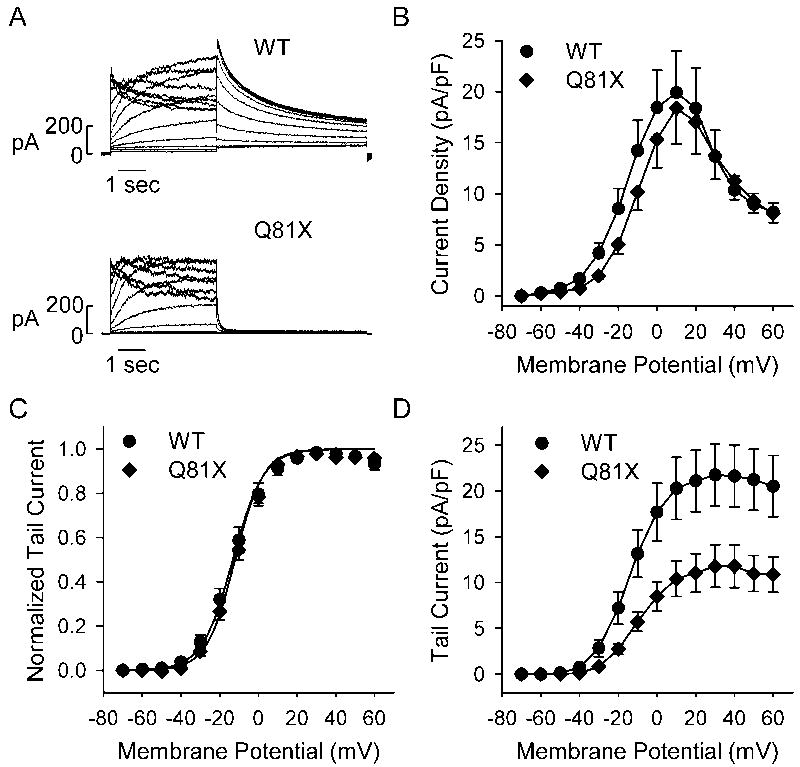
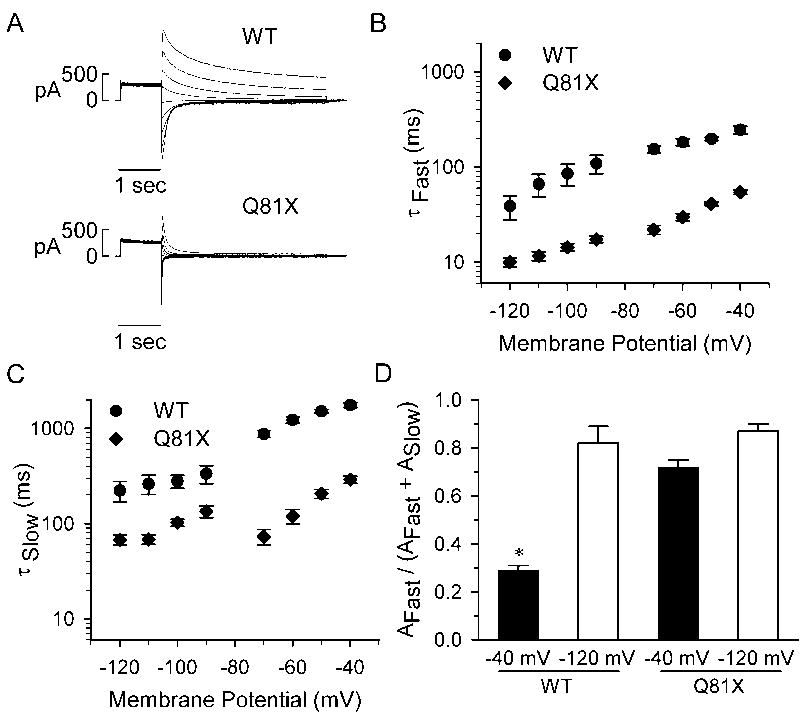
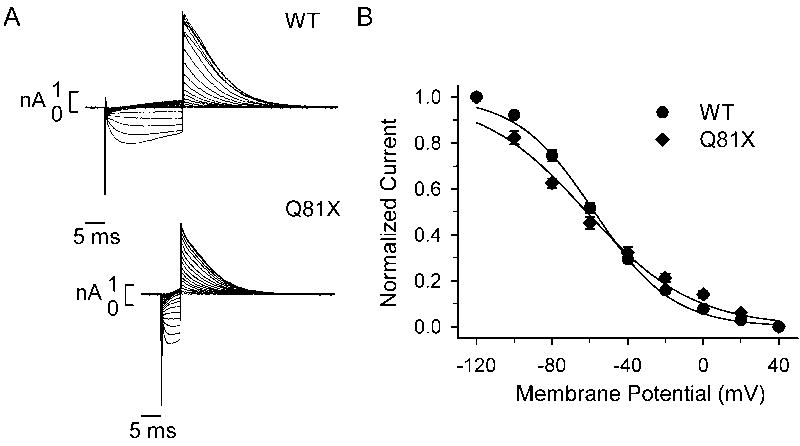
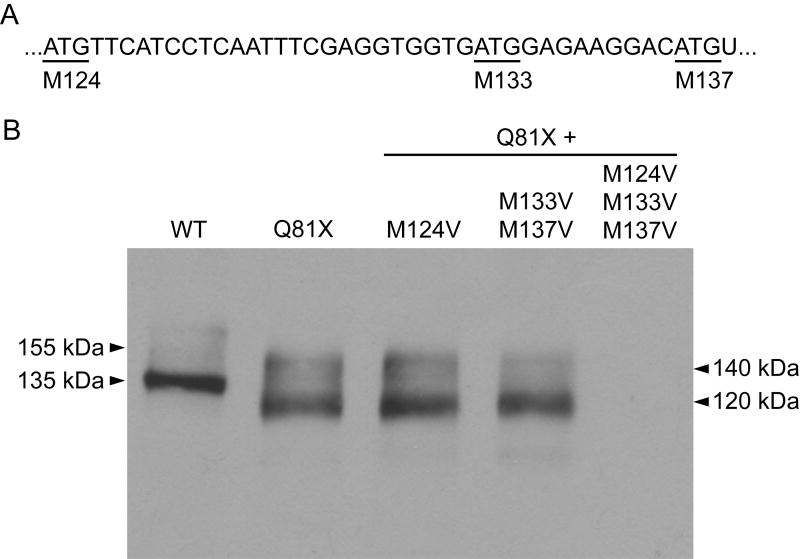
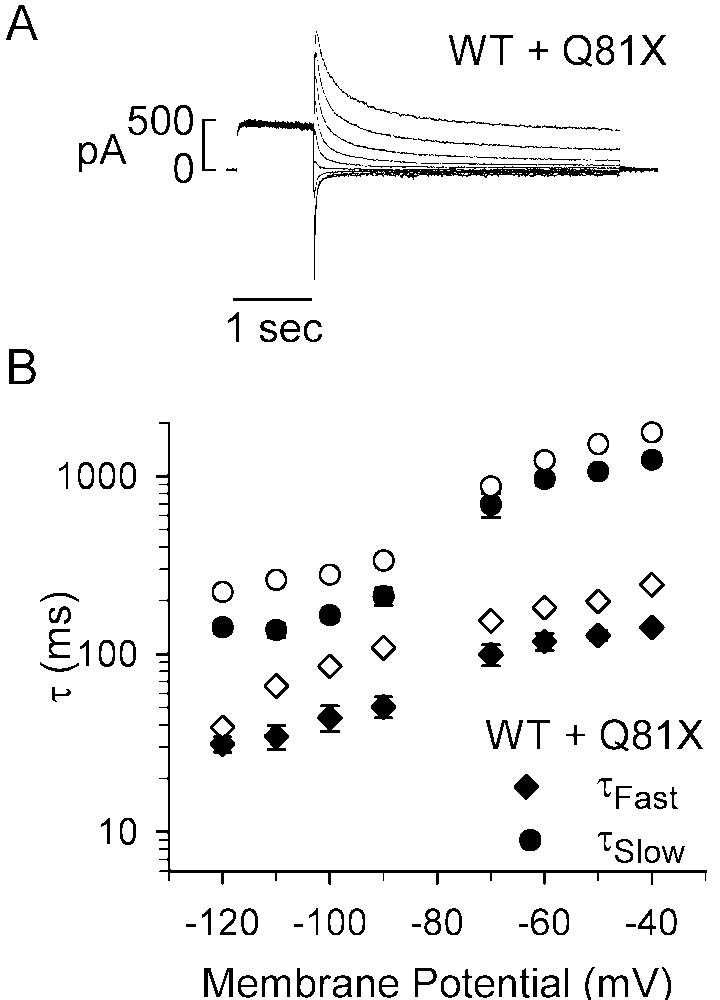
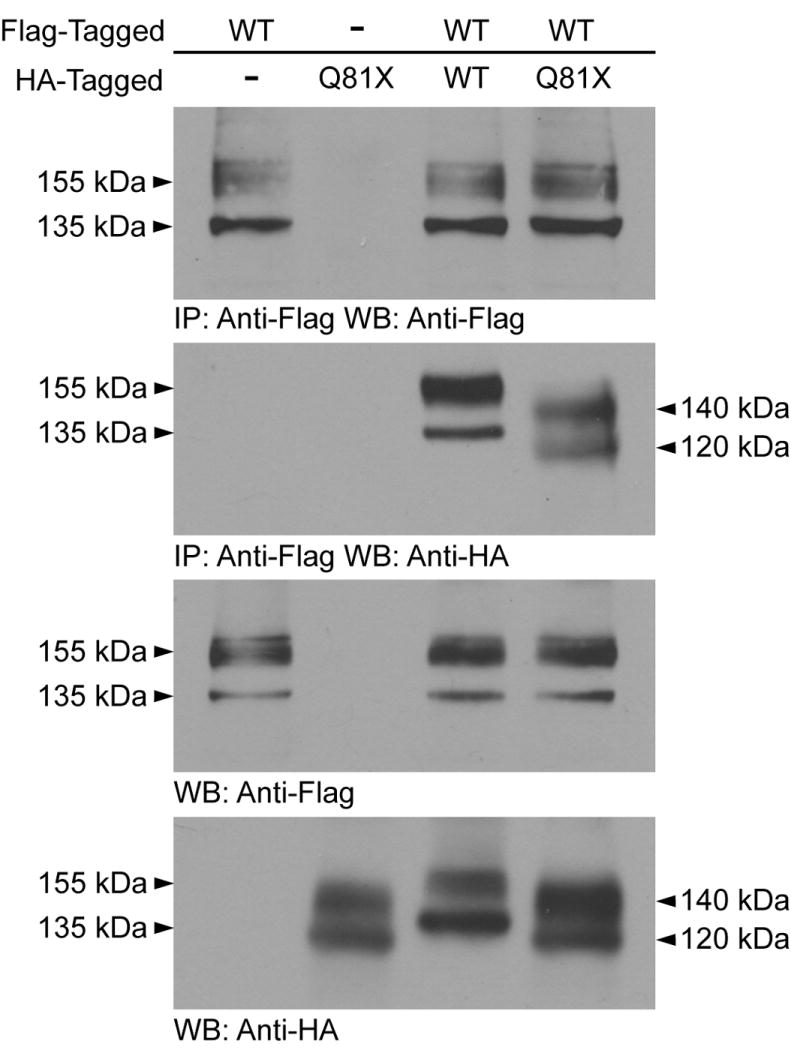
Mutations in the human ether-a-go-go-related gene (hERG) result in long QT syndrome type 2 (LQT2). The hERG gene encodes a K(+) channel that contributes to the repolarization of the cardiac action potential. We have previously shown that hERG mRNA transcripts that contain premature termination codon mutations are rapidly degraded by nonsense-mediated mRNA decay (NMD). In this study, we identified a LQT2 nonsense mutation, Q81X, which escapes degradation by the reinitiation of translation and generates N-terminally truncated channels. RNA analysis of hERG minigenes revealed equivalent levels of wild-type and Q81X mRNA while the mRNA expressed from minigenes containing the LQT2 frameshift mutation, P141fs+2X, was significantly reduced by NMD. Western blot analysis revealed that Q81X minigenes expressed truncated channels. Q81X channels exhibited decreased tail current levels and increased deactivation kinetics compared to wild-type channels. These results are consistent with the disruption of the N-terminus, which is known to regulate hERG deactivation. Site-specific mutagenesis studies showed that translation of the Q81X transcript is reinitiated at Met124 following premature termination. Q81X co-assembled with hERG to form heteromeric channels that exhibited increased deactivation rates compared to wild-type channels. Mutant channels also generated less outward current and transferred less charge at late phases of repolarization during ventricular action potential clamp. These results provide new mechanistic insight into the prolongation of the QT interval in LQT2 patients. Our findings indicate that the reinitiation of translation may be an important pathogenic mechanism in patients with nonsense and frameshift LQT2 mutations near the 5' end of the hERG gene.
人类 ether-a-go-go 相关基因 (hERG) 的突变导致长 QT 综合征 2 型 (LQT2)。hERG 基因编码一种 K(+)通道,有助于心脏动作电位的复极化。我们之前已经表明,含有无意义终止密码突变的 hERG mRNA 转录本会被无意义介导的 mRNA 降解 (NMD) 迅速降解。在这项研究中,我们鉴定了一种 LQT2 无意义突变,Q81X,它通过翻译的重新起始而逃避降解,并产生 N 末端截断的通道。hERG 小基因的 RNA 分析显示野生型和 Q81X mRNA 的水平相当,而含有 LQT2 移码突变的小基因表达的 mRNA 则被 NMD 显著降低。Western blot 分析显示 Q81X 小基因表达截断的通道。与野生型通道相比,Q81X 通道的尾电流水平降低,失活动力学加快。这些结果与 N 端的破坏一致,众所周知,N 端调节 hERG 的失活。定点突变研究表明,在过早终止后,Q81X 转录本的翻译重新起始于 Met124。Q81X 与 hERG 共组装形成异源通道,与野生型通道相比,其失活速率增加。突变通道在心室动作电位钳位期间复极化的后期也产生较少的外向电流和传递较少的电荷。这些结果为 LQT2 患者 QT 间期延长提供了新的机制见解。我们的发现表明,在 hERG 基因 5' 端附近的无意义和移码 LQT2 突变患者中,翻译的重新起始可能是一种重要的致病机制。