Division of Pharmacoepidemiology and Pharmacoeconomics, Department of Medicine, Brigham and Women's Hospital and Harvard Medical School, Boston, MA 02115, USA.
Hypertension. 2012 Oct;60(4):913-20. doi: 10.1161/HYPERTENSIONAHA.112.197095. Epub 2012 Sep 10.
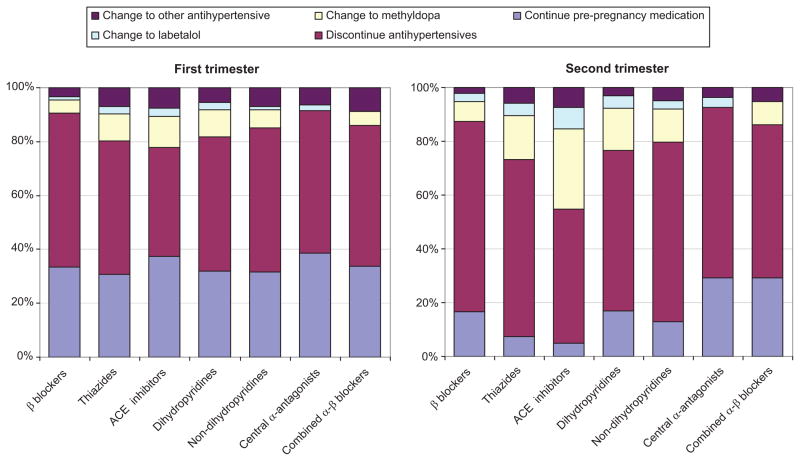
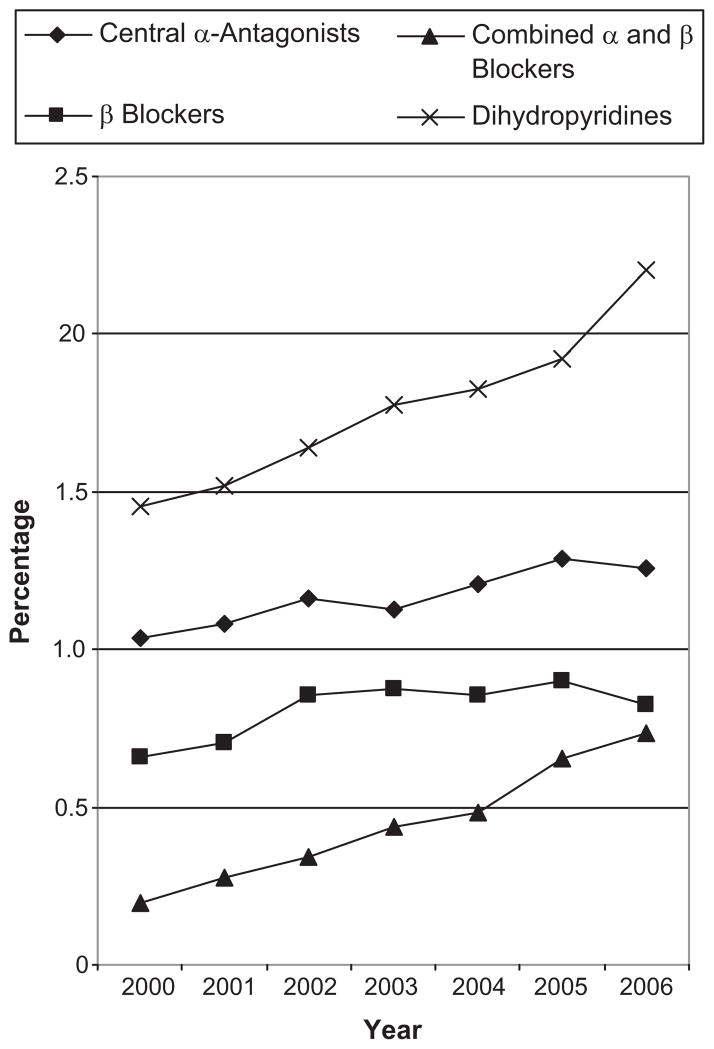
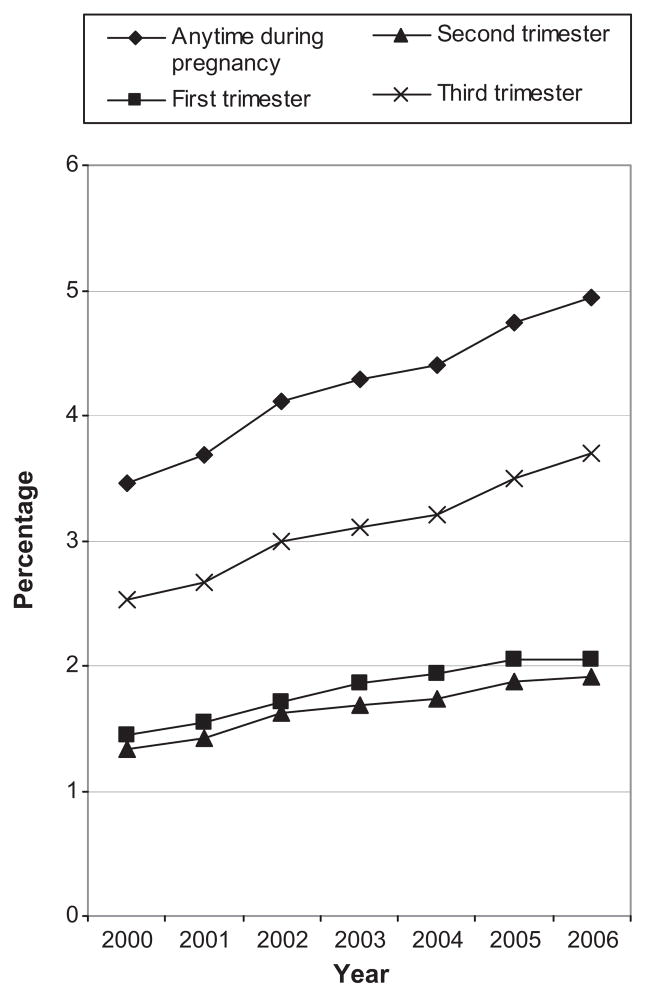
Hypertensive disorders occur in approximately 6% to 8% of all pregnancies and are a significant source of maternal and fetal morbidity. Little is known about the range of agents routinely used in practice. We used Medicaid claims from 2000 to 2007 to identify completed pregnancies. We included women who were Medicaid beneficiaries from at least 3 months prior to last menstrual period to 1 month postdelivery, and were successfully linked to infant records. Maternal exposure to antihypertensive medications was derived from Medicaid pharmacy claim files, and duration of exposure was assigned based on the days' supply dispensed. We identified 1,106,757 Medicaid patients in our cohort, of whom 48,453 (4.4%) were exposed to antihypertensive medications during pregnancy. The prevalence of antihypertensive use increased from 3.5% to 4.9% during the study period. Antihypertensive medication users were older than nonusers, more likely to be white or black, and more likely to have comorbid diabetes mellitus and renal disease. Overall, 1.9% of pregnant women were exposed during the first trimester, 1.7% during the second trimester, and 3.2% during the third trimester. The range of antihypertensive medications to which patients were exposed was highly heterogeneous and frequently included agents other than methyldopa or labetalol. Angiotensin-converting enzyme inhibitor exposure, which is contraindicated in late pregnancy, occurred in 928 (4.9%) antihypertensive medication users in the second trimester and 383 (1.1%) in the third trimester. Antihypertensive use during pregnancy is relatively common and increasing. The wide range of agents used during pregnancy includes medications considered contraindicated during pregnancy.
高血压疾病在所有妊娠中约占 6%至 8%,是孕产妇和胎儿发病率的重要来源。对于实践中常规使用的药物种类,我们知之甚少。我们利用 2000 年至 2007 年的医疗补助(Medicaid)理赔记录来识别已完成的妊娠。我们纳入了从末次月经前至少 3 个月至产后 1 个月期间至少有 3 个月是 Medicaid 受益人的女性,且这些女性成功与婴儿记录相匹配。母亲暴露于抗高血压药物是从 Medicaid 药房理赔文件中得出的,并且根据配给的供应天数来确定暴露时间。我们在队列中确定了 1106757 名 Medicaid 患者,其中 48453 名(4.4%)在妊娠期间暴露于抗高血压药物。在研究期间,抗高血压药物的使用率从 3.5%增加到 4.9%。与未使用者相比,抗高血压药物使用者年龄更大,更可能是白人或黑人,并且更可能合并患有糖尿病和肾脏疾病。总体而言,1.9%的孕妇在妊娠早期暴露,1.7%在妊娠中期暴露,3.2%在妊娠晚期暴露。患者暴露的抗高血压药物种类高度异质,经常包括除了甲基多巴或拉贝洛尔以外的药物。在妊娠晚期禁忌使用的血管紧张素转换酶抑制剂(ACEI)在妊娠中期的 928 名(4.9%)抗高血压药物使用者和妊娠晚期的 383 名(1.1%)使用者中被发现。妊娠期间使用抗高血压药物较为常见,且呈上升趋势。在妊娠期间使用的药物种类广泛,包括被认为在妊娠期间禁忌使用的药物。